 Semiahmoo Exterior
 Point Roberts' Roof Problem Is Different From the Rest of Whatcom County
Point Roberts sits on its own little peninsula, cut off from the rest of Washington by the international border and surrounded by water on three sides. That geography is part of what makes the place special, but it's hard on roofs. Homes here take a steadier beating from salt-laden marine air, wind-driven rain off the water, and heavy shade from mature evergreens that keeps roof surfaces damp for months at a time. A roof that would last two or three extra years in a drier, more open part of Whatcom County can wear out faster here if it wasn't built and installed with this exposure in mind.
When we replace a roof in Point Roberts, we're not just swapping old shingles for new ones. We're building a roof system that's meant to hold up against the specific combination of salt, rain, and moss that this stretch of coastline throws at it year after year.
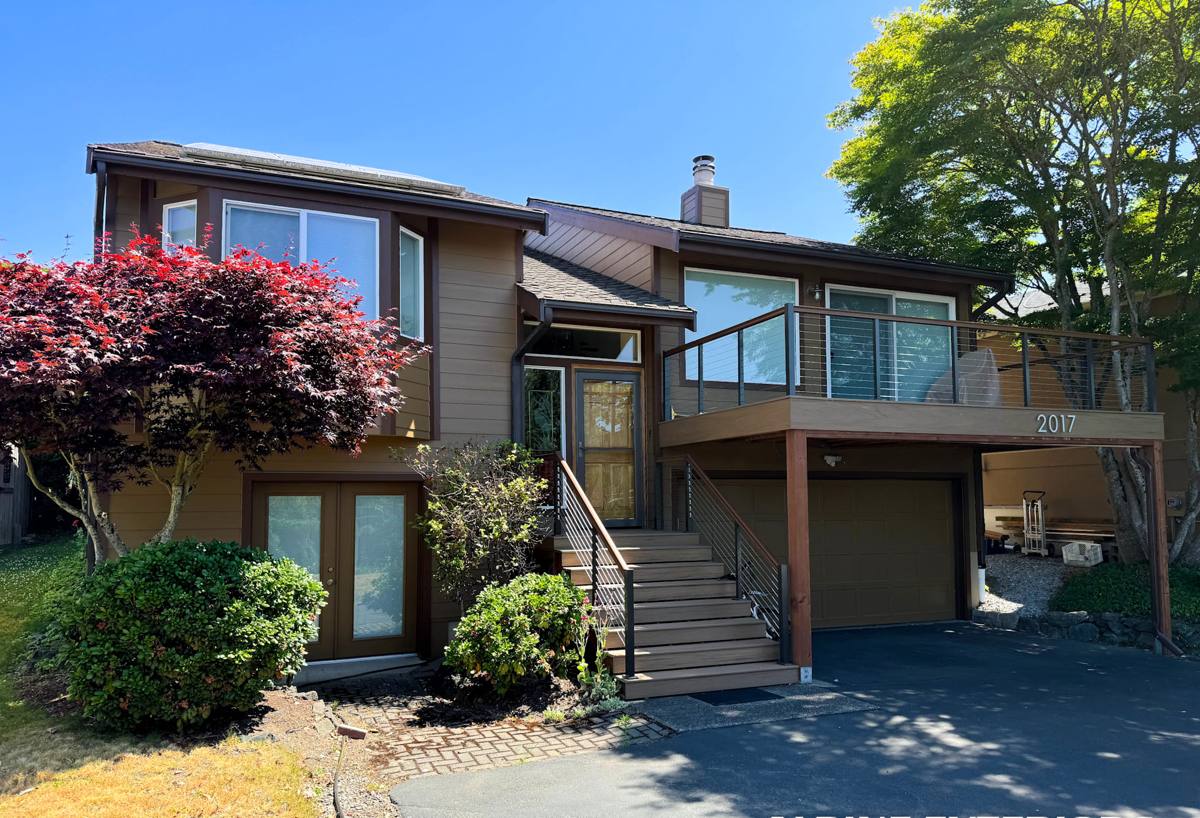
What Salt Air, Rain, and Moss Actually Do to a Roof
Salt and Marine Air
Airborne salt doesn't just sit on the surface — it works into metal fasteners, flashing, and vent components, speeding up corrosion. Once a nail head or a piece of flashing starts to corrode, it stops sealing the way it should, and that's how small leaks get started long before a homeowner notices a stain on the ceiling.
Wind-Driven Rain
Point Roberts gets its share of storms coming straight off the water, and wind-driven rain behaves differently than a normal vertical downpour. It can push up under shingle edges, through poorly lapped flashing, and into any gap that a calmer rain would never find. Roofing details that are "good enough" inland — standard nailing patterns, minimal underlayment, basic valley flashing — often aren't enough for a site with this kind of wind exposure.
Moss and Shade
Tree cover keeps a lot of Point Roberts roofs shaded and slow to dry out after rain, which is exactly what moss and algae need to take hold. Moss isn't just cosmetic — as it grows, it lifts shingle edges, holds moisture against the roofing material, and speeds up granule loss. Left unchecked long enough, it shortens the life of an otherwise sound roof.
Signs Your Roof Needs Replacement, Not Another Repair
Not every roof problem calls for a full tear-off. But there's a point where patching stops making financial sense and a full replacement becomes the honest recommendation. Here's what we look for:
- Granule loss heavy enough that shingles look bald or the gutters are consistently full of grit
- Multiple layers of moss or algae staining across large sections of the roof, not just isolated spots
- Curling, cracking, or cupped shingles, especially on south- and west-facing slopes
- Soft spots or visible sagging in the roof deck when viewed from the attic or from the ground
- Repeated leaks in different locations, rather than one consistent trouble spot
- Rusted, pitted, or failing flashing around chimneys, skylights, and valleys
- A roof that's already had two or more rounds of repairs in the last several years
- Visible daylight or water staining on the underside of the roof deck in the attic
If you're seeing two or more of these, it's worth having someone take an honest look before spending more money chasing individual leaks.
What a Correct Roof Replacement Involves Here
Tear-Off and Deck Inspection
We remove the existing roofing down to bare decking rather than layering new material over old. That's the only way to actually see the condition of the plywood or sheathing underneath — and on a coastal, moss-prone roof, it's common to find soft or water-damaged decking sections that need to be replaced before anything new goes down. Skipping this step is one of the most common shortcuts in the roofing trade, and it's the one that causes the most trouble years later.
Underlayment and Flashing Built for Wind-Driven Rain
Given how often rain here comes in sideways, we treat underlayment and flashing as more than a formality. That typically means a synthetic underlayment across the full roof, with self-adhering ice-and-water membrane at eaves, valleys, and around every penetration — chimneys, vents, skylights — where wind-driven water is most likely to find a way in. Flashing gets replaced, not reused, and fasteners are chosen with the corrosive marine air in mind.
Ventilation
A roof deck that can't breathe traps moisture underneath the roofing material, which accelerates rot and helps moss and mildew take hold from below as well as above. Part of a correct replacement is checking that intake and exhaust ventilation are balanced, and correcting it if the existing setup is undersized or blocked.
Moss-Resistant Finishing Touches
On shaded, moss-prone roofs, we typically recommend algae-resistant shingles and, where the roof design allows it, zinc or copper strips near the ridge. Rain washes trace amounts of metal down the roof surface, which discourages new moss growth between cleanings without relying on chemical treatments.
Choosing Roofing Materials for a Point Roberts Home
Material choice matters more here than in a drier, more sheltered location. The table below reflects how common options actually perform against salt air, wind-driven rain, and moss — not just their sticker price.
| Material | Salt Air / Coastal Durability | Moss & Algae Resistance | Relative Cost | Maintenance |
|---|---|---|---|---|
| Standard 3-tab asphalt | Fair — shorter lifespan in marine exposure | Low unless algae-resistant granules specified | Lowest | Moderate to high |
| Architectural (laminate) asphalt | Good, especially with algae-resistant granules | Good with the right product line | Mid-range | Moderate |
| Standing seam metal | Very good with proper coating and fasteners | Very good — sheds moss with minimal buildup | Higher upfront | Low |
| Composite / synthetic shake | Good, doesn't absorb moisture like wood | Good, does not rot like natural cedar | Higher | Low to moderate |
We don't push one material on every home. A shaded lot buried in fir trees is a different conversation than an open lot with a clear view of the water. What we will always be straight with you about is the trade-offs — a cheaper material that needs more frequent moss treatments and earlier replacement isn't necessarily the better value over the life of the roof.
Our Point Roberts Roof Replacement Process
- On-site inspection. We walk the roof and the attic, check the deck, flashing, and ventilation, and take photos to document existing conditions.
- Written estimate. You get a clear scope of work and pricing — no vague allowances, no surprise add-ons sprung on you mid-project.
- Material selection. We go over the honest trade-offs between options based on your home's exposure, shading, and budget.
- Scheduling. Given Point Roberts' location, we plan crew and material logistics in advance rather than treating it as a same-day drop-in job.
- Tear-off and deck repair. Old roofing comes off, the deck is inspected, and any damaged sheathing is replaced before new material goes down.
- Installation. Underlayment, flashing, ventilation components, and the roofing material go in to manufacturer specifications, not shortcuts.
- Cleanup and final walkthrough. Site is cleared of debris and nails, and we walk the finished roof with you before calling the job done.
Why Point Roberts' Location Changes How We Plan the Job
Because Point Roberts is physically separated from the rest of Washington by the border, getting a crew, a dump trailer, and a full load of roofing material to a job site here isn't quite the same as scheduling a roof in a mainland Whatcom County neighborhood. It takes advance planning — making sure materials are staged and ready, that the crew's schedule accounts for the crossing, and that we're not making multiple last-minute trips back and forth for forgotten supplies. Contractors who don't already work this area regularly tend to either pad their bids to cover the uncertainty or cut corners to avoid the hassle. A crew that's used to working here builds that logistics planning into the process from the start, which is part of what keeps the job on schedule and the pricing honest.
Caring for Your New Roof After Installation
A correctly installed roof still benefits from a little regular attention, especially in a moss-prone, shaded environment like this one. A simple maintenance routine goes a long way toward protecting the investment:
- Have gutters and downspouts cleared at least twice a year, more often under heavy tree cover
- Rinse off accumulating debris and moss buildup before it has a chance to establish and lift shingles
- Trim back overhanging branches to reduce shade and let the roof surface dry out faster after rain
- Schedule a visual inspection after major windstorms, particularly ones with sustained wind off the water
- Address any small flashing or sealant issues right away rather than waiting for a leak to show up inside
Why Hire a Crew That Already Works in Point Roberts
A roof is only as good as the details most homeowners never see — the deck condition underneath, how the flashing is lapped, whether the ventilation is balanced, and whether the materials were actually chosen for this specific exposure instead of a generic spec sheet. That's the kind of judgment that comes from having replaced roofs on this stretch of coastline before, not from a one-size-fits-all approach brought in from somewhere with a milder, drier climate. We treat every Point Roberts roof as a coastal roof first, because that's what it actually is.
If your roof is showing its age or you just want an honest opinion on whether repair or replacement makes more sense, we're happy to take a look. Reach out for a free, no-pressure estimate using the form below.