 Semiahmoo Exterior
 Point Roberts Sits in One of the Toughest Spots on the Peninsula
Point Roberts is a unique place to own a home. It sits at the end of a small peninsula, surrounded on three sides by water, cut off from the rest of Whatcom County by an international border. That geography is part of what makes it beautiful — and part of what makes it brutal on exterior siding. Homes here take on salt-laden air off Boundary Bay and the Strait of Georgia, driving rain that comes in sideways off the water during winter storms, and long stretches of shaded, damp weather that keep north and east-facing walls wet for days at a time.
Siding that works fine forty miles inland can fail early out here. We install fiber cement siding for homeowners throughout this stretch of Whatcom County, and Point Roberts projects get treated as their own case — not a copy-paste of a job done somewhere drier.
Salt Air and Wind-Driven Moisture
Airborne salt accelerates the breakdown of paint film, fasteners, and any wood-based material that isn't built to resist moisture intrusion. Combined with wind-driven rain that gets pushed into every gap, lap, and fastener hole on a wall facing open water, the result is a siding system that's under near-constant assault for a good part of the year. Products that rely on a surface coating alone — rather than a material that's dimensionally stable and moisture-resistant at its core — tend to show their age fastest in exactly this kind of exposure.
The Long Moss Season
Point Roberts gets the same maritime pattern as the rest of the Pacific Northwest coast, stretched out by tree cover and shaded exposures: cool, damp conditions that can run for much of the fall, winter, and spring. That's a long runway for moss, algae, and mildew to establish themselves on any siding surface that holds moisture instead of shedding it. Once moss gets a foothold on a wood-based product, it holds water against the surface and speeds up rot from the outside in.
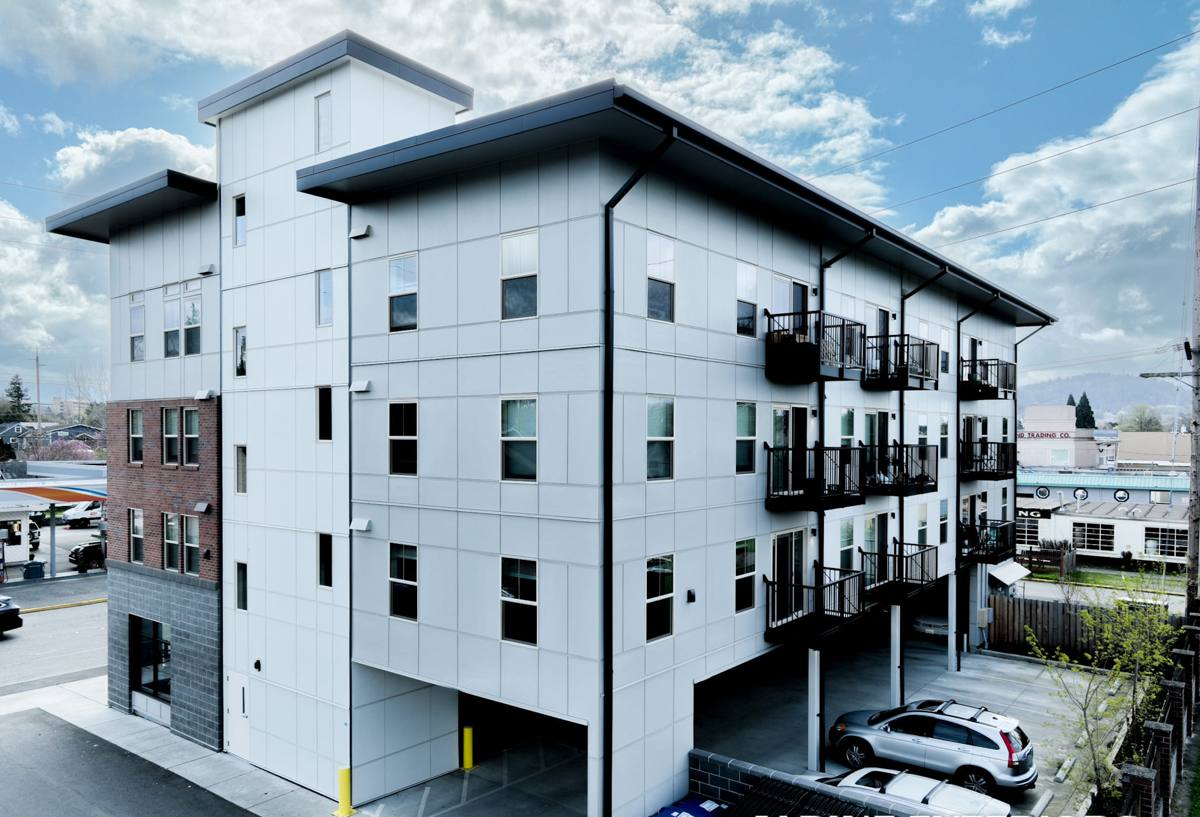
Why Fiber Cement Is the Right Material for This Exposure
Fiber cement siding is made from cement, sand, and cellulose fiber, cured into a rigid board that doesn't absorb water the way wood or wood-composite products do, and doesn't corrode or dent the way some other claddings can. It's dimensionally stable across temperature and humidity swings, which matters on a site that goes from soaked to sun-baked and back again through the year. It's also non-combustible, which is a real advantage during dry-season wildfire smoke and ember exposure, even in a coastal community.
None of that means every fiber cement product performs the same. Board density, the quality of the factory finish, and how well a manufacturer engineers its product for a specific climate zone all vary — and those differences show up fastest in tough coastal exposure like Point Roberts gets.
Why We Install Only James Hardie
We standardized on James Hardie fiber cement and don't install vinyl, LP SmartSide, Cemplank, Allura, primed spruce, or cedar. That's a deliberate professional standard, not a sales pitch, and it's worth explaining honestly:
- Climate-engineered product lines. Hardie's HZ5 formulation is engineered for wetter, freeze-prone regions like ours, rather than a single national board sold everywhere.
- Factory-applied ColorPlus finish. The finish is baked on under controlled conditions rather than field-painted, which holds up better against UV and salt air and resists the fading and chalking that field-applied paint shows first.
- Non-combustible core. Cement-based board doesn't feed a fire the way wood-based siding can.
- Warranty structure. Hardie backs its product with a transferable, long-term warranty on the substrate, which matters to buyers if a Point Roberts property changes hands.
Vinyl is inexpensive and low-maintenance, but it's a thin plastic product that can warp in heat, crack in cold, and offers little protection value beyond appearance. LP SmartSide and similar engineered wood products use a wood-strand core that performs well when detailing and maintenance stay perfect, but any breach in the finish gives moisture a path into a wood-based substrate — a real risk on walls that face wind-driven rain for months at a stretch. Primed spruce and cedar are attractive, traditional choices, but they're wood: they need ongoing refinishing, and in a moss-heavy, high-moisture environment, that maintenance schedule gets demanding fast. We'd rather tell a homeowner that up front than sell a product we don't think holds up here.
What a Correct Fiber Cement Installation Involves
Fiber cement is only as good as the installation behind it. On an exposed coastal site like Point Roberts, the details matter more, not less. A correct job includes:
Behind the Board
A continuous water-resistive barrier, properly lapped and taped, is the actual waterproofing layer — the siding sheds bulk water, but the barrier behind it is what keeps a home dry if water does get past a joint or fastener. On walls that take direct wind-driven rain, we pay close attention to how that barrier integrates with window and door flashing, not just how it looks once the siding goes up.
Flashing and Drainage
Every horizontal transition — window heads, roof-to-wall intersections, deck ledgers — needs flashing that actually directs water out and away from the wall assembly. A drainage gap behind the siding lets any moisture that does get in evaporate and drain rather than sit against the back of the board.
Fastening and Clearances
Hardie specifies fastener type, spacing, and placement for a reason, and those specs get followed, not approximated. Siding also needs proper clearance from grade, roofing, and decks — tight clearances trap moisture against the bottom edge of the board and are one of the most common causes of early failure we see corrected on coastal homes.
Joints and Caulking
Butt joints and trim transitions get treated with the right sealant, applied correctly — not as a substitute for good flashing, but as a second line of defense. Over-reliance on caulk instead of proper flashing tends to fail first in a climate that gets this much sustained rain.
Fiber Cement vs. the Alternatives, for This Specific Site
| Material | Salt air / moisture resistance | Moss and algae resistance | Maintenance | Fire resistance |
|---|---|---|---|---|
| James Hardie fiber cement | High — stable core, factory finish | High — doesn't feed moss growth | Low — occasional wash, no repainting cycle needed for years | Non-combustible |
| Vinyl | Moderate — can warp/crack with temperature swings | Moderate — surface growth still possible | Low, but limited lifespan in harsh exposure | Combustible, can melt/deform |
| Engineered wood (LP-style) | Moderate — vulnerable if finish is breached | Moderate — wood-based core at risk if wet | Moderate — finish and joints need monitoring | Combustible |
| Cedar / primed spruce | Lower — absorbs moisture, prone to rot | Lower — moss and mildew take hold easily | High — regular refinishing required | Combustible |
What Affects the Cost of a Point Roberts Siding Project
Point Roberts jobs carry a few cost factors that don't apply to a typical mainland Whatcom County project, mostly tied to access. We give real numbers during an on-site estimate, but here's what generally moves the price:
| Factor | Why it matters |
|---|---|
| Access and logistics | Material and crew scheduling across the border adds planning time compared to a mainland job |
| Existing siding condition | Rot or moisture damage found underneath old siding adds repair scope before new siding goes on |
| Home size and wall complexity | Story count, roofline complexity, and trim detail all affect labor hours |
| Tear-off vs. new construction | Removing and disposing of old siding adds a labor step new construction doesn't have |
| Color and trim selection | Custom trim details and specialty ColorPlus colors can shift material cost |
Our Process for Point Roberts Projects
Working in Point Roberts means planning around its geography, not ignoring it. We schedule material deliveries and crew time in batches so a project isn't stop-and-start every time something has to cross the border. We handle the local permitting a siding replacement requires through Whatcom County, and we build in realistic weather windows rather than promising a schedule that a fall storm off the strait is going to blow up anyway. A lot of Point Roberts homes are owned by people who aren't on-site full time, so we default to clear written updates and photos at each stage rather than assuming someone's around to walk the job daily.
Why a Crew That Already Works in Point Roberts Matters
A contractor who hasn't worked this exclave before is learning its logistics on your project. That shows up as delays, underestimated schedules, or crews that treat the border crossing as an afterthought instead of something to plan around from day one. A crew with Point Roberts experience already knows how to move materials and people efficiently, already understands the level of exposure this site's wind and rain patterns create, and is easier to reach for warranty follow-up because the relationship with the area is already established — not a one-time trip.
Signs Your Siding May Need Attention
- Persistent moss or dark streaking that returns soon after cleaning, especially on shaded or north-facing walls
- Soft spots, bubbling, or visible warping in wood-based or engineered siding
- Paint that's chalking, peeling, or fading unevenly, particularly on walls facing open water
- Visible gaps at joints, trim, or fastener heads where water could be tracking in
- Siding sitting tight against grade, decking, or roofing with little to no drainage clearance
- Interior signs like musty smells, peeling interior paint, or damp drywall near exterior walls
If any of that sounds familiar, it's worth having someone look at the wall assembly, not just the surface — problems behind the siding are often further along than they appear from the driveway.
If you own a home in Point Roberts and want a straight answer on what your siding needs, we're happy to take a look. Reach out for a free, no-pressure estimate — there's a short form below to get started.