 Semiahmoo Exterior
 Roofing in Point Roberts: A Different Set of Conditions
Point Roberts sits on its own peninsula at the southern tip of the Tsawwassen Peninsula, cut off from the rest of Whatcom County by water and by the Canadian border. That geography means every roof out here takes a beating from three sides of open water — Boundary Bay to the east, the Strait of Georgia to the west — plus the shade and dampness of the surrounding conifers. Asphalt shingle roofing is still one of the most practical, cost-effective options for homes in this stretch of Semiahmoo-area coastline, but only when it is specified and installed with those conditions in mind. A shingle roof built for a drier inland climate simply doesn't hold up the same way out here.
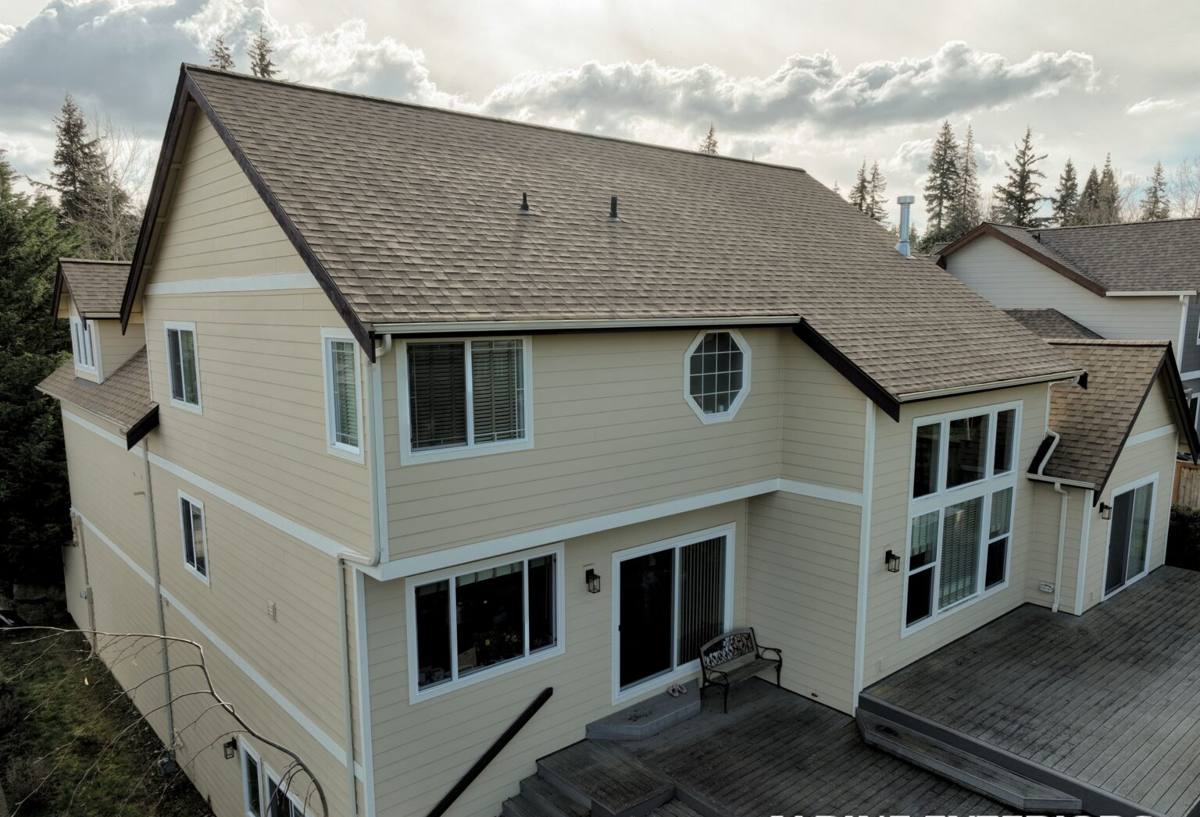
How the Local Climate Wears Down a Shingle Roof
Salt Air and Corrosion
Homes within a mile or two of the water pick up airborne salt that settles on every exposed metal surface — nail heads, flashing, vent stacks, gutter hardware. Over years, that salt accelerates corrosion on anything that isn't rated for coastal exposure. On a shingle roof, the flashing and fasteners usually fail well before the shingles themselves wear out, which is why the metal components matter as much as the shingle brand.
Driving Rain and Wind
Storms coming off the Strait of Georgia don't just drop rain straight down — they push it sideways under wind gusts that regularly test the wind rating of the shingle and the seal of every lap joint. Wind-driven rain finds gaps in poorly lapped underlayment or short flashing runs that would never leak in calmer weather. Roofs here need to be built assuming rain will hit at an angle, not just from above.
Moss, Shade, and Moisture Retention
Whatcom County's wet season runs long, and Point Roberts' tree cover keeps north-facing slopes and shaded valleys damp for weeks at a stretch. That combination is exactly what moss needs to take hold. Once moss establishes on a shingle roof, it holds moisture against the granule surface, lifts shingle tabs as it grows, and channels water sideways instead of letting it shed downhill. Left alone through a few wet seasons, moss does more damage to a shingle roof out here than sun and heat ever will.
What a Correctly Installed Roof Needs to Handle These Conditions
Shingle Selection
Not every asphalt shingle is built the same. For Point Roberts homes we look for a laminated (architectural) shingle with a wind rating suited to open coastal exposure, and — on roofs with heavy shade or a north-facing slope — a shingle with algae-resistant, copper-infused granules built in. It costs a little more up front and pays for itself by slowing the moss and algae cycle that plagues shaded roofs in this area.
Underlayment and Water Barrier
A synthetic underlayment with fully lapped, properly fastened seams is the baseline. On eaves, valleys, and any low-slope transition, we add a self-adhered ice-and-water membrane — not because Point Roberts sees heavy ice, but because that membrane also seals against wind-driven rain and any water that backs up behind moss or debris before it's cleared.
Flashing
Flashing is where coastal roofs actually fail, not the field shingles. Step flashing at walls, counter-flashing at chimneys, and valley metal all need to be corrosion-resistant material, properly lapped with the underlayment, and sized generously enough to handle sideways rain. Reusing old, corroded flashing to save a few dollars is the single most common shortcut that leads to a callback two winters later.
Ventilation and Attic Moisture
A shingle roof sheds water, but the attic underneath still needs to breathe. Balanced intake and exhaust ventilation keeps moisture from condensing on the underside of the deck during damp winters, which protects both the roof deck and the shingle warranty from the inside out.
Realistic Lifespan Expectations for This Climate
Manufacturer lifespan ratings assume average conditions, and Point Roberts is not average. Salt exposure ages flashing and fasteners faster than the shingles wear, and a shaded, moss-prone slope can show granule loss and lifted tabs years before a sunnier, more exposed slope on the same roof. That's why we look at each slope of a roof separately rather than quoting one blanket lifespan for the whole house. A roof with a mixed exposure — open to the water on one side, shaded by trees on the other — often needs attention on the shaded side well before the rest of the roof is due for replacement.
Regular inspection matters more here than in a drier inland climate. A quick check after major windstorms and again before the wet season sets in each fall catches lifted shingles, clogged valleys, and early moss growth while they're still easy fixes, instead of finding out about them from a leak.
Shingle Options for a Point Roberts Roof
There's no single "right" shingle for every home, but the trade-offs are consistent. Here's how the common tiers compare for this specific climate:
| Shingle Type | Wind Rating | Moss/Algae Resistance | Typical Lifespan | Best Fit |
|---|---|---|---|---|
| 3-tab (standard) | Lower | Standard granules only | 15–20 years | Budget re-roofs, less exposed sites |
| Architectural / laminated | Higher | Available with algae-resistant granules | 25–30 years | Most Point Roberts homes |
| Impact-rated architectural | Highest | Available with algae-resistant granules | 30+ years | Fully exposed, waterfront-facing roofs |
Cost differences between these tiers come down to material grade, the manufacturer's wind and impact rating, and whether algae-resistant granules are included — not brand marketing. We walk through the actual trade-offs for your roof's exposure and slope before recommending a tier, rather than defaulting to the most expensive option by habit.
Our Process for a Point Roberts Re-Roof
- Inspection and exposure assessment — we check slope, shade pattern, existing moss or algae growth, and how exposed the roof is to wind off the water.
- Deck evaluation — once the old roofing is off, we check the deck for soft spots or moisture damage, common under moss-covered sections that have been holding water for years.
- Underlayment and water barrier install — synthetic underlayment across the field, self-adhered membrane at eaves, valleys, and other vulnerable transitions.
- Flashing replacement — new step, counter, and valley flashing rather than reusing corroded, coastal-exposed metal.
- Shingle installation — properly nailed, not stapled, with attention to nailing pattern and exposure since under-fastened shingles are the first thing high wind finds.
- Ventilation check — confirming intake and exhaust venting is balanced before we close out the job.
- Cleanup and final walkthrough — magnetic sweep for nails, full site cleanup, and a walkthrough so you know what to expect from the new roof.
Living With a Shingle Roof in a Moss-Heavy, Salt-Air Area
A correctly installed roof still needs some basic upkeep out here. None of it is complicated, but skipping it shortens the life of even a well-built roof.
- Have moss and algae growth removed before it spreads past a few isolated patches — soft washing, not pressure washing, which can strip granules.
- Keep gutters and valleys clear of needles and debris so water isn't sitting against the shingle edge.
- Trim back overhanging branches where possible to cut down on shade and debris on north-facing slopes.
- Have flashing and fasteners checked every few years for early corrosion, especially on homes with direct water exposure.
- Address granule loss or curling shingles early — those are the first visible signs of wear in this climate, well before a roof actually leaks.
Why a Crew That Already Works in Point Roberts Matters
Point Roberts is part of Whatcom County, but it's physically cut off from the rest of the county and the state — reaching it by land means crossing the Canadian border twice. That's not a small detail for a roofing job. Material deliveries, crew scheduling, and warranty callbacks all take more planning than a job across town in Semiahmoo or Blaine. A contractor who doesn't regularly work here can underestimate that logistics cost, or worse, treat it as a reason to cut corners on materials to make up the difference.
We build border-crossing time and delivery lead times into how we schedule Point Roberts jobs, so it doesn't turn into delays or rushed work on your roof. Just as important, we know what this stretch of coastline actually does to a roof over time — which flashing details hold up, which shingle tiers are worth the upgrade, and where moss tends to take hold first — because we've seen it on other roofs in the area, not just read about it.
If your roof is showing granule loss, moss buildup, or you're just planning ahead for a replacement, we're happy to take a look and give you a straightforward assessment — no pressure, no inflated urgency. Reach out for a free, no-obligation estimate and we'll walk the roof with you and explain exactly what it needs.