 Semiahmoo Exterior
 Building Decks for Point Roberts' Particular Conditions
Point Roberts sits in a spot most contractors never have to think about: a small American exclave hanging off the bottom of the Tsawwassen peninsula, reachable from the rest of Whatcom County only by driving up through Canada and back down. That geography shapes everything about how a deck gets built here, from the way materials arrive on site to how exposed a structure is to open water on three sides. Add in the marine air coming off Boundary Bay and the Strait of Georgia, the driving rain that blows in sideways during fall and winter storms, and a moss season that can run from October through April, and you've got a set of conditions that punishes decks built to a generic spec.
We build custom decks for Point Roberts homeowners as part of our regular Semiahmoo-area work, not as an occasional side trip. That matters more than most people expect — a deck that holds up on a sheltered inland lot in Whatcom County can fail years early right on the water, and the fixes aren't always obvious unless you've already seen the failure pattern locally.
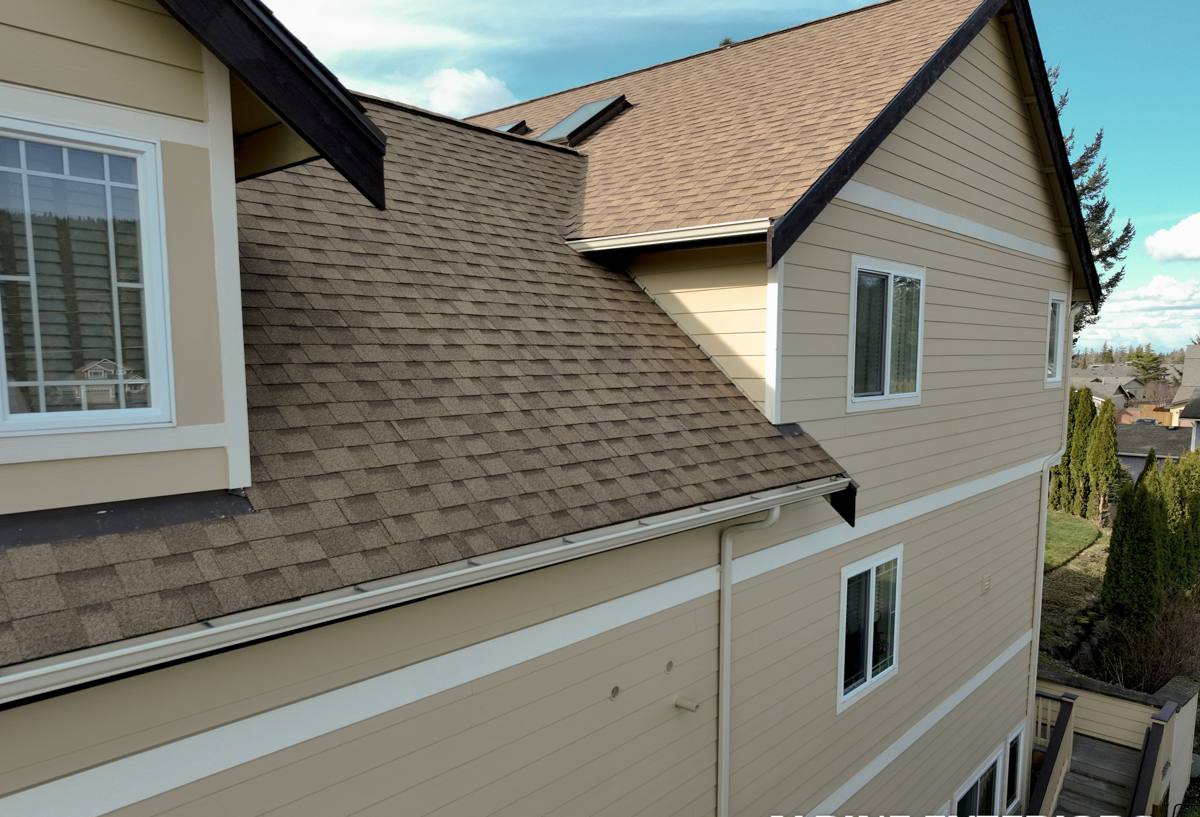
What Point Roberts Homes Actually Need From a Deck
Salt Air and Hardware
Salt-laden air corrodes standard fasteners, brackets, and connectors faster than most homeowners expect — sometimes visibly within a couple of seasons. Galvanized hardware that would be fine forty miles inland can start rusting at the head of every screw within a few years this close to the water. We spec stainless steel or high-grade coated fasteners and structural connectors for anything exposed, and we pay attention to dissimilar-metal contact points, which is where a lot of hidden corrosion starts.
Driving Rain and Water Management
Storms here don't just drop rain straight down — wind-driven rain gets pushed sideways and up under ledger boards, railings, and stair stringers if those areas aren't properly flashed and sloped. A deck that looks fine from the yard can be trapping water against the house rim joist for years before anyone notices rot. Correct flashing at the ledger connection, proper drainage slope across the decking, and gapping that lets water shed instead of pool are not optional details on this coastline — they're the difference between a deck that lasts and one that needs structural repair inside a decade.
Moss, Shade, and Surface Buildup
Long wet seasons and tree cover common on Point Roberts lots create ideal moss and algae conditions on horizontal surfaces. Beyond looking bad, moss holds moisture against the decking material and turns walking surfaces slick and genuinely dangerous, especially on stairs. Board spacing, surface texture, and airflow underneath the deck all affect how fast moss takes hold — and they're decisions made at the design stage, not fixes applied after the fact.
Choosing the Right Decking Material for This Climate
There's no single "best" decking material — the right call depends on how much maintenance you want to do, your budget, and how exposed the deck is. Here's how the common options actually perform in a marine, high-moisture climate like this one.
| Material | Moisture/Salt Performance | Maintenance | Typical Lifespan Here |
|---|---|---|---|
| Pressure-treated lumber | Good if properly sealed and maintained; needs re-sealing regularly in this climate | Annual cleaning and re-staining/sealing | 10–15 years before major boards need replacing |
| Cedar | Naturally rot- and insect-resistant, weathers well, but softer surface shows wear | Periodic cleaning; sealing extends life and color | 15–20 years with upkeep |
| Capped composite | Excellent — the cap resists moisture absorption and salt exposure well | Occasional washing, no sealing or staining | 25+ years, backed by manufacturer warranty |
| Uncapped/traditional composite | Fair — can absorb moisture at cut edges and in humid, low-airflow spots | Regular cleaning; more prone to mold/mildew in shaded areas | 15–20 years, shorter in poorly ventilated spots |
For fully exposed, waterfront-adjacent decks, we lean toward capped composite or well-maintained cedar. For sheltered, shaded decks where moss is the bigger concern, surface texture and drainage design often matter more than the material choice itself.
What a Correctly Built Deck Involves
A deck is a structure first and a surface second. The parts nobody sees are what determine whether it's still solid in fifteen years.
- Footings sized and set for local soil conditions — Point Roberts lots vary in soil composition, and footings need to reach frost depth and bear on stable ground, not just meet a minimum pour size.
- Proper ledger board attachment and flashing — this is the single most common failure point on older decks tied into a house, especially where wind-driven rain is a factor.
- Joist spacing matched to the decking material — composite and certain wood species have different span ratings than standard lumber; using lumber spacing for composite decking leads to bounce and premature sagging.
- Corrosion-resistant fasteners and structural connectors throughout, not just on visible surfaces.
- Adequate under-deck ventilation to reduce moisture retention and slow moss growth on the underside of joists and framing.
- Code-compliant railing height, baluster spacing, and stair geometry, inspected and permitted through Whatcom County as required.
Our Process
1. On-Site Assessment
We walk the property, look at sun and wind exposure, existing drainage patterns, and how the deck will tie into the house. Waterfront and near-waterfront lots on Point Roberts often have specific wind exposure that affects material and railing choices.
2. Design and Material Selection
We go over decking material, framing approach, and layout based on how you'll actually use the space, then give you a straightforward written scope — no vague allowances.
3. Permitting
Deck construction in Whatcom County generally requires a permit once you're past a certain size or height off grade. We handle the permit application and coordinate inspections so you're not chasing paperwork.
4. Building It Right
Footings, framing, flashing, decking, and railing — done in that order, with each stage built to hold up to the specific conditions on your lot, not a generic spec sheet.
5. Final Walkthrough
We walk the finished deck with you, cover basic care for whatever material you chose, and make sure everything meets what we scoped at the start.
Logistics: Why Point Roberts Needs a Crew That Already Works Here
Because Point Roberts is only reachable by land through Canada, scheduling and material delivery take real planning — a crew that treats it as a routine stop, with border logistics and timing already worked out, doesn't pass those headaches on to you as delays or surprise costs. A contractor unfamiliar with the crossing can end up burning a day just getting a crew and materials on site, time that often gets built into the price whether it's said outright or not. We factor Point Roberts logistics into scheduling from the start, so the timeline we give you is the timeline you get.
Local familiarity also means we've already seen how decks perform on specific pockets of this exclave — which lots get hit hardest by wind, where moss takes over fastest, which older decks in the area failed early and why. That's the kind of knowledge that doesn't come from a spec sheet.
Maintaining a Deck in This Climate
Even the right material and a correctly built structure need some seasonal attention here. A short, honest maintenance routine goes a long way toward hitting the upper end of a deck's expected lifespan.
- Clear leaves and debris from between boards and off ledger flashing before fall rains set in
- Scrub moss and algae off horizontal surfaces at least once a year, more often on shaded sections
- Check and re-tighten hardware periodically, especially on stairs and railings
- Re-seal or re-stain wood decking on the manufacturer or trade-standard schedule — don't stretch it another season "to see"
- Inspect under the deck once a year for standing water, blocked drainage, or early signs of rot at the ledger
- Keep gutters and downspouts near the deck clear so runoff isn't dumping directly onto or under it
Common Problems We Get Called to Fix
Most of the repair calls we get on Point Roberts trace back to a handful of recurring issues: ledger boards that were never properly flashed, standard galvanized hardware corroding faster than expected in the salt air, decking installed without enough gap or slope to shed water, and moss-covered stairs that had become a real slip hazard. None of these are exotic problems — they're standard mistakes that show up faster and worse in this climate than they would forty miles inland. Building it right the first time costs less than repairing it early.
If you're planning a new deck or replacing one that's past its prime, we're happy to walk the site with you and give you a straightforward, no-pressure estimate. Use the form below to get started.