 Semiahmoo Exterior
 Point Roberts Is Its Own Kind of Job Site
Point Roberts sits on the tip of a peninsula, surrounded by water on three sides and exposed to whatever the Strait of Georgia and Boundary Bay send its way. It's also a U.S. exclave — the only way in by land is through Canada, and everything from a crew's morning commute to a delivery truck full of new windows has to account for that. Combine the exposure with the border logistics and you get a community where window replacement genuinely needs a different plan than a job ten miles inland in Whatcom County.
Homes here take a steady beating from salt-laden air, wind-driven rain, and a moss season that runs longer than almost anywhere else in the region. None of that is unique to any one house — it's just what living on this stretch of coastline means. A window that's a good fit in a sheltered inland neighborhood can underperform fast once it's facing open water and salt spray year-round.
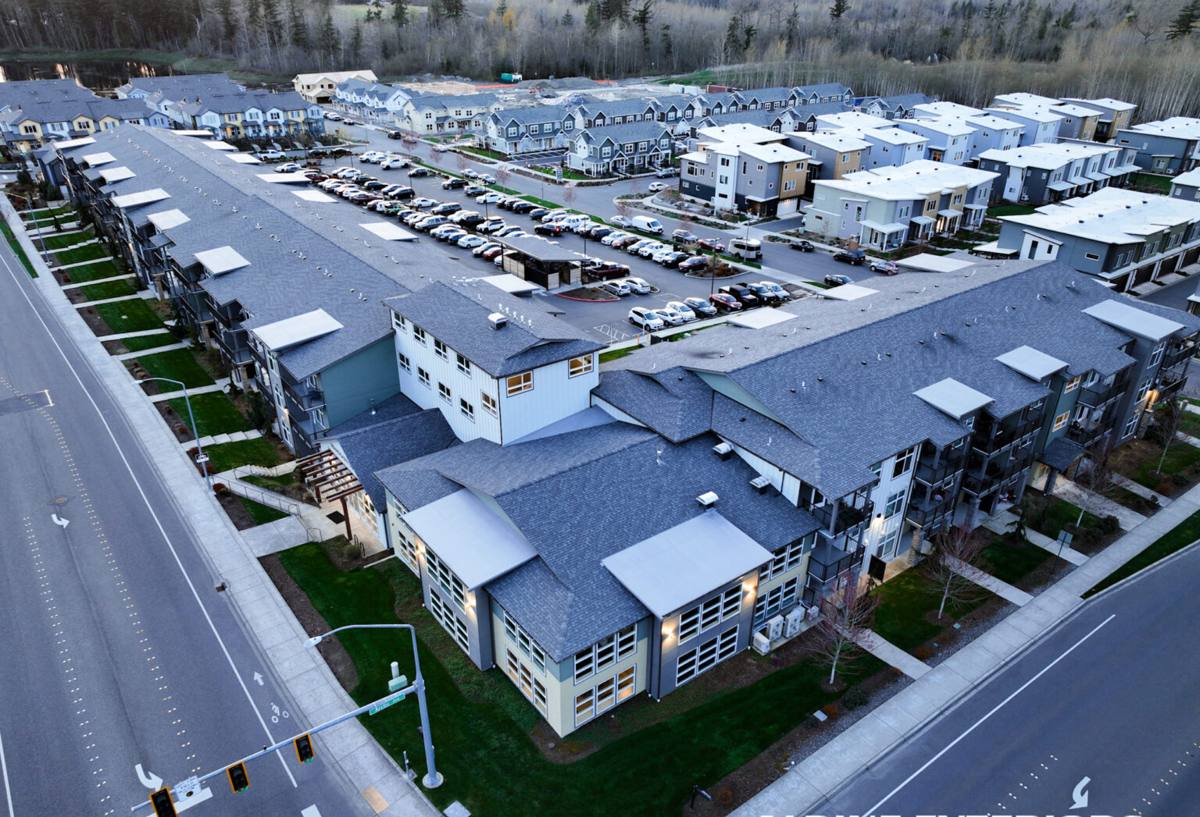
What Salt Air, Driving Rain, and Moss Season Actually Do to Windows
Each of these three factors wears on a window in a different way, and understanding how helps explain why some replacements fail early and others last for decades.
Salt Air
Airborne salt settles on hardware, fasteners, and metal cladding and slowly accelerates corrosion — balances stiffen, screws weaken, and aluminum components pit and discolor well before a comparable window would show wear in a drier, inland setting. Once corrosion starts on hardware you can't see, it's usually further along than it looks from the outside.
Driving Rain
Wind off open water doesn't just fall — it drives rain sideways into wall assemblies, which puts real pressure on flashing details and sill pans. A window that was installed without proper water management can look fine for years and then suddenly show interior staining or soft drywall the first time a strong system blows through at the wrong angle.
Moss Season
Whatcom County's wet season stretches long, and shaded or north-facing walls stay damp for weeks at a stretch. Moss and algae take hold on sills, trim, and cladding, and where they grow they also hold moisture against the surface underneath. On older wood-framed windows, that's a slow but steady path toward rot in the sill and jamb.
Signs a Point Roberts Home Needs New Windows
Most window failures don't announce themselves — they show up as small annoyances long before there's an obvious problem. Homeowners on this stretch of coastline should watch for:
- Fogging or a hazy film between the panes, which means the seal has failed and the insulating gas is gone
- Sills or lower frames that feel soft, spongy, or discolored to the touch
- Noticeable drafts near the frame even when the window is fully latched
- Hardware that's stiff, sticking, or corroded — especially on windows facing the water
- Visible moss, algae, or dark staining building up on frames, sills, or the siding just below the window
- Interior condensation on the glass during cold snaps, which points to a failing seal or poor insulation
- Peeling paint or water tracking on the wall beneath the window, a sign water is getting past the frame
Any one of these on its own isn't an emergency. Several together, especially on the same wall, usually means it's time to look seriously at replacement rather than another round of caulk and paint.
What a Correct Window Replacement Job Actually Involves
Swapping an old window for a new one is the easy part to picture. The parts that actually determine whether the job lasts are mostly hidden once the trim goes back on.
A correct installation starts with removing the old unit carefully enough to avoid tearing up surrounding siding and trim that doesn't need to be replaced. Once the opening is exposed, the sheathing and framing underneath get inspected for hidden rot or moisture damage — this is often the first real look anyone has had at that wall assembly in years, and it's the step that gets skipped when a job is rushed.
From there, the water management details matter more than almost anything else: a proper sill pan to direct any water that gets past the window back outside, house wrap and flashing tape integrated in the correct shingle-style order so water always sheds downward and outward, and fasteners rated for coastal exposure rather than standard hardware that will corrode faster in salt air. Insulation gets packed into the gap between the new frame and the rough opening without over-compressing it, and the interior and exterior get sealed and finished to match the rest of the wall.
Skip any one of those steps and the window itself can be excellent quality and still fail — usually with water finding its way into the wall long before anyone notices from inside the house.
Choosing a Window That Can Handle This Exposure
Material choice matters more here than in a sheltered inland location, because the frame is dealing with constant salt exposure and repeated wetting. There's no single right answer for every house — it depends on the wall's exposure, the home's style, and the budget — but the trade-offs are worth understanding upfront.
| Material | Coastal Performance | Maintenance | Typical Fit |
|---|---|---|---|
| Vinyl | Good — won't corrode or rot, handles salt air well | Low; occasional cleaning | Most homes, best value |
| Fiberglass | Excellent — very stable in temperature swings and moisture, minimal expansion/contraction | Low | Higher-exposure walls, longer-term ownership |
| Wood-clad | Fair — clad exterior helps, but any breach in the cladding exposes wood to rot | Higher; needs monitoring at joints and sills | Homes prioritizing interior wood appearance |
We don't push one material on every job. On a wall that takes direct wind-driven rain off the water, we're more likely to steer a homeowner toward vinyl or fiberglass simply because there's less upkeep involved in keeping the frame sound. On a more sheltered elevation, wood-clad can be a fine choice if the homeowner understands the maintenance that comes with it.
Our Process, Start to Finish
- On-site assessment. We look at each window individually — its exposure, its current condition, and whether the surrounding wall shows any signs of moisture damage.
- Material and style selection. We walk through the trade-offs above based on that specific wall's exposure and the homeowner's priorities, not a one-size-fits-all recommendation.
- Scheduling around logistics. Because Point Roberts is only reachable through Canada by land, we plan material delivery and crew scheduling with that lead time built in, rather than promising a timeline we can't actually hit.
- Protection and removal. Landscaping and interior spaces get protected before the old window comes out, and removal is done carefully to preserve siding and trim that's staying.
- Inspection and repair. Any hidden rot or moisture damage in the framing gets addressed before the new window ever goes in — not covered up.
- Installation and flashing. The new window goes in with correct sill pan, flashing sequence, insulation, and sealant for this climate.
- Walkthrough and warranty paperwork. We check operation, review what was done, and make sure the homeowner has the documentation they need.
What Affects the Cost of a Window Replacement
We won't quote a number here because every home is different, but these are the factors that actually move the price on a Point Roberts job:
| Factor | Why It Matters |
|---|---|
| Number and size of windows | More openings and larger units mean more material and labor |
| Material choice | Vinyl, fiberglass, and wood-clad carry different upfront costs |
| Hidden repair needs | Rotted sheathing or framing found during removal adds time and material |
| Wall exposure and access | Upper-story or hard-to-access windows on exposed walls take more time to do right |
| Delivery and scheduling | Point Roberts' border-crossing logistics can affect lead time on custom sizes |
| Disposal and cleanup | Old window and packaging removal is part of a complete job, not an add-on |
An honest estimate accounts for all of these upfront rather than surprising a homeowner with change orders once the job is underway.
Why Hiring a Crew That Already Works in Point Roberts Matters
A crew that doesn't regularly work this exclave has to relearn its logistics on your job. Every material order and every crew visit means crossing the border, and a contractor unfamiliar with that reality tends to underestimate lead times, show up late, or push jobs off when something easier comes up on their side of the line. A crew that already builds Point Roberts into its regular schedule doesn't have that problem — the delivery timing and crossing logistics are already accounted for before your job is ever booked.
There's also a practical, on-the-ground knowledge gap. A contractor who's done several jobs on this peninsula has already seen which hardware finishes hold up against the salt air here and which start corroding within a few seasons, which flashing details actually keep wind-driven rain out on a west-facing wall, and how long moss really takes to become a problem on a shaded elevation. That's not something you can fully learn from a manufacturer's spec sheet — it comes from doing the work in this exact environment.
Get a Free, No-Pressure Estimate
If your windows are showing their age — fogged glass, stubborn hardware, drafts, or moss creeping in around the frames — it's worth having someone take a look before another wet season adds to the damage. Use the form below to request a free estimate, and we'll walk your home's exposure with you and give you a straightforward assessment of what it actually needs.