 Semiahmoo Exterior
 Building New in Point Roberts Means Building for the Water on Three Sides
Point Roberts sits on a small peninsula bounded by Boundary Bay and the Strait of Georgia, which means almost every lot has some exposure to salt-laden marine air. New construction here gets one real advantage over a retrofit: the window openings aren't fighting old framing, old flashing, or decades of settling. But that advantage only pays off if the install is done correctly the first time, because the same wind-driven rain and salt air that wear down existing homes will start working on a new one the day it's framed. Whatcom County's wet season brings long stretches of low-intensity rain pushed sideways by wind off the water, and that's a very different load on a window assembly than a hard downpour falling straight down. Sideways rain finds gaps that vertical rain never would.
A new build gives us the chance to get the water management right from the studs out — correct flashing sequence, correct sill pan, correct integration with the weather-resistive barrier — instead of retrofitting a fix around an existing opening. That's the whole case for hiring a window contractor who does new-construction work specifically, rather than someone who mostly replaces windows in existing walls.
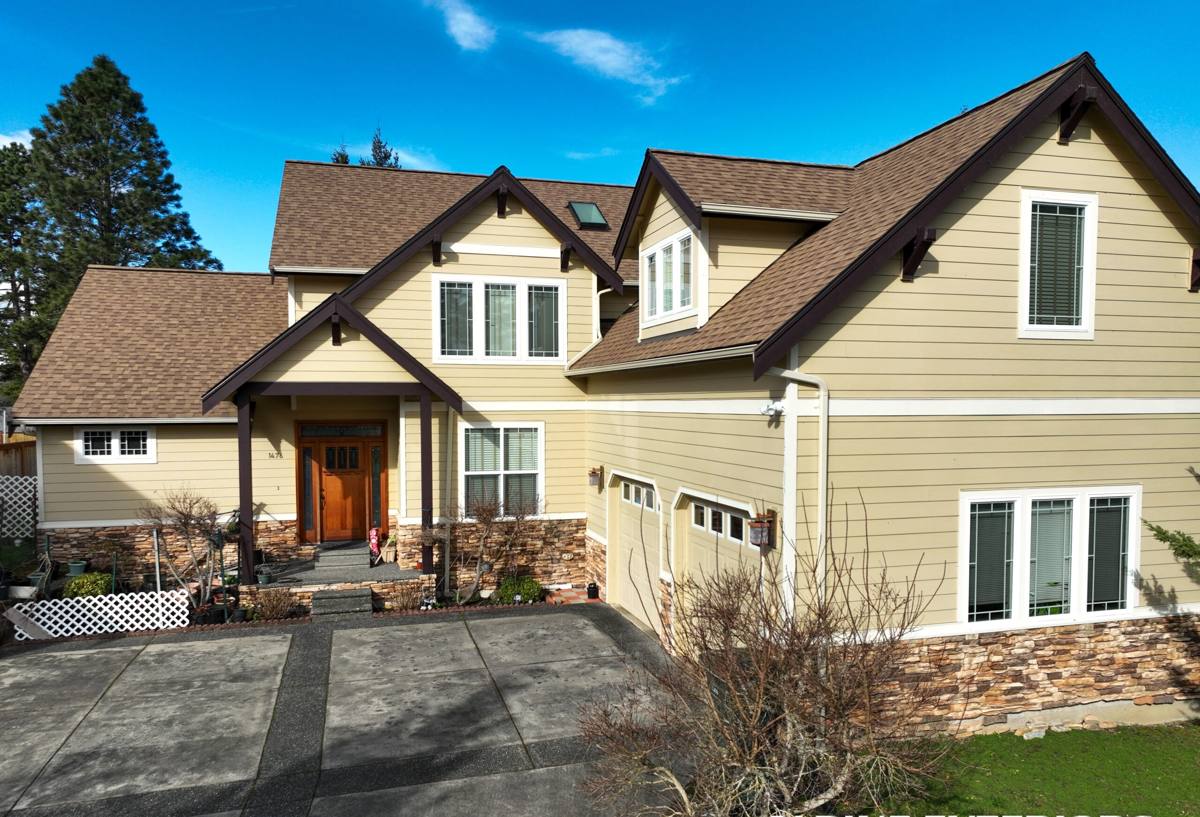
New-Construction Windows vs. Replacement Windows: Why the Distinction Matters
These are genuinely different jobs, not just different products. A replacement window is designed to fit inside an existing frame with minimal disruption to the surrounding siding and trim. A new-construction window has a nailing fin (or flange) that gets integrated directly into the wall's water-resistive barrier during framing, before siding goes on. That integration is what makes new-construction windows the stronger long-term choice for a house being built from scratch — but it also means there's no room for a rushed or out-of-sequence install. Once the siding is up, mistakes in the flashing behind it are hidden until they show up as a stain, a soft spot, or mold years later.
For a Point Roberts build, that sequencing matters more than in a drier inland location. Wind-driven rain off the Strait puts sustained pressure on wall assemblies that a calmer site wouldn't see, so a flashing detail that would "probably be fine" somewhere else isn't a risk worth taking here.
What Salt Air Specifically Does
- Accelerates corrosion on unprotected fasteners, hinges, and low-grade hardware
- Degrades some sealants and finishes faster than inland exposure
- Makes cheap aluminum components pit and chalk noticeably sooner
- Increases the value of stainless or coated fasteners and marine-grade hardware at every penetration
What a Correct New-Construction Window Install Actually Involves
There's a specific order of operations that protects the opening for the life of the house. Skipping or reversing steps is the single most common cause of window-related water intrusion in new builds — not the window product itself.
- Rough opening prep — squared, level, and sized correctly to the manufacturer's tolerances before the window ever shows up on site.
- Sill pan flashing — a sloped, sealed pan at the bottom of the opening so any water that does get past the window has a path back out, not into the framing.
- Window-to-WRB integration — the nailing flange is taped or flashed into the house wrap in the correct shingle-lap order (sides over sill, head flashing over sides) so water sheds down and out at every layer.
- Head flashing — installed with a drip edge that directs water away from the top of the frame, not just a bead of caulk and hope.
- Air sealing and insulation of the gap — the space between the frame and rough opening gets sealed for both air and moisture control, not stuffed solid with fiberglass that holds water.
- Interior and exterior trim — set only after the flashing and sealing is verified, never before.
Every one of these steps is inspectable before siding goes on. Any contractor who tells you the flashing detail "doesn't really matter" on a house exposed to Boundary Bay weather is telling you they don't do a lot of coastal work.
Choosing Window Materials for a Salt-Air, High-Moisture Site
Material choice is a real trade-off decision, not a matter of picking whatever looks best in a showroom. Here's how the common options hold up specifically under salt air, driving rain, and the moss-prone shade many Point Roberts lots have from surrounding trees:
| Frame Material | Salt Air Behavior | Moisture/Moss Exposure | Maintenance |
|---|---|---|---|
| Vinyl | Doesn't corrode; UV and salt exposure can affect finish over decades | Handles sustained moisture well; no rot risk | Low — occasional cleaning |
| Fiberglass | Excellent — dimensionally stable, resists pitting and corrosion | Very good moisture resistance, handles temperature swings well | Low |
| Wood-clad | Cladding protects wood from salt air if sealed and detailed correctly | Vulnerable at joints and end grain if flashing fails; moss and algae can gain a foothold on exposed sills | Higher — periodic inspection of cladding seams and exposed wood |
| Aluminum | Prone to pitting and corrosion in sustained salt exposure unless marine-grade coated | Conducts cold, prone to condensation in our wet winters | Moderate to high |
We don't push one brand or material as the universal answer — the right call depends on the home's design, budget, and how much exposure a given elevation actually gets. A north-facing wall shaded by trees and prone to moss buildup is a different conversation than a south wall catching direct wind off the water. What we do insist on, as our own standard, is not installing bare aluminum frames on high-exposure coastal elevations, because the corrosion and condensation trade-offs aren't worth it for what's saved up front.
Our Process for New-Construction Window Installs
Before Framing Is Finished
We review the window schedule against the plans, confirm rough opening sizes with the framer, and flag anything that needs adjusting before drywall or siding crews are scheduled — catching a sizing mismatch now is a phone call; catching it later is a change order.
Install Day
Windows go in following the sequence above — sill pan, sides, head flashing, integration with the WRB — with each layer inspected before the next goes on. We don't cover a step we haven't checked.
Before Siding Closes It Up
This is the last point where flashing problems are visible and cheap to fix. We walk every opening again before giving the go-ahead for siding.
Final Walkthrough
Operation, weatherstripping seal, hardware function, and interior trim get checked together with the homeowner or builder, not signed off from a clipboard in the truck.
What New-Construction Windows Cost — and What Actually Drives the Number
Pricing on a new build depends more on the count and complexity of openings than any single line item. Broad factors that move the number for a Point Roberts project:
| Factor | Why It Matters Here |
|---|---|
| Number and size of openings | More and larger windows mean more flashing details and more labor |
| Frame material | Vinyl is generally the most affordable; fiberglass and wood-clad cost more upfront but carry different long-term maintenance profiles |
| Glazing package | Double vs. triple pane, low-E coatings, and gas fills affect both cost and performance in our cool, wet climate |
| Elevation exposure | Walls facing direct wind off the water may warrant upgraded flashing details or hardware, adding modest labor cost |
| Site access and delivery | Point Roberts' logistics — material has to cross the border or come by ferry — can affect lead time and scheduling more than raw cost |
Why Local Experience and Logistics Actually Matter Here
Point Roberts is a U.S. exclave — the only way in by land is through Canada, and that changes how a construction project runs in ways that have nothing to do with the window itself. Material deliveries, crew scheduling, and even simple things like a forgotten fastener run take longer when a border crossing is part of the trip. A crew that already works this peninsula regularly has that logistics reality built into how they plan a job — order lead times, delivery windows, and site scheduling that account for it — instead of learning it in real time on your project. That's a genuine, practical reason to hire a contractor with an established Point Roberts and greater Whatcom County track record, separate from the technical quality of the install itself.
Familiarity with the specific microclimate matters too. A crew that has flashed openings on other homes near Boundary Bay knows which elevations tend to take the worst of the wind-driven rain and where moss and algae buildup is most likely to be an issue down the road — and can flag those to a homeowner or builder before the windows go in, not after.
A Practical Checklist Before You Sign Off on Window Install
- Confirm the sill pan flashing was installed and sloped before the window went in
- Confirm flashing tape or metal flashing follows the correct shingle-lap sequence (sides over sill, head over sides)
- Ask which frame material was specified for each elevation and why, especially on wind- or shade-exposed walls
- Verify fasteners and exposed hardware are rated for coastal/salt-air exposure
- Check that gaps between frame and rough opening are sealed for air and moisture, not packed solid
- Walk every opening before siding is installed, while flashing is still visible
- Get a clear answer on warranty coverage for both the window product and the installation labor
Let's Talk About Your Build
If you're framing a new home or addition in Point Roberts and want the window openings done right the first time — correct flashing, the right material for your exposure, and a crew that already knows how to work the logistics of this peninsula — we're glad to walk the plans with you. Reach out for a free, no-pressure estimate; there's a form right below to get started.