 Semiahmoo Exterior
 Deck Repair Built for Point Roberts Conditions
Point Roberts sits in an unusual spot — a small peninsula community surrounded by water on three sides, tucked against the Semiahmoo area of Whatcom County. That geography means decks here take a beating that decks fifteen miles inland simply don't. Salt-laden air off the water accelerates corrosion on fasteners and hardware. Driving rain off the Strait finds every gap in flashing and decking. And the long, damp moss season coats north-facing boards and shaded understructure with a slick, moisture-holding layer for months at a time. A deck repair here has to account for all three, or the same problem comes back in a year or two.
We work on decks throughout the Semiahmoo area, and Point Roberts jobs are a regular part of that work. We know what a deck built or repaired without local conditions in mind looks like after five winters, and we know what holds up.
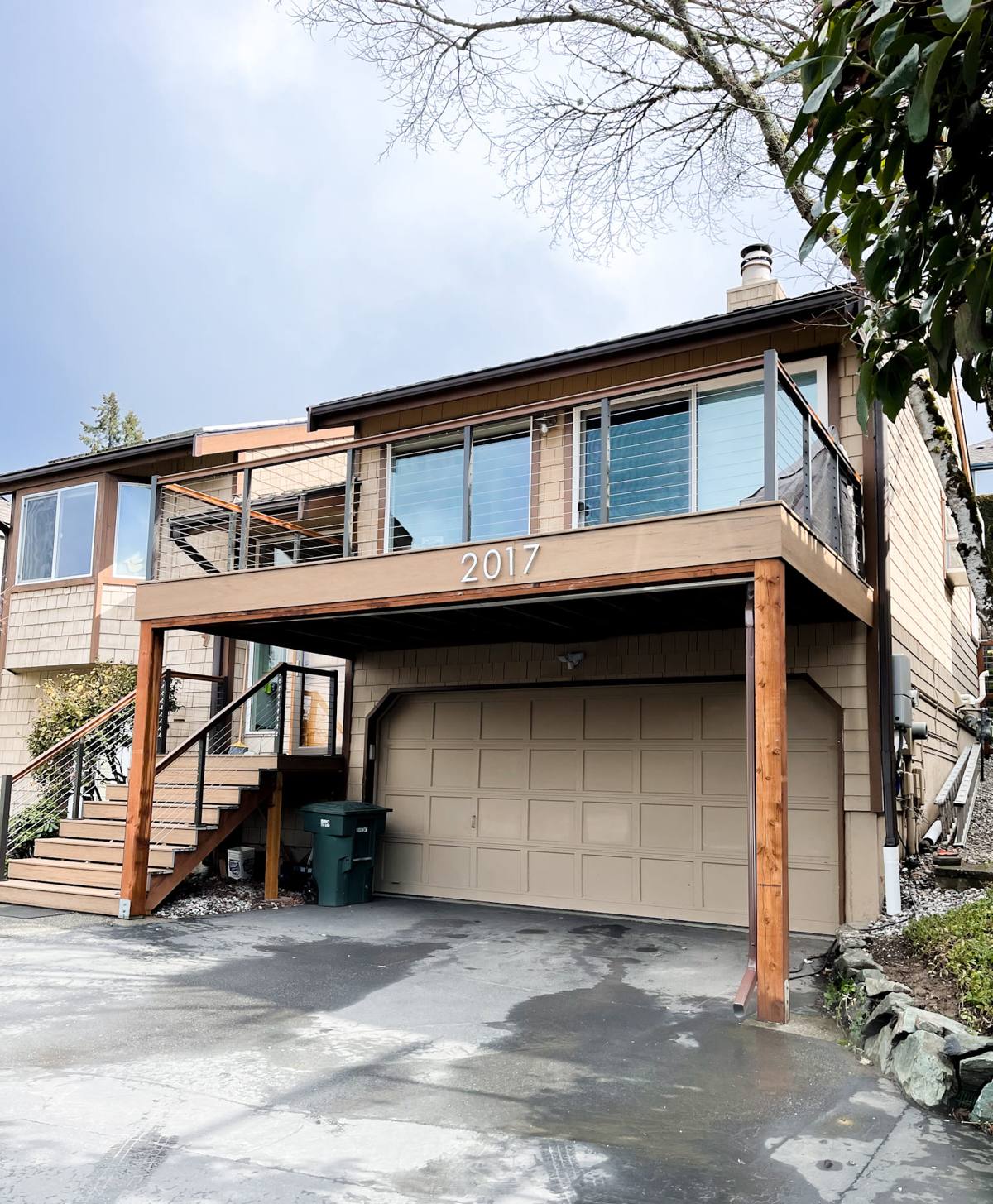
What Point Roberts Decks Are Up Against
Salt Air and Corrosion
Coastal salt exposure doesn't just affect boats and railings you can see rust on. It works on fasteners hidden inside your decking — the nails or screws holding boards to joists, the structural screws in ledger connections, and any exposed metal brackets or post hardware. Once a fastener starts corroding, it loses holding strength long before it looks visibly bad from the top. That's part of why a proper repair means pulling boards to inspect fasteners, not just looking at the surface.
Driving Rain and Water Intrusion
Wind-driven rain off the water doesn't fall straight down — it gets pushed sideways into ledger boards, under flashing, and into any gap where decking meets the house. Over time this shows up as soft or dark wood at the ledger connection, staining on siding below the deck, or rot at board ends and around post bases where water collects and doesn't drain.
Moss Season and Trapped Moisture
Whatcom County's long wet season means moss and algae get a real foothold on shaded or north-facing deck surfaces, especially where trees or the house block sun and airflow. Moss holds moisture against the wood surface far longer than open rain exposure would. On wood decking, that means slow surface rot and slick, unsafe footing. On composite decking, it's usually more of a maintenance and appearance issue, but buildup in gaps and fastener heads can still trap moisture against the substructure below.
Signs You Need Deck Repair, Not Just Cleaning
- Boards that feel spongy, soft, or springy underfoot, especially near the house or at board ends
- Visible gaps, cracking, or dark staining where the deck ledger meets the siding or foundation
- Railings or posts that wiggle more than a firm push should allow
- Rust streaks below fastener heads or visibly corroded screws when you check a few
- Persistent moss or algae that comes back within weeks of cleaning
- Stairs that feel less solid than they used to, or uneven step spacing that's developed over time
- Water pooling on the deck surface instead of draining off within an hour or two after rain
What a Correct Deck Repair Actually Involves
Inspection First
Before any repair work starts, we check the parts of a deck that cause the most trouble in this climate: the ledger connection to the house, joist ends, post bases, and any area with limited sun or airflow where moss tends to establish. A repair that only replaces obviously bad boards but skips the ledger and joist inspection often leaves the real problem in place.
Structural Repairs
This covers sistering or replacing compromised joists, re-securing or rebuilding a failing ledger connection with proper flashing, replacing corroded fasteners and hardware with stainless or coated fasteners rated for coastal exposure, and rebuilding railings or stair stringers that no longer meet a solid structural standard.
Surface and Decking Repairs
Individual board replacement, refastening loose decking, and addressing gaps or spacing issues that let water sit instead of shedding. Where moss has been a recurring problem, we'll talk through what's driving it — usually shade, poor airflow, or drainage — since replacing boards without addressing the cause just resets the clock.
Drainage and Flashing
A lot of long-term deck damage in wet coastal climates traces back to water that had nowhere to go. Correcting slope, adding or repairing flashing at the ledger, and making sure water moves off the deck and away from the house is often the difference between a repair that lasts and one that doesn't.
Repair, Partial Rebuild, or Full Replacement?
Not every damaged deck needs to come down. The right call depends on how far the damage has spread and what's holding up structurally.
| Situation | Typical Approach | Why |
|---|---|---|
| A few soft or damaged boards, structure is sound | Board replacement | Localized damage, framing and ledger still solid |
| Corroded fasteners throughout, boards otherwise okay | Refastening with upgraded hardware | Addresses the root corrosion issue without wasting good decking |
| Ledger connection compromised or improperly flashed | Ledger rebuild with correct flashing | This is the most common source of repeat water damage if left alone |
| Widespread rot in joists or multiple structural members | Partial or full rebuild | Patching individual members doesn't restore overall structural margin |
| Deck is old, undersized fasteners, outdated railing code | Full replacement | Repair cost approaches rebuild cost once code and age are both factors |
Wood vs. Composite: What We Consider in This Climate
Both wood and composite decking can perform well in the Semiahmoo area if they're installed and maintained correctly — the honest trade-offs are about maintenance burden and how each material behaves with trapped moisture.
Wood decking needs more regular attention here — sealing or staining on a schedule, and prompt cleaning of moss and algae before it takes hold. Done consistently, it can last a long time, but it's less forgiving of neglect in a climate this wet. Composite decking generally needs less surface maintenance and resists rot in the board material itself, but it still relies entirely on the wood or metal frame underneath, so the substructure inspection and fastener quality matter just as much regardless of which decking material sits on top. We'll walk through what fits your deck's exposure, budget, and how much upkeep you want to take on, without steering you toward one product over another based on anything but those honest trade-offs.
Our Process for Point Roberts Deck Repairs
- On-site inspection — we check decking, framing, ledger, fasteners, and drainage, and explain what we find in plain terms.
- Written scope and estimate — a clear breakdown of what needs repair, what's optional, and what it costs, with no pressure to upsell into a full rebuild you don't need.
- Repair work — using fasteners and hardware suited to coastal exposure, with attention to drainage and flashing so the fix holds up through the next wet season, not just through summer.
- Final walkthrough — we check the repaired areas with you and point out any maintenance steps that will extend the life of the work.
Why Local Experience on This Peninsula Matters
A crew that mainly works drier inland areas can still do competent carpentry, but they may not think to check fastener corrosion on a deck that looks fine from ten feet away, or recognize that a north-facing section's "just needs cleaning" moss problem is actually a shade and drainage problem that'll be back in a month. Working regularly in the Semiahmoo and Point Roberts area means we've seen how salt air, driving rain, and the long moss season actually play out on decks over years, not just how they look on the day of a quote. That shows up in which fasteners we use, where we double-check flashing, and which repairs we recommend versus which we tell you to skip.
Maintenance That Extends a Repair's Life
- Clean moss and algae off the deck surface at the first sign of buildup, especially on shaded sections
- Keep gutters and downspouts near the deck clear so runoff isn't adding extra water at the ledger
- Check railings and stair connections for looseness once a year
- Reseal or restain wood decking on the schedule appropriate for the product you have
- Trim back vegetation that's blocking sun and airflow to persistently damp sections
If your deck in Point Roberts or the surrounding Semiahmoo area has soft spots, loose railings, recurring moss, or you're just not sure how it's holding up after a few wet winters, we're happy to take a look. The estimate is free, there's no pressure, and you'll get a straight answer about what actually needs fixing — just fill out the form below.