 Semiahmoo Exterior
 Point Roberts Roofs Deal With Conditions Most Roofs Don't
Point Roberts sits out on its own — a small peninsula wrapped almost entirely by saltwater, cut off from the rest of Whatcom County by the international border. That location is part of what makes it a beautiful place to live, and it's also exactly why roofs out here age differently than roofs ten miles inland. Wind comes off the water with nothing to slow it down, salt spray settles on every exposed surface, and the tree cover that shades so many lots keeps shingles damp for days after a storm has already passed. A roof repair here has to account for all of that, not just patch the symptom in front of you.
Salt Air and Metal Fatigue
Airborne salt is corrosive to unprotected metal, and a roof has more metal on it than most homeowners realize — nail heads, flashing, drip edge, vent stacks, gutter fasteners. On a standard inland roof, minor corrosion is a decades-out concern. On a Point Roberts roof exposed to marine air year-round, we see fastener corrosion and flashing degradation show up well before the shingles themselves are worn out. A repair that only replaces shingles and ignores the metal underneath usually needs a second visit within a few years.
Driving Rain and Wind Exposure
Storms moving across the Strait of Georgia hit Point Roberts with rain that comes in sideways, not straight down. That matters for repair work because wind-driven rain finds gaps that vertical rain never would — under lifted shingle tabs, behind poorly lapped flashing, along valleys where water runs fast and under pressure. A repair has to be sealed and lapped correctly for wind-driven conditions, not just for a calm afternoon rainstorm.
The Long Moss Season
Between the tree cover common on Point Roberts lots and the region's extended damp season, north-facing and shaded roof slopes stay wet longer than south-facing ones. That's ideal growing conditions for moss, and moss is more than cosmetic — it holds moisture against the roofing material, lifts shingle edges as it grows, and can work its way under flashing over time. Any repair on a moss-prone roof should include moss removal and treatment as part of the job, not as a separate line item nobody mentions until later.
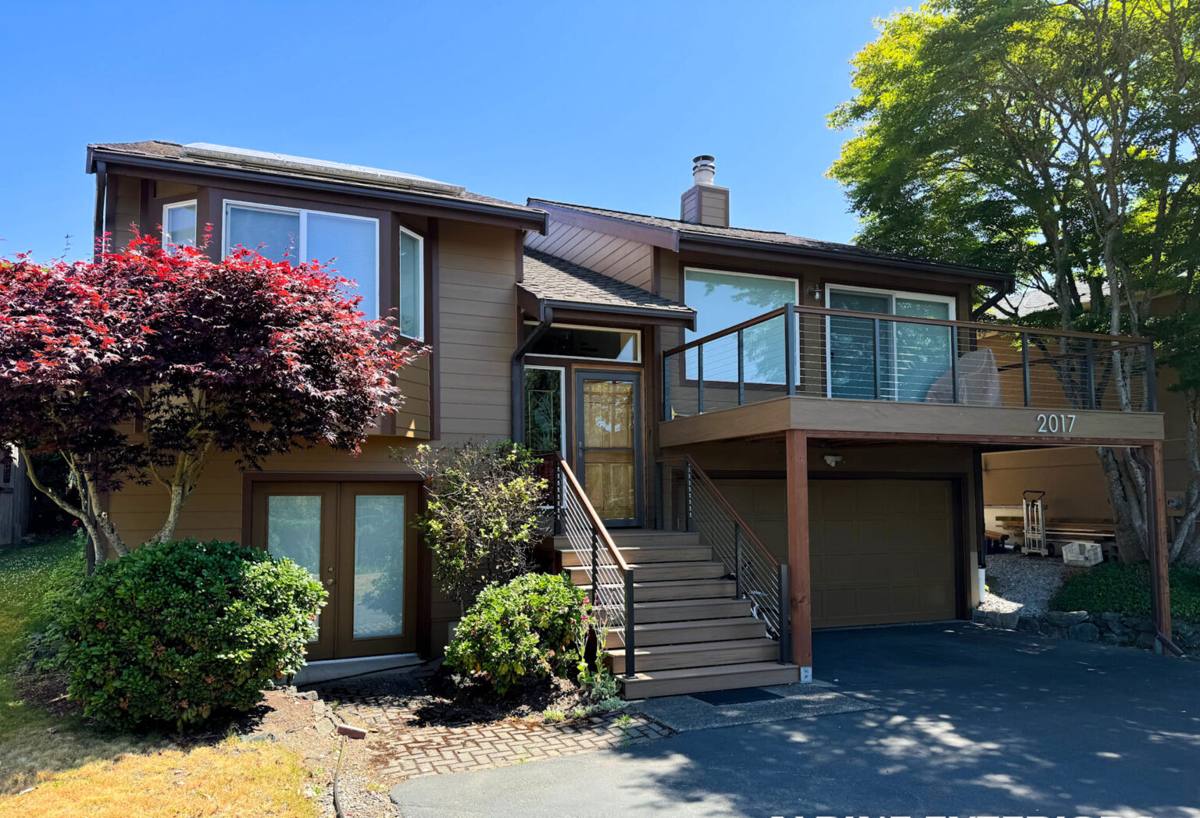
Signs a Point Roberts Roof Needs Repair — Not a Full Replacement
Not every roof problem means a new roof. Most of the calls we get for repair work fall into a fairly predictable set of issues:
- A handful of cracked, curling, or missing shingles after a windstorm
- Active moss growth along shaded slopes, valleys, or roof edges
- Water staining on an interior ceiling near a chimney, skylight, or roof valley
- Rusted or lifting flashing around vents, chimneys, or skylights
- Granule buildup in gutters, suggesting shingle wear in one localized area
- A soft spot or slight sag felt when walking a section of roof
- Daylight visible through the attic decking at a joint or penetration
If the issue is isolated to one area and the rest of the roofing material is sound, repair is almost always the right call. We'll tell you plainly if what you're describing sounds like something bigger — we don't pad a repair estimate into a replacement sales pitch, and we don't downplay a real structural issue to keep a job small.
What a Correct Roof Repair Actually Involves
A roof repair done right isn't just swapping out damaged shingles. It's tracing the problem back to its actual cause and addressing that too, so the same spot doesn't fail again in a year or two.
| Repair Type | What It Addresses | Why It Matters in Point Roberts |
|---|---|---|
| Shingle replacement | Cracked, curled, or missing shingles | Wind exposure loosens shingle tabs faster than in sheltered areas |
| Flashing repair | Leaks at chimneys, skylights, valleys, wall intersections | Salt air corrodes flashing metal and breaks down sealant faster |
| Moss treatment & removal | Moisture retention, lifted shingles | Shaded, damp lots hold moss longer through the season |
| Fastener and metal replacement | Rust staining, loose fasteners, failing drip edge | Marine air accelerates corrosion on exposed metal |
| Decking and underlayment repair | Soft spots, water intrusion below the surface | Prevents hidden rot from spreading past the visible damage |
Repair vs. Replacement: When Each One Makes Sense
Homeowners on Point Roberts often ask us to just be straight about whether their roof is worth repairing at all. Here's how we actually think about it on site:
| Factor | Repair usually makes sense | Replacement usually makes sense |
|---|---|---|
| Age of roofing material | Well within its expected service life | At or past the end of its typical lifespan |
| Extent of damage | Isolated to one or two areas | Spread across most or all slopes |
| Decking condition | Solid, no soft spots found | Rot or soft decking found in multiple areas |
| Granule loss | Localized | Widespread, shingles look uniformly worn |
| History of repairs | First or second repair on this roof | Repeated repairs to the same general area |
If a roof lands in the middle of that table, we'll walk you through the honest trade-offs rather than pushing you toward the more expensive option by default.
Common Roof Repair Work We Do on Point Roberts Homes
Shingle and Roofing Material Repair
Replacing damaged shingles with matched material, re-securing lifted tabs, and correcting nail patterns that were installed wrong the first time — a common source of premature failure on older roofs.
Flashing and Penetration Repair
Chimneys, skylights, plumbing vents, and roof valleys are where the vast majority of leaks originate, not the open field of shingles. We reflash and reseal these points using materials suited to salt-air exposure.
Moss Removal and Prevention
Safe removal without damaging the shingle surface underneath, followed by treatment aimed at slowing regrowth on shaded slopes through the next wet season.
Gutter and Edge Repair
Roof edges and gutter attachment points take a beating from both wind and corrosion. Loose or rusted components here let water run behind fascia instead of off the roof.
Structural and Decking Repair
When water has gotten past the roofing material, we open the affected section, replace rotted decking, and rebuild the area correctly before any new roofing material goes back down.
Our Process for a Point Roberts Roof Repair
- Inspection. We walk the roof and attic, not just look from the ground, to find the actual source of the problem.
- Honest assessment. We explain what we found, what's causing it, and whether repair or replacement fits the situation.
- Written scope. A clear description of the repair work and materials before anything starts — no surprise add-ons mid-job.
- The repair itself. Correct flashing laps, proper fastener spacing, and materials matched to your existing roof.
- Cleanup and check. Debris and old material hauled off, gutters checked for granules or fastener debris from the work.
Why It Matters to Hire a Crew That Already Works Point Roberts
Point Roberts' geography isn't a minor detail for a roofing contractor — it's a real logistical factor. Getting a crew and materials to the peninsula takes planning that a contractor unfamiliar with the area won't have built into their scheduling, and that unfamiliarity tends to show up as delays, missed weather windows, or rushed work to make up for lost time. A crew that already services Point Roberts regularly has that logistics figured out, knows which materials hold up to the specific salt-air and wind exposure out here, and isn't learning the local conditions on your roof for the first time.
It also means we're not guessing at what "normal wear" looks like on a Point Roberts roof versus one further inland in Whatcom County. We know what fastener corrosion at this age looks like, what moss regrowth pattern to expect on a shaded north slope near the water, and which flashing details tend to fail first in this specific climate.
Maintaining Your Roof Between Repairs
A repair extends the life of your roof, but a little maintenance between visits extends it further:
- Clean gutters at least twice a year so water isn't backing up under roof edges
- Keep overhanging branches trimmed back to cut down on shade and debris buildup
- Have moss treated before it spreads across a whole slope, not after
- Walk your attic after major storms and check for new staining or daylight
- Have the roof looked at after any significant windstorm, even if nothing looks obviously wrong from the ground
If you're seeing signs of trouble on your Point Roberts roof — or just want an honest read on where it stands — we're glad to come take a look. The estimate is free, there's no pressure to book anything, and you'll get a straight answer about what your roof actually needs. Fill out the form below to get started.