 Semiahmoo Exterior
 Why Peace Arch Roofs Take More Punishment Than Most
A roof in Peace Arch does more work than a roof twenty miles inland. Sitting close to the water in Semiahmoo, homes here get a steady dose of salt-laden air, which is slowly corrosive to exposed metal fasteners, flashing edges, and drip edge over the years. Add in the driving rain that comes off the water sideways during winter storms, and every seam, valley, and penetration on the roof gets tested in a way that a dry-climate roof never is. Then there's moss. Whatcom County's long, wet, mild winters give moss months to establish itself on any roof surface that stays shaded or slow to dry, and once it takes hold it holds moisture against the shingles or shakes far longer than rain alone ever would.
None of this means a roof in Peace Arch is doomed to fail early. It means the roof has to be built and maintained with these three factors in mind from the start, rather than treated like it's going up in a dry, inland neighborhood.
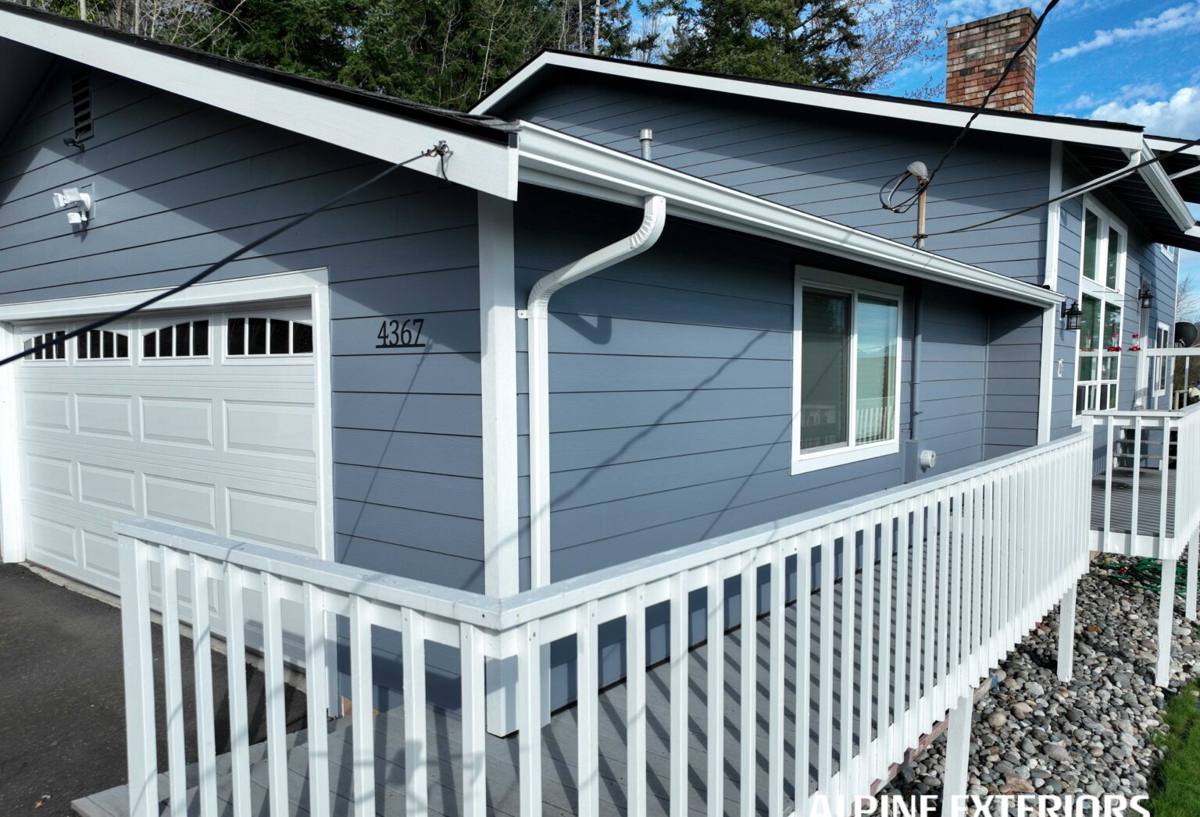
Repair or Replace: Reading the Signs Correctly
Not every roof problem in Peace Arch means a full replacement. But local conditions do tend to accelerate certain kinds of wear, and it's worth knowing which signs point toward a patch job and which point toward starting over.
- Granule loss heavy enough that you can see bare asphalt mat on multiple slopes, not just one weathered spot
- Shingles that are curling, cupping, or cracking across large sections rather than a single storm-damaged area
- Soft or spongy decking felt underfoot in the attic, or daylight visible through the roof deck
- Moss growth that has pushed up shingle edges or left dark, spongy streaks that don't scrub off cleanly
- Leaks showing up in more than one location, or in a new location each time it rains hard
- A roof that's already had two or more repair visits in the last few years for unrelated issues
When a Repair Still Makes Sense
A younger roof with an isolated leak, a section of flashing that failed around a chimney or vent, or storm damage confined to one slope is usually a repair, not a replacement. The honest answer depends on the roof's age, how much of the underlying decking is still sound, and whether the damage is a symptom of a bigger problem or a one-off. A good inspection should tell you which one you're dealing with before any work starts.
What a Correct Roof Replacement Actually Involves
A roof replacement done right in this climate is more than stripping old shingles and nailing down new ones. The details that don't show from the street are what determine whether the new roof handles salt air, driving rain, and moss season better than the last one did.
Tear-Off and Decking Inspection
A full tear-off exposes the deck so it can actually be inspected, not guessed at. Any decking that's soft, delaminated, or water-stained gets replaced before anything new goes down. Skipping this step and layering new shingles over old is a shortcut that traps existing moisture problems underneath a fresh surface.
Underlayment and Water Protection
Given how much driving rain this area sees, the underlayment matters as much as the shingles themselves. Synthetic underlayment generally holds up better than old-style felt against wind-driven moisture, and self-adhering ice-and-water shield belongs at eaves, valleys, and around every roof penetration, since those are the spots where wind-blown rain finds its way in first.
Flashing and Ventilation
Flashing around chimneys, skylights, and sidewalls has to be formed and fastened correctly, not just caulked and hoped for. On the salt-air side, corrosion-resistant fasteners and flashing materials are worth the small upcharge over standard galvanized options. Ventilation is the other piece homeowners rarely think about: balanced intake and exhaust airflow keeps the underside of the roof deck drier, which slows moss growth from the inside and helps the shingles reach their expected lifespan instead of failing early from trapped moisture.
Comparing Roofing Materials for Peace Arch Conditions
There isn't one "correct" material for every home here, but each option performs differently against salt air, moss, and heavy rain. The table below is a general guide, not a guarantee — actual performance still depends on installation quality, roof pitch, and how much shade and moisture a given roof deals with.
| Material | Salt Air Performance | Moss Resistance | Typical Lifespan |
|---|---|---|---|
| Architectural asphalt shingle | Good with corrosion-resistant fasteners and flashing | Moderate; benefits from zinc/copper strips and regular cleaning | 20–30 years |
| Standing seam metal | Very good when properly coated and detailed | Strong; moss struggles to grip smooth metal panels | 40–50+ years |
| Cedar shake/shingle | Fair; needs diligent maintenance near salt air | Weak without active upkeep; wood holds moisture longest | 20–30 years with upkeep |
| Synthetic composite shake/slate | Good; resists corrosion since it isn't metal-fastened the same way | Moderate to good depending on surface texture | 30–50 years |
Metal roofing tends to be the strongest all-around performer against this specific combination of salt, rain, and moss, but it also carries the highest upfront cost. Architectural asphalt shingle remains the most common choice for good reason: reasonable upfront cost, solid performance when installed and maintained correctly, and a wide range of contractors who can service it down the road.
How We Approach a Roof Replacement in Peace Arch
- On-site inspection — we get on the roof and in the attic, not just a look from the ground, to check decking condition, ventilation, and existing moss or water damage.
- Material walkthrough — we go over the realistic options for your roof's pitch, shading, and budget, including the trade-offs between them.
- Written estimate — a clear scope of work and price before anything is scheduled, so there are no surprises mid-project.
- Scheduling around the weather — in this climate, timing a tear-off matters; we build in a plan for keeping the deck protected if weather turns during the job.
- Tear-off and deck verification — old roofing comes off, decking gets inspected and repaired as needed before anything new goes down.
- Installation — underlayment, ice-and-water shield at vulnerable points, flashing, ventilation components, and the finish material go on in that order, done to manufacturer specification.
- Site cleanup and walkthrough — magnetic sweep for stray fasteners, debris hauled off, and a final walkthrough so you know what was done and what to watch for going forward.
Living With Moss and Salt Air After the New Roof Goes On
A new roof still needs some seasonal attention in this environment — that's just the reality of building near the water in Whatcom County. The good news is that the maintenance is straightforward and doesn't take much time if it's kept up with.
- Clear gutters and downspouts at least twice a year so water isn't backing up under the roof edge
- Have moss buildup removed gently before it spreads, rather than waiting for it to cover a whole slope
- Consider zinc or copper strips near the ridge, which release trace minerals that discourage moss regrowth over time
- Trim back overhanging branches to cut down on shade and debris, both of which feed moss growth
- Do a visual check after major windstorms for lifted shingles, displaced flashing, or debris caught in valleys
- Get a professional look every couple of years, even with no visible problems, since salt-air corrosion on fasteners and flashing isn't always obvious from the ground
What Affects the Cost of a Roof Replacement in Peace Arch
Every roof is different, so a real number only comes from an on-site look. But the factors that move the price up or down are consistent:
- Roof size and pitch — steeper roofs take longer and require more safety setup
- Number of layers to remove — tear-off of two layers costs more than tearing off one
- Decking condition — hidden rot or delamination found during tear-off adds material and labor
- Material choice — architectural asphalt shingle sits at the lower end, metal and cedar at the higher end
- Roof complexity — valleys, dormers, skylights, and chimneys all add flashing work and time
- Site access — waterfront lots, mature trees, or tight driveways can affect staging and cleanup
As a general range, a straightforward asphalt shingle replacement on an average-size Peace Arch home tends to run in the mid-single-digit thousands, while a large, steep, or architecturally complex roof — or one built in metal — climbs well beyond that. Anyone quoting a firm number without seeing the roof in person is guessing.
Why Hiring a Crew That Already Works Peace Arch Matters
A roofing crew that regularly works this stretch of Semiahmoo already knows the kinds of decking conditions common in homes of a certain age around here, the moss patterns that show up on north-facing and shaded slopes, and how much of a role wind-driven rain plays in flashing and valley failures. That local pattern recognition means fewer surprises during tear-off and a more accurate estimate from the start, instead of pricing built around assumptions from a drier, calmer climate. It also means faster response when a storm off the water causes damage that needs attention before the next system rolls in, rather than waiting on a crew that has to travel in from farther away.
Local experience also shapes material recommendations. A contractor who has seen how different roofing materials actually hold up against salt air and moss in this specific area — not just on a manufacturer's spec sheet — can give a more honest read on what will perform well on your particular roof, given its shading, pitch, and exposure to the water.
If your roof in Peace Arch is showing its age, or you just want a straight answer on whether it needs repair or replacement, we're happy to take a look. The estimate is free, there's no pressure to commit on the spot, and you'll get a clear explanation of what we find and why — just fill out the form below to get started.