 Semiahmoo Exterior
 Siding Built for the Peace Arch Stretch of Semiahmoo
Homes along the Peace Arch corridor sit close enough to Semiahmoo Bay and the Strait of Georgia that the weather off the water shapes almost every exterior decision you make. Salt-laden air moves inland on a regular basis, wind-driven rain comes in sideways during fall and winter storms, and the shaded, damp stretches of yard and roofline stay wet long enough each year to grow moss on anything that will host it. Siding here isn't just a cosmetic choice — it's the first line of defense against a climate that never fully dries out. We install James Hardie fiber cement siding exclusively, and on this page we'll walk through what that actually means for a Peace Arch home, what correct installation looks like in this specific setting, and why the crew you hire matters as much as the product itself.
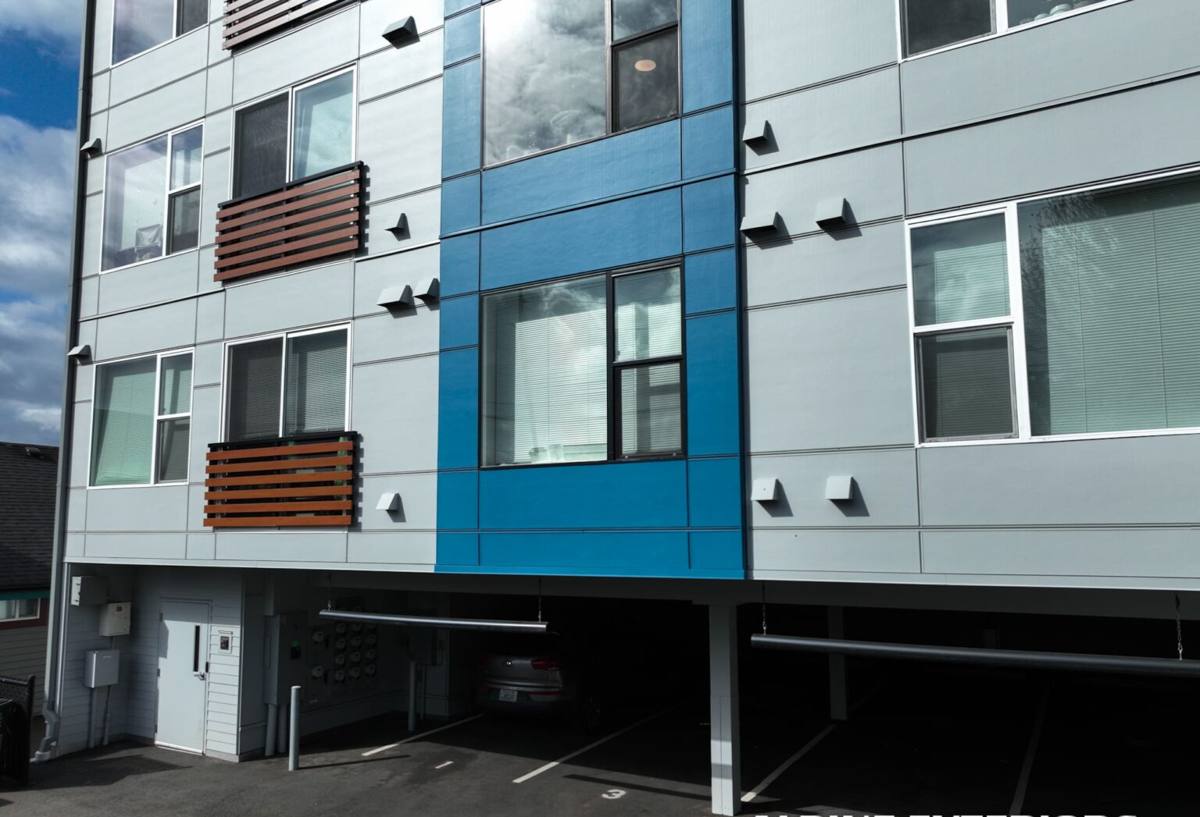
What This Climate Actually Does to Siding
Whatcom County's northwest corner gets a version of Pacific Northwest weather that's a notch more aggressive than inland areas. Three things stand out for homes near Peace Arch and the Semiahmoo waterfront:
Salt Air
Proximity to saltwater means airborne salt settles on siding, trim, and fasteners year-round, not just during storms. Salt accelerates corrosion in metal fasteners and flashing, and it can degrade certain paint and coating systems faster than inland exposure would. Siding materials and finishes that aren't engineered for coastal exposure tend to show chalking, fading, or fastener staining well ahead of their rated lifespan.
Driving Rain
Storms coming off the Strait often arrive with real wind behind them, which pushes rain horizontally into wall assemblies instead of letting it run straight down. That means water finds its way into every gap, seam, and poorly lapped joint that vertical rain would simply run past. Water-resistive barriers, flashing details, and joint treatment matter more here than in a calmer climate — a small installation shortcut that would be harmless in a dry region can become a moisture path in a driving-rain one.
A Long Moss Season
North-facing walls, shaded elevations, and anything near mature trees or fences stay damp for months at a stretch. That's exactly the condition moss and algae need to take hold. Once organic growth establishes on a siding surface, it holds moisture against the substrate even longer, which compounds the problem. Siding that resists moisture absorption at the material level — not just at the paint layer — has a real advantage here.
Why We Install James Hardie and Nothing Else
We standardized on James Hardie fiber cement siding because it's engineered specifically for the kind of punishment this region hands out, and because we've seen what happens to other materials over time in exposures like Semiahmoo's. A few specifics:
- Non-combustible core: Fiber cement doesn't feed a fire the way wood-based or foam-backed products can, which matters for insurance and peace of mind alike.
- Engineered for moisture, not just painted against it: Hardie's fiber cement formulation resists swelling, cracking, and rot in ways that wood-based composite sidings can struggle to match under sustained damp exposure.
- ColorPlus factory finish: The color is baked on at the factory under controlled conditions, which holds up better against UV and salt exposure than field-applied paint typically does, and it comes with its own finish warranty.
- HZ5 and climate-matched product lines: Hardie engineers specific plank formulations for different climate zones. For a marine, high-moisture environment like this one, that engineering isn't a marketing detail — it's the difference between siding that performs for decades and siding that needs early intervention.
- A transferable warranty structure: Coverage that survives a sale protects both the homeowner who installs it and whoever buys the house next, which is a real factor if you ever list the property.
We don't install vinyl, LP SmartSide, Cemplank, Allura, primed spruce, or cedar. Each of those has legitimate uses somewhere, but none of them is what we'd choose to put on a home exposed to salt air, driving rain, and a long moss season, and we'd rather turn down work than install something we don't stand behind in this climate.
What Correct Installation Involves
Fiber cement siding is only as good as the assembly it's installed into. On a Peace Arch home, we treat the following as non-negotiable, not optional upgrades:
Water-Resistive Barrier and Drainage Plane
A properly lapped weather barrier behind the siding, combined with a drainage gap, gives incidental moisture a path out instead of trapping it against the sheathing. In a driving-rain climate, this layer does as much work as the siding itself.
Flashing at Every Penetration
Windows, doors, hose bibs, light fixtures, and any other wall penetration need flashing detailed to shed water outward, not funnel it into the wall cavity. Wind-driven rain finds shortcuts that calmer weather never would.
Proper Fastening and Clearances
Hardie specifies fastener type, spacing, and placement for a reason — under-driven or over-driven nails, wrong fastener metallurgy, or skipped clearances at grade and roof lines are exactly where premature failures start, especially with salt in the air accelerating any corrosion-prone shortcut.
Ground and Roof Clearance
Siding installed too close to grade, a deck, or a roofline stays wet longer and is more exposed to splash-back and debris that holds moisture — a direct contributor to the moss and algae growth this area is prone to.
Caulking and Joint Treatment
Joints and butt seams need the right sealant, applied correctly, and Hardie's own installation guidance is specific about where caulking is required versus where it isn't. Getting this wrong is a common source of hidden moisture intrusion.
Comparing Approaches: What a Peace Arch Home Is Really Choosing Between
| Factor | James Hardie Fiber Cement (Our Standard) | Vinyl or Wood-Based Alternatives |
|---|---|---|
| Moisture behavior in driving rain | Engineered fiber cement core, resists swelling and rot when properly installed | Can trap or wick moisture depending on material; wood-based products are more moisture-sensitive |
| Salt air exposure | ColorPlus factory finish holds up well; fiber cement doesn't corrode | Fasteners and some finishes degrade faster in sustained salt exposure |
| Moss and algae resistance | Dense material resists moisture retention that feeds organic growth | More porous or moisture-retentive substrates can host growth longer |
| Fire performance | Non-combustible core | Vinyl can deform or melt under heat; wood-based products are combustible |
| Long-term maintenance | Factory finish reduces repainting frequency | Often requires more frequent painting, caulking, or panel replacement |
Our Process for Peace Arch Homes
We work this stretch of Semiahmoo regularly, which means we already understand the exposure conditions before we ever look at your specific house. Our process typically runs:
- On-site assessment: We walk the exterior, check existing siding and sheathing condition, identify moisture-prone zones (shaded walls, low-clearance areas, anything near mature landscaping), and note any rot or hidden damage that needs to be addressed before new siding goes on.
- Tear-off and substrate check: We remove the old siding down to the sheathing, inspect for water damage or compromised framing, and repair anything we find rather than sealing it in behind new siding.
- Weather barrier and flashing installation: Every penetration, seam, and transition gets detailed for this climate's driving-rain conditions, not a generic install.
- Hardie plank or panel installation: Installed to manufacturer spec — correct fastening, clearances, and joint treatment throughout.
- Trim, caulking, and finish work: Final detailing at corners, windows, and transitions, checked against Hardie's installation requirements.
- Walkthrough: We go over the finished work with you before calling the job done.
A Practical Checklist Before You Hire Anyone
- Ask what siding material they're proposing and why it's suited to a marine, high-rain climate — not just what it costs.
- Confirm they follow manufacturer-specified fastening, flashing, and clearance requirements, not just "how we've always done it."
- Ask how they handle existing rot or water damage found during tear-off — repair, disclose, and price separately, not hidden.
- Check that their warranty covers both material and labor, and ask what's transferable if you sell the home.
- Ask about their experience specifically in coastal or near-coastal Whatcom County conditions, not general regional experience.
Why Local Experience on This Peninsula Matters
A crew that mostly works inland jobs may not think twice about ground clearance, fastener corrosion resistance, or drainage plane detailing — because inland homes are more forgiving of small shortcuts. On a home exposed to Semiahmoo Bay weather, those same shortcuts show up faster: streaking, moss patches, soft trim, or fastener bleed within a few seasons instead of a couple of decades. Working this area regularly means we already know which elevations of a typical Peace Arch home take the worst of the wind-driven rain, where moss tends to establish first, and how much clearance actually holds up against salt spray and splash-back over time. That local pattern recognition is part of what you're paying for when you hire a crew that already works this peninsula, not just a general contractor passing through.
Timing Your Project Around This Climate
Siding installation can happen across most of the year here, but scheduling around the wettest stretches of late fall and winter makes for a cleaner install — drier substrate, faster caulk and sealant cure times, and less risk of trapping moisture behind new siding before it's fully weathered in. If you're planning ahead, late spring through early fall tends to give the most reliable install conditions, though we work with what the weather gives us and adjust sequencing as needed.
If your Peace Arch home is due for new siding, we're glad to come take a look, walk the exterior with you, and put together a clear, no-pressure estimate for a James Hardie installation built for this exact stretch of coastline. There's a form below — reach out and we'll get a time on the calendar.