 Semiahmoo Exterior
 Peace Arch's Climate Is Hard on Siding
Homes near Peace Arch sit in one of the more exposed pockets of Semiahmoo, close enough to the water that salt-laden air is a daily fact of life, not an occasional nuisance. Add in driving rain that comes sideways off Semiahmoo Bay during winter storms, and a moss season that can stretch from fall well into spring in this part of Whatcom County, and you have three separate forces working against exterior siding at the same time: corrosion, moisture intrusion, and organic growth that traps both.
None of that means siding fails quickly here. It means siding fails differently here than it would inland. Fastener corrosion shows up sooner. Caulk joints give out faster. Moss and algae hold moisture against the wall longer after every rain, which matters more in a place that doesn't get many bone-dry stretches to let materials fully recover. A repair approach that works fine in a drier climate can leave a Peace Arch home with the same problem again in a year or two if it doesn't account for this.
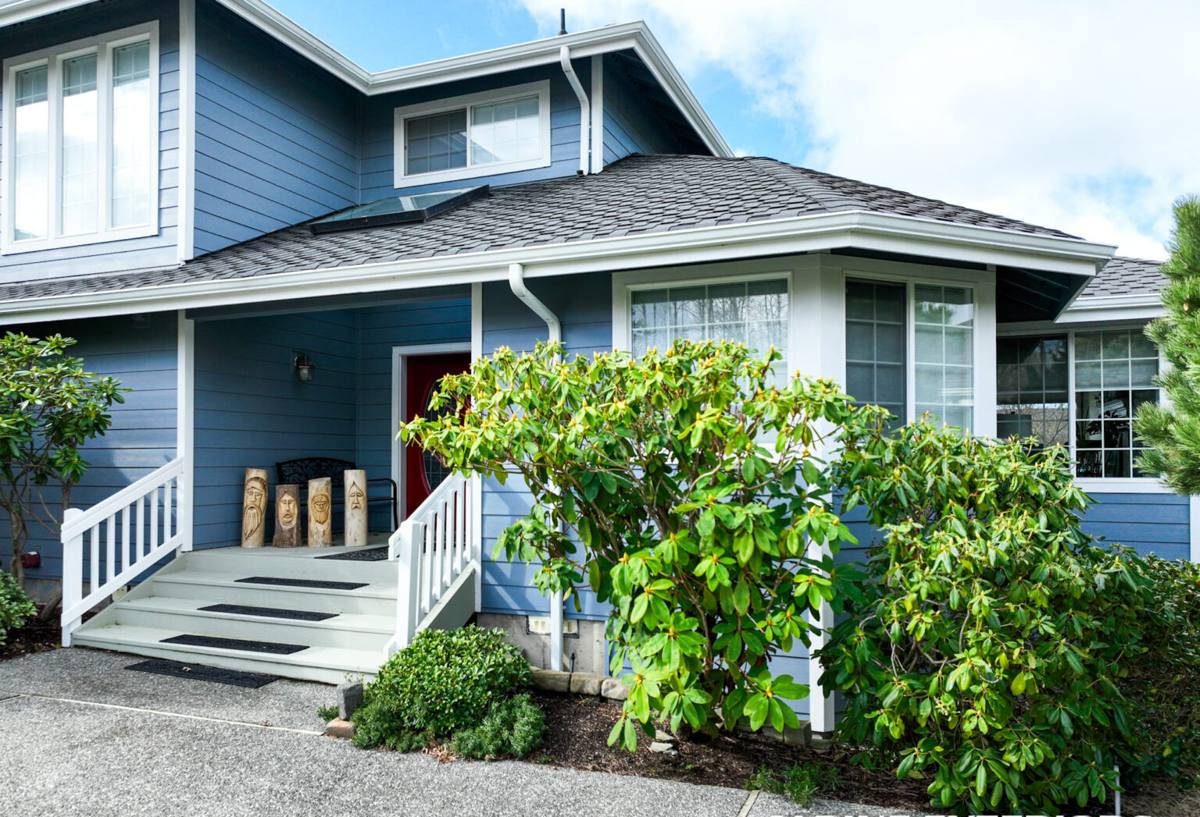
Signs Your Siding Needs Repair, Not Just a Repaint
A lot of siding damage gets misread as a cosmetic problem when it's actually a moisture problem waiting to get worse. Some of the signals worth taking seriously:
- Soft or spongy spots when you press on the siding, especially near the bottom courses or around window and door trim
- Streaking, dark staining, or a persistent green or black tint that comes back within weeks of cleaning
- Visible gaps at seams, corners, or trim joints where caulking has shrunk, cracked, or pulled away
- Bubbling, peeling, or bulging paint or finish, which usually means moisture is trying to get out from underneath
- Rust streaks below fasteners or trim fasteners that have started to back out
- Warping or visible separation between siding boards, particularly on the north and west-facing walls that catch the worst of the weather
Any one of these on its own might be minor. Several showing up together, or showing up on the same wall repeatedly, usually means water has been getting behind the siding for a while and the surface damage is just the part you can see.
What Correct Siding Repair Actually Involves
It Starts Behind the Siding, Not At It
The most common mistake in siding repair isn't a bad patch — it's a patch that never looks past the visible damage. If a section of siding failed because water got behind it, replacing that section without checking the water-resistive barrier, flashing, and sheathing underneath just resets the clock on the same failure. A proper repair means pulling back enough of the surrounding material to actually see what caused the damage, not just what shows it.
Matching Matters More Than People Expect
Fiber cement siding is factory-finished, which means color, texture, and reveal have to match closely enough that a repair doesn't read as a patch from the street. That gets harder the longer siding has been on a house and the more it's weathered, which is one reason we keep a record of what was installed on a home so a repair years later can be matched properly instead of guessed at.
Fastening and Flashing Get Redone, Not Reused
In a salt-air environment, corroded fasteners are often part of why a section failed in the first place. A correct repair replaces fasteners with the right corrosion-resistant hardware, re-establishes proper flashing at any disturbed seams or trim, and reseals with a sealant rated for the exposure — not whatever caulk was closest at hand.
Repair or Replace: What We Actually Look At
Not every damaged section needs a full residing job, and not every homeowner needs to be sold one. The honest answer usually comes down to how contained the damage is and what caused it.
| Factor | Points Toward Repair | Points Toward Replacement |
|---|---|---|
| Extent of damage | Isolated to one or two sections or a single wall | Present across multiple elevations |
| Cause | A one-time event (impact, a failed flashing detail, a bad caulk joint) | Systemic moisture intrusion or widespread material failure |
| Age of existing siding | Relatively young, still well within its expected service life | Near or past the point where matching new material to old is impractical |
| Underlying structure | Sheathing and framing are sound once opened up | Rot or sustained water damage found behind the siding |
| Original material | James Hardie fiber cement in serviceable condition | Vinyl, wood, or LP-type products showing broader wear that repair won't meaningfully fix |
A single damaged section is typically a straightforward, contained repair. A wall where the same problems keep resurfacing is usually a sign that residing that elevation — or the whole home — will save money over time compared to repeated patch work.
Why We Repair (and Install) Only James Hardie Siding
We don't work with vinyl, LP SmartSide, primed wood, or other fiber cement brands, and that's a deliberate call, not a limitation we're apologizing for. In a place like Peace Arch, where salt air and sustained moisture are the norm rather than the exception, the material behind the wall matters as much as the workmanship.
James Hardie's fiber cement is engineered to resist moisture absorption and doesn't feed the kind of organic growth that thrives in this climate the way wood-based products can. It's non-combustible, holds its factory ColorPlus finish far longer than field-applied paint, and Hardie builds specific product lines (their HZ5 line, for example) engineered for the freeze-thaw and moisture conditions of the Pacific Northwest. That climate-specific engineering is a real advantage for a house sitting this close to the water.
Because we only work in one material system, our repair crews know its behavior in detail — how it takes on and sheds moisture, how it should be fastened and flashed, how factory finishes age and how to match them. That focus is exactly what makes a repair blend in and hold up, rather than becoming the next spot that fails.
Our Siding Repair Process in Peace Arch
We keep the process straightforward because homeowners deserve to know what's actually happening to their house, not a sales pitch dressed up as a process.
- On-site inspection. We look at the damaged area and the surrounding siding, and we check for signs the problem extends further than what's visible from the ground.
- Open it up. Where damage suggests moisture has gotten behind the siding, we remove enough material to inspect the water-resistive barrier, flashing, and sheathing underneath.
- Address the cause, not just the symptom. Failed flashing gets replaced, gaps in the barrier get corrected, and any soft or damaged sheathing gets addressed before new siding goes back on.
- Match and install. We match the existing Hardie profile, reveal, and finish as closely as possible and install with corrosion-resistant fasteners appropriate to a coastal-influenced climate.
- Seal and finish. Joints and trim get sealed with a sealant rated for sustained wet exposure, not a generic caulk that will shrink and crack within a season or two.
- Walkthrough. We show you what we found, what we did, and what to watch for going forward.
Keeping Repaired Siding Ahead of the Moss and Salt
A correct repair buys you a lot, but the climate here doesn't take a break, and a little upkeep goes a long way toward making a repair last as long as it should.
- Rinse siding periodically, especially north and west-facing walls, to keep salt residue and organic buildup from accumulating
- Keep gutters and downspouts clear so runoff isn't sheeting down the wall during heavy rain
- Trim back vegetation and tree cover that keeps siding shaded and damp longer than it needs to be
- Have caulking and trim joints checked every couple of years, since sealant is usually the first thing to give out in this climate
- Address any new soft spots, staining, or gaps early — the smaller the problem when it's caught, the smaller and cheaper the repair
Why Local Experience in This Corner of Whatcom County Matters
Peace Arch and the surrounding Semiahmoo area aren't generic Pacific Northwest exposure — they're a specific combination of coastal salt air, high annual rainfall, and a moss season long enough to shape how siding should be detailed and maintained. A crew that repairs siding across a wide range of inland climates will get the fiber cement part right, but the flashing details, fastener choices, and sealant products that actually hold up a few hundred feet from Semiahmoo Bay are things you learn from working this specific stretch of coastline, not from a general contracting background.
We work in this area regularly, which means we're not guessing at how a repair here will perform in year three or year five — we're basing it on what we've already seen hold up, and what hasn't, on homes with the same exposure as yours.
If you've got a section of siding that's showing damage, staining that won't clean off, or a repair that was done before and didn't hold, we're glad to take a look. Reach out for a free, no-pressure estimate using the form below, and we'll give you a straight answer on what your siding actually needs.