 Semiahmoo Exterior
 Asphalt Shingle Roofing for the Peace Arch Area
Homes around Peace Arch sit close enough to the water that the weather does something different to a roof than it does ten or fifteen miles inland. Salt-laden air off the Semiahmoo waterfront and the Strait works on metal fasteners and flashing year-round. Driving rain off Georgia Strait storms pushes water sideways under shingle tabs that aren't sealed right. And the long, wet Whatcom County shoulder seasons give moss and algae months to get established on any roof that doesn't shed water and dry out quickly. An asphalt shingle roof installed for this exposure needs to be built differently than a roof going up in a dry inland subdivision, even if the shingle bundle on the truck looks identical.
This page is about that one job — asphalt shingle roofing, done right, for houses in the Peace Arch area. Not a general overview of roofing, and not a sales pitch for a specific manufacturer. Just what actually matters here, what a correct installation looks like, and how we approach it.
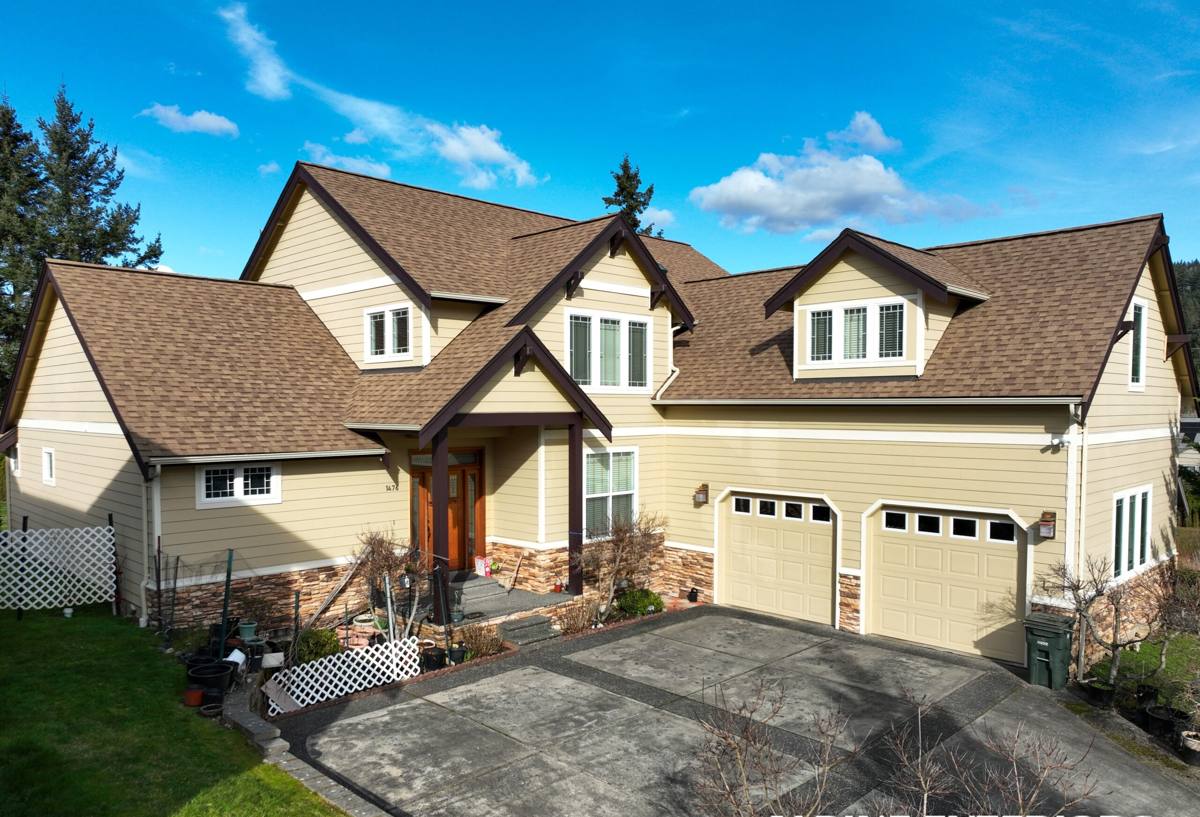
What This Climate Actually Does to a Shingle Roof
It helps to be specific about the mechanisms, because they change what you should ask a contractor to do differently.
Salt Air and Corrosion
Salt spray carried inland from the water accelerates corrosion on exposed metal — nail heads, flashing seams, vent housings, gutter hardware. A roof that would hold up for decades on plain galvanized fasteners further inland can show rust streaking and fastener failure years earlier this close to the shoreline. That's why fastener and flashing metal choice matters more here than the shingle brand does.
Driving, Wind-Driven Rain
Rain that comes in sideways during a winter blow doesn't behave like rain falling straight down. It can work its way under shingle tabs, around poorly lapped underlayment, and through any flashing detail that was cut short. Roofs in this area need every transition — valleys, chimneys, wall step-flashing, skylights — sealed and lapped as if the wind will eventually push water uphill through it, because eventually it will.
A Long, Wet Moss Season
Whatcom County's shaded, moisture-heavy fall through spring stretch gives moss spores plenty of time to take hold, especially on north-facing slopes and anywhere a roof stays damp longer than it should — under overhanging trees, in valleys, behind chimneys. Moss isn't just cosmetic. It lifts shingle edges, holds water against the mat, and shortens the life of the roof underneath it.
What a Correct Installation Involves Here
A shingle roof is a system, not just a layer of shingles nailed to plywood. For this exposure, every layer of that system earns its keep:
- Deck inspection and repair — soft, delaminated, or water-stained sheathing gets replaced before anything else goes down. Shingles nailed over a bad deck fail early no matter how good the shingle is.
- Ice-and-water shield at vulnerable zones — eaves, valleys, and roof penetrations get a self-adhering waterproof membrane, not just felt, because these are exactly the spots wind-driven rain and moss exploit.
- Synthetic underlayment across the field — more tear-resistant and consistent than old-style felt, and it holds up better through a longer install window in wet weather.
- Corrosion-resistant fasteners and flashing — stainless or hot-dip galvanized fasteners and properly formed step, valley, and counter-flashing suited to salt exposure, not the cheapest metal that happened to be in stock.
- Balanced attic ventilation — intake at the eaves, exhaust at the ridge, sized to the attic. Poor ventilation traps moisture under the deck, which shortens shingle life from underneath — a problem that's easy to miss because it doesn't show on the surface right away.
- Correct nailing pattern and exposure — nailed per the manufacturer's high-wind pattern where the site calls for it, not the minimum pattern that only holds up in calm weather.
Dealing with Moss Before It Becomes a Problem
You can't eliminate moss risk on a shaded, coastal roof, but a correct install reduces it significantly and makes ongoing control realistic:
- Zinc or copper control strips near the ridge, which release trace metal ions with every rain and inhibit moss and algae growth on the slopes below.
- Algae-resistant (AR) shingle granules, which resist the blue-green algae staining common on Pacific Northwest roofs — a cosmetic issue, but one that also signals a roof staying damp longer than it should.
- Keeping valleys and low-slope transitions clear of debris that traps moisture, since those are the areas moss colonizes first.
- Trimming back overhanging branches where practical, since shade and leaf litter are the two biggest drivers of moss establishment.
None of this makes a roof moss-proof. It buys years before moss becomes a maintenance issue instead of an installation defect.
Choosing the Right Shingle for This Exposure
Not every shingle product is worth the premium in every situation, and we'll tell you honestly where the extra cost does and doesn't pay off for a Peace Arch-area home.
| Shingle Type | Wind Rating (typical) | Best Fit Here | Trade-Offs |
|---|---|---|---|
| 3-Tab Standard | 60–70 mph | Budget re-roofs, secondary structures | Shortest lifespan in salt air and wind exposure; least forgiving of installation shortcuts |
| Architectural / Laminate | 110–130 mph | Most homes in this area | Best balance of cost, wind performance, and moss/algae resistance options |
| Premium Impact-Resistant | 130+ mph | Exposed sites, waterfront-facing slopes | Higher upfront cost; longest service life against wind-driven rain and debris |
For most Peace Arch homes, a mid-to-upper architectural shingle with algae-resistant granules and a manufacturer-rated high-wind nailing pattern is the sweet spot — enough performance for the exposure without paying for wind ratings a sheltered lot doesn't need.
Our Process, Start to Finish
- On-site inspection — we walk the roof (or use a lift/camera where the pitch or condition calls for it), check the deck, flashing, ventilation, and any moss or moisture issues, and photograph anything you can't easily see from the ground.
- Honest scope and written estimate — what needs replacing, what can be reused, and why, with the shingle and underlayment options that fit your slope, exposure, and budget.
- Tear-off and deck assessment — full removal down to the sheathing, with any soft or damaged decking replaced and documented before we cover it up.
- Underlayment, flashing, and ventilation install — the system layers described above, built for this coastline's weather rather than a generic spec.
- Shingle installation — laid and nailed to manufacturer spec for the wind exposure of your specific site.
- Cleanup and magnetic sweep — job site and yard cleared of debris and stray fasteners.
- Final walkthrough — we go over the finished roof with you before we consider the job done.
Repair or Full Re-Roof? A Practical Checklist
Not every roof issue in this area means a full replacement. Use this as a rough guide before deciding:
- Isolated missing or lifted shingles after a windstorm, roof otherwise sound → usually a repair.
- Moss buildup with granule loss underneath, but deck and underlayment still solid → cleaning, treatment, and targeted shingle replacement may be enough.
- Widespread granule loss, curling, or brittle shingles across most of the roof → replacement is usually more cost-effective than chasing repairs.
- Visible sagging, soft decking, or interior water stains that track back to the roof → replacement, and the deck needs a close look before anything goes back on.
- Roof nearing or past the manufacturer's rated lifespan for this climate → worth a full inspection even if it looks fine from the ground.
Why a Crew That Already Works Peace Arch Matters
Roofing crews that mostly work drier, inland jobs sometimes underbuild for this stretch of coastline — standard fastener packages, minimum nailing patterns, felt instead of synthetic underlayment, no thought given to moss control. It's not that the work is dishonest; it's that the job doesn't look any different on paper until the salt air and the wet season start working on it.
Working this area regularly means knowing which slopes hold moss longest, which exposures take the worst of the wind off the water, and which flashing details fail first when they're cut short. It also means being realistic about scheduling — this region's wet stretches narrow the windows for a clean, dry install, and a crew that works here knows how to plan around that instead of rushing a roof on in bad conditions.
What to Expect After Installation
A correctly installed shingle roof in this climate still needs occasional attention — it's not a maintenance-free product anywhere on this coastline. Expect to have gutters cleared before the wet season, an occasional look for early moss growth on shaded slopes, and a visual check after any major windstorm. None of that is heavy maintenance; it's the kind of upkeep that keeps a well-built roof performing for its full service life instead of losing years to problems that get caught too late.
If you're weighing a repair, a full re-roof, or just want an honest read on where your roof stands, we're happy to take a look and walk you through what we find. There's a free, no-pressure estimate form below — no obligation, just a straight answer.