 Semiahmoo Exterior
 Peace Arch sits close enough to the water that homeowners feel it in their decks before almost anywhere else on the property. Salt-laden air off the Strait, driving winter rain, and a moss season that seems to start earlier every year all work on a deck surface at once. Composite decking was built to handle exactly that combination, but only when it's specified and installed correctly for this specific location. This page covers what a composite deck needs to hold up in Peace Arch, what a correct installation actually involves, and how we approach the work when we're on your property.
Why Peace Arch's Climate Is Hard on Decks
Whatcom County's marine climate is mild compared to inland Washington, but "mild" doesn't mean easy on building materials. Peace Arch's proximity to Semiahmoo Bay means airborne salt settles on every exterior surface, including deck boards, fasteners, and railing hardware. Add in a rainy season that can run wet for months at a stretch, and you get conditions that punish anything with a weak moisture defense.
The Three Local Stressors
- Salt air corrosion — accelerates rust on fasteners, brackets, and any exposed metal hardware, and can dull or streak lower-grade composite surfaces over time.
- Sustained rain exposure — keeps boards and substructure wet for days at a time, which matters far more for how a deck is built underneath than for the boards on top.
- Moss and algae growth — shaded, damp decks in this area can develop moss within a single season if drainage and airflow aren't addressed at installation.
None of these are exotic problems — they're the normal cost of living near the water in Whatcom County. But they mean a deck installed without local conditions in mind will show wear years before it should.
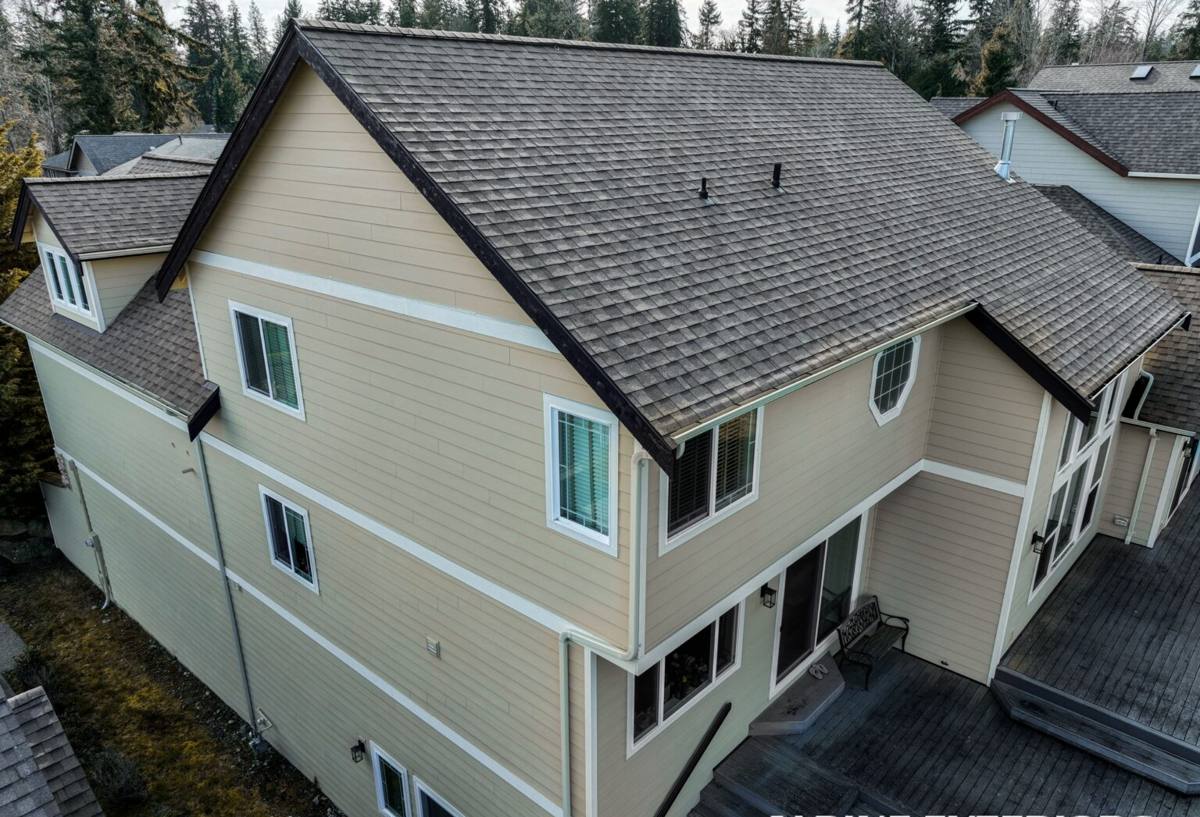
Why Composite Makes Sense Here
Composite decking exists to solve a specific problem: wood decks in wet coastal climates need constant upkeep — sanding, staining, sealing — just to keep moisture out of the boards. Composite boards are engineered from wood fiber and recycled plastic, which means they don't absorb water the way solid wood does and don't need refinishing on a yearly cycle.
That doesn't make composite maintenance-free, and we won't tell you it is. What it does is shift the maintenance burden from "recurring refinishing" to "periodic cleaning," which is a much easier standard to keep up with in a climate that gives you a short dry season to work in.
Where Composite Still Needs Attention
- Surface film from salt spray and pollen needs periodic washing, especially on decks facing open water or wind.
- Moss and algae will still grow on composite in shaded, poorly drained areas — the board doesn't grow it, standing moisture and organic debris do.
- Fastener and hardware corrosion happens independent of the decking material, so hardware grade matters as much as board selection.
What a Correct Installation Involves
The board is only part of the deck. In a climate like Peace Arch's, the parts you don't see — framing, fasteners, and drainage — determine how the deck ages more than the composite surface does.
Substructure and Framing
We build to proper joist spacing for the composite product being installed — composite boards often require tighter joist spacing than solid wood to prevent long-term sagging, especially on boards that will see consistent moisture. Framing lumber gets appropriate ground clearance and, where the site allows it, airflow underneath to keep humidity from pooling against the substructure.
Fasteners and Hardware
Given the salt exposure common in Peace Arch, we use stainless steel or coated fasteners rated for coastal exposure rather than standard galvanized hardware, which corrodes faster near saltwater. This is a small cost difference at install time and a large difference in how the deck looks and performs five years out.
Drainage and Grading
Water needs somewhere to go. We grade the substructure and any ledger connections so rain sheds away from the house rather than pooling against the band board — a detail that matters more here than in drier parts of the state, simply because of how many wet days the deck has to shed water on.
Board Spacing and Airflow
Proper gapping between boards allows drainage and airflow that reduces moss colonization, especially on shaded sections of the deck. Tight, uneven gapping traps moisture and organic debris — the exact combination that grows moss fastest.
Choosing the Right Composite Product
Not all composite decking performs the same way in a wet, salty coastal climate. We evaluate products on how they handle moisture at the board level, not just on appearance or price point.
| Factor | What to Look For | Why It Matters in Peace Arch |
|---|---|---|
| Capping | Fully capped (encapsulated) boards vs. uncapped composite | A full cap resists moisture intrusion and staining better in sustained wet conditions |
| Core material | Moisture-resistant core formulation | Reduces swelling and warping risk with long wet seasons |
| Surface texture | Textured or grooved finish | Improves footing when boards stay damp for extended periods |
| Color | Mid-tone vs. very dark colors | Very dark boards run hotter in sun and can show salt film more visibly |
| Warranty structure | Manufacturer warranty terms and what voids them | Improper installation is the most common warranty voider — correct install protects your coverage |
We won't push a specific brand as "the only option" — several manufacturers make composite products that hold up well on the coast. Our standard is that whatever product we install has to be fully capped and rated for the moisture exposure this site sees. That's a professional standard, not a brand endorsement, and it's the same standard whether the deck faces the water or sits back from it.
Our Process on a Peace Arch Composite Deck
- Site assessment — we look at sun exposure, drainage patterns, proximity to the water, and existing structure condition before recommending anything.
- Framing evaluation or rebuild — if the existing substructure isn't sound or isn't spaced correctly for composite, we address that before boards go down, not after.
- Material selection — we walk through capped composite options suited to the site's specific moisture and sun exposure.
- Installation — correct fastener selection, board spacing, and ledger flashing where the deck attaches to the house.
- Final walkthrough — we go over basic care so the deck starts its life clean and properly maintained from day one.
Repairs, Replacements, and Aging Decks
A lot of our composite deck calls in this area aren't new builds — they're repairs or partial replacements on decks that were installed without the coastal exposure in mind. The most common issues we see:
- Corroded fasteners causing loose boards or railing, even when the boards themselves are still sound
- Moss buildup on shaded, poorly drained sections that were never gapped or graded correctly
- Substructure rot beneath composite boards where the framing underneath wasn't rated or protected for sustained moisture
- Warranty claims complicated by prior installation errors that weren't the homeowner's fault
If your deck is showing any of these signs, it's usually cheaper to address the root cause — framing, hardware, drainage — than to keep replacing surface boards on a substructure that's fighting the climate.
Maintaining a Composite Deck in This Climate
Composite cuts down on maintenance, but a Peace Arch deck still needs a basic seasonal routine to stay ahead of salt, rain, and moss.
- Rinse or wash the surface periodically to clear salt film, pollen, and debris before it builds up
- Sweep leaves and organic debris off the deck promptly, especially in shaded corners where moss takes hold fastest
- Check fastener and hardware condition once a year, particularly on railings and stair connections
- Keep gutters and downspouts near the deck clear so runoff isn't draining directly onto boards
- Address any standing water or drainage issues early — it's far easier to fix than moss or substructure damage later
Why Local Experience Matters for This Job
A composite deck installed to a generic spec sheet will function fine in a dry inland climate and still underperform in Peace Arch. Fastener grade, joist spacing, drainage detailing, and board selection all need to account for salt air and a long wet season — decisions that come from having actually built and repaired decks in this specific part of Whatcom County, not from following a manufacturer's minimum installation guide. That's the difference between a deck that needs attention in three years and one that holds up for the long haul.
If you're planning a new composite deck or dealing with an aging one in Peace Arch, we're happy to take a look and give you an honest read on what it needs. Request a free, no-pressure estimate using the form below.