 Semiahmoo Exterior
 Building New in Peace Arch Means Building for the Weather You Already Know
If you're framing a new home near Semiahmoo or in the Peace Arch area, you already know what Whatcom County weather does to a house over time. Salt-laden air off the water, long stretches of driving rain, and a moss season that seems to start earlier every year all put steady pressure on the building envelope. Windows are one of the biggest openings in that envelope, and new construction is the one time you get to install them correctly from the very first flash tape, before siding, trim, and interior finishes make corrections expensive or impossible.
This page is specifically about new-construction window installation for homes going up in the Peace Arch area — not a retrofit or replacement job. The distinction matters more than most homeowners realize, and getting it right at the framing stage is what separates a window system that performs for decades from one that starts showing problems in five or six years.
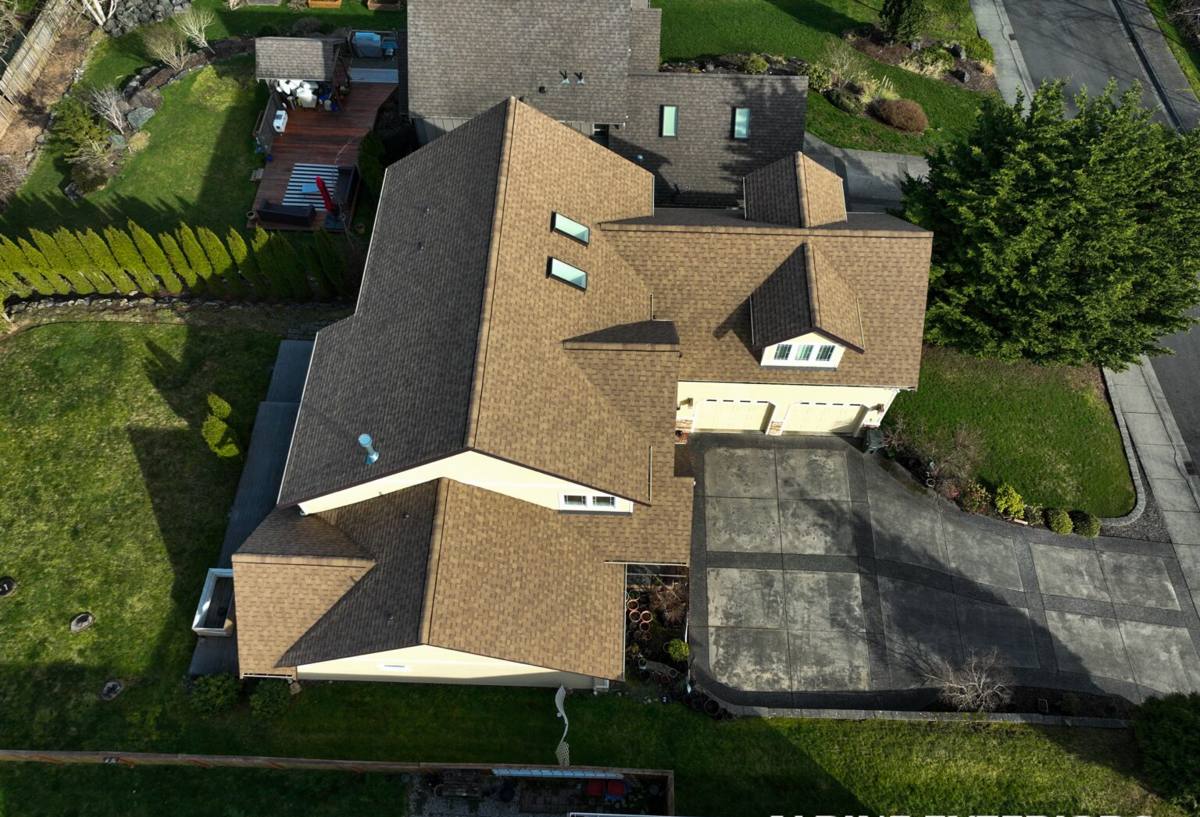
New-Construction Windows vs. Replacement: Why the Difference Matters Here
A new-construction window has a nailing fin (sometimes called a nail flange) built into the frame. That fin gets integrated directly into the wall's weather-resistive barrier and flashing system during framing, before siding goes on. A replacement window, by contrast, is built to fit into an existing opening without disturbing the exterior cladding — it's a different product for a different situation, with different water-management logic.
Because you're building new, you have the option to do this properly: correct flashing sequence, proper integration with the housewrap or building paper, and a window chosen for the specific exposure of your lot rather than whatever happened to fit an old opening. That's a real advantage, and it's worth taking seriously rather than treating window selection as an afterthought once the framing crew has already moved on.
Working Around Your Builder's Schedule
On most new builds, windows go in after the framing inspection and roof dry-in, but before siding and exterior trim. That sequencing is non-negotiable if the flashing is going to work the way it's supposed to. We coordinate directly with general contractors and framing crews on new builds in the Peace Arch area so window installation happens at the right moment in the schedule — not squeezed in late because of a delay elsewhere, which is one of the more common ways water problems get built into a new home.
What This Climate Actually Demands From a Window System
Three things define window performance requirements for a new build in this part of Whatcom County, and they don't always get equal attention from crews who aren't used to building this close to the water.
Salt Air and Metal Fatigue
Salt-laden air accelerates corrosion on hardware, fasteners, and certain metal components far faster than it would inland. This affects everything from the screws used to anchor the window to the finish on locks, hinges, and cranks. It's a reason we pay attention to fastener material and hardware finish, not just the frame itself, when specifying windows for homes close to the shoreline.
Driving Rain and Wind-Driven Water
Rain in this area doesn't just fall — it gets pushed sideways against exterior walls during storms coming off the water. A window and flashing assembly that would be adequate in a more sheltered inland location can fail here simply because water is being forced horizontally into gaps that would otherwise stay dry. Sill pan flashing, proper head flashing laps, and correct integration with the water-resistive barrier aren't optional details on an exposed lot — they're the difference between a dry wall cavity and a slow, hidden leak.
Long Moss and Humidity Season
Extended damp periods keep humidity elevated around the exterior envelope for much of the year. Any weak point in flashing or sealant becomes an entry point not just for bulk water but for the sustained moisture that feeds rot and mold inside wall cavities. Because that kind of damage is invisible until it's advanced, the installation details matter more here than in a drier climate where minor mistakes have more time to dry out before they cause harm.
Frame Material: What Actually Holds Up Near the Water
Frame material is one of the first decisions on a new build, and it affects long-term maintenance as much as upfront cost. There's no single right answer for every home, but here's how the common options compare for a coastal Whatcom County build.
| Frame Material | Salt Air / Moisture Performance | Maintenance | Typical Cost Tier |
|---|---|---|---|
| Vinyl | Good — won't corrode or rot, though prolonged UV and salt exposure can affect finish over decades | Low | $ |
| Fiberglass | Excellent — dimensionally stable, resists corrosion and doesn't rot | Low | $$$ |
| Aluminum-clad wood | Good exterior protection, but any breach in the cladding exposes wood to moisture | Moderate | $$$ |
| Bare wood | Requires diligent upkeep in this climate; most exposed to rot and moss growth without maintenance | High | $$ |
For homes in more exposed spots near Semiahmoo, we generally steer clients away from bare wood exteriors unless they're committed to a real maintenance schedule — not because wood is a bad material, but because the upkeep burden in this climate is significant and easy to underestimate during the excitement of a new build. Vinyl and fiberglass both hold up well with far less attention.
Our Installation Process for New Builds in the Peace Arch Area
- Plan review and window scheduling — we review your building plans and elevations to confirm sizes, egress requirements, and orientation-specific exposure before ordering.
- Coordination with your builder — we time the install to land after dry-in and before siding, and confirm the water-resistive barrier is in place and lapped correctly ahead of our arrival.
- Sill pan flashing — every rough opening gets a sloped, sealed sill pan so any water that does get past the window has a way out instead of a place to collect.
- Window set and shim — the unit is set plumb, level, and square, with shimming at load-bearing points per the manufacturer's installation instructions, not just wherever's convenient.
- Flashing integration — jamb and head flashing are integrated with the wall's drainage plane in the correct shingle-lap order so water is always directed outward and down, never trapped behind the siding.
- Sealant and fastening — appropriate exterior sealant is applied at the right points (never a solid bead all the way around, which traps water instead of releasing it), and fasteners are chosen with this climate's corrosion exposure in mind.
- Final inspection — we check operation, weatherstripping seal, and flashing integrity before the crew moves on to siding.
Mistakes We See on New Builds — and Why They Happen
Most window problems on new construction aren't caused by a bad window. They're caused by installation shortcuts that are invisible once siding goes on. A few patterns show up repeatedly on jobs we're brought in to fix or inspect:
- Sealant used as the primary water barrier instead of proper flashing — sealant fails over time; flashing is a permanent mechanical solution.
- Flashing lapped in the wrong order, directing water behind the barrier instead of over it.
- Windows installed before the wall's drainage plane is fully lapped and sealed, leaving gaps that get covered over.
- Hardware or fasteners chosen without accounting for salt-air corrosion, leading to premature failure of locks and operating hardware.
- Rushed installs to meet a siding subcontractor's schedule, skipping sill pan flashing or shimming steps.
None of this reflects poorly on any particular window brand — a correctly installed builder-grade window will outperform a premium window installed carelessly. The installation is where the real risk lives.
A Checklist for Homeowners Overseeing a New Build
You don't need to become a window expert to keep your project on track. These are the questions worth asking your builder or window crew directly:
- Will sill pan flashing be installed at every rough opening, not just the ones facing the weather?
- What weather-resistive barrier is being used, and how will it be lapped with the window flashing?
- Is the installation following the specific window manufacturer's written instructions (this affects your warranty)?
- What fastener and hardware materials are specified, and are they appropriate for a coastal, salt-air environment?
- Who is inspecting the flashing before siding covers it up — and can you get photos before that happens?
Why It Matters That We Already Work in Peace Arch
Building code minimums are a starting point, not a finish line, and they don't fully account for lot-specific exposure — a home facing open water sees a different wind-driven rain load than one tucked behind a rise or tree line a few blocks away. A crew that has already worked new construction in the Peace Arch area has seen how these differences play out on real builds nearby, not just in a manufacturer's spec sheet. That familiarity shows up in small decisions — which elevations get extra attention, how conservative to be with flashing on an exposed gable, which hardware finishes are worth the upgrade — that a crew coming in cold wouldn't necessarily think to make.
It also means fewer surprises for your general contractor. We know how to fit into a framing schedule, what inspectors in this area expect to see, and how to hand off a clean, documented install before siding closes everything up.
Warranty and Long-Term Performance
Window manufacturers warranty the product; installation quality is what determines whether that warranty ever matters. A window with a strong manufacturer warranty installed with poor flashing can still leak — and most manufacturer warranties explicitly exclude damage caused by improper installation. We install according to manufacturer specifications so your product warranty stays valid, and we stand behind our own installation work separately. For a new build, ask your window contractor directly how installation workmanship is covered, not just the glass and hardware.
If you're planning a new build in the Peace Arch area and want windows installed right the first time — with this climate's salt air, rain, and moisture in mind — we're happy to walk your plans with you and provide a free, no-pressure estimate. There's no cost to have the conversation before you're locked into a schedule.