 Semiahmoo Exterior
 Board & Batten Siding on Peace Arch Homes
Peace Arch, tucked in along the border edge of the Semiahmoo area in Whatcom County, has a good number of homes where vertical board and batten siding either already defines the look or would suit the house well — garages, gable ends, single-story ramblers, and newer builds all take to the style naturally. Board and batten reads as clean, vertical lines with a repeating rhythm of wide boards and narrow battens, and it holds up on this stretch of coastline better than most people assume, as long as it's built out of the right material and installed correctly for what the climate actually does here.
We install board and batten siding for Peace Arch homeowners as one specific service, not a side option tacked onto a general siding job. The style has its own installation logic — different fastening pattern, different joint detailing, different failure points — and it deserves its own plan rather than being treated like lap siding turned sideways.
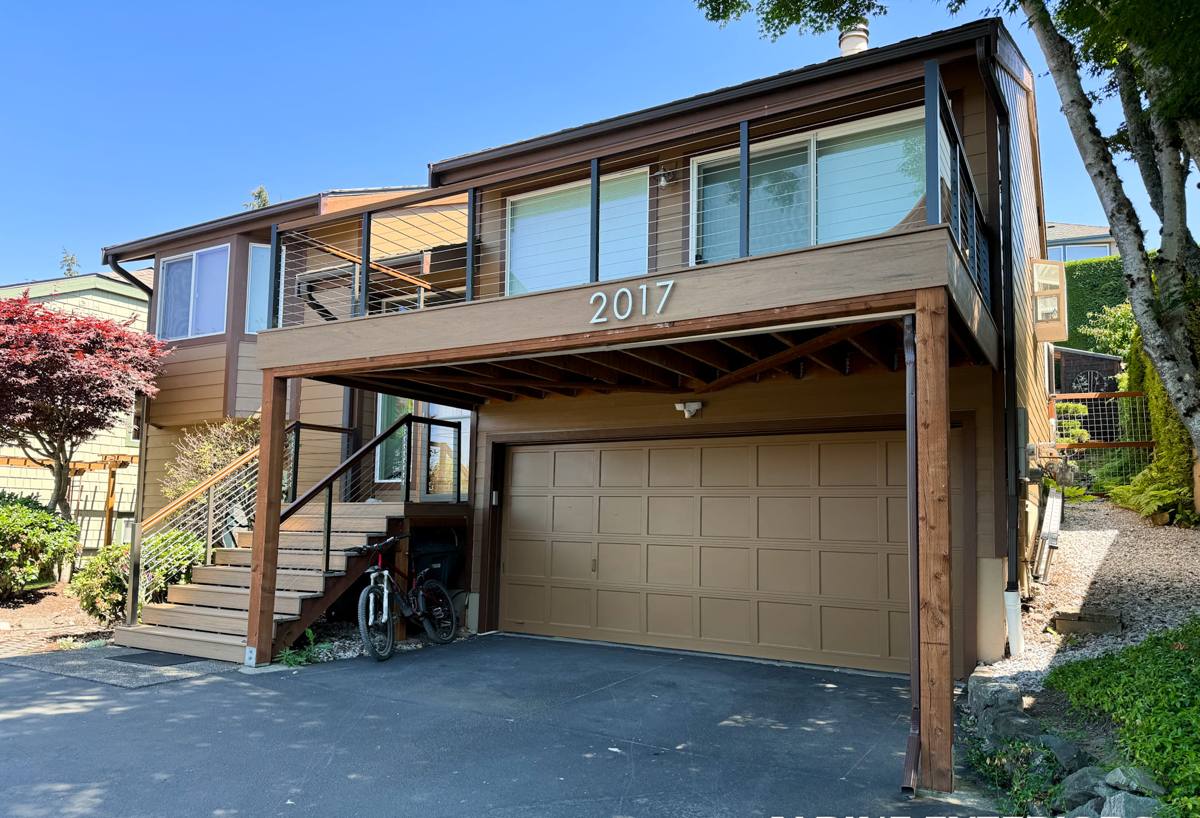
What This Climate Asks of Board & Batten Siding
Peace Arch sits close enough to Semiahmoo Bay and the open water along the border that homes here deal with salt-laden air, driving rain, and a moss season that runs long into the year. Board and batten siding has more vertical seams than horizontal lap siding, and every one of those seams is a place water can either shed cleanly or work its way in, depending on how the job was built.
Salt Air and Fastener Corrosion
Salt in the air speeds up corrosion in fasteners, flashing, and any exposed metal trim faster than it would a few miles further inland. On a board and batten wall, the battens themselves are usually face-nailed or blind-nailed at a tighter interval than a single lap course, which means more fastener penetrations per square foot of wall. If those fasteners aren't corrosion-resistant, the earliest failures on a Peace Arch board and batten job usually show up as rust streaking below batten nails long before the siding material itself is a problem.
Driving Rain and Vertical Joints
Wind off the water doesn't always come straight at a house — it often hits at an angle, which pushes rain sideways into vertical joints the way it wouldn't on a more sheltered inland lot. Board and batten depends on the batten correctly covering the gap between boards with enough overlap and the right clearance behind it for water to drain rather than pool. Get that overlap or the drainage gap wrong and a board and batten wall can trap moisture behind the battens exactly where you can't see it until the sheathing underneath is already compromised.
Moss on Shaded, North-Facing Elevations
Mild temperatures and steady humidity keep moss and mildew active most of the year in this part of Whatcom County, and it tends to concentrate on shaded, north-facing walls with less direct sun and airflow. Vertical board and batten sheds bulk water reasonably well when it's built right, but any siding material that stays damp on a shaded elevation will grow moss eventually — the difference is whether the material itself breaks down under that moisture or just needs the moss rinsed off.
What a Correct Board & Batten Installation Involves
Board and batten looks simple from the street, but the assembly behind it is doing real work. A correct installation on a Peace Arch home includes a drainage plane or rainscreen gap behind the boards, batten spacing and fastening that follows the manufacturer's published pattern, and clearance at the bottom of the wall so the siding isn't sitting in contact with grade, decking, or hardscape where moisture collects.
| Material | Moisture Behavior on Vertical Joints | Maintenance in This Climate | Typical Longevity |
|---|---|---|---|
| James Hardie fiber cement | Dimensionally stable; doesn't swell or cup at battens | Low; factory finish resists moss staining and fading | 30+ years with correct install |
| Vinyl board and batten panels | Battens are often molded-in, limiting true drainage detailing | Low upfront, but seams and fastener points are exposure risks | Variable; shorter in wind-driven rain settings |
| Cedar or primed wood boards | Absorbs moisture at end grain and board edges readily | High; refinishing and edge sealing needed regularly | Shorter without consistent upkeep |
| LP SmartSide / engineered wood | Wood-based core is sensitive at cut edges and batten seams | Moderate; caulk and edge maintenance matter a lot | Depends heavily on installation quality |
We build every Peace Arch board and batten job around the first row of that table. Fiber cement doesn't move dimensionally the way wood-based products do, so the fit between board and batten stays tight over time instead of gapping or cupping and opening a path for water.
What Correct Installation Should Include
- A rainscreen or drainage gap behind the boards, not battens fastened tight against a flat wall wrap
- Corrosion-resistant fasteners at the manufacturer's specified spacing, not a generalized nailing pattern
- Proper clearance between the bottom of the siding and grade, roof lines, decks, or patios
- Flashing integrated correctly at windows, doors, and any roof-to-wall transitions on the elevation
- Board and batten joints detailed to shed water outward rather than relying on caulk as the primary seal
James Hardie's Board & Batten Options
We install James Hardie exclusively, and for vertical board and batten that means one of two approaches: HardiePanel vertical siding with HardieTrim battens run over the panel joints, or individual HardiePlank-style boards installed with battens covering the gaps between them. Both give the same finished look; the choice usually comes down to the home's existing wall condition and the look the homeowner wants for reveal depth and shadow lines.
Either way, the material is Hardie's HZ5 formulation, engineered for regions with sustained moisture exposure and freeze-thaw cycling, which fits this part of Whatcom County. The color comes from Hardie's factory-applied ColorPlus finish rather than field-applied paint, which matters more on board and batten than on most siding styles because vertical grain lines and shadow reveals show fading and chalking unevenly when a site-applied finish starts to break down. A factory finish ages more evenly across the wall.
We don't install vinyl board and batten panels, cedar boards, primed spruce, LP SmartSide, Cemplank, or Allura for this style. That's not a knock on every homeowner who has one of those products on their house — it's a standard we hold because we've seen what salt air and driving rain do to those materials on exposed board and batten walls specifically, where the vertical joint count multiplies the number of places a lesser material can fail.
Our Process for a Peace Arch Board & Batten Job
We start with an on-site look at the wall or walls being sided — checking the existing sheathing and wall condition, noting which elevations take the worst of the wind and rain, and confirming there's nothing already compromised underneath that needs to be addressed before new siding goes up. From there we put together a written scope covering the drainage detailing, fastener spec, batten layout, and color before any work begins.
Installation follows in sequence: removing the old siding down to sheathing, repairing or replacing any damaged sheathing, installing the water-resistive barrier and rainscreen gap, hanging the Hardie boards or panels, then running battens over the joints at the correct spacing and fastening pattern. Trim, flashing, and caulking at transitions get done last, and we walk the finished job with the homeowner before calling it complete.
Why a Crew That Already Works Peace Arch Matters
A contractor who regularly works this stretch near Semiahmoo already has a feel for which elevations on a given lot take the worst wind-driven rain, how fast moss comes back on shaded walls in this specific microclimate, and what fastener and flashing details actually hold up here rather than in a drier or more sheltered part of Whatcom County. That familiarity shows up in small decisions — how tight the rainscreen gap gets built, where extra flashing goes at a transition — and those decisions are what separate a board and batten job that lasts decades from one that needs attention again in a few wet seasons.
It also means faster turnaround if something needs a look after installation. A crew that's already in the area for other Peace Arch and Semiahmoo jobs can get back out to check a detail without the delay of scheduling a special trip from further away.
Keeping Board & Batten Siding Performing After Installation
- Rinse moss and mildew off shaded, north-facing walls before it builds up into a persistent stain
- Check caulking at trim, window, and door transitions annually, since caulk wears faster than the siding itself
- Keep gutters and downspouts clear so runoff isn't sheeting down the wall face during heavy rain
- Maintain clearance between the bottom of the siding and any landscaping, mulch beds, or hardscape that's crept up over time
- Have any fastener rust streaking or lifted batten checked promptly rather than waiting for it to spread
Correctly installed Hardie board and batten needs very little of this compared to wood or engineered wood options, but no siding material in a climate like this is entirely maintenance-free.
If you're considering board and batten siding for a home in Peace Arch or elsewhere around Semiahmoo, we're glad to come take a look and give you a straight read on what your walls actually need. Reach out below for a free, no-pressure estimate.