 Semiahmoo Exterior
 Storm Damage Roof Repair for Peace Arch Homes
Homes near Peace Arch sit close enough to the water that every roofing decision has to account for salt air, wind-driven rain, and the long, wet moss season that Whatcom County is known for. When a windstorm rolls through or a heavy winter system parks itself over the coast for a few days, roofs in this area don't just get wet — they get tested. Loose flashing, marginal shingle seals, and moss-choked valleys all reveal themselves fast. This page covers what storm damage roof repair actually looks like for homes in and around Peace Arch, what a correct repair involves, and why local experience matters more here than it does in drier, inland parts of the county.
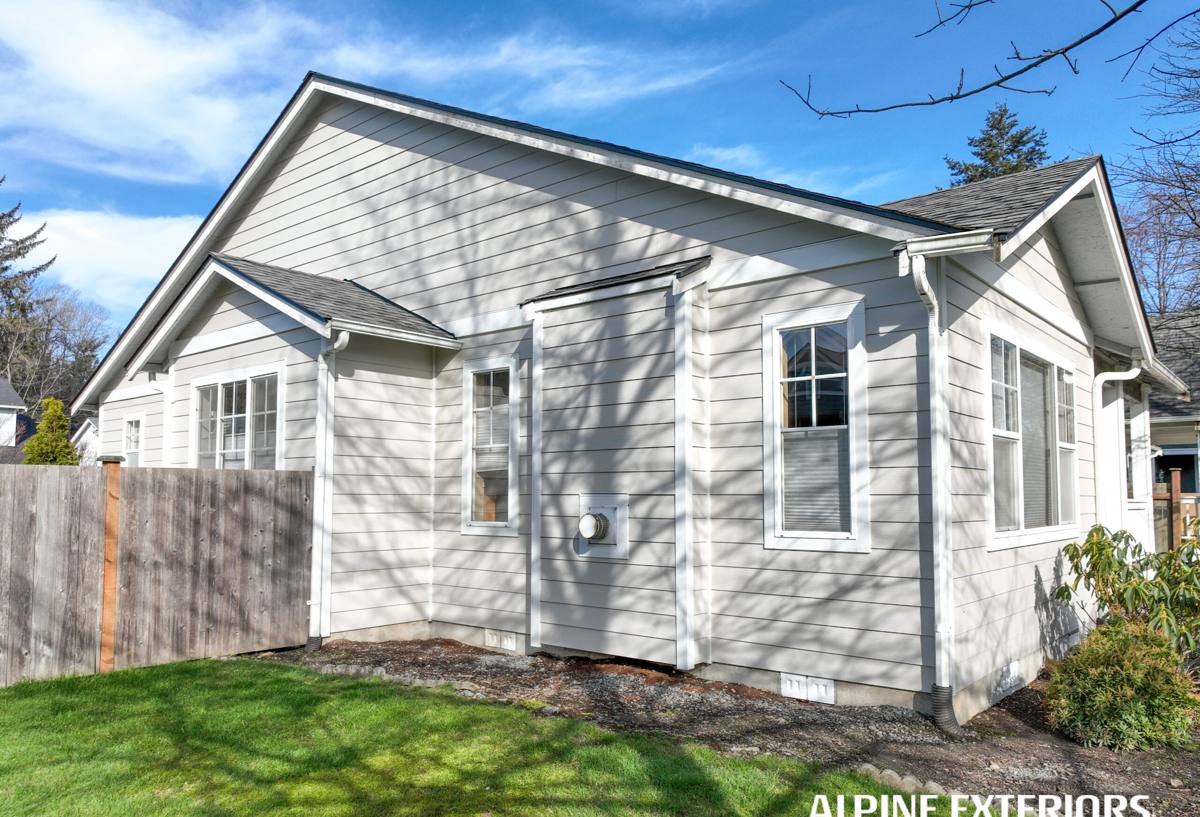
Why Peace Arch Roofs Take a Different Kind of Beating
Semiahmoo and the surrounding Peace Arch area sit in a corridor where marine weather off the Salish Sea meets driving winter rain and wind. Three factors combine to age roofs faster here than they would a few miles inland:
- Salt air: corrodes exposed fasteners, flashing, and metal roof edges faster than standard inland exposure, especially on the sides of a roof facing open water.
- Driving rain: wind-driven storms push water sideways and uphill under shingle laps, which exposes weak flashing and underlayment gaps that would never leak in calm rain.
- Long moss season: Whatcom County's wet, mild winters give moss and algae months to establish on north-facing slopes and shaded valleys, holding moisture against the roof deck year-round.
None of these factors cause damage on their own overnight. The problem is that they compound — a roof with aging fasteners, a little moss buildup, and one hard windstorm is far more likely to fail than a roof dealing with just one of those issues.
What Actually Counts as Storm Damage
Not every roof problem after a storm is obvious. Homeowners often assume "storm damage" means missing shingles, but in this climate it's usually more subtle:
Wind-related damage
Lifted or creased shingle tabs, shingles blown off entirely, and fasteners backed out just enough to break the seal — all common after a windstorm off the water. A roof can look intact from the ground and still have several compromised tabs.
Water intrusion damage
Driving rain finds the weakest point in flashing around chimneys, skylights, and roof-wall intersections. Once water gets behind flashing, it can travel along the underlayment and show up as a stain on an interior ceiling well away from where the leak started.
Moss and debris damage
A storm can knock branches and debris into valleys already clogged with moss, damming water that then backs up under the shingle courses above it. This is one of the most common causes of "mystery leaks" we're called out for in this area.
What a Correct Repair Actually Involves
A storm repair that only replaces the shingles you can see from the ground is a short-term fix. A correct repair addresses the whole system:
Full inspection before any repair
We check the deck for soft spots, the underlayment condition around the damaged area, flashing at every penetration nearby, and the gutters and valleys feeding that section of roof. Storm damage rarely stays contained to the spot that's visibly missing shingles.
Matched materials
Shingle color and profile drift over just a few years of sun and salt exposure. We source the closest available match and set expectations honestly — a patch repair on an older roof will rarely be invisible, and we'd rather tell you that upfront than have it surprise you later.
Flashing and underlayment, not just shingles
If flashing has corroded from salt exposure or underlayment has been compromised by trapped moisture, replacing shingles over it just delays the next leak. We replace flashing and underlayment as part of the repair scope whenever the inspection shows it's compromised, not as an upsell.
Moss and debris clearing
Any repair in this area includes clearing moss and debris from the surrounding valleys and gutters. Leaving moss in place next to a fresh repair just sets up the same failure again next season.
Our Repair Process
Storm repair calls tend to be urgent, so we keep the process straightforward:
- Same-window assessment. We look at the damage, check the attic or ceiling below if there's any sign of water intrusion, and document everything with photos — useful for you and for any insurance claim.
- Temporary protection if needed. If the roof is actively exposed to weather, we can tarp or dry-in the area to stop further water intrusion while repair materials are sourced.
- Scoped repair, explained plainly. Before work starts, we walk through exactly what's being repaired and why — no vague line items.
- Repair execution. Shingles, flashing, underlayment, and moss clearing as needed, done to match the surrounding roof as closely as possible.
- Final walkthrough. We show you the completed repair and flag anything else on the roof worth keeping an eye on, even if it's not part of this repair.
Repair Scope Comparison
| Repair Type | What's Included | Best For |
|---|---|---|
| Spot shingle repair | Replace missing/damaged shingles in the affected area only | Isolated wind damage on a roof in otherwise good condition |
| Repair + flashing replacement | Shingles plus flashing at nearby penetrations or roof-wall joints | Storm damage near a chimney, skylight, or wall intersection |
| Repair + underlayment section | Shingles, flashing, and a section of underlayment replaced down to the deck | Any case where water has clearly gotten past the shingle layer |
| Repair + moss/valley clearing | Standard repair plus clearing and treatment of moss-affected valleys | North-facing slopes or shaded roofs with visible moss buildup |
Cost Factors Worth Knowing
Storm repair costs vary a lot based on what the inspection actually finds, not just what's visible from the driveway. The honest cost drivers we see most often in this area:
| Factor | Why It Matters |
|---|---|
| Extent of deck damage | Soft or rotted decking under the damaged shingles adds material and labor beyond a simple shingle swap |
| Roof pitch and access | Steeper roofs and limited access add time and safety equipment to any repair |
| Shingle age and match availability | Older or discontinued shingle lines may require a broader replacement area to blend properly |
| Flashing condition | Salt-corroded flashing found during inspection often needs replacing even if it wasn't the original complaint |
| Moss and debris extent | Heavier moss buildup on shaded roof sections takes more time to clear and treat safely |
We'd rather give you a number after we've actually looked at the roof than a broad estimate that has to change once we're up there. That's why every visit starts with an inspection, not a guess.
Insurance Claims and Storm Repair
Many storm repairs in this area are covered in whole or part by homeowners insurance, but coverage depends heavily on your policy and the cause of damage. We document damage thoroughly with photos and a written scope so you have what you need if you choose to file a claim, and we're happy to walk an adjuster through the roof if that's useful. We don't handle the claim itself or promise a specific outcome — that's between you and your insurer — but we make sure the documentation on our end is solid.
Signs You Should Get a Storm Damage Inspection
After any significant windstorm or heavy rain event, it's worth checking for these signs before small problems become bigger ones:
- Shingle granules collecting in gutters or at downspout outlets
- Visible gaps, lifted tabs, or missing shingles from the ground
- New water stains on ceilings, especially near chimneys or skylights
- Moss buildup that's noticeably thicker after a wet stretch
- Debris sitting in roof valleys instead of washing through
- Gutters overflowing during rain instead of draining cleanly
- Any soft spot felt when walking near a roof-accessible attic space
Catching any of these early usually means a straightforward repair instead of a deck replacement down the line.
Why Hire a Crew That Already Works in Peace Arch
Storm damage repair isn't a one-size-fits-all trade. A crew that mostly works drier, inland roofs may not think to check for salt-corroded flashing or know how aggressively moss needs to be cleared before it's safe to walk a north-facing slope in this area. Working roofs around Semiahmoo and Peace Arch regularly means we already know which materials hold up against the salt air here, how local moss growth patterns affect valley design, and what a genuine wind-driven rain leak looks like versus a slow moss-related one. That local pattern recognition is what keeps a repair from becoming a repeat call next storm season.
If you've had storm damage or just want a roof checked after a rough stretch of weather, we're glad to take a look. Use the form below to request a free, no-pressure estimate — we'll tell you honestly what we find, whether it's a quick repair or something bigger.