 Semiahmoo Exterior
 Why Peace Arch Windows Wear Differently Than Windows Inland
Peace Arch sits close enough to Semiahmoo Bay and the international border that homes here take on a different set of weather problems than a house twenty minutes inland in Whatcom County. Salt-laden air off the water works into aluminum hardware, vinyl weatherstripping, and exposed fasteners faster than dry-climate manufacturers ever account for. Add driving rain that comes in sideways off the Strait during winter storms, plus a moss and mildew season that can run eight or nine months out of the year, and you get windows that fail years before their rated lifespan — usually starting with the seals and hardware, not the glass itself.
We install and replace windows in this specific pocket of Whatcom County often enough to know which failure points show up first. That's the difference between a window replacement that holds up and one that starts leaking again in three winters.
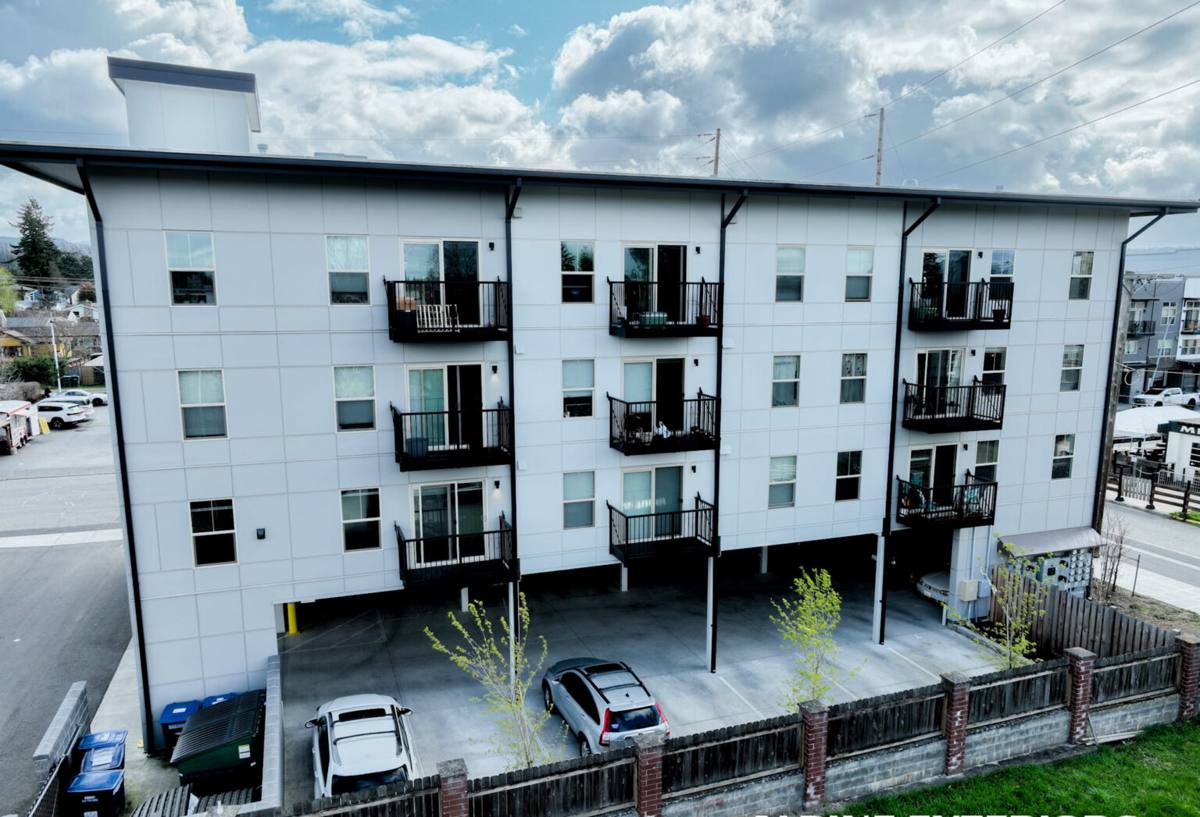
How Salt Air, Rain, and Moss Actually Damage Windows Here
Salt Air
Airborne salt is corrosive and it doesn't need a direct ocean view to reach your house — wind carries it inland in a fine mist that settles on frames, tracks, and hardware. Over time it pits aluminum cladding, corrodes cheaper screws and hinges, and breaks down the seals on double-pane glass, which is what causes that foggy, cloudy look between the panes.
Driving Rain
Wind-driven rain doesn't just fall on a window, it gets pushed sideways into every gap in the flashing, the trim, and the frame itself. A window that would be fine in a calm rain in a sheltered location can still leak here if the flashing detail wasn't built for wind-driven exposure. Most of the water damage we find inside walls started as a flashing or sealant failure, not a bad window unit.
The Long Moss Season
Whatcom County's wet season keeps wood trim, sills, and surrounding siding damp for extended stretches. Moss and algae hold moisture against the building longer than plain rain does, which accelerates rot in any wood-framed window or wood trim that isn't properly primed, sealed, and flashed. It also means a window installed without proper drainage paths will trap moisture instead of shedding it.
Signs a Peace Arch Home Needs Window Replacement Now
- Fogging or cloudiness between the panes (failed seal, no longer repairable)
- Visible corrosion or chalky white residue on aluminum frames or hardware
- Soft or spongy wood at the sill, especially on the side facing prevailing wind and rain
- Drafts you can feel even with the window fully latched
- Difficulty opening, closing, or locking — often swelling or hardware corrosion
- Moss or dark staining building up on the frame or the trim just below the window
- Rising heating bills without any other clear explanation
- Condensation forming on the inside of the glass regularly, even in mild weather
Any one of these can be a minor fix. Several together, especially on an older home, usually means the window and its surrounding flashing have reached the end of useful life together.
What a Correct Window Replacement Actually Involves
Swapping glass is the easy part. What determines whether a replacement window lasts in this climate is everything around it — the flashing, the sealant, and how water is directed away from the wall assembly. A rushed installation can look perfect for a year and still leak the first hard winter storm.
Full-Frame vs. Insert Replacement
Insert (pocket) replacement reuses the existing frame and is faster and less invasive, which works fine when the existing frame is sound. Full-frame replacement removes the old frame down to the rough opening and rebuilds the flashing and sealant from scratch — slower and more disruptive, but necessary when there's rot, corrosion, or water damage behind the old unit. We check the condition of the frame and sheathing before recommending either option; guessing here is how call-backs happen.
Flashing and Water Management
Correct flashing overlaps so water sheds downward and outward, never into the wall. On a wind-exposed property, we pay particular attention to head flashing and side leg overlap, since that's where driving rain finds its way in on a poorly detailed installation.
Sealant and Insulation
Low-expansion foam or backer rod and sealant around the frame perimeter closes air gaps without bowing the frame out of square. Cheap installations skip this or use the wrong product, which shows up later as drafts and condensation.
Choosing the Right Window Material for This Climate
Every frame material has trade-offs. In a salt-air, high-rain environment like Peace Arch, some hold up noticeably better with less upkeep than others.
| Frame Material | Salt Air Resistance | Maintenance | Notes |
|---|---|---|---|
| Vinyl | Good — won't corrode | Low | Most common choice for coastal replacement; check weld quality on corners |
| Fiberglass | Very good | Low | Handles temperature swings and salt exposure well; higher upfront cost |
| Wood (clad exterior) | Fair, if properly clad and sealed | Moderate to high | Interior warmth of real wood with a protected exterior face; needs attentive sealant maintenance |
| Bare aluminum | Poor in salt air | High | We generally steer clients away from uncoated aluminum here — it corrodes and conducts cold, causing more condensation |
We don't install bare aluminum frames on properties this close to the water as a matter of our own standard — not because the product is inherently bad everywhere, but because the maintenance burden and corrosion risk in this specific salt-air exposure isn't worth it to the homeowner long-term. Vinyl and fiberglass options give better value for the climate without that upkeep.
Glass Package Matters Too
Double-pane with a low-E coating and argon fill is the practical minimum for this area — it cuts heat loss and reduces condensation on cold, damp mornings. Triple-pane adds further insulation value and is worth discussing if the home faces prevailing wind and rain directly, though it comes at a cost and weight premium that isn't always necessary on a sheltered wall.
Our Process, Start to Finish
- On-site assessment — we check each window's condition, the surrounding frame and sheathing, and note which openings need full-frame replacement versus insert replacement.
- Written estimate — clear pricing by window, material, and glass package, no surprise add-ons discovered mid-job.
- Removal — old units and, where needed, damaged frame material and sheathing are removed and the opening is inspected for hidden rot before anything new goes in.
- Flashing and sealing — proper flashing sequence and sealant application, built for wind-driven rain, not just a bead of caulk around the trim.
- Installation and finish — window set, shimmed level and square, insulated, and trimmed to match the existing exterior.
- Walkthrough — we test operation, locks, and weather sealing with you before calling the job done.
Why Local Experience in Peace Arch Matters
A window replacement crew that mostly works dry, inland neighborhoods will default to standard details that work fine there — and sometimes fail here. Knowing that Peace Arch takes wind-driven rain from a specific direction, or that salt exposure means avoiding certain hardware and frame materials, isn't something you learn from a training manual. It comes from doing the work in this exact area, seeing which installations hold up after five winters and which don't, and adjusting accordingly.
We also know the practical side: permitting expectations for exterior work in this part of Whatcom County, realistic scheduling around the wetter months, and how to sequence a job so open wall cavities aren't left exposed to a rainstorm overnight.
Keeping New Windows Performing Once They're In
- Rinse frames and tracks periodically to clear salt residue, especially after storms
- Keep weep holes (drainage openings along the bottom of the frame) clear of dirt and debris
- Check exterior sealant annually for cracking or separation, particularly on wind-exposed walls
- Remove moss or algae buildup on trim promptly rather than letting it sit against the wood
- Operate locks and hardware a few times through the off-season so they don't seize
- Have a professional recheck flashing and sealant if you notice any new drafts or staining
None of this is a lot of work, but skipping it is how a well-installed window still ends up with problems a decade early in a climate like this one.
What Affects the Cost of a Window Replacement Here
Every home is different, but a few factors consistently move the price up or down: whether the job is insert or full-frame replacement, the number and size of openings, frame material chosen, glass package, and whether hidden rot or corrosion turns up once the old unit comes out. We give a straightforward range during the on-site assessment rather than a number over the phone, since guessing before seeing the actual condition of your frames does nobody any favors.
If you're weighing whether to replace a few problem windows now versus the whole house at once, we're happy to walk through the trade-offs honestly — sometimes phasing it over a couple of years makes more financial sense, and we'll tell you that if it's true.
If your windows in Peace Arch are fogging, drafty, or showing wear from the salt air and rain, we're glad to come take a look. The estimate is free, there's no pressure to sign anything on the spot, and you'll get a straight answer about what your windows actually need — just use the form below to get started.