 Semiahmoo Exterior
 Why Peace Arch Homes Need Siding Built for This Exact Coastline
Peace Arch sits about as close to the water and the border as a Whatcom County neighborhood gets, and that location comes with a specific set of siding problems. Salt-laden air off the strait works into seams and fastener heads year-round. Driving rain off Semiahmoo Bay hits walls sideways during winter storms, not straight down, which means siding here has to shed water it was never designed to simply drip off of. And the long, damp shoulder seasons that stretch from fall through spring keep north- and west-facing walls wet long enough to grow moss, algae, and mildew on anything that holds moisture.
None of that is unusual for the Pacific Northwest coast in general, but Peace Arch's proximity to open water intensifies it. Homes a mile inland in Semiahmoo proper often show less salt residue and less moss pressure than homes closer to the shoreline. That difference matters when you're choosing a siding material and a contractor — what works fine in a drier interior county can fail early here.
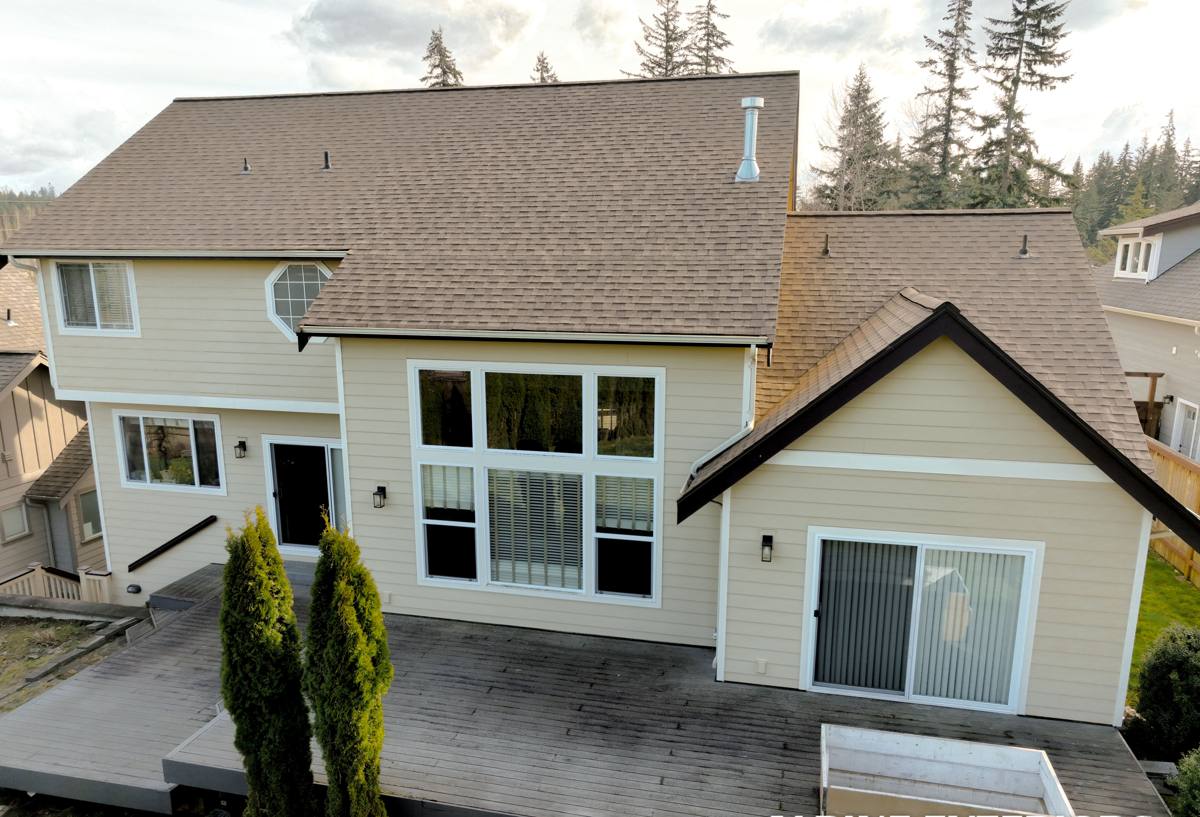
Why We Only Install James Hardie Fiber Cement
We don't install vinyl, LP SmartSide, Cemplank, Allura, primed spruce, or cedar. That's a deliberate standard, not a sales pitch. Vinyl expands and contracts more than fiber cement in the kind of temperature swings and driving rain Peace Arch sees, and its seams and J-channels give salt-air moisture more places to collect over time. Engineered wood products like LP SmartSide use wood strand cores that are more sensitive to sustained moisture exposure than fiber cement — a real risk in a neighborhood with a long moss season. Cedar and primed spruce look great on day one but demand a maintenance schedule (refinishing, caulking, moisture checks) that most homeowners can't keep up with indefinitely, especially on a home taking direct salt spray.
James Hardie fiber cement is a cement, sand, and cellulose fiber composite. It doesn't rot, it isn't combustible, insects don't eat it, and it holds paint and factory finish far longer than wood-based sidings because it doesn't swell and shrink with every wet-dry cycle. Hardie also engineers specific product lines for different climate zones — HZ5 for the Pacific Northwest — which matters more in Peace Arch than in a drier part of the state.
Other Fiber Cement Brands
Allura and Cemplank are also fiber cement, and we're not here to tell you they're bad products. We standardized on Hardie because of its factory-applied ColorPlus finish, its HZ5 engineering specifically for wet coastal climates, and the depth of its installer network and warranty backing in this region. When we recommend one manufacturer over another, it's about what we've found holds up and what we can back with a strong installation warranty — not a claim that competitors' products are defective.
What Correct Installation Looks Like in a Salt-Air, High-Rain Climate
Fiber cement siding is only as good as the installation behind it, and that's especially true this close to the water. A correct job on a Peace Arch home includes:
- A drainage plane behind the siding. A weather-resistant barrier with a rainscreen gap lets any moisture that gets past the siding drain and dry out instead of sitting against the sheathing.
- Proper flashing at every penetration. Windows, doors, hose bibs, and vent penetrations are the most common failure points on older Peace Arch homes we've inspected — water finds the smallest gap and driving rain will eventually push it there.
- Correct fastener spec and placement. Corrosion-resistant fasteners, driven at the manufacturer's specified depth and location, matter more here because salt air accelerates corrosion on the wrong hardware.
- Manufacturer-spec gapping and clearances. Hardie specifies minimum clearances from grade, roofing, and decks so the bottom edge of the siding isn't sitting in a moisture trap.
- Factory-finished ColorPlus panels, caulked and touched up per spec. Field-painted cut edges are sealed correctly so raw cement isn't left exposed to wicking moisture.
Skip any one of these steps and the siding itself can be excellent while the wall behind it still fails. Most of the "bad siding job" stories homeowners tell aren't really about the material — they're about a rainscreen that wasn't installed, or flashing that was skipped to save an afternoon.
Moss Season: The Peace Arch Reality
Whatcom County's wet season runs long, and Peace Arch's exposure to marine air stretches it further. Moss and algae growth on siding isn't just cosmetic — sustained organic growth holds moisture against the surface longer than bare siding would, which is exactly the condition that shortens the life of wood-based products. Fiber cement doesn't feed moss the way wood fiber does, and its factory finish resists staining better than field-applied paint, but no siding is moss-proof. The real defense is airflow: correctly installed rainscreen gapping, trimmed vegetation away from walls, and gutters that actually move water away from the siding face instead of overflowing onto it during a heavy Pacific storm.
James Hardie Product Lines We Install
| Product | Best Use | Why It Fits Peace Arch |
|---|---|---|
| HardiePlank Lap Siding | Most common wall application | HZ5-engineered for Pacific Northwest moisture exposure |
| HardiePanel Vertical Siding | Accent walls, gables, modern facades | Fewer horizontal seams for water to track along |
| HardieTrim | Corners, window and door trim | Matches siding durability at the most water-exposed edges |
| HardieSoffit | Eaves and overhangs | Resists moisture pooling in covered, shaded areas prone to moss |
ColorPlus factory finish is available across these lines in a range of colors baked on under controlled conditions, which holds up to salt air and UV exposure better than a field-applied coat and reduces how often the home needs repainting.
Our Process for a Peace Arch Siding Project
- On-site assessment. We look at wall orientation relative to the water and prevailing storms, existing moisture damage, current siding material, and trim/flashing condition before quoting anything.
- Tear-off and sheathing check. Old siding comes off and we inspect the sheathing underneath for rot or moisture damage that needs to be addressed before new siding goes on — this is where hidden problems from a prior bad install usually show up.
- Weather barrier and rainscreen installation. This is the step that gets skipped most often industry-wide, and it's the one we won't skip.
- Flashing and trim. Every window, door, and penetration gets flashed to shed water outward, not into the wall assembly.
- Hardie siding installation to manufacturer spec. Correct fasteners, correct gapping, correct clearances.
- Final inspection and cleanup. We walk the job with you before we consider it done.
Cost Factors for Fiber Cement Siding in This Area
| Factor | Why It Affects Price |
|---|---|
| Existing siding removal | Tear-off and disposal of old material adds labor before new siding starts |
| Sheathing repair | Moisture-damaged sheathing found during tear-off must be replaced before install |
| Home size and wall complexity | More corners, gables, and penetrations mean more cutting, flashing, and trim work |
| Product line and finish | Panel vs. lap profile and ColorPlus color selection affect material cost |
| Site access | Waterfront lots and tight setbacks can add staging and scaffolding time |
We give honest, project-specific numbers after an on-site look — broad ranges without seeing the walls and sheathing condition aren't useful to you and we won't pretend otherwise.
Maintenance That Actually Matters Here
- Rinse siding periodically to remove salt residue and organic buildup before it sets in, especially on walls facing the water.
- Keep gutters clear so overflow doesn't run down the siding face during heavy rain events.
- Trim back vegetation and tree cover that keeps a wall shaded and damp longer than the rest of the house.
- Have caulking at trim and penetrations checked periodically — this is a small job that prevents a much bigger one.
- Watch for moss or algae buildup at the bottom courses and in shaded corners, and address it early rather than letting it establish.
What to Look for in a Peace Arch Siding Contractor
- Manufacturer training or certification on the specific product being installed
- A clear explanation of rainscreen and flashing details before work starts, not after you ask
- Familiarity with this specific coastline — how salt exposure and storm direction affect wall assemblies here
- A written warranty that covers workmanship, not just the material
- Willingness to show you the sheathing before it's covered back up
A crew that already works in Peace Arch and along the Semiahmoo shoreline has usually already seen what happens when these details get skipped — that experience shows up in how carefully they handle flashing and drainage on your home.
If your siding is aging, showing moss, or you're planning ahead for a replacement, we're happy to take a look and give you a straight, no-pressure estimate. Use the form below to get started.