 Semiahmoo Exterior
 Why Laurel Roofs Wear Differently Than Roofs Inland
Laurel sits close enough to the water that homes here deal with a different set of stresses than a roof twenty miles inland. Salt-laden air off the Strait moves through the area steadily, driving rain comes in sideways more often than it falls straight down, and the shoulder seasons stay damp long enough for moss and algae to get established and stay established. None of this means a roof in Laurel needs to be exotic or overbuilt — it means the ordinary parts of the job (fastening, flashing, ventilation, and material choice) have to be done correctly, because this climate finds every shortcut.
We install roofs across Whatcom County, and the installations that hold up best in Laurel share the same traits: tight, correctly lapped flashing at every penetration and valley, ventilation that actually balances intake and exhaust, and materials chosen for how they behave wet and salted, not just how they look on a sunny install day.
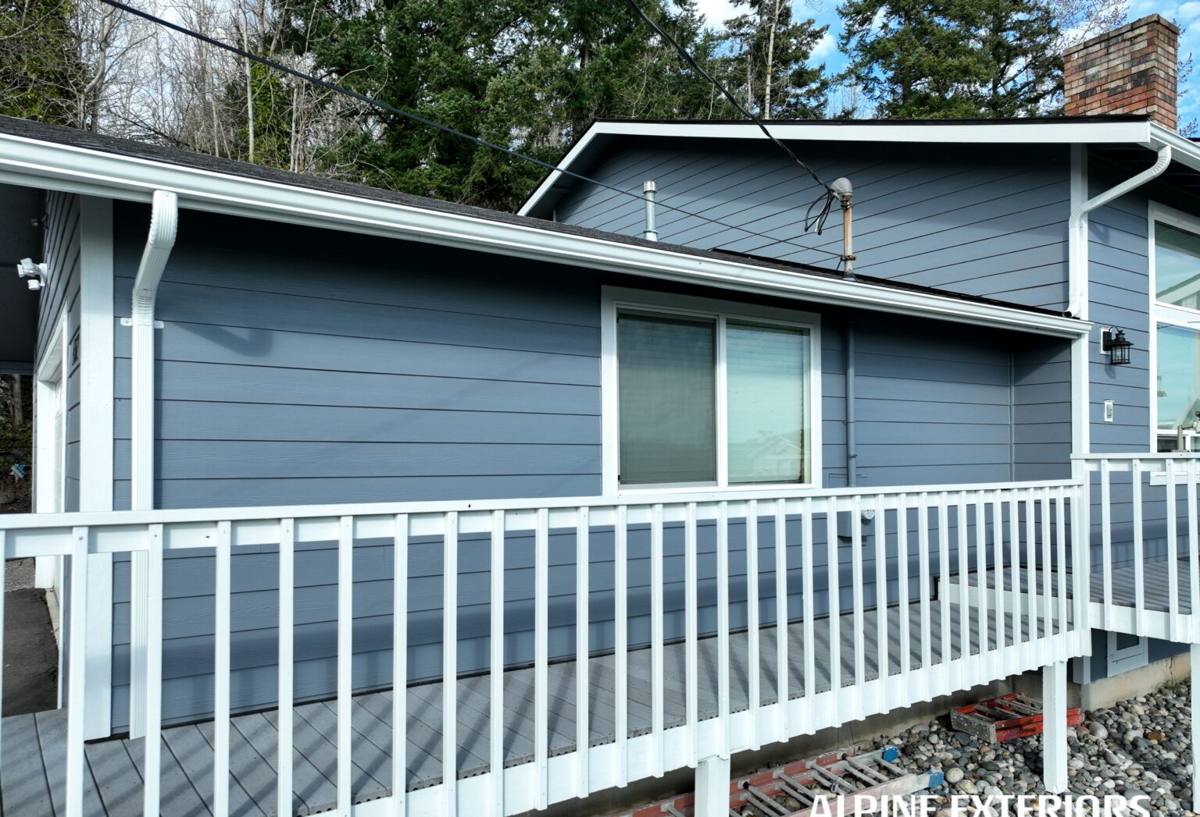
What a Correct Installation Actually Involves
A roof replacement is more than swapping old shingles for new ones. The parts underneath the surface layer are what determine whether the roof performs for the next 20-30 years or starts giving you trouble in five.
Underlayment and Moisture Barriers
Given how much wind-driven rain this area sees, we don't treat underlayment as an afterthought. A synthetic underlayment with proper lap and fastening, combined with self-adhered ice-and-water membrane at eaves, valleys, and around penetrations, gives the roof a real second line of defense if wind pushes water up under the shingle tabs — which it will, at some point, in a coastal storm.
Flashing at Every Transition
Chimneys, skylights, sidewall intersections, and valleys are where roofs actually fail, far more often than the open field of shingles. Step flashing, counter-flashing, and valley metal need to be installed in the correct sequence with the underlayment and shingle courses, not caulked into place as a substitute for proper technique. Caulk is a maintenance item, not a flashing method.
Ventilation That Balances
A roof needs intake at the eaves and exhaust at the ridge in the right proportion to each other. Get this wrong and you trap moisture in the attic, which shortens the life of the roof deck and sheathing from underneath — a problem that has nothing to do with the shingles themselves but will still shorten the roof's life. In a humid coastal climate, this detail matters more than it does in a dry one.
Choosing the Right Roofing Material for This Climate
There isn't one "best" roofing material for Laurel — there's a best material for your home's exposure, roof pitch, and budget. Here's how the common options actually compare for coastal Whatcom County conditions:
| Material | Coastal Performance | Moss/Algae Resistance | Typical Lifespan |
|---|---|---|---|
| Architectural asphalt shingle | Good wind rating, reliable when installed with proper nailing pattern | Algae-resistant (AR) granules help; still needs periodic cleaning | 25-30 years |
| 3-tab asphalt shingle | Lower wind rating, more prone to lifting in driving coastal wind | Same granule technology available, but thinner profile weathers faster | 15-20 years |
| Standing seam metal | Excellent wind and rain performance, sheds water fast | Very little organic buildup; smooth surface discourages moss | 40-60 years |
| Cedar shake | Attractive, but higher maintenance in wet, salty air | Prone to moss and rot without diligent upkeep | 20-30 years with maintenance |
For most Laurel homes, we recommend architectural asphalt with AR granules as the practical middle ground, or standing seam metal for homeowners who want to minimize moss maintenance and get the longest service life out of the investment. We'll walk you through the honest trade-offs for your specific roof rather than pushing one product across every job.
Signs a Laurel Roof Needs Replacing, Not Just Patching
Not every roofing problem calls for a full replacement, but coastal wear tends to show up as a pattern rather than an isolated issue. Watch for:
- Granule loss showing up in gutters or at downspout discharge points, especially after wind events
- Shingles that are cupping, curling, or lifting at the edges rather than lying flat
- Moss established directly on the shingle surface rather than just in shaded valleys
- Soft spots or sagging when walking the roof, which can indicate deck damage underneath
- Daylight visible through the roof deck from inside the attic
- Staining on interior ceilings or exterior fascia boards, which usually means water has already found a path in
- A roof that's 20+ years old and has never had underlayment or flashing upgraded
If you're only seeing one or two of these and the roof is otherwise sound, a repair may be the right call. When several show up together, replacement is usually the more cost-effective path — repeated patch repairs on an aging coastal roof add up fast without solving the underlying moisture problem.
Our Installation Process, Start to Finish
We keep the process straightforward and communicate at each stage so there are no surprises partway through the job.
- On-site inspection and estimate. We look at the existing roof, deck condition, ventilation setup, and any problem areas before quoting anything.
- Material selection. We go over the options for your roof pitch, exposure, and budget, with honest pros and cons for each.
- Tear-off and deck inspection. Old roofing comes off down to the deck, and we check for rot or soft spots before anything new goes down — this is where hidden moisture damage from the old roof usually surfaces.
- Underlayment and flashing installation. Ice-and-water membrane at vulnerable areas, synthetic underlayment across the field, and correctly sequenced flashing at every penetration.
- Roofing material installation. Installed to manufacturer specification for nailing pattern and exposure, which matters directly for wind and warranty performance.
- Ventilation check and cleanup. We confirm intake and exhaust are balanced, then do a full site cleanup including a magnetic sweep for stray fasteners.
- Final walkthrough. We review the finished roof with you before calling the job complete.
Moss, Algae, and Salt Air After the Roof Goes On
A correctly installed roof with AR shingles or metal roofing will resist moss and algae far better than an older roof, but "resist" isn't "immune." Whatcom County's long damp season means organic growth is always going to be a factor here, especially on north-facing slopes and shaded areas near trees. We recommend a simple annual check: clear debris from valleys and gutters, and if moss does start to establish, treat it early with a gentle wash rather than letting it mat down and hold moisture against the shingle surface. Salt air doesn't damage asphalt or metal roofing directly the way it corrodes untreated metal fasteners or trim, which is another reason we spec corrosion-resistant fasteners and flashing on coastal installs rather than standard-grade hardware.
Permits, Timelines, and What Actually Affects Cost
Whatcom County and local jurisdictions typically require a permit for a full roof replacement, and we handle that process as part of the job rather than leaving it to the homeowner. A straightforward residential re-roof usually takes one to three days depending on roof size, pitch, and weather windows — and in this climate, we plan installs around forecasted dry stretches rather than pushing through active rain, since a roof installed in a downpour is a roof installed poorly.
Cost varies by roof, but the main drivers are consistent from job to job:
| Cost Factor | Why It Matters |
|---|---|
| Roof size and pitch | More surface area and steeper pitches mean more material and labor time |
| Number of penetrations and valleys | Each chimney, skylight, or valley adds flashing labor and material |
| Deck condition | Rotted sheathing found during tear-off needs replacement before roofing can go down |
| Material choice | Asphalt, metal, and cedar carry different material and labor costs |
| Access and staging | Difficult site access or steep lots can add setup and safety equipment time |
We give a firm, itemized estimate after the on-site inspection — not a phone-quote guess — so you know what you're paying for and why before work starts.
Why Local Experience in Laurel Matters
A roofing crew that works this specific stretch of coastline regularly knows things a general contractor coming from inland doesn't necessarily account for: which slopes in Laurel tend to hold moss longest, how much extra attention flashing needs given the wind-driven rain pattern here, and which fastener and flashing grades actually hold up against salt air over years, not just through the manufacturer's warranty period. That local pattern recognition shows up in fewer callbacks and a roof that's still performing well a decade in, not just on the day it's installed.
We're a Whatcom County crew, and Semiahmoo-area roofs — including homes in and around Laurel — are the roofs we know best. If you're weighing repair versus replacement, or just want an honest read on your roof's condition, we're happy to take a look. Use the form below to request a free, no-pressure estimate.