 Semiahmoo Exterior
 Window Replacement Built for Laurel's Coastal Climate
Laurel sits close enough to the water that salt air is a daily fact of life, not an occasional nuisance. Combine that with Whatcom County's long stretch of driving rain and the moss season that follows it, and you have one of the tougher climates in the state for exterior wood, vinyl, and metal to survive in year after year. Windows take the brunt of it. They're penetrations in the building envelope, they sit exposed to wind-driven rain on every elevation, and their frames and sills are where moisture problems start if the original installation wasn't done right.
This page covers what window replacement actually involves for a home in Laurel specifically — not a generic overview, but the material choices, installation details, and process steps that matter given what this area's weather does to a house over time.
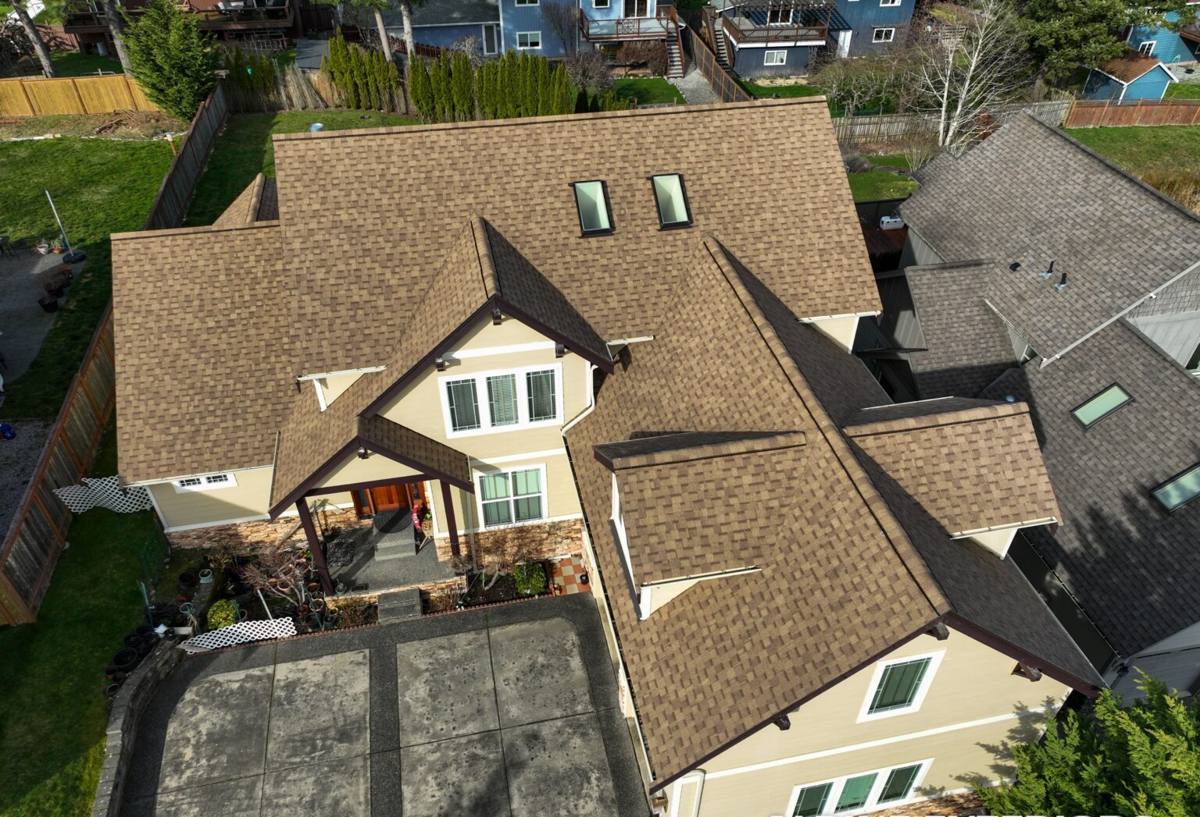
What Salt Air, Rain, and Moss Season Do to Windows
Three separate stresses act on windows here, and they compound each other.
Salt Air
Airborne salt accelerates corrosion on any exposed metal — hinges, cranks, screen frames, and especially aluminum components that weren't specified for coastal exposure. It also breaks down some sealants and finishes faster than they'd wear in an inland climate, which shortens the effective service life of hardware and weatherstripping.
Driving Rain
Wind-driven rain doesn't just hit a window head-on — it gets pushed sideways and upward into gaps that would stay dry in a calmer climate. This is why flashing detail and sill pan design matter more here than in places with lighter, more vertical rainfall. A window that's watertight in a still rain can still leak in a Whatcom County wind event if the flashing wasn't lapped correctly.
Moss and Sustained Damp
Long wet seasons keep humidity high around window openings for months at a time. Wood trim and sills that don't get a chance to dry out are where rot starts, and moss and algae growth on north-facing and shaded elevations holds moisture against the frame even longer. Once moisture gets behind trim or into a sill, it tends to travel and cause damage well beyond where it first entered.
Signs a Laurel Home's Windows Need Replacing
Some of these are obvious, others show up gradually and get written off as normal aging. Worth checking for:
- Soft or spongy wood at the sill or lower frame corners
- Fogging or moisture between panes on double- or triple-glazed units — a sign the seal has failed
- Windows that are difficult to open, close, or lock, or that have visibly warped frames
- Visible gaps between the window frame and siding or trim
- Drafts or a noticeable temperature difference near the window on windy days
- Paint that keeps peeling or bubbling on the frame or sill despite repainting
- Corroded or seized hardware — cranks, hinges, locks
- Rising energy bills without a clear other cause
- Visible moss, algae, or persistent black staining around the frame
Any one of these on its own might just mean a repair. Several at once, especially on the same window, usually means the unit or its installation has reached the end of its useful life.
What a Correct Window Replacement Job Actually Involves
The window itself is only part of the job. In this climate, the installation detail is what determines whether a replacement lasts fifteen years or fails in three.
Removal Without Hidden Damage
Pulling the old unit is also the first real look at what's underneath — sill condition, framing, and any water damage that's been building unseen. A rushed removal can miss rot that then gets sealed behind the new window, which is worse than leaving the old one in place.
Sill Pan and Flashing
Given how much wind-driven rain this area gets, a sloped sill pan and properly lapped flashing (so each layer sheds water onto the layer below it, never the reverse) is non-negotiable. This is the single most common point of failure we see in prior installations that weren't done to this standard.
Air and Water Sealing
Correct sealant selection and placement — inside, outside, and around the nailing flange — keeps both bulk water and humid air out. Sealing the wrong layer, or skipping the interior air seal, is a common shortcut that causes condensation and drafts later.
Trim and Finish Work
Exterior trim needs to be back-primed and sealed on all sides before install, not just face-painted afterward. This matters more here than in drier climates because damp trim that isn't sealed on the back is exactly what feeds moss growth and slow rot.
Choosing Materials for This Climate
Every window material has trade-offs. In a salt-air, high-rain environment, some of those trade-offs matter more than they would elsewhere.
| Material | How It Handles This Climate | Maintenance |
|---|---|---|
| Vinyl | Doesn't corrode or rot; handles salt air well. Quality varies a lot between manufacturers. | Low — occasional cleaning |
| Fiberglass | Very stable in temperature swings and moisture; strong resistance to warping | Low |
| Wood (clad exterior) | Warm interior look; exterior cladding needs to be genuinely watertight since bare wood struggles in sustained damp | Moderate to high on any exposed wood |
| Aluminum | Prone to corrosion in salt air unless specifically coated/anodized for coastal use; conducts cold | Moderate — watch hardware and finish |
We don't install every product on the market, and that's a deliberate standard rather than a lack of options. Some window lines look fine on a spec sheet but are more sensitive to installation error, have weaker warranty support for coastal regions, or use hardware that doesn't hold up to salt exposure. We'd rather install fewer product lines well than install everything and let quality vary.
Cost Factors Worth Knowing
Window replacement pricing depends on more than the number of openings. The main variables are:
| Factor | Why It Moves the Price |
|---|---|
| Window size and type | Larger units, custom shapes, and operable styles (casement, awning) cost more than standard sliders |
| Material | Fiberglass and higher-end clad-wood typically cost more upfront than vinyl |
| Existing damage | Rot repair or sill reframing found during removal adds labor beyond the window swap itself |
| Number of openings | Whole-house replacements have better per-window economics than a single unit |
| Access and elevation | Second-story or hard-to-reach windows take longer and may need staging |
Our Window Replacement Process
- On-site assessment. We look at every window being considered, check sill and frame condition, and note anything specific to the home's exposure to wind and rain.
- Material and product recommendation. Based on that assessment and the home's orientation, we recommend materials and glazing that fit the budget and hold up to the conditions here.
- Written estimate. Clear scope, materials, and pricing before any work starts — no surprises added mid-job.
- Removal and inspection. Old units come out carefully so we can check the framing and sill underneath before anything new goes in.
- Correct installation. Sill pan, flashing, sealing, and trim done in the sequence that actually keeps water out, not just what's fastest.
- Final walkthrough. Every window operated, checked, and cleaned up before we call the job done.
Why a Crew That Already Works Laurel Matters
A crew that's replaced windows across Whatcom County knows what a north-facing sill in this area looks like after ten wet seasons, and what a south or west exposure catching direct wind-driven rain needs differently. That's not something you can fully substitute with a spec sheet or a generic install manual. It shows up in small decisions — how much lap a flashing detail needs given the typical wind direction, which trim details tend to hold moss, which hardware finishes actually last in salt air locally versus what the marketing claims.
It also matters for follow-up. A local crew is easy to reach if a question comes up after the job, and stands behind its own installation work on a home it can actually get back to.
Maintaining New Windows in This Climate
Even a correctly installed window benefits from basic upkeep here:
- Rinse salt residue off frames and glass periodically, especially after storms
- Keep weep holes clear of debris so water can drain out as designed
- Check exterior caulk lines yearly and touch up before gaps open up
- Remove moss or algae buildup on shaded elevations before it holds moisture against the frame
- Operate hardware occasionally in winter to keep cranks and locks from seizing
None of this is a lot of work, but skipping it in a climate this demanding shortens the life of even a well-installed window.
If your Laurel home has windows showing any of the signs above, or you're planning ahead for a full replacement, we're happy to take a look and put together a straightforward, no-pressure estimate. Use the form below to get started.