 Semiahmoo Exterior
 Laurel's Exterior Problem Isn't Complicated, It's Constant
Laurel sits close enough to Semiahmoo and the water to deal with a specific combination of weather that doesn't let up for long stretches of the year: salt-laden air moving in off the water, rain that arrives sideways more often than it falls straight down, and long stretches of mild, damp weather that keep moss and mildew active on north-facing walls and shaded siding almost year-round. None of these three things is dramatic by itself. A single wind-driven rainstorm doesn't damage a house. A season of moss growth doesn't either. What actually wears out siding in this part of Whatcom County is the accumulation of all three, repeated every year, for as long as the material is on the wall.
This page is specifically about James Hardie fiber cement siding for homes in Laurel — what the local exposure actually asks of a siding product, what a correct installation looks like given that exposure, and how our process is built around getting it right the first time. We're not going to cover general siding education here; this is the local, practical version for one product, in one area.
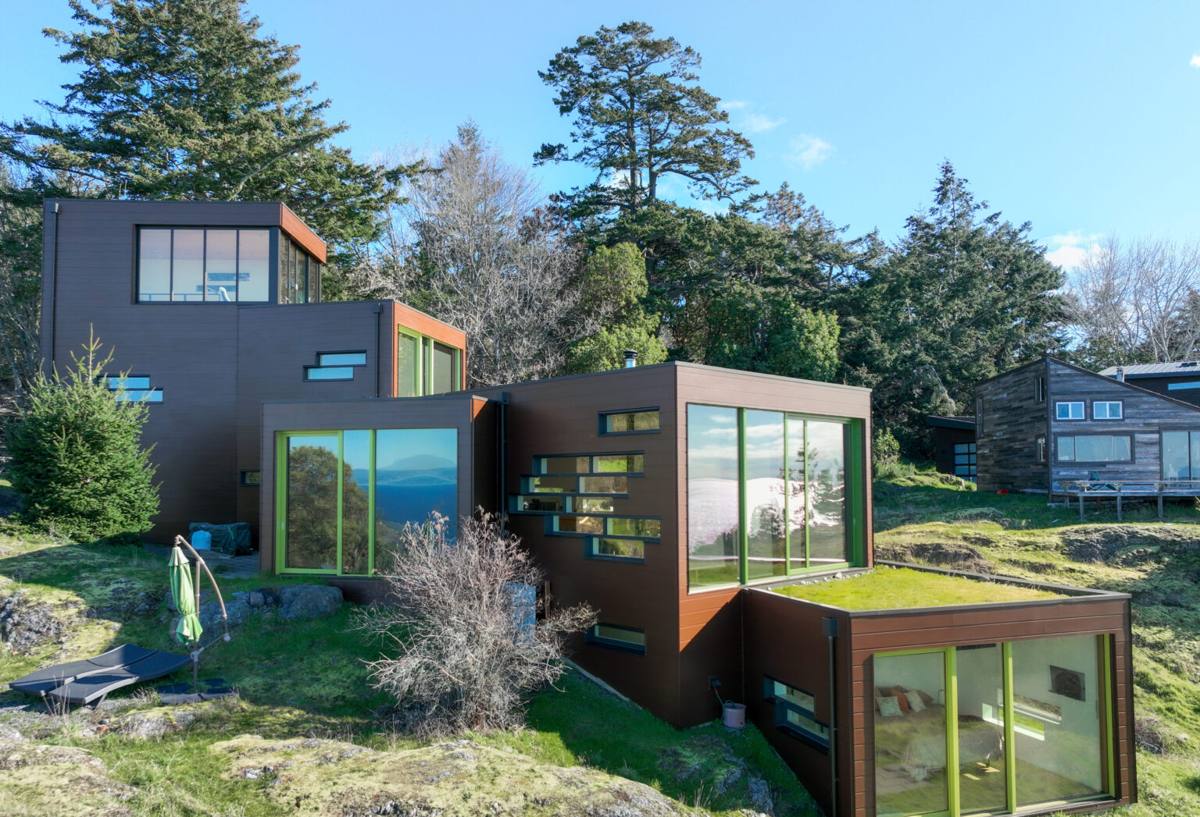
What Laurel Homes Actually Need From Their Siding
A siding product that performs fine in a drier, inland market can fall short here, and the gap usually doesn't show up in year one. It shows up five or ten years in, as fading, softened trim, swollen seams, or a wall that never quite dries out between rain events. Three local conditions drive most of that wear.
Salt Air
Homes in and around Laurel that sit within reach of air moving off Semiahmoo Bay and the wider Salish Sea deal with salt exposure even when they're not directly waterfront. Salt accelerates corrosion on exposed fasteners and trim hardware, and it breaks down factory finishes faster than a UV-only exposure would. A coating system needs to be formulated to handle that, not just tested against sun and rain in isolation.
Driving Rain
Wind-pushed rain doesn't behave like a straight-down downpour. It gets forced sideways into lap joints, up under trim, and into any seam where flashing or gapping isn't done correctly. That's a much tougher test on caulked joints and butt seams than a simple annual rainfall number suggests, and it's where a lot of long-term siding failures actually start — not on the open wall face, but at the seams.
A Long Moss Season
Mild temperatures combined with steady moisture keep moss and mildew active on shaded and tree-adjacent walls for most of the year in this area. Organic growth on a siding surface isn't just cosmetic — it holds moisture against the wall behind it, and that trapped moisture is where rot and finish failure tend to originate on materials that aren't moisture-stable to begin with.
Why We Install Only James Hardie Fiber Cement Here
James Hardie siding is fiber cement — a cured blend of Portland cement, sand, and cellulose fiber. It's inorganic, which means it doesn't have a wood-based core that can absorb water, swell, or feed rot and insects the way organic siding materials can. That matters directly in Laurel's climate, where moisture exposure is close to constant rather than seasonal.
HZ5 Engineering for This Climate
James Hardie manufactures climate-specific product lines rather than one universal formulation. The HZ5 line is engineered for regions with sustained moisture exposure and freeze-thaw cycles, which fits Whatcom County's weather pattern far better than a product built primarily for hot, dry climates. That's a real manufacturing distinction, not a marketing label.
ColorPlus Factory Finish
Rather than relying on paint applied on site, Hardie's ColorPlus finish is baked on in multiple coats under controlled factory conditions before the boards ever reach a job. That finish carries its own warranty, separate from the substrate warranty, and it's built to resist the fading and chalking that salt air and UV exposure cause faster here than in drier markets.
What a Correct Installation Involves
Fiber cement's real-world performance depends heavily on installation quality. The material itself resists moisture and combustion, but a poorly detailed install can still let water in around it. We treat every one of the following as non-negotiable, not optional upgrades.
| Installation Detail | Why It Matters in Laurel |
|---|---|
| Manufacturer-specified clearances at grade, roofline, and decking | Keeps splash-back and standing moisture off the board edge during wet-season storms |
| Rain screen or drainage plane behind the siding | Lets moisture that gets past the surface drain and dry instead of sitting against the sheathing |
| Correct fastener type, spacing, and depth | Prevents cracking and protects against salt-accelerated corrosion at penetration points |
| Proper flashing at windows, doors, and roof-wall intersections | Directs wind-driven rain away from seams instead of letting it collect there |
| Correctly gapped and sealed butt joints | Reduces the seam failures that driving rain finds first |
A checklist we walk through, or expect a homeowner to be able to ask about, on every Laurel project:
- Is the crew James Hardie certified, not just generally experienced with siding?
- Is a proper weather-resistive barrier and drainage plane going in behind the siding, not just house wrap stapled up and left?
- Are clearances at grade, roofline, and deck ledgers being held to manufacturer spec?
- Is flashing being installed at every window, door, and roof intersection, not just caulked over?
- Are fasteners the correct type and depth for this material and this climate?
Our Process for a Laurel Siding Project
The work itself follows a straightforward sequence, but the details inside each step are where quality actually gets decided.
Estimate and Walkthrough
We look at the existing siding, the home's specific exposure to wind and water given its orientation and surrounding trees, and any visible moisture or moss issues already showing on the walls. That walkthrough shapes the actual scope, not a generic square-footage number.
Prep and Sheathing Check
Old siding comes off and the sheathing underneath gets inspected before anything new goes up. In a climate this consistently damp, hidden rot behind old siding isn't rare, and it needs to be dealt with before a new weather barrier and siding system go over it.
Installation to Spec
Certified installers follow James Hardie's published fastening, clearance, and flashing specifications rather than treating fiber cement as an interchangeable swap for whatever a crew is used to hanging. This is the step where the climate-specific engineering in the product actually gets translated into a wall that performs.
Final Walkthrough
We go over the finished work directly with the homeowner, including how the drainage details were handled, since those are the parts that aren't visible once the siding is up but matter most over the following decade.
How Fiber Cement Compares for This Exposure
| Material | Moisture Behavior | Finish Durability in Salt Air | Maintenance Load |
|---|---|---|---|
| James Hardie fiber cement | Dimensionally stable; doesn't swell or rot with moisture | Factory-baked ColorPlus finish, formulated to resist salt and UV fading | Low; no repainting cycle required |
| Vinyl siding | Doesn't absorb water, but seams and J-channels aren't sealed and rely on lapped joints | Color can fade and chalk; softens under direct heat | Low, but panels can warp or crack over time |
| Engineered wood (LP SmartSide) | Wood-fiber core depends on an intact factory coating and sealed field cuts | Coating performance depends on ongoing seal maintenance | Moderate; edges and penetrations need regular inspection |
| Cedar or primed spruce | Absorbs and releases moisture readily; prone to swelling and cupping | Fully dependent on a repainting or restaining schedule | High; regular maintenance required to prevent moss and rot |
This isn't a claim that every other material fails on every house. It's the reason we made a standardization decision as a company: given what this specific climate does to a wall over ten and twenty years, we didn't want to keep installing products that ask homeowners to fight moisture and organic growth with a maintenance schedule instead of a moisture-stable material from the start.
Cost Factors Worth Understanding
- Upfront cost is generally higher than vinyl and comparable to or somewhat above engineered wood, reflecting heavier material and more labor-intensive installation.
- Long-term maintenance cost is lower, since there's no periodic repainting or recaulking of a wood-based core to keep on schedule.
- Warranty structure matters here specifically: James Hardie's substrate warranty is transferable and non-prorated, and the ColorPlus finish carries its own separate warranty, which is a real factor if the home sells before either warranty period ends.
- Site conditions in Laurel, like how much old siding needs to come off, tree cover, and any hidden sheathing repair, affect the final number more than the siding material choice itself.
Why Hiring a Crew That Already Works This Area Matters
A siding contractor who mostly works drier, inland markets can install a technically correct product and still get the details wrong for this specific exposure, because the failure points that matter here — salt-accelerated fastener corrosion, wind-driven rain finding seams, moss taking hold on shaded walls — aren't the same ones that show up in a typical inland installation. A crew that regularly works Laurel and the surrounding Semiahmoo area has already seen what happens when clearances, flashing, or drainage planes get shorted on a house exposed to this weather pattern, and builds around avoiding those specific failures rather than a generic installation checklist. That local pattern recognition is most of what separates an installation that holds up for decades from one that starts showing seam problems within a few years.
If you're planning a re-side in Laurel or anywhere nearby in the Semiahmoo area, we're glad to walk the property, look at what's currently on the walls, and give you a straight answer about scope and cost. Use the form below to schedule a free, no-pressure estimate.