 Semiahmoo Exterior
 Laurel's Siding Problem Isn't Like Other Neighborhoods
Homes in the Laurel area sit close enough to the water that salt-laden air is a daily fact of life, not an occasional weather event. Add Whatcom County's long, wet winters and the moss season that follows, and you get a combination that wears down siding faster than almost anywhere else in Western Washington. Siding here doesn't fail because homeowners neglect it — it fails because it was never built for this exposure in the first place.
Salt air is corrosive to fasteners and finishes, driving rain gets pushed sideways into seams and laps by wind off the water, and moss holds moisture against the wall assembly for months at a stretch. Any siding replacement in this pocket of Semiahmoo has to be evaluated against all three of those stresses at once, not just against "how does this look."
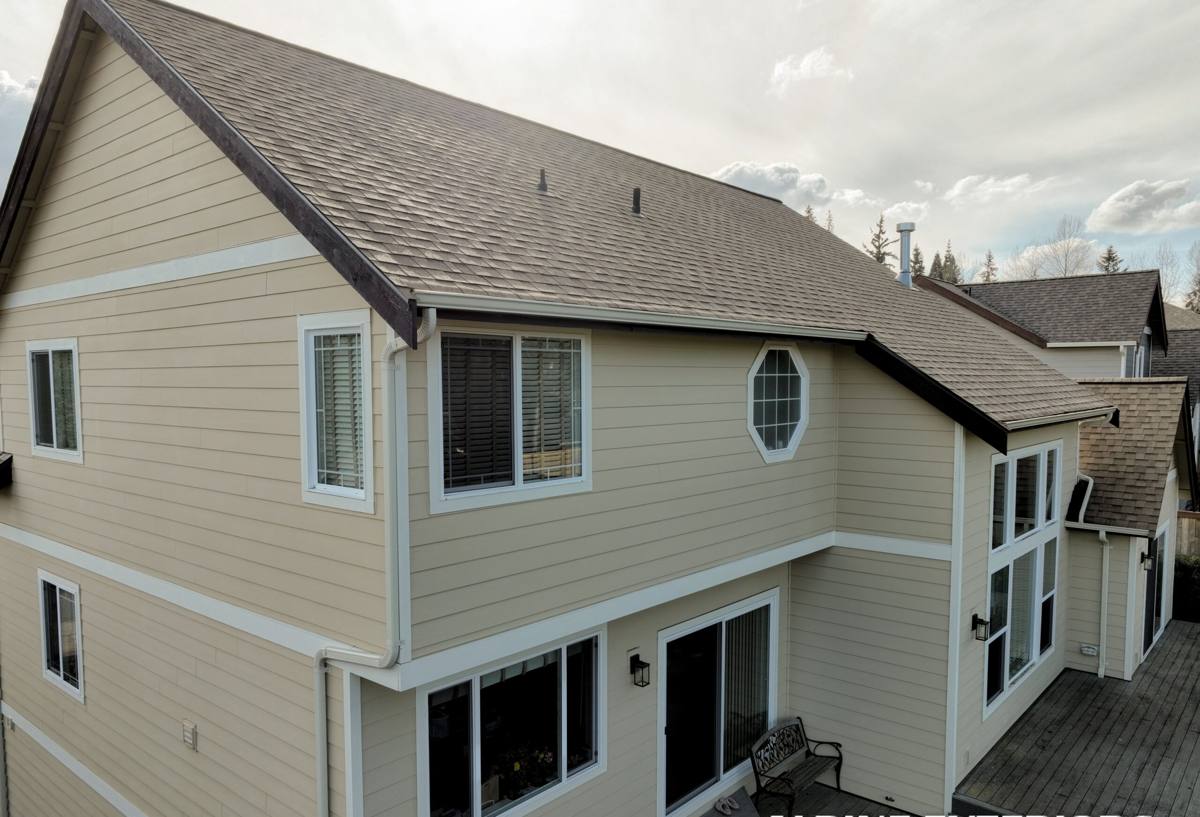
How to Tell Laurel Siding Has Reached the End
Because the damage here is driven by moisture and salt rather than simple age, the warning signs are often subtle before they become expensive. A quick walk around the exterior — especially the water-facing side — tells you most of what you need to know.
- Soft or spongy spots when you press on the siding, especially near the bottom courses and under windows
- Paint that's peeling, bubbling, or chalking faster than it should, particularly on the side that takes the most weather
- Visible moss or dark streaking on horizontal laps that never fully dries out between rains
- Rust bleeding from fastener heads or corner trim, a common sign of salt-air corrosion
- Gaps opening up at seams, corners, or window trim as boards cup or shrink unevenly
- A musty smell or visible staining on interior walls that back up to exterior siding
Any one of these on its own might just need a repair. Several at once, especially combined with soft spots, usually means the water-resistive barrier behind the siding has already been compromised and a full replacement is the honest recommendation.
Why Patch Jobs Rarely Hold Up in This Location
We get calls from Laurel homeowners who've had spot repairs done that failed again within a year or two. The reason is almost always the same: whoever did the repair matched the visible siding but didn't address the underlying moisture path. In a location with this much wind-driven rain, a patch that isn't tied properly into the flashing and drainage plane behind it is just delaying the same failure.
What a Correct Siding Replacement Actually Involves
A siding replacement done right is mostly about what happens before the new siding ever goes up. The finish material matters, but the assembly behind it is what determines whether the job lasts fifteen years or fifty.
- Full tear-off and inspection — removing the old siding to check sheathing, framing, and window openings for rot or hidden damage before anything new is installed
- Repair of any compromised sheathing or framing — replacing anything soft or water-damaged rather than covering it up
- New water-resistive barrier — a continuous, properly lapped house wrap that manages bulk water before it reaches the wall
- Correct flashing at every penetration — windows, doors, hose bibs, vents, and anywhere else water can find a way in
- Rainscreen or drainage gap where appropriate — giving moisture a path to drain and dry rather than sitting against the back of the siding
- Installation to the manufacturer's specified fastener pattern and clearances — including proper ground clearance and gaps at butt joints
- Trim, caulking, and paint touch-up at cut edges — sealing the finish system completely, not just where it's visible
Skipping or rushing any one of these steps is how a siding job that looks fine on installation day ends up failing quietly behind the wall within a few years — exactly the kind of failure that's hardest to catch until it's expensive.
Why We Install Only James Hardie Fiber Cement
We standardized on James Hardie fiber cement siding for every project we take on, including replacements in Laurel, because it's the product that holds up best against this specific combination of salt exposure, driving rain, and prolonged dampness. Fiber cement is non-combustible, doesn't rot, and doesn't provide the organic material that moss and mildew feed on the way some wood-based and engineered wood products do. The factory-applied ColorPlus finish is baked on under controlled conditions, which gives it better fade and chip resistance in salt air than most job-site-applied paint systems.
Hardie also engineers specific product lines — its HZ5 and HZ10 designations — for different climate zones, which matters in a marine environment like this one where moisture exposure is more aggressive than an inland location a few miles away would see. We don't install vinyl, LP SmartSide, Cemplank, Allura, or primed wood siding, and we're happy to walk any homeowner through why those products carry trade-offs we're not willing to put our name behind in this climate.
Choosing the Right Hardie Line and Color for a Coastal Look
Most Laurel homes work well with either HardiePlank lap siding for a traditional look or HardiePanel for a more modern, board-and-batten style. Both are available in the full ColorPlus palette, which is worth leaning on here — a factory finish holds its color longer against salt air and UV than a field-painted board, and it comes with a longer finish warranty as a result.
| Product Line | Best For | Why It Fits This Area |
|---|---|---|
| HardiePlank Lap Siding | Traditional and craftsman-style homes | Classic look with factory finish that resists salt-air fading |
| HardiePanel Vertical Siding | Modern or mixed-material exteriors | Clean lines, pairs well with trim accents, low maintenance |
| HardieTrim | Corners, window and door surrounds | Matches expansion behavior of the field siding, resists moisture at joints |
Cost Factors for a Laurel Siding Replacement
Every home is different, but the same handful of variables drive most of the cost difference between projects in this area. Understanding them ahead of time makes for a much more useful estimate conversation.
| Factor | Why It Matters Here |
|---|---|
| Extent of hidden damage found at tear-off | Salt air and driving rain often cause sheathing damage that isn't visible until old siding comes off |
| Home size and wall complexity | More corners, dormers, and trim details mean more cutting, flashing, and labor |
| Siding profile and color choice | Custom ColorPlus colors and wider plank exposures price differently than standard options |
| Access and site conditions | Waterfront lots, slopes, and limited staging area affect scaffolding and material handling |
| Whether a drainage gap or rainscreen is added | Recommended in high-exposure locations like Laurel, adds a modest labor step for long-term performance |
We give a firm number after a walk-through, not a phone estimate — too much of the real cost depends on what we find once the old siding comes off.
Our Process, Step by Step
We keep the sequence consistent from one Laurel project to the next because consistency is what prevents the kind of shortcuts that cause callbacks later.
- On-site assessment and honest discussion of what your home actually needs
- Written estimate covering material, labor, and any anticipated sheathing repair allowance
- Scheduled tear-off with daily weather protection for any exposed wall sections
- Sheathing repair and inspection, documented before covering it back up
- Installation of house wrap, flashing, and Hardie siding to manufacturer spec
- Final walk-through with the homeowner before we consider the job done
Why a Crew That Already Works Laurel Matters
Siding work in this pocket of Semiahmoo isn't the same job as siding work twenty minutes inland. A crew that already knows this stretch of Whatcom County understands where wind-driven rain hits hardest on a given lot orientation, how much moss buildup to expect on north-facing walls, and how salt exposure tends to concentrate fastener corrosion in specific spots. That local pattern recognition shows up in small decisions — where to add extra flashing, which side of the house needs a drainage gap most, how tight to run caulk joints — that a crew unfamiliar with the area might not think to make.
It also matters for scheduling. Weather windows on this coast can be narrow, and a crew that works here regularly plans tear-offs around them instead of leaving sheathing exposed and hoping for the best.
After the Job: Keeping Hardie Siding Performing in Laurel
One of the advantages of fiber cement in this climate is how little ongoing maintenance it asks for compared to wood or vinyl alternatives. A rinse-down once or twice a year to clear salt residue and moss spores, prompt recaulking if a joint ever opens up, and keeping gutters and downspouts clear so water isn't dumping directly onto a wall section are really the extent of it. There's no repainting cycle to plan around the way there is with field-finished wood siding.
If you're weighing a siding replacement for a home in the Laurel area, we're glad to come take a look and give you a straightforward, no-pressure estimate — no obligation, just an honest read on where your siding actually stands and what it would take to fix it right. Use the form below to get started.