 Semiahmoo Exterior
 Board & Batten Siding Built for Laurel's Coastal Conditions
Board and batten has a clean, vertical look that suits a lot of homes in Laurel — farmhouse-style builds, craftsman remodels, and newer construction alike. It's a strong choice for this part of Whatcom County, but only when the material underneath the good looks can actually handle what Semiahmoo's climate throws at it year after year. That's the part most homeowners don't think about until the siding is already failing.
This page covers what board and batten siding specifically needs to hold up in Laurel, what a correct installation actually involves, and why we only install it in James Hardie fiber cement — never wood, engineered wood, or vinyl.
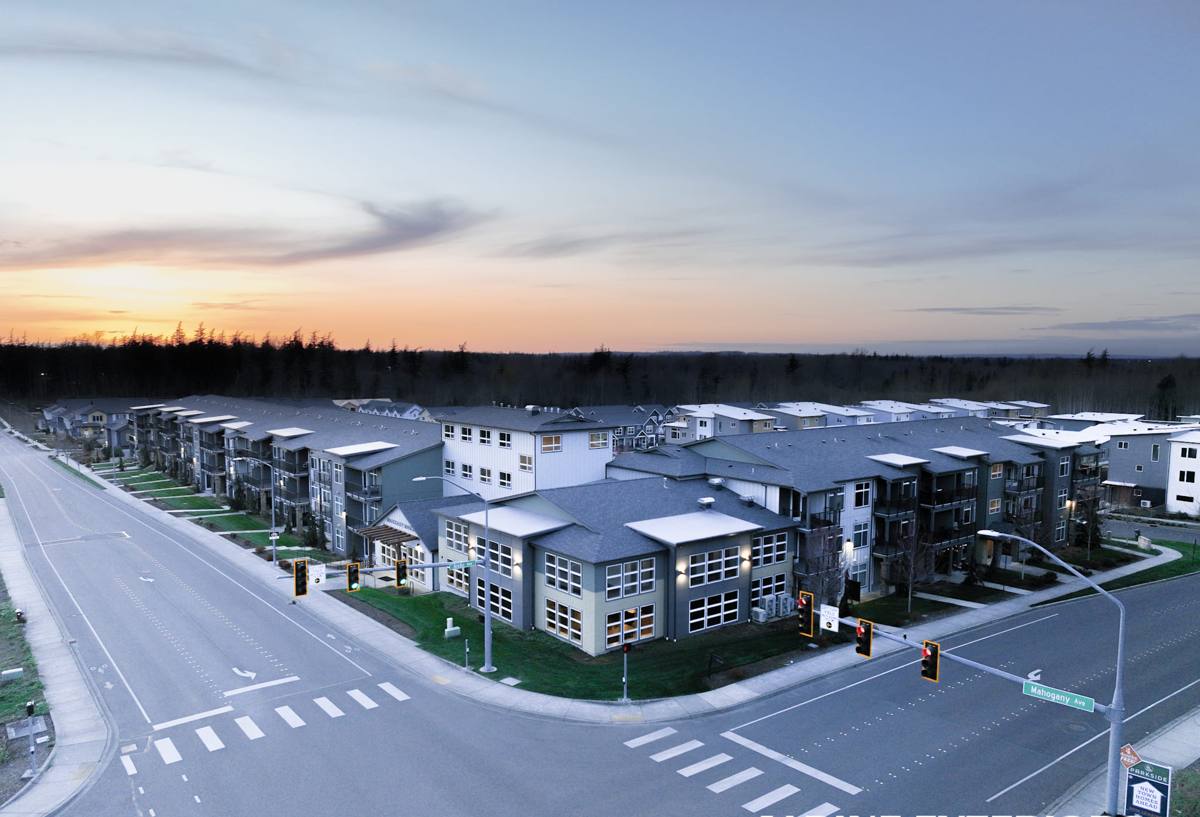
What Laurel's Climate Does to Board & Batten Siding
Laurel sits close enough to the water that salt-laden air is a constant, low-grade factor on every exterior surface — it accelerates corrosion on fasteners and trim, and it works into any gap in a finish faster than people expect. Add in Whatcom County's driving, wind-pushed rain and the long stretch of shaded, damp months that keep moss and algae established on north- and west-facing walls for much of the year, and you've got three separate stressors hitting the same siding at once.
Board and batten is more exposed to these stressors than standard lap siding in a few specific ways:
- More seams, more risk points: Every batten strip covers a joint between panels — each of those joints is a place water can get behind the cladding if it isn't detailed correctly.
- Vertical water path: Water runs straight down a vertical board instead of shedding off a lapped edge, so the drainage plane behind the siding has to actually work, not just be present.
- More edge exposure: Battens have thin edges and corners that take the brunt of driving rain and are the first place a weak finish starts to fail.
None of this means board and batten is a bad choice for Laurel — it means the material and the installation both have to be right for the style, not just for the climate in general.
Moss Season Isn't Just Cosmetic
Moss and algae growth on siding in this area isn't only an appearance issue. Sustained moisture held against a wall by moss buildup keeps the substrate wetter for longer, which matters a lot on wood or engineered wood products and much less on a material that doesn't absorb and swell with moisture in the first place.
Board & Batten Material Options — What Actually Holds Up
Board and batten gets installed in several different materials, and they don't perform the same way once they're exposed to salt air, driving rain, and shaded, mossy conditions for years at a stretch.
| Material | Moisture / Salt Air Behavior | Moss & Algae Resistance | Maintenance Burden |
|---|---|---|---|
| Solid wood (cedar, spruce) | Absorbs moisture, swells and shrinks seasonally, prone to rot at joints | Low — organic surface, needs regular treatment | High — repainting, caulking, spot repairs |
| Engineered wood (LP-type products) | Wood-fiber core, vulnerable if the factory finish is compromised at cuts or edges | Moderate — finish helps but is not immune | Moderate to high |
| Vinyl | Doesn't rot, but flexes and can gap or warp; seams rely on overlap, not a sealed system | Low to moderate — surface can still host growth | Low, but limited repair options once damaged |
| James Hardie fiber cement | Non-combustible, dimensionally stable, engineered HZ formulations for wet climates | Higher — factory ColorPlus finish resists the conditions that feed growth | Low — periodic cleaning, no repainting cycle |
We install James Hardie exclusively, so we won't pretend the other options in that table are all equally bad — they're not. But we've made a professional call that in a climate like this one, the trade-offs of wood, engineered wood, and vinyl aren't ones we're willing to put our name behind, especially in a vertical-seam style where a moisture mistake is harder to spot early.
What a Correct Board & Batten Installation Actually Involves
The style is simple to look at, but a correct install has more going on behind the battens than most homeowners realize. This is where a job either holds up for decades or starts showing problems in a few years.
- A continuous, properly lapped weather-resistive barrier behind the panels — not just a barrier, but one installed with the correct overlaps and taped seams
- A drainage plane or rainscreen gap so any water that does get behind the panel has somewhere to go and dry out, rather than sitting against the wall sheathing
- Correct panel and batten fastening pattern and spacing, per the manufacturer's engineering — not just "close enough"
- Proper flashing at every window, door, and roofline intersection, installed before the siding goes on, not caulked in as an afterthought
- A weep screed or equivalent detail at the base of the wall so water has a clear exit path
- Correctly sized gaps and sealant at panel-to-batten and panel-to-trim joints, sized for the product's expansion and contraction
- Factory-finished cut edges sealed per manufacturer spec wherever a panel is field-cut
Skip any one of these and the siding can look fine for a year or two while the actual problem — trapped moisture — builds behind the wall where nobody sees it until there's a bigger repair.
Why We Install Only James Hardie for This Style
Board and batten in James Hardie fiber cement — through HardiePanel vertical siding paired with Hardie trim battens — gives Laurel homeowners a version of this look that's built for the actual climate here, not just for the region in general:
- Non-combustible core: Fiber cement doesn't burn, rot, or provide a food source for the moss and algae that a shaded, damp lot will otherwise keep feeding.
- Climate-engineered HZ formulation: Hardie's HZ product lines are engineered for specific climate zones, including wet, humid, coastal conditions like ours, rather than a one-size-fits-all mix.
- ColorPlus factory finish: A baked-on finish applied under controlled conditions holds color and resists the kind of surface breakdown that gives moss and algae something to grip.
- Dimensional stability: Fiber cement doesn't swell and shrink with moisture the way wood and wood-fiber products do, which matters most at every batten joint.
- Transferable warranty: A strong manufacturer warranty that can transfer to a new owner is worth something real if you sell the home down the road.
We're not installing Hardie because it's trendy — we're installing it because we don't want to come back out to a Laurel home in five years to explain why a batten joint failed.
Our Process for Laurel Board & Batten Projects
- On-site assessment: We look at sun and shade exposure, existing moss patterns, current siding condition, and any moisture issues already present before recommending a scope.
- Detailed proposal: You get a clear breakdown of the Hardie products, trim details, color, and the specific flashing and drainage plan for your home — not a vague line item.
- Tear-off and inspection: Old siding comes off and we inspect the sheathing underneath for hidden rot or damage before anything new goes on.
- Weather barrier and drainage plane: Installed correctly and inspected before a single panel goes up, since this is the layer you won't see again once the job is done.
- Panel, batten, and trim installation: Fastened and spaced to manufacturer specification, with flashing integrated at every penetration and opening.
- Final walkthrough: We review the finished work with you, including how to care for it and what to watch for over the coming seasons.
Why a Crew That Already Works in Laurel Matters
A lot of board and batten problems we get called out to inspect trace back to a crew that installed the style correctly for a drier climate but didn't adjust for what this corner of Whatcom County actually does to a house. A contractor who already works in and around Laurel has seen how the salt air, shade patterns, and moss cycles here play out on real homes across multiple seasons — not just on paper.
That local experience shows up in small decisions that matter: how tight to run batten spacing given our humidity swings, which elevations need extra attention for moss and algae exposure, and how to sequence a project around our wetter months so materials aren't fighting the weather during installation.
Maintenance & Longevity Expectations
Even the right material benefits from basic upkeep. For Hardie board and batten in a climate like Laurel's, that means:
- Periodic gentle rinsing of shaded or north-facing walls where moss and algae are most likely to establish
- Visual checks of caulking at trim and batten joints every year or two, since sealant is the one component that does age faster than the fiber cement itself
- Prompt attention to any gutter or downspout issues, since concentrated water dumping onto a wall section will stress even a well-installed system over time
- Avoiding pressure washing directly into panel and batten joints, which can force water past a sealant line that's otherwise doing its job
Done right, this isn't a high-maintenance system — it's a low-maintenance one that just isn't a zero-maintenance one, and being upfront about that difference is part of doing an honest job.
Get a Straight Answer for Your Home
If you're weighing board and batten for a home in Laurel, we're happy to take a look, walk you through what your specific exposure and existing siding condition call for, and give you a straightforward, no-pressure estimate. Use the form below to get started.