 Semiahmoo Exterior
 Building Decks That Actually Hold Up in Laurel
Laurel homeowners in Semiahmoo don't need a generic deck. They need one built for a specific set of conditions: salt-laden air drifting in off the water, driving rain that comes in sideways during winter storms, and a moss season that seems to stretch longer every year in Whatcom County. A deck that looks great on installation day but wasn't built with those factors in mind will show its age fast — soft spots, green film on the boards, corroded hardware, and a substructure that's quietly failing underneath a surface that still looks fine.
We build decks for this specific climate, not a generic one. That means different material choices, different fastener specs, different drainage details, and a different maintenance conversation than you'd get from a contractor who mostly works inland or in a drier region. This page walks through what that actually looks like for a Laurel deck project, from the ground up.
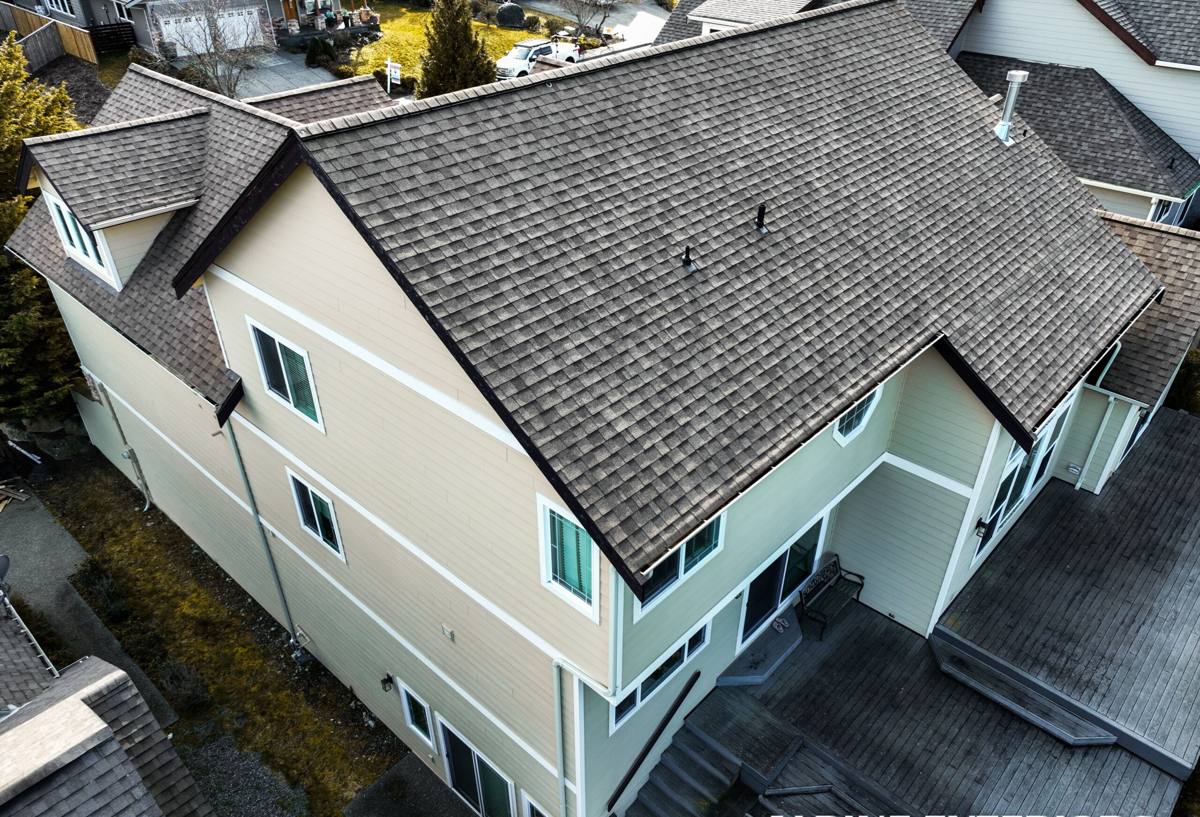
What This Climate Does to an Unprotected Deck
Salt Air and Metal Corrosion
Proximity to Semiahmoo Bay and the surrounding saltwater means airborne salt settles on everything outdoors, including deck hardware. Standard zinc-coated fasteners and brackets that would be fine in a dry inland climate can start corroding within a few seasons here. Once a fastener corrodes, it loses holding strength — and because it's usually hidden under decking boards or behind ledger flashing, nobody notices until there's a problem.
Driving Rain and Wind-Driven Moisture
Winter storms in this part of Whatcom County don't just drop rain straight down — wind pushes it sideways, into gaps, under flashing, and behind ledger boards where a deck attaches to the house. Water that gets trapped rather than shed causes far more damage than water that simply runs off. This is one of the most common failure points we see on older decks: a ledger connection that was never properly flashed against wind-driven rain.
The Long Moss Season
Shaded, north-facing, or tree-covered lots around Laurel hold moisture longer, and moss and algae take hold on any surface that stays damp. Beyond the slip hazard, moss and algae hold water against the decking surface, which accelerates rot in wood and can dull or stain composite and PVC products over time if the surface isn't shedding water the way it should.
Decking Material Options for a Laurel Property
There's no single "best" decking material — there's a best material for your budget, your site conditions, and how much upkeep you actually want to do. Here's how the common options stack up specifically for this climate.
| Material | Moisture & Moss Behavior | Maintenance Needed | Relative Cost Tier |
|---|---|---|---|
| Pressure-treated pine | Absorbs moisture; needs sealing to resist moss staining and swelling | Annual cleaning and periodic re-sealing | Budget |
| Western red cedar | Naturally rot-resistant, but surface still needs care to prevent graying and moss growth | Regular cleaning, periodic oil or stain | Mid-range |
| Capped composite | Resists moisture absorption; textured surfaces still need occasional cleaning to stay algae-free | Low — occasional wash-down | Mid to upper |
| PVC decking | Doesn't absorb moisture at all; performs well in damp, shaded areas | Lowest — soap and water as needed | Upper |
Wood decking isn't a wrong choice for Laurel — plenty of homeowners prefer the look and are willing to keep up with sealing and cleaning. Our job is to make sure whichever material you pick is installed with this climate's demands in mind, and to be straight with you about the maintenance commitment each option carries before you commit to it.
Why We're Selective About What We Install
We don't push a single product line. What we won't do is install a material in a shaded, moisture-heavy spot in Laurel without being upfront that it's going to need more attention than the sales brochure implies. Some lower-grade composite products, in particular, are more sensitive to installation gaps and ventilation than solid wood — get the airflow wrong underneath, and moisture gets trapped instead of shed. That's an installation issue as much as a product one, which is why we treat substructure ventilation as a non-negotiable step, not an afterthought.
What's Underneath Matters More Than What's On Top
Footings and Framing
Whatcom County's mix of clay-heavy and moisture-retentive soils means footings need to be set below frost depth and sized correctly for the load — a shortcut here doesn't show up as a problem for a year or two, but it will eventually. Joists and beams should be rated for exterior, ground-contact-adjacent exposure even when they're not technically touching soil, because in this climate, "dry" is relative.
Hardware and Fasteners
Given the salt air issue described above, we spec stainless steel or heavy hot-dip galvanized fasteners and structural connectors for Laurel projects rather than standard-grade coated hardware. It costs more up front. It also means the connections holding your deck to your house aren't quietly weakening every winter.
Ledger Flashing
The ledger board — where the deck attaches to the house — is the single most common point of hidden water damage on any deck in this region. Proper flashing, ideally with a self-adhering waterproof membrane behind it and correct step-flashing at the siding, keeps wind-driven rain from working its way behind the board and into your home's framing. This is a detail that's completely invisible once the deck is finished, which is exactly why it's worth asking your contractor about directly.
Drainage and Airflow: The Details That Prevent Moss and Rot
A deck that sheds water and breathes underneath will outlast one that doesn't, regardless of material. For Laurel homes specifically, we pay close attention to:
- Board gapping sized to allow water to drain through rather than pool on the surface
- A slight slope away from the house so water doesn't collect at the ledger connection
- Adequate clearance and ventilation underneath the deck so the substructure can dry out between rain events
- Keeping planting beds and mulch pulled back from deck posts and skirting, since damp organic material against framing is one of the fastest ways to invite rot and moss
- Positioning stairs and low-clearance sections to avoid trapping standing water or debris
None of this is complicated, but it's easy to skip when a crew is trying to move fast. Skipping it is exactly how a deck that looks fine in year one develops soft joists and moss-covered boards by year four.
Our Deck Building Process for Laurel Homeowners
1. On-Site Assessment
We walk the actual site — sun exposure, shade patterns, slope, drainage, and how exposed the location is to wind off the water. That assessment shapes our material and design recommendations more than any generic checklist would.
2. Design and Material Selection
We talk through the material options above in plain terms, including realistic maintenance expectations, so you're choosing based on how you actually want to live with the deck, not just how it looks in a sample board.
3. Permitting
Deck projects in Whatcom County typically require permitting depending on size, height, and attachment to the structure. We handle that process as part of the job rather than leaving it for the homeowner to sort out.
4. Construction
Footings, framing, flashing, and fastener selection are done to the standards described above — not scaled back to hit a lower bid. We'd rather explain why a proper build costs what it costs than cut a corner that fails in three years.
5. Final Walkthrough
Before we call the job done, we walk the finished deck with you, cover basic care for whatever material you chose, and make sure you know what routine maintenance actually looks like for your specific setup.
Maintaining a Deck Through Moss Season
Whatever material you choose, a little seasonal attention goes a long way in this climate. A simple checklist we give Laurel homeowners:
- Sweep leaves and debris off the deck surface regularly in fall, before they trap moisture against the boards
- Rinse or gently scrub visible moss or algae buildup before it spreads across the whole surface
- Check that gaps between boards are still clear and draining, not clogged with debris or dirt
- Inspect the ledger board area annually for any signs of staining, soft wood, or peeling caulk
- Trim back vegetation that's shading or crowding the deck, since more airflow means faster drying
- Re-seal or re-stain wood decking on the schedule appropriate to the product, rather than waiting until it visibly needs it
Why Hiring a Crew That Already Works in This Area Matters
A contractor who mostly builds decks in a drier, less coastal climate may not think twice about standard hardware, standard flashing details, or skipping extra ventilation under the substructure — because in their usual conditions, it holds up fine. In Laurel, those same shortcuts show up as problems years earlier than they should. Working regularly in Semiahmoo and the surrounding Whatcom County area means we're not guessing at how salt air, moss, and driving rain affect a deck over time — we see it on older decks we get called out to repair, and we build new ones to avoid becoming that call in five years.
It also means we know the local permitting process, understand typical soil and drainage conditions in the area, and can give you a realistic picture of what your specific site needs rather than a one-size-fits-all recommendation.
Let's Talk About Your Deck
If you're planning a new deck or replacing one that's showing its age, we're happy to take a look and give you a straightforward, no-pressure estimate. Fill out the form below and we'll get in touch to talk through what your Laurel property actually needs.