 Semiahmoo Exterior
 Laurel's Siding Problem Isn't Like Most of the Country's
Homes in the Laurel area, tucked in close to Semiahmoo Bay and Drayton Harbor in Whatcom County, deal with a combination of stresses that most siding products were never designed around: near-constant salt-laden air off the water, long stretches of driving rain pushed in by Pacific storm systems, and a moss season that can run from fall through spring. Any one of those is manageable on its own. Together, over years, they expose every weak point in a siding system — every gap in the caulking, every place water can sit, every seam that wasn't flashed correctly.
That's the lens we use when we look at a Laurel siding job. We're not just matching a color or covering old siding — we're building an assembly that has to shed water, resist moisture intrusion, and stay dimensionally stable through repeated wet-dry cycles, year after year, this close to the water.
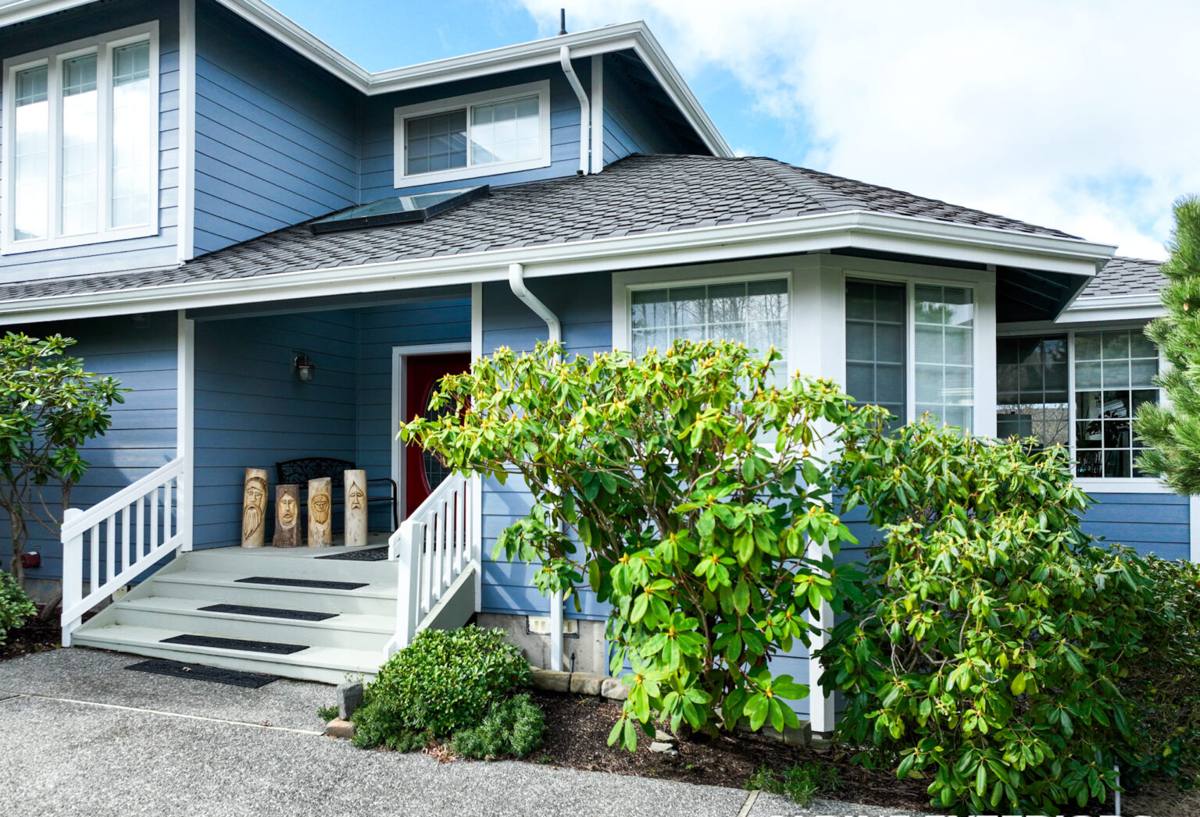
What Salt Air, Rain, and Moss Actually Do to Siding Over Time
Salt Air
Airborne salt from Semiahmoo Bay settles on exterior surfaces constantly, even on days without direct spray. It accelerates corrosion of exposed fasteners, degrades cheaper paint films faster than inland exposure would, and works its way into any crack or seam in siding that isn't fully sealed. Materials that are only rated for "coastal" exposure in general terms can still underperform this close to open water.
Driving Rain
Whatcom County's weather pattern pushes a lot of rain sideways, not just down. That matters because siding isn't just tested by how much water falls — it's tested by how much water gets driven horizontally into laps, seams, and penetrations around windows and doors. A siding system with weak lap engineering or inconsistent factory tolerances will let water behind the cladding long before the face of the material shows any damage.
Moss and Sustained Moisture
Moss doesn't damage siding by itself, but it's a symptom of a bigger issue: surfaces that stay damp for extended periods. Where moss and algae take hold — north-facing walls, shaded areas near trees, spots with poor sun exposure — the siding underneath is sitting wet for longer stretches. Any material that absorbs moisture into its core, or swells and doesn't fully dry back out, is going to degrade faster in exactly those spots.
Why We Install Only James Hardie Fiber Cement in Laurel
We made the decision years ago to stop installing vinyl, LP SmartSide, primed wood, cedar, and other fiber cement brands, and to install James Hardie exclusively. That's not a marketing position — it's a standard we hold because of what we've seen this material do in exactly the kind of environment Laurel sits in.
- Non-combustible core: fiber cement doesn't rot from the inside the way wood-based products can when moisture gets trapped, and it doesn't burn.
- Dimensional stability: Hardie board doesn't swell and shrink with humidity the way engineered wood siding does, which matters when a wall sees repeated wet-dry cycling from driving rain.
- ColorPlus factory finish: a baked-on finish system designed to hold color and resist the fading and chalking that salt air and UV exposure cause faster on field-painted surfaces.
- HardieZone engineering: Hardie manufactures specific formulations for different climate zones (HZ5 and HZ10), rather than one generic product sold everywhere — a real advantage in a mixed marine climate like this one.
- Transferable warranty: a meaningful, well-documented warranty backing the product, which matters more, not less, on a home this close to the water.
We're upfront that other products get parts of this right. LP SmartSide is easier on installers in cold weather and costs less. Vinyl is low-maintenance in mild climates. Cedar looks the way a lot of homeowners want a Pacific Northwest home to look. But when we weigh moisture behavior, long-term maintenance, and how a product performs specifically in salt air and driving rain over a 20-30 year horizon, fiber cement — and specifically Hardie's engineering and finish system — is what we're willing to put our name on.
What a Correct Fiber Cement Job Actually Involves
Fiber cement siding is only as good as its installation. In a climate like this, the details that get skipped on a rushed job are exactly the details that cause failures three to five years later.
Water Management Behind the Cladding
Correct installation starts with a weather-resistive barrier and rainscreen or drainage plane behind the siding — a gap that lets any water that gets past the cladding drain and dry out instead of sitting against the sheathing. This matters more in a driving-rain climate than almost anywhere else in the country.
Flashing at Every Penetration
Windows, doors, hose bibs, vents, and any other wall penetration need proper flashing and head flashing so water is directed out and away, not into the wall assembly. This is the single most common place we find prior installation shortcuts on homes we're asked to re-side.
Fastening and Gaps to Spec
Hardie's installation instructions specify exact nailing patterns, minimum clearances from grade and roof lines, and gaps at butt joints and trim to allow for the material's minor expansion and contraction. Skipping these — over-driving fasteners, butting boards tight, ignoring clearance requirements — is how caulk-dependent failures start.
Caulking and Sealant as a System, Not a Patch
Sealant should be a planned part of the water management system, not a substitute for correct flashing and gapping. We use it where it belongs and rely on the physical assembly to do the rest, rather than caulking over gaps that should have been flashed.
Our Process for a Laurel Siding Project
- On-site assessment: we walk the exterior, check for existing moisture damage, evaluate current flashing and drainage, and look specifically at north-facing and shaded walls where moss and sustained dampness are most likely.
- Moisture check before tear-off: where there's any sign of prior water intrusion, we check sheathing condition before pricing the job, so there are no surprises once old siding comes off.
- Water-resistive barrier and drainage plane installation: installed to current best practice for this climate, not just to code minimums.
- Flashing at every window, door, and penetration: done before siding goes up, not patched afterward.
- Hardie panel or lap installation to manufacturer spec: correct fastener spacing, clearances, and joint gaps throughout.
- Final inspection and detailing: trim, caulking, and touch-up done as a last step, not a cover-up for skipped steps earlier.
Choosing the Right Hardie Product and Finish for This Location
Not every Hardie product or color performs identically in a salt-air, high-moisture environment. For Laurel, we generally steer homeowners toward HZ5 formulations engineered for the Pacific Northwest's freeze-thaw and moisture profile, and toward ColorPlus finishes over field-applied paint wherever budget allows, since the factory finish holds up better against salt exposure and reduces repainting cycles. Darker colors show less algae staining on shaded walls; lighter colors show it more but also run cooler in the rare stretches of summer sun. We walk through these trade-offs with each homeowner rather than defaulting to one answer.
Fiber Cement vs. Other Common Siding Choices for This Climate
| Material | Moisture Behavior Near Salt Water | Maintenance Burden | Typical Lifespan Here |
|---|---|---|---|
| James Hardie Fiber Cement (HZ5) | Stable; doesn't absorb and swell; factory finish resists salt fading | Low — occasional wash, minimal repainting with ColorPlus | 30+ years with correct install |
| Vinyl | Doesn't absorb water but can warp/fade faster under salt-UV exposure; seams are a weak point | Low but limited repair options if damaged or discolored | 15-25 years, shorter in harsh coastal exposure |
| LP SmartSide (engineered wood) | Wood-based core is more moisture-sensitive; edge sealing critical near salt air | Moderate — edge and cut-end maintenance is important | 20-30 years if maintained closely |
| Cedar | Natural material; absorbs and releases moisture; needs consistent finish maintenance | High — regular refinishing, more vulnerable in shaded/damp spots | 20-40 years with diligent upkeep |
Maintenance Realities for a Salt Air, Moss-Prone Property
Even the right siding needs some ongoing attention in this environment. What we recommend to Laurel homeowners:
- Rinse salt residue off exterior walls periodically, especially walls facing the water directly.
- Keep gutters and downspouts clear so water isn't overflowing onto siding or pooling at the base of walls.
- Trim back vegetation and tree cover where it's keeping walls shaded and damp longer than necessary — this is the single biggest factor in moss and algae growth.
- Inspect caulking and trim joints annually, particularly after the first heavy storm season each year.
- Address any moss or algae growth with a gentle wash rather than pressure washing directly into seams and joints.
- Watch for any soft spots, staining, or bubbling near ground level or under windows — early signs of moisture problems are far cheaper to fix than late ones.
What Affects Cost on a Laurel Project
| Cost Factor | Why It Matters Here |
|---|---|
| Extent of tear-off and any sheathing repair | Prior moisture damage from driving rain or failed flashing may need to be addressed before new siding goes on |
| Product line and finish (ColorPlus vs. primed) | Factory finish costs more up front but reduces repainting needs in salt air over the product's life |
| Drainage plane / rainscreen detailing | Proper water management behind the cladding adds labor but is the single best defense against moisture problems in this climate |
| Trim and flashing complexity | Homes with more windows, dormers, and wall penetrations require more flashing detail and labor |
| Access and site conditions | Waterfront and sloped lots common around Semiahmoo can affect staging and equipment access |
We don't quote from a distance. Every Laurel estimate comes from an in-person look at the specific walls, exposure, and existing condition of the home, because two houses a block apart can need very different scopes of work.
Why a Crew That Already Works This Area Matters
A siding crew that hasn't worked in a marine, salt-air environment can install a product correctly by the book and still miss the details that matter most locally — drainage plane detailing tuned for driving rain, clearance requirements that account for salt spray, or flashing sequencing that holds up to this specific weather pattern. We've built our process around what actually happens to siding in Whatcom County's coastal microclimates, not a generic national install standard.
If you're weighing a siding replacement or repair in the Laurel area and want a straight answer about what your home actually needs, we're happy to walk the property with you and put together a free, no-pressure estimate — no obligation, just a clear look at what correct work looks like for your specific walls and exposure.