 Semiahmoo Exterior
 Why Semiahmoo Resort Roofs Take a Different Kind of Beating
Semiahmoo sits out on the spit above Drayton Harbor and Semiahmoo Bay, right at the northwest corner of Whatcom County. That location is beautiful, but it's also exposed. Homes here catch wind straight off the water with almost nothing to break it up, and that same water throws salt into the air that settles on every roof surface, fastener, and piece of flashing within reach of the shoreline. Add in the long, wet, mild winters typical of this part of the Pacific Northwest, and you get a roofing environment that's harder on materials than most inland neighborhoods a few miles away ever see.
After a storm rolls through — whether it's a fall windstorm, a winter atmospheric river event, or just a string of days with driving, sideways rain — the damage on a Semiahmoo roof often isn't as obvious as a missing shingle in the yard. It can be a lifted tab you'd only spot from a ladder, a fastener that's started to back out, or water finding its way under flashing that looked fine from the ground. We built our storm damage repair process around catching that kind of damage before it turns into a bigger problem.
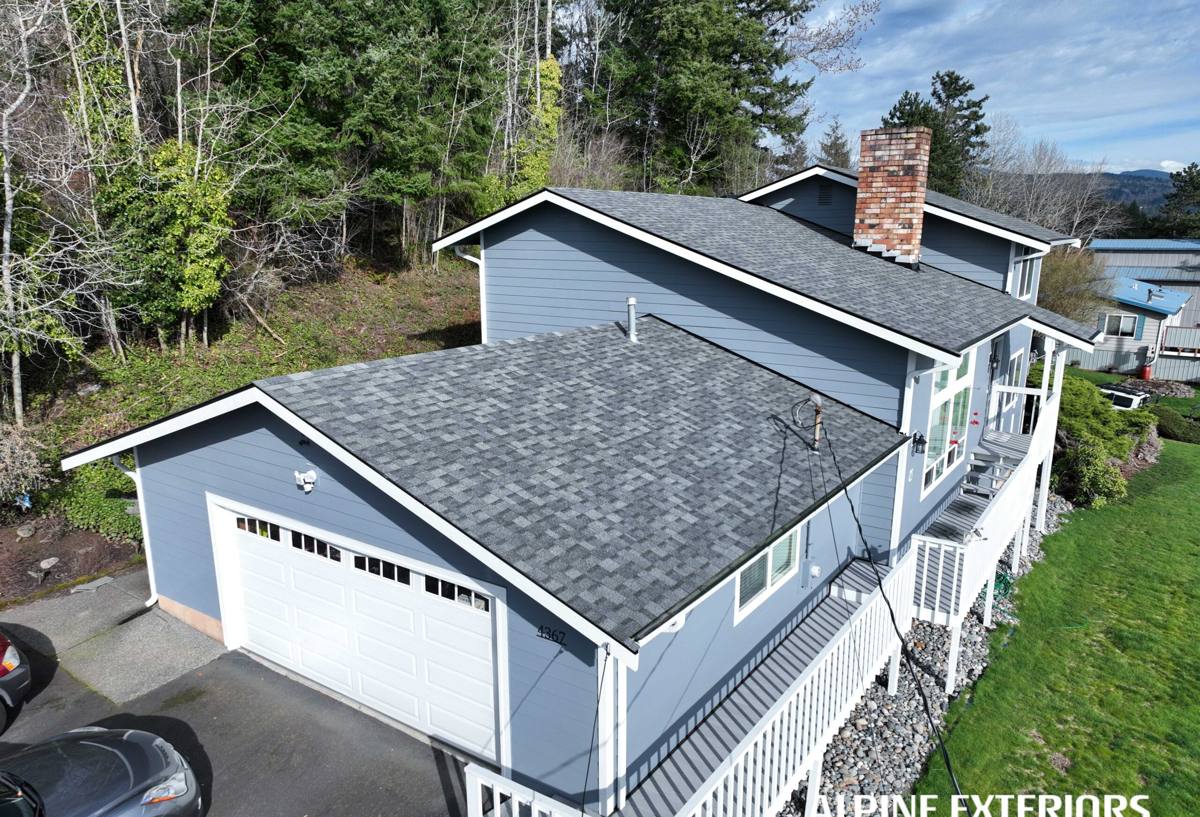
What Storm Damage Actually Looks Like Here
Wind Damage
Because Semiahmoo is so exposed to wind coming off the water, we see a lot of wind damage that starts at the edges — ridge caps, rake edges, and the first few courses along the eaves. Wind gets under a shingle edge, works it loose, and either tears it off outright or leaves it flapping, which lets water in on the next rain. Repeated wind events over a season can loosen fasteners across a whole slope even when nothing looks visibly wrong yet.
Moss and Moisture Damage
Whatcom County's roofing season for moss is long — mild temperatures and consistent moisture mean moss can establish itself almost any time of year, not just in the depths of winter. On shaded, north-facing slopes especially, moss holds water against the shingle surface far longer than the roof was ever designed to tolerate. Over time it lifts shingle edges, traps debris, and accelerates granule loss. A storm that wouldn't damage a clean, dry roof can do real harm to one that's already compromised by moss.
Salt Air Corrosion
This is the piece that's easy to underestimate. Salt-laden air corrodes exposed metal — nail heads, flashing, gutter hardware, and any unprotected fasteners — faster than it would a few miles inland. A storm doesn't have to be severe to exploit a fastener or flashing seam that's already been weakened by salt exposure over several seasons. This is one of the biggest reasons storm damage on a Semiahmoo roof can be more serious than it first appears from the ground.
What a Correct Storm Damage Repair Involves
A repair that actually holds up in this environment has to address more than the visible symptom. Replacing one torn shingle and calling it done is a short-term fix if the surrounding fasteners are corroding or the underlayment nearby is already compromised. A correct repair means:
- Identifying the full extent of the damage, not just the spot that's visibly missing or torn
- Checking flashing at valleys, chimneys, vents, and wall intersections near the damaged area, since wind-driven rain often finds its way in through flashing before it shows up as a shingle problem
- Using corrosion-resistant fasteners and hardware appropriate for a salt-air environment, not standard inland-grade materials
- Matching shingle type, color, and exposure as closely as possible so the repair blends in and performs consistently with the surrounding roof
- Clearing moss and debris from the repair area and, where it makes sense, treating nearby growth so it doesn't undermine the new work within a season or two
- Confirming underlayment and ice-and-water protection at eaves and valleys are intact, since these are the areas most exposed to wind-driven rain off the bay
Our Repair Process
We keep the process straightforward because storm damage is stressful enough without a confusing scope of work.
1. Inspection
We get on the roof (not just a look from the driveway) and check the damaged area along with the flashing, fasteners, and shingle condition nearby. Wind and salt damage rarely stay confined to one neat spot, so we look at the whole slope, not just where the damage is obvious.
2. Documentation
We take clear photos of the damage before any repair work starts. If you're filing an insurance claim, this documentation is often the difference between a smooth claim and a drawn-out back-and-forth with an adjuster.
3. Temporary Protection, If Needed
If a storm has left your roof open to the weather, protecting the interior of the home comes first. A tarp or temporary seal buys time to do the permanent repair correctly rather than rushing it.
4. The Repair
We match materials, use fasteners and flashing suited to a coastal environment, and reseal or replace underlayment as needed. We don't cut corners on flashing details just because the visible shingle repair is small — flashing failures are what turn a small storm repair into a bigger leak down the road.
5. Follow-Up
Once the repair is done, we walk the area with you, explain what we found and what we did about it, and flag anything else worth keeping an eye on — a moss patch that's starting to establish, a gutter section that's not draining well, anything that could turn into next season's storm damage if left alone.
Repair Scope: What Drives the Cost
Every roof and every storm is different, so we don't quote sight-unseen. But these are the main factors that determine whether a repair is a smaller job or a more involved one:
| Factor | Smaller Scope Repair | Larger Scope Repair |
|---|---|---|
| Area affected | Isolated to a few shingles or one section of ridge/flashing | Spread across a full slope or multiple areas of the roof |
| Underlayment condition | Intact, no water has reached it | Saturated or torn, needs replacement in addition to shingles |
| Flashing involved | Standard flashing in good condition, minor resealing | Corroded or damaged flashing at valleys, chimneys, or walls |
| Moss/moisture history | Clean roof surface, no prior moss buildup | Existing moss has already compromised nearby shingles |
| Access | Straightforward, low-slope or easily reached area | Steep slope, high roof, or difficult access adding time and safety measures |
Because salt air and moss are ongoing factors here, not one-time events, we'll also tell you honestly if a "repair" isn't the right long-term call — for example, if a roof is old enough and worn enough that patching one storm-damaged section is just delaying a broader conversation about remaining roof life. We'd rather tell you that upfront than have you pay for a repair that only buys a season or two.
After the Storm: A Homeowner's Checklist
You don't need to get on a ladder yourself, and we don't recommend it after a storm when conditions are still wet and roofs are slick. But from the ground and inside the house, here's what's worth checking:
- Granules collecting in gutters, downspouts, or at the base of downspout splash areas — a sign of accelerated shingle wear
- Shingles or shingle pieces in the yard or landscaping after high wind
- Visible gaps, lifted edges, or discoloration on roof slopes viewed from the ground or a neighboring vantage point
- Water stains or new spots on interior ceilings, especially near chimneys, vents, or where roof planes meet
- Gutters overflowing or pulling away from the fascia during heavy rain
- Moss patches that have visibly grown or spread since the last time you looked
- Any daylight visible through the attic roof deck, if you're able to safely check the attic
If you notice any of these after a storm, it's worth having someone look sooner rather than later. Small issues caught early are inexpensive fixes; the same issues left through another wet season often aren't.
Why a Crew That Already Works Semiahmoo Resort Matters
Storm damage repair isn't just about roofing skill in general — it's about knowing how this specific stretch of coastline behaves. We know which slopes on Semiahmoo-area homes tend to take the brunt of wind coming off the bay, which orientations hold onto moss longest through the wet season, and what salt exposure does to fasteners and flashing over a few winters. That's the kind of knowledge that comes from working roofs in this exact environment repeatedly, not from a general repair playbook applied to any roof anywhere.
It also means we're not learning Whatcom County permitting or working through unfamiliar terrain for the first time on your roof. We show up knowing the conditions, which means less guesswork and a repair that's built for what your roof will actually face next winter, not just what caused the damage this time.
Materials and Workmanship We Stand Behind
We don't push a specific brand or product line as a one-size-fits-all answer for storm damage repair. What matters more is matching the repair to your existing roof system and to the coastal conditions it has to survive. That means corrosion-resistant fasteners over standard ones near the shoreline, flashing details that account for wind-driven rain rather than just vertical rainfall, and shingle products with wind ratings suited to an exposed site rather than the lowest-cost option available. When a product or installation method has a maintenance burden or moisture sensitivity that doesn't make sense for a salt-air, high-moss environment, we'll tell you that directly and explain the trade-off rather than installing something we don't think will hold up here.
Get a Free Estimate
If a recent storm has left you with damage, or you just want a roof checked over before the next round of winter weather rolls in off the bay, we're happy to take a look. There's no pressure and no cost to get an honest assessment of what's going on and what it would take to fix it right. Use the form below to request a free estimate for your Semiahmoo Resort home.