 Semiahmoo Exterior
 Semiahmoo Resort Sits in One of the Toughest Micro-Climates in Whatcom County
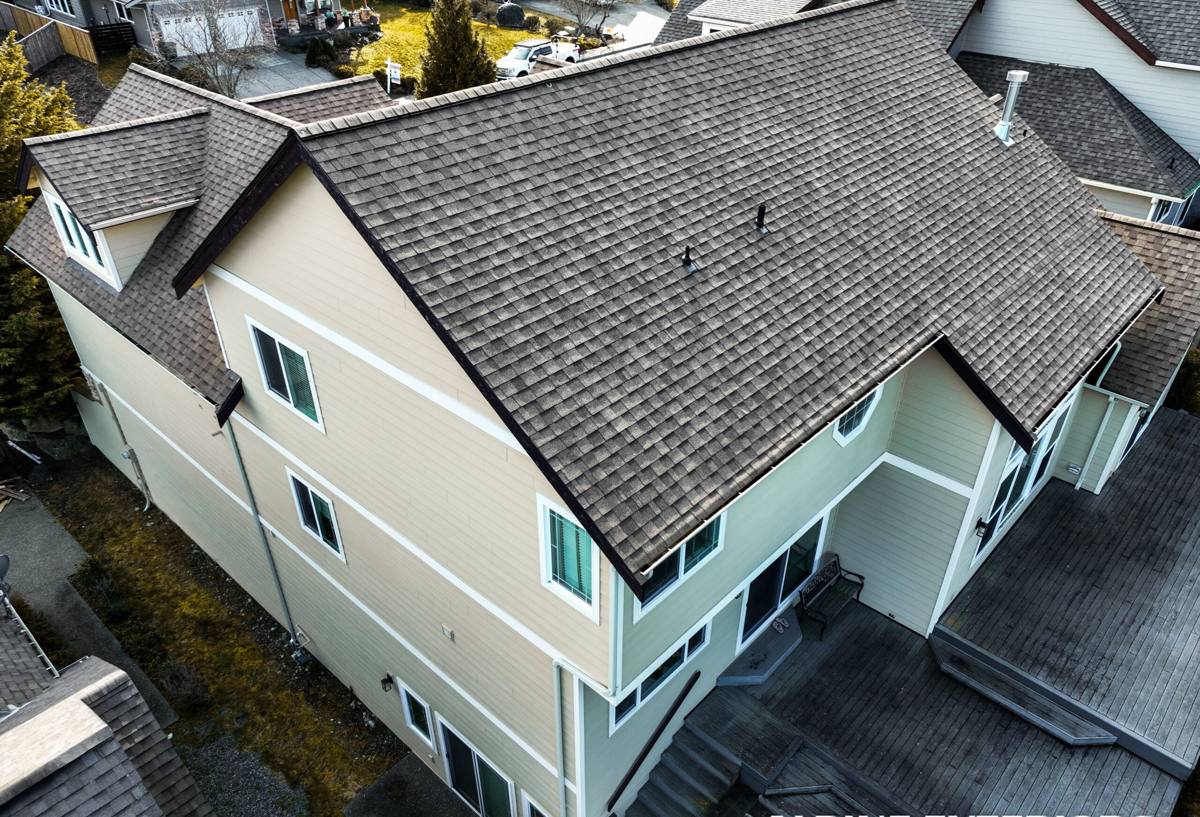
Homes on the Semiahmoo Spit and around Semiahmoo Resort don't weather the same way a house ten miles inland does. Sitting out on open water between Semiahmoo Bay and Drayton Harbor, these homes take wind-driven rain off the water, near-constant marine humidity, and salt-laden air that settles on every exterior surface, siding included. Add the long, gray, low-sun stretch of a typical Whatcom County winter and you get a moss season that can run six months or longer on north- and west-facing walls. That combination — salt, wind, driving rain, and moss — is exactly the profile that wears out the wrong siding material fast and exposes bad workmanship even faster.
We're not describing a hypothetical. It's the normal weather pattern for anything sitting close to the water in this part of Washington, and it's the reason siding replacement here needs to be treated differently than a standard re-side job in a sheltered neighborhood.
Why the Wrong Material Fails Faster Right Here
Salt air is corrosive to fasteners and hardware, and it accelerates the breakdown of finishes that aren't engineered to resist it. Constant dampness feeds moss, algae, and mildew on any surface that can't shed water quickly or that holds moisture against the substrate. Wood-based products — cedar, primed spruce, and engineered wood siding like LP SmartSide — depend on paint film and edge sealing to keep moisture out. In a marine environment, that paint film is under attack from salt spray and UV on one side and trapped moisture on the other, so touch-up painting and caulk maintenance become a recurring, never-ending chore. Vinyl siding doesn't rot, but it isn't dimensionally stable in wide temperature swings and wind events, and it can't be finished in the deep, saturated colors that a lot of resort-style architecture calls for without a much higher risk of fading and warping in direct coastal sun and salt exposure.
This is why we install James Hardie fiber cement exclusively. It's non-combustible, it doesn't feed moss or rot the way wood-based siding does, and its factory-applied ColorPlus finish is baked on and warranted against fading and flaking in a way that field-applied paint on wood siding simply isn't. For a home absorbing salt air and driving rain year-round, that difference isn't cosmetic — it's the difference between repainting every few years and leaving the finish alone for decades.
What "Climate-Engineered" Actually Means
James Hardie makes region-specific formulations under its HZ5 engineering standard for the Pacific Northwest, built to handle sustained moisture exposure and freeze-thaw cycling better than a one-size-fits-all fiber cement product. For a Semiahmoo Resort home, that's the correct starting point — not an upgrade, a baseline.
What a Correct Siding Replacement Involves
Replacing siding on a home in this environment is not a cosmetic swap. Done right, it's a full envelope job:
- Complete tear-off of the old siding down to the sheathing, not a re-clad over existing material
- Inspection of the sheathing and framing underneath for hidden water damage, especially around old window and door penetrations
- Repair or replacement of any compromised sheathing before anything new goes up
- Installation of a new weather-resistant barrier (WRB) lapped correctly, shingle-style, so water sheds down and out
- Proper flashing at every window, door, deck ledger, and roof-to-wall transition — this is where the majority of moisture failures actually start
- Correct fastening pattern and fastener type for the specific Hardie product and exposure
- Rainscreen or drainage gap where wall assembly and exposure warrant it, so bulk water and incidental moisture can drain and the wall can dry
Skip any one of those steps and the new siding may look fine for a season or two before problems show up behind it — problems that are far more expensive to fix once they're hidden behind finished walls.
The Details That Matter Most in a Marine Environment
Fasteners and Hardware
Salt air corrodes standard fasteners and trim hardware faster than most homeowners expect. We use corrosion-resistant fasteners rated for coastal exposure, and we don't cut corners on trim hardware just because it's out of sight once the job is finished.
Flashing and Water Management
On a home taking wind-driven rain off open water, flashing details do more work than the siding material itself. Kickout flashing where roof lines meet walls, head flashing over every window, and proper end-dam details at deck ledgers are non-negotiable — these are the spots where water gets pushed sideways by wind rather than falling straight down, and standard installation details sometimes don't account for that.
Clearance and Ventilation
Siding installed too close to grade, decks, or roof lines traps moisture and feeds the moss and mildew that this climate already encourages. We hold correct clearances at every transition and make sure the wall assembly can actually dry out between wet spells, not just shed water when it's raining.
Choosing the Right Hardie Product Line for This Exposure
| Product | Best Fit For | Why It Works Here |
|---|---|---|
| HardiePlank lap siding | Most single-family homes | Classic profile, wide color range, proven track record in wet coastal climates |
| HardiePanel vertical siding | Resort/contemporary architecture, accent walls | Clean modern look that suits resort-style design without sacrificing durability |
| HardieTrim boards | Corners, fascia, window and door surrounds | Matches the fiber cement performance of the field siding so trim doesn't become the weak point |
| ColorPlus factory finish | Any of the above | Baked-on, warranted color that resists salt-air fading far better than field-applied paint |
Our Process for a Semiahmoo Resort Home
Assessment and Scope
We start with a walk-around assessment of the whole envelope, not just the siding — exposure by elevation, existing moisture damage, window and door flashing condition, and any deck or roof intersections that need special attention. Homes closer to the water or facing the prevailing weather usually need more flashing and drainage detail work than a sheltered elevation on the same house.
Product and Color Selection
We help homeowners pick a Hardie product line and ColorPlus color that fits both the home's architecture and the practical realities of a marine setting — some colors and sheens hold up more visibly than others under salt spray and UV, and we're upfront about that when we make recommendations. Many resort-area communities also have design guidelines or a review process for exterior changes; we build that into the timeline rather than treating it as an afterthought.
Tear-Off, Repair, and Installation
We remove the old siding down to bare sheathing, repair anything compromised, install the WRB and flashing system, then install the new Hardie siding and trim to manufacturer specification and the fastening/clearance standards this exposure calls for.
Final Walkthrough
Before we call the job finished, we walk the whole exterior with the homeowner, check every flashing and transition point, and go over basic care specific to the ColorPlus finish and the local climate.
What Drives Cost on a Job Like This
| Factor | Why It Matters at Semiahmoo Resort |
|---|---|
| Extent of hidden water damage | Marine exposure means sheathing and framing repair is more common here than in sheltered neighborhoods |
| Flashing and drainage detail complexity | Roof-wall intersections, decks, and multiple elevations facing open water need more careful (and more time-consuming) flashing work |
| Product line and finish | Panel siding, custom trim details, and premium ColorPlus colors carry different material costs than a standard lap job |
| Site access | Resort-area lots, shared driveways, and elevation changes can affect staging, scaffolding, and material handling |
| Existing siding removal and disposal | Full tear-off of old wood or vinyl siding adds labor and disposal cost but is not optional for a correct job |
As a broad guide, full tear-off James Hardie siding replacement projects in this region typically fall in the range of roughly $12 to $22 per square foot installed, with the final number driven by the factors above rather than a flat rate. Any legitimate quote should be based on an in-person assessment, not a phone estimate.
Living With Hardie Siding in a Salt-Air, High-Moss Climate
One of the practical advantages of fiber cement in this setting is how little ongoing maintenance it asks for compared to wood-based siding. It won't rot, it doesn't need repainting on a cycle, and it resists the moss and mildew growth that wood siding is prone to in shaded, damp conditions. That said, no exterior surface in a marine environment is maintenance-free:
- Rinse siding periodically to clear accumulated salt residue, especially on elevations facing the water
- Keep gutters and downspouts clear so water isn't overflowing onto wall surfaces
- Trim back vegetation and tree cover that keeps siding shaded and damp, which encourages moss
- Recaulk and inspect sealant joints at trim and penetrations every few years, since caulk wears out well before the siding does
- Address any flashing or trim damage quickly rather than letting moisture find its way behind the siding
Why It Matters That We Already Work This Area
A crew that mainly works inland, sheltered subdivisions can do a technically fine installation and still miss the details that matter on a spit exposed to open water — the extra flashing at a windward elevation, the fastener choice that holds up to salt air, the clearance that keeps moss from taking over a shaded north wall within a year. Working Semiahmoo Resort and similar Whatcom County coastal properties regularly means we've already seen how these homes actually weather over time, not just how they look on installation day.
If you're considering a siding replacement for a home in or near Semiahmoo Resort, we're glad to walk the property, look at what your current siding and flashing are actually doing, and give you a straight assessment of what a correct James Hardie installation would involve. There's no cost and no pressure to move forward — just use the form below to request your free estimate.