 Semiahmoo Exterior
 Siding Repair in a Tough Coastal Microclimate
Semiahmoo Resort sits right up against the water, and that location is exactly why siding here wears differently than siding ten miles inland. Homes in this part of Whatcom County take on salt-laden air off the bay, wind-driven rain that gets pushed sideways into wall assemblies, and a moss season that can stretch from fall through spring. None of that is unusual for northwest Washington, but the combination is more concentrated near the water, and it shows up in siding failures years before homeowners expect them.
Siding repair in this setting isn't just about patching a crack or replacing a cracked board. It's about understanding why that board failed in the first place, because if the underlying cause — moisture intrusion, trapped organic growth, a failed caulk joint, or a flashing detail that was never right — isn't addressed, the repair won't hold. We've built our repair process around that reality rather than around the fastest way to make a wall look fixed.
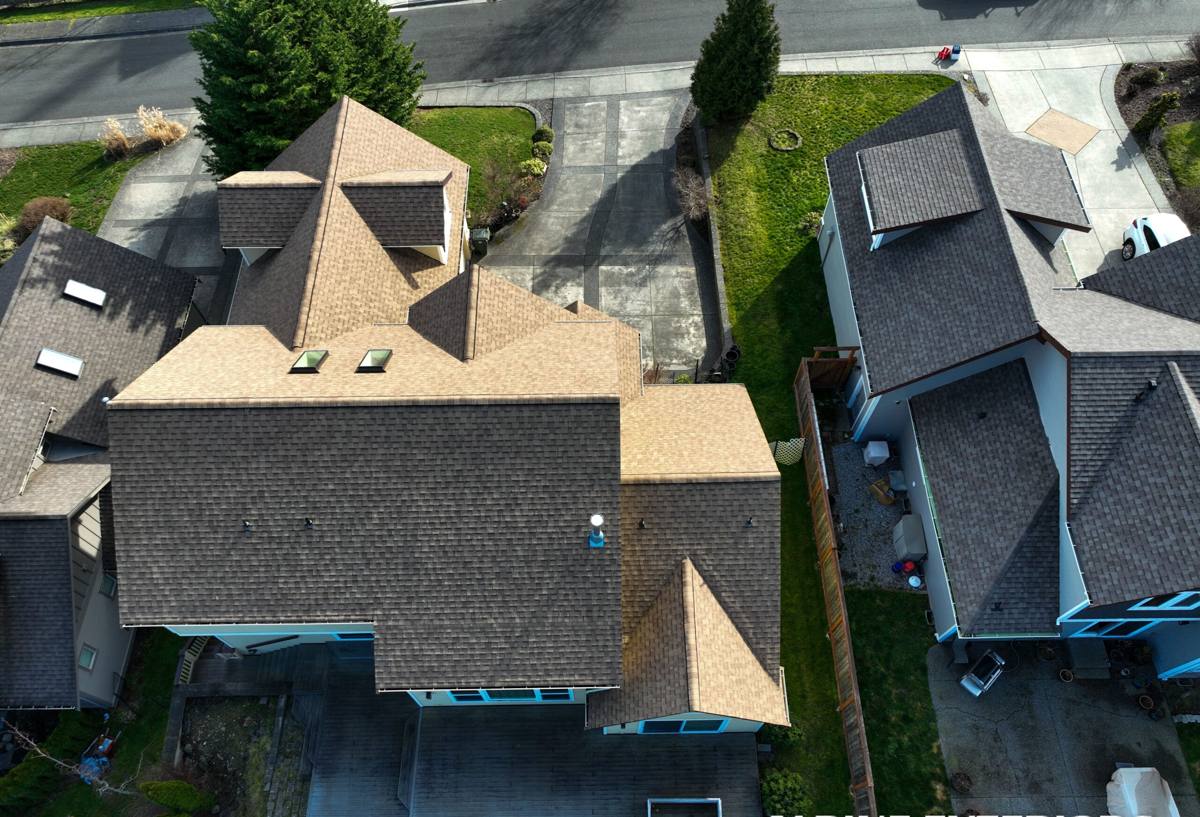
What Causes Siding Damage in Semiahmoo Resort
Salt Air
Airborne salt accelerates corrosion on fasteners, trim flashing, and any exposed metal components tied into the siding system. It also breaks down certain paint and caulk formulations faster than inland exposure would. Siding that looks fine from the street can have fastener corrosion or caulk failure at joints that only becomes obvious once you're up close during a repair inspection.
Driving Rain
Wind off the water doesn't just fall as rain — it drives horizontally into siding laps, trim returns, and window and door penetrations. Over time, that pressure finds any gap in the water-resistive barrier or flashing detail and pushes moisture behind the cladding, where it can sit against sheathing and framing long before a stain or soft spot shows up on the surface.
A Long Moss Season
Shaded, north-facing, and tree-adjacent walls in this area can stay damp for months at a stretch. Moss and algae hold moisture against the siding surface, which is hard on paint finishes and, on materials that aren't dimensionally stable, can contribute to swelling, cupping, or delamination at seams and butt joints.
Signs Your Semiahmoo Resort Home Needs Siding Repair
Most siding problems in this area start small and stay hidden until they aren't. A short walk around the exterior a couple of times a year is enough to catch most of these early:
- Soft, spongy, or visibly swollen sections of siding, especially near the bottom courses or around trim
- Persistent moss or algae growth that doesn't wash off easily, particularly on shaded or bay-facing walls
- Cracked, bubbling, or peeling paint concentrated in one area rather than spread evenly across the wall
- Gaps or separation at butt joints, corners, or where siding meets window and door trim
- Visible rust streaking below fasteners or metal flashing
- Warping, cupping, or boards that no longer sit flush against the wall
- Interior signs — musty smell, discoloration on interior drywall, or peeling interior paint on an exterior wall
Any one of these on its own might be minor. Several showing up in the same area, or interior symptoms paired with exterior damage, usually means moisture has been getting behind the siding for a while.
Repair vs. Replacement: How We Make the Call
Not every damaged section needs to come off the whole house, and not every problem can be solved with a patch. We walk every job through the same set of questions before recommending a direction:
| Factor | Favors Repair | Favors Replacement |
|---|---|---|
| Extent of damage | Isolated to one or two sections | Spread across multiple walls or elevations |
| Moisture intrusion | Surface-level, sheathing is dry | Sheathing or framing shows rot or sustained moisture |
| Age of existing siding | Relatively young, otherwise sound material | Near or past its expected service life |
| Material match | Matching product still available or close enough to blend | Discontinued profile, color, or product line |
| Root cause | Identifiable and fixable in place | Systemic — flashing, drainage plane, or original install issues |
The honest answer is that we'd rather tell a homeowner they only need a targeted repair than talk them into more work than the house needs. But we'll also tell you plainly when a patch is just going to fail again in a season or two — that's not a good use of anyone's money.
What a Correct Repair Job Actually Involves
A repair that holds up in this climate is more than swapping out a bad board. Our process looks like this:
- Inspection beyond the visible damage. We check adjacent sections, the flashing and trim tied into the repair area, and probe for soft sheathing before we quote anything.
- Identify the actual cause. A cracked board is a symptom. We look for what let water in — a missing kick-out flashing, a failed sealant joint, poor clearance at grade, or a drainage plane gap.
- Remove damaged material back to sound substrate. Cutting out only what's visibly bad and leaving compromised sheathing behind is how repairs fail early.
- Correct the underlying detail. Re-flash, re-seal, or adjust the drainage path so the same failure doesn't recur in the same spot.
- Replace with matched or appropriate material. Where original siding can't be matched well, we discuss whether a full elevation or full wall replacement gives a better long-term result than a visible patch.
- Finish and seal correctly. Paint, caulk, and trim details get finished to hold up against salt air and driving rain, not just to look clean on the day we leave.
Why We Recommend James Hardie When Repair Turns Into Replacement
We install James Hardie fiber cement siding exclusively — we don't install vinyl, LP SmartSide, or other fiber cement brands. When a repair job reveals damage extensive enough that patching individual boards no longer makes sense, our recommendation for the replacement sections is always Hardie, for reasons that matter specifically in a place like Semiahmoo Resort:
- Dimensional stability. Fiber cement doesn't swell, cup, or rot the way wood-based products can when they stay damp through a long moss season.
- Non-combustible material. Not a driving factor in a coastal repair, but relevant to overall home protection.
- Factory-applied ColorPlus finish. A baked-on finish holds color and resists the fading and peeling that site-applied paint struggles with under salt air exposure.
- Climate-engineered HZ product lines. Hardie's HZ5 formulation is built for wetter, harsher climates like ours, rather than a one-size-fits-all national spec.
- A transferable warranty that carries value if the home changes hands, which matters in a resort community where properties do change ownership.
We're not going to pretend other products can't be repaired competently — we still work carefully around existing vinyl, wood, or other siding when a repair is genuinely isolated. But when the conversation moves from "patch this section" to "replace this wall," Hardie is what we put back up, because we've seen how it performs against this exact climate over time.
How Our Process Works in Semiahmoo Resort
We already work in this neighborhood regularly, which matters more than it might seem. Knowing which elevations in Semiahmoo Resort take the worst of the wind and rain, how moss behaves on the shaded lots near the water versus the more exposed ones, and what drainage and flashing details tend to fail first in this specific setting means we're not guessing on day one of an inspection.
A typical repair project runs through the same steps regardless of scope:
- An on-site inspection where we assess visible damage and probe for hidden moisture issues
- A clear, written explanation of what we found and why — including photos of anything not visible from ground level
- A straightforward repair-or-replace recommendation, with the reasoning behind it
- A written estimate before any work begins, with no pressure to expand scope beyond what the house needs
- Work scheduled around Whatcom County's wetter months when possible, since repair work goes best in a dry window
Maintaining Siding After a Repair
A good repair still needs some upkeep in this environment, especially given the moss season and salt exposure specific to this area:
- Rinse siding periodically, particularly shaded or bay-facing walls, to slow moss and algae buildup
- Keep gutters clear so runoff isn't sheeting down wall sections during heavy rain
- Trim back vegetation that keeps a wall section shaded and damp longer than the rest of the house
- Do a visual walk-around each fall before the wet season sets in, checking caulk joints and trim for early separation
- Address small caulk or paint failures promptly — they're inexpensive to fix early and expensive to ignore
None of this prevents every issue this climate throws at a house, but it extends the life of both the repair and the siding around it.
Get an Honest Look at Your Siding
If you're seeing soft spots, moss buildup, or trim separation on a Semiahmoo Resort home, it's worth getting a straightforward assessment before the next wet season sets in. We'll tell you plainly whether a targeted repair will hold or whether a section needs a proper replacement — no upselling, no scare tactics. Reach out for a free, no-pressure estimate using the form below.