 Semiahmoo Exterior
 Building New at Semiahmoo Resort Means Building for the Water
Semiahmoo Resort sits out on the spit, with open water on more than one side and very little standing between a new home and whatever the marine layer is doing that day. If you're framing a new build here, the windows aren't just an aesthetic decision — they're one of the first lines of defense against conditions that are noticeably harder on a house than a typical inland Whatcom County lot. Salt-laden air, wind-driven rain that comes in sideways off the water, and a moss and algae season that runs most of the year all work on a home's exterior in ways that show up early if the window installation wasn't done right the first time.
New construction is actually the best time to get this right. Unlike a retrofit, you're not working around existing siding, trim, or a weather barrier that's already in place — you get to build the water management system into the wall from the studs out. Get the sequence wrong here, though, and you're baking a problem into the house that won't show up as a leak for a few years, by which point it's a much bigger repair than it needed to be.
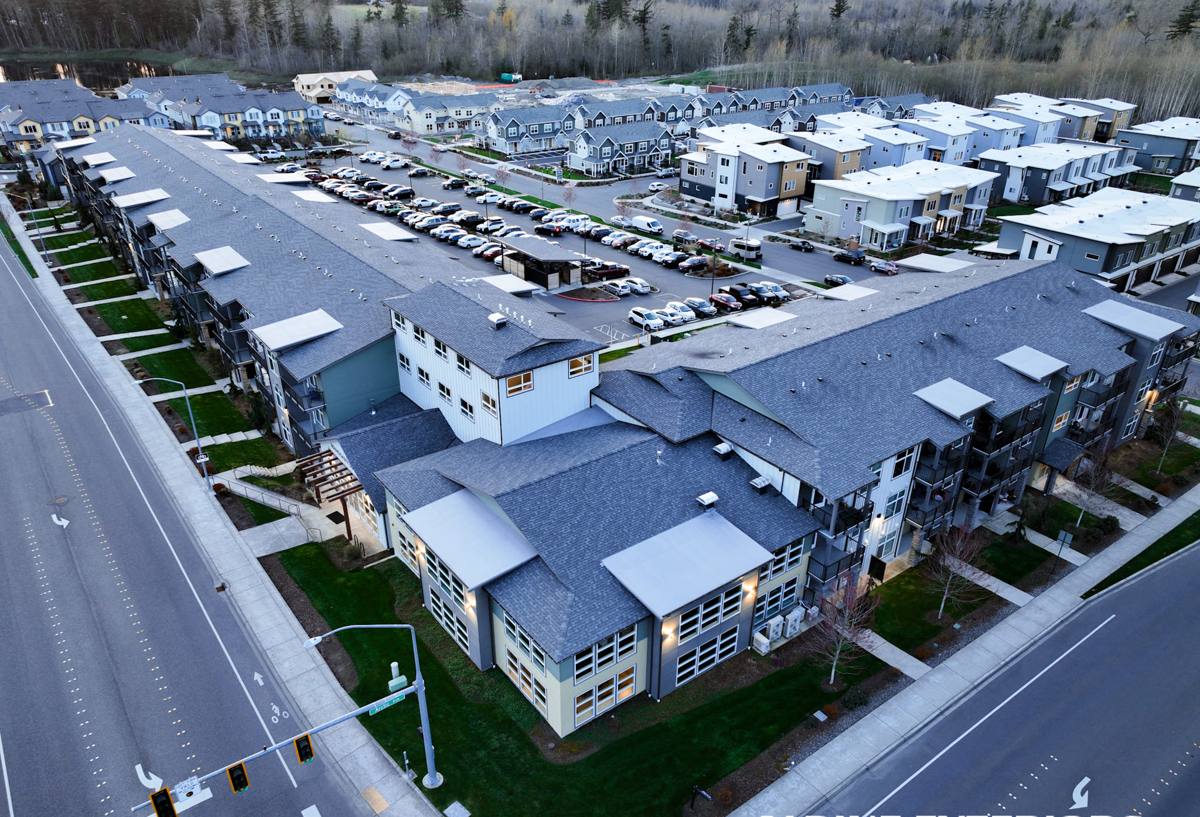
New-Construction Installation Is a Different Job Than a Replacement
A lot of homeowners assume "installing a window" is the same task whether it's a brand-new house or a 20-year-old one getting upgraded. It isn't. Replacement work happens after the wall is already closed up, so the installer is often adapting to whatever flashing and framing already exist. New construction is the opposite — the rough opening, the weather-resistive barrier (WRB), the flashing, and the window itself all get installed in a specific order, and each layer has to lap correctly over the one below it so water always sheds outward and down, never in.
On a site like Semiahmoo Resort, that sequencing matters more than it would on a sheltered inland lot, because wind-driven rain will find any gap in the water management plan and push moisture into places gravity alone wouldn't. A window that's simply "set into the opening and caulked" might pass a dry-day walkthrough and still fail the first real coastal storm.
What Correct Sequencing Looks Like
- Rough opening is checked for square, level, and correct size before anything goes in — a window forced into an out-of-square opening never seals evenly.
- Sill pan flashing is installed first, sloped slightly outward, so any water that gets past the window has somewhere to go besides the framing.
- The WRB (house wrap) is cut and integrated with the flashing in a shingle-lap pattern — each layer overlaps the one below it, never the reverse.
- Window is set, shimmed level and plumb, and fastened per the manufacturer's instructions — this is what keeps the warranty valid, and it's also just the difference between a window that operates smoothly for decades and one that binds within a few years.
- Jamb flashing and head flashing go on last, integrated back into the WRB above the opening so water is shed over the top of the window, not behind it.
- Sealant is used to back up the flashing, not replace it — caulk is a second line of defense, never the primary water barrier.
Choosing Window Materials and Glass for This Exposure
Not every window product handles salt air and constant moisture equally well, and the right choice often comes down to trade-offs rather than one obvious winner. We'll walk through the options honestly rather than pushing whatever happens to be easiest to install.
| Frame Material | How It Handles Salt Air & Moisture | Maintenance Reality |
|---|---|---|
| Vinyl | Won't corrode or rust; performs well in coastal humidity | Low maintenance, but darker colors can fade faster in strong reflected coastal light |
| Fiberglass | Very stable dimensionally, resists moisture and corrosion well | Low maintenance, holds paint finishes longer than vinyl if a custom color is wanted |
| Aluminum-clad wood | Attractive interior wood look, but hardware and cladding seams need attention in salt exposure | Higher maintenance — exterior cladding should be inspected regularly for seam integrity near the coast |
| Bare aluminum | Prone to corrosion and pitting in direct salt exposure over time | We generally steer new-construction coastal clients away from bare aluminum for this reason |
Hardware matters as much as frame material. Look for corrosion-resistant hinges, locks, and cranks — stainless steel or coated hardware rated for coastal use holds up far longer than standard interior-grade hardware on a house exposed to salt spray. Glass packages should account for wind exposure too: a laminated or impact-rated glass option on the water-facing elevations adds real durability against wind-driven debris, and a quality Low-E coating helps manage the temperature swings that come with big glass areas facing open water.
Working With Your Builder or GC: Coordination Points That Get Missed
Window installation on a new build doesn't happen in isolation — it sits in the middle of a trade sequence, sandwiched between framing/WRB and siding/trim. Most of the callbacks we see on new construction trace back to a coordination gap, not a bad window.
Sequencing Questions Worth Asking Before Windows Go In
- Has the WRB been installed and inspected before window setting begins, with enough material left at each opening to properly lap the flashing?
- Is there a written flashing detail for this specific wall assembly (siding type, sheathing, WRB product) that the window installer and the siding crew are both building to?
- Who is responsible for the sill pan — the framer, the window installer, or the siding crew? On too many jobs, everyone assumes it's someone else's task.
- Are window rough openings being verified against the actual window order, not just the plan set? Custom sizes and field changes are common on resort-community builds with unique elevations.
- Is there a plan for inspecting flashing laps before the siding closes everything up and makes it invisible?
Getting on the schedule at the right point — after the WRB but before siding closes things in — is its own logistical challenge on an active job site. A crew that's done this specific sequence on other Semiahmoo builds knows how to communicate with the GC and framing crew without becoming the bottleneck.
Moss, Algae, and What Long-Term Exposure Does to a New Home
Whatcom County's wet season is long, and Semiahmoo's marine exposure keeps humidity and surface moisture around even on days that aren't actively raining. Moss and algae don't damage window glass, but they do take hold on horizontal surfaces — sills, exterior trim, and mulled window assemblies where water sits rather than draining. On a new build, the fix isn't a special window product; it's making sure every horizontal surface around the window has real slope built in, and that sill design doesn't create a flat ledge where organic growth and standing water can settle in year after year.
This is worth thinking about at the design stage, not after move-in. A slightly steeper sill detail or a drip cap that actually throws water clear of the wall below costs nothing extra in materials but saves years of green staining and slow trim deterioration.
Our New-Construction Window Process
We treat new-construction window work as a sequence, not a single visit. Here's the general shape of how we approach it on Semiahmoo Resort builds:
- Plan review and window schedule verification — confirming sizes, swing directions, and glass packages against the actual architectural plans before anything is ordered.
- Site coordination with the builder — agreeing on flashing details and where our scope starts and ends relative to WRB and siding trades.
- Rough opening inspection — checking square, level, and size against the ordered units before install day, so surprises get caught while they're still cheap to fix.
- Sill pan and flashing installation — built to shed water outward, integrated with the WRB in proper shingle-lap order.
- Window setting — shimmed, leveled, and fastened to manufacturer specification, which keeps the product warranty intact.
- Head and jamb flashing, sealant backup — completing the water management envelope around each opening.
- Final inspection and documentation — a walkthrough before siding closes the wall, since this is the last point where flashing details are actually visible and correctable.
Why a Crew That Already Works Semiahmoo Resort Matters
A window installer who mostly works inland jobs isn't necessarily doing anything wrong — they're just solving a different problem. On Semiahmoo Resort's exposure, the margin for error on flashing and material selection is smaller, and the community's architectural review process and construction schedule often move on a different rhythm than a typical subdivision build. Knowing that going in — showing up with the right flashing details already planned, the right hardware specified, and a schedule that fits around how the resort community's building process actually runs — saves real time and avoids the kind of rework that happens when someone learns those lessons on your house instead of the last one.
We're not guessing at what salt air and driving rain do to a window assembly over time on this stretch of coastline — we've seen it, and we build for it from the first flashing detail rather than trying to patch for it later.
Before Your Windows Go In: A Quick Checklist
- Confirm frame material and hardware are specified for coastal/marine exposure, not standard inland-grade hardware.
- Ask for the written flashing detail specific to your wall assembly, and confirm the siding crew is building to the same detail.
- Verify sill design has real outward slope, not a flat ledge that will collect moss and standing water.
- Check that the glass package (Low-E coating, laminated/impact glass on exposed elevations) matches the home's actual wind and sun exposure.
- Make sure someone is inspecting flashing laps before siding closes the wall — this is the last chance to catch a sequencing error.
- Confirm installation will follow manufacturer instructions closely enough to keep the product warranty valid.
If you're planning a new build in Semiahmoo Resort, we're glad to walk the plans with you and talk through window selection and flashing details before framing even gets to that wall. Reach out for a free, no-pressure estimate using the form below — there's no obligation, just a straight conversation about what this site needs.