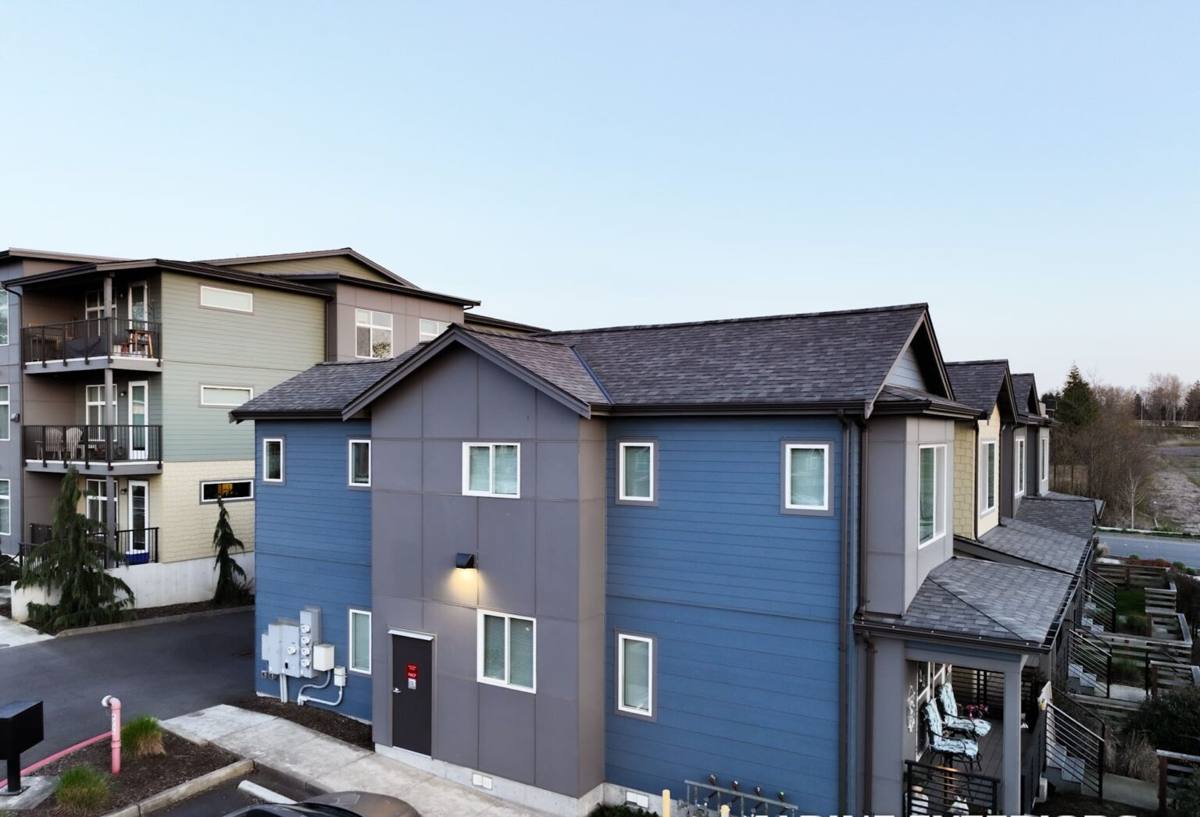
 Semiahmoo Exterior
 Why Semiahmoo Resort Roofs Wear Out Differently
Semiahmoo Resort sits out on the spit, with open water on multiple sides and very little standing between the neighborhood and Semiahmoo Bay. That location is part of what makes it a beautiful place to live, but it's hard on a roof. Salt-laden air corrodes exposed metal faster than it does even a few miles inland — fasteners, flashing, vent caps, and gutter hardware all take the brunt of it. Add in the driving rain that comes sideways off the water during winter storms, and any weak point in a roof system — a lifted shingle tab, a gap at a flashing seam, an undersized underlayment — turns into an active leak much sooner here than it would on a roof in a more sheltered part of Whatcom County.
Then there's moss. Semiahmoo's tree cover, marine humidity, and long stretch of overcast, wet months give moss and algae a real head start every year. Once it gets a foothold on a north-facing slope or under a stand of conifers, it holds moisture against the roofing material and works into laps and fastener lines. A roof that would last 25+ years in a dry climate can lose meaningful life here if it isn't installed and maintained with these three factors — salt, wind-driven rain, and moss — specifically in mind.
Signs a Semiahmoo Resort Roof Needs Replacement, Not Another Repair
Not every roof problem means a full replacement, but out here the window for "just patch it" closes faster than homeowners expect. Some signs point clearly toward replacement rather than another round of spot repairs:
- Granule loss heavy enough that you're finding shingle grit in gutters and downspouts every season
- Multiple past repairs in different areas of the roof, rather than one isolated problem
- Soft or spongy decking felt underfoot in the attic, especially near valleys or the eaves facing the water
- Rusted or pitted flashing around chimneys, skylights, and roof penetrations — a common early failure point in salt air
- Moss or algae that keeps coming back within a season or two of cleaning, no matter how it's treated
- Visible sagging along the ridge or roof plane, which usually means structural decking issues underneath
- A roof already past 18–20 years old with asphalt shingles, given the accelerated wear this location sees
If a roof is showing one or two of these, a targeted repair can still make sense. If it's showing several at once, it's usually cheaper in the long run to replace than to keep chasing leaks room by room.
Material Choices for a Coastal, Wet-Climate Roof
There's no single "best" roofing material for every home — it depends on the roof's slope, the home's style, moss exposure, and budget. Here's how the common options actually perform in a Semiahmoo Resort setting:
| Material | Typical Lifespan Here | Salt/Moisture Behavior | Moss Resistance |
|---|---|---|---|
| Architectural asphalt shingle | 20–25 years | Good with proper flashing and ventilation; fasteners should be corrosion-resistant | Moderate — improves greatly with copper or zinc strips on shaded slopes |
| Standing seam metal | 40–50+ years | Excellent when specified with a marine-grade finish; watch fastener and flashing metal compatibility | High — sheds moisture fast, little surface for growth to grip |
| Composite/synthetic shake | 30–40 years | Good; doesn't absorb moisture like wood shake does | Moderate to high, depending on product |
| Cedar shake | 20–30 years with upkeep | Requires diligent maintenance in this climate; absorbs moisture and salt spray | Low without regular treatment — highest moss risk of the group |
For most Semiahmoo Resort homes, we steer people toward architectural asphalt or standing seam metal. Both handle the combination of salt exposure and wet winters well when installed correctly, and both give us solid options for moss control built into the install rather than bolted on afterward.
A Note on Cedar Shake
Cedar shake still shows up on some older homes in the area and can look great, but it's an honest trade-off out here: it needs more frequent inspection, cleaning, and occasional board replacement to hold up against the marine humidity and shaded, moss-prone areas near the water. We'll install or repair it if that's what a homeowner wants, but we'll also tell you upfront what the maintenance schedule really looks like in this specific climate before you commit to it.
What a Correct Roof Replacement Actually Involves
A roof replacement is more than swapping old shingles for new ones. On a home exposed to Semiahmoo's wind and salt air, the details underneath the surface layer matter as much as the material itself.
Full Tear-Off and Deck Inspection
We remove the existing roofing down to the deck rather than layering over it. That's the only way to actually see the condition of the sheathing — soft, delaminated, or water-stained decking gets replaced before anything new goes down, because covering a compromised deck just hides a problem that will resurface.
Underlayment Built for Wind-Driven Rain
Because Semiahmoo Resort takes rain sideways off the bay during storms, we use a synthetic underlayment rated for high wind-driven moisture exposure, with extra ice-and-water shield membrane at eaves, valleys, and around every penetration — the spots where sideways rain is most likely to find a way under the surface layer.
Flashing and Fasteners Suited to Salt Air
Standard galvanized flashing and fasteners corrode faster this close to salt water. We spec corrosion-resistant flashing and fastener materials for roofs in this area as standard practice, not an upcharge — it's simply what holds up here.
Ventilation That Matches the Home
Proper intake and exhaust ventilation keeps moisture from building up in the attic, which matters even more in a marine climate where ambient humidity is already high. Undersized or blocked ventilation shortens the life of a new roof regardless of how good the shingles are.
Moss Prevention Built Into the Install
Rather than treating moss as an annual maintenance chore, we address it at install time wherever the roof design allows:
- Zinc or copper control strips near the ridge on slopes with heavy shade or moss history, so rain carries trace metal down the roof and inhibits regrowth
- Trimming recommendations for overhanging branches that keep a slope shaded and damp longer than necessary
- Material and color choices that show moss less and shed water faster on north-facing or heavily shaded sections
- Straight talk about which slopes on a given home are genuinely moss-prone, so homeowners know what to watch and clean, and how often
None of this makes a roof moss-proof — nothing does in this climate — but it meaningfully extends the time between cleanings and reduces how aggressively moss takes hold.
Our Process for a Semiahmoo Resort Roof Replacement
The steps are straightforward, but we don't skip any of them:
- On-site inspection. We walk the roof and attic, check the deck, flashing, and ventilation, and note anything specific to the home's exposure to wind and salt.
- Written estimate. A clear scope and price, with material options explained in plain terms — no pressure toward the most expensive option.
- Permitting. We handle the permit through the appropriate local jurisdiction before work begins.
- Tear-off and deck repair. Old roofing comes off, the deck gets inspected and repaired as needed, and debris is hauled off site.
- Install. Underlayment, flashing, ventilation, and the finish material go in per manufacturer specs and the details above.
- Final walkthrough and cleanup. We inspect the finished roof with the homeowner and do a magnetic sweep of the property for stray fasteners.
- Warranty paperwork. Manufacturer and workmanship warranty documentation is provided in writing.
Why a Crew That Already Works Semiahmoo Resort Matters
Access and logistics in Semiahmoo Resort aren't the same as a typical inland neighborhood. Narrow roads, HOA guidelines on staging materials and equipment, and the general expectation of a tidy job site all factor into how a crew needs to operate here. A contractor who's already worked in the community knows how to stage a project without disrupting neighbors, what the HOA typically expects for notice and cleanup, and how the local weather windows off the bay affect scheduling a tear-off — you don't want a roof opened up when a wind-driven system is rolling in off the water.
There's also a practical benefit to familiarity with the housing stock itself: a lot of homes in this community share similar roof pitches, architectural styles, and past-decade construction details, so a crew that's worked several of them can spot problems and plan a job more efficiently than one seeing this kind of home for the first time.
What to Check Before Hiring a Roofer in Whatcom County
- Current Washington State contractor license and liability insurance — ask to see proof, not just a claim
- A written estimate that breaks down materials, labor, and disposal — not a single lump number
- Manufacturer certification for the specific product being installed, if warranty coverage matters to you
- A clear answer on who pulls the permit and handles inspections
- References or past work in the local area, ideally on a similar coastal or moss-exposed site
- A written workmanship warranty, separate from the manufacturer's material warranty
Any legitimate local roofer should answer all of these without hesitation. If a contractor is vague on licensing, insurance, or warranty terms, that's worth treating as a red flag before signing anything.
Get a Straight Answer on Your Roof
If your Semiahmoo Resort roof is showing its age, or you just want an honest opinion on whether repair or replacement makes more sense, we're happy to take a look. The estimate is free, there's no pressure, and we'll tell you plainly what we see — including if replacement isn't actually necessary yet. Fill out the form below to get started.