 Semiahmoo Exterior
 Why Decks in Semiahmoo Resort Wear Out Faster
Semiahmoo Resort sits out on the water, which is exactly why people love it and exactly why decks here take more punishment than decks a few miles inland. The combination of salt-laden air off the bay, wind-driven rain that gets pushed sideways into ledger boards and railings, and a moss season that can stretch from October well into spring puts a lot of stress on wood and hardware. Homes with waterfront or near-waterfront exposure see faster corrosion on fasteners, quicker breakdown of finishes, and more moisture trapped in places a deck built for a drier climate was never designed to shed.
We've worked on decks throughout Whatcom County, and the pattern in Semiahmoo Resort is consistent: the failures aren't usually cosmetic. They start underneath — at the ledger connection, in the joists, around post bases — long before the surface boards look bad enough to worry anyone. A repair done right here has to account for that environment, not just patch what's visible.
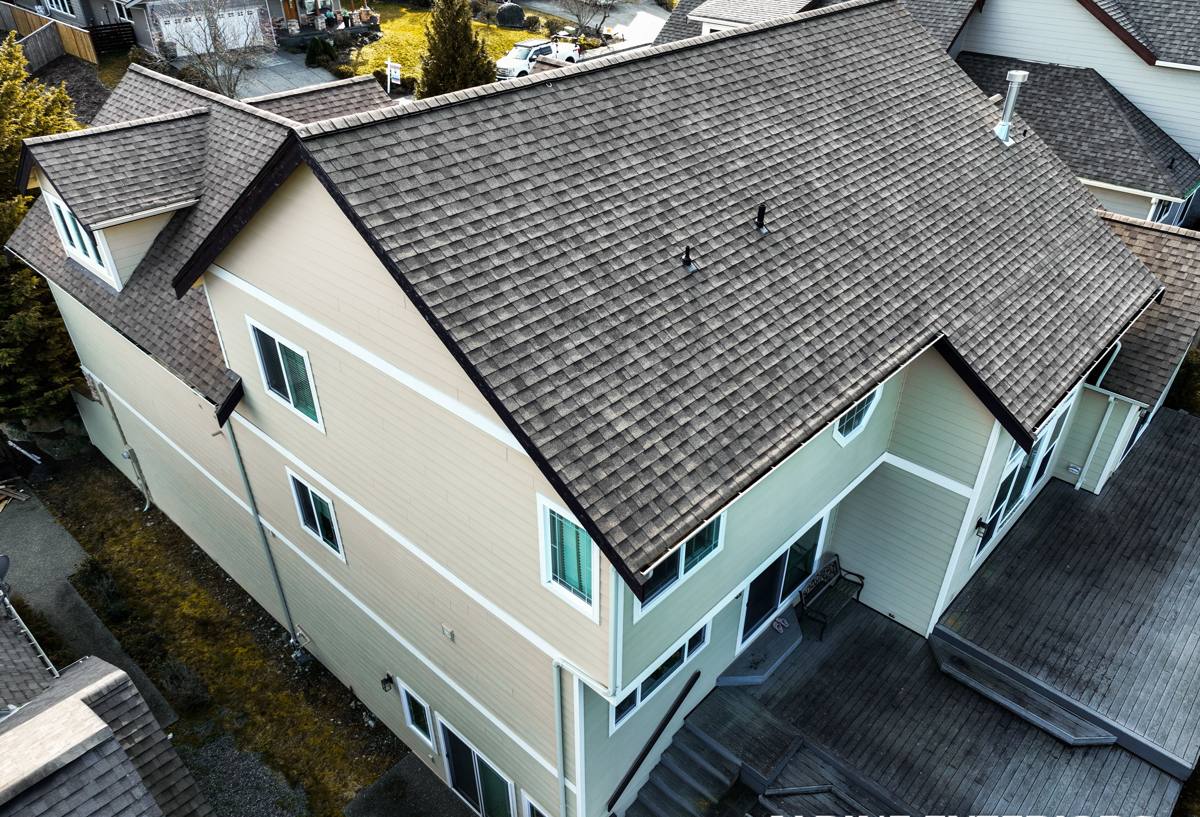
Signs Your Deck Needs Repair — Not Just a New Coat of Stain
Most homeowners call us because something looks off on the surface: a soft board, a wobbly railing, dark streaks near a post. Those are real signs, but they're rarely the whole story. Here's what we actually check before recommending anything:
- Soft or spongy spots underfoot, especially near the house or at board ends
- Rust staining or streaking around fasteners and joist hangers
- Railings or posts that flex or move when pushed
- Gaps opening up where the deck meets the house (ledger board separation)
- Persistent green or black growth that comes back within weeks of cleaning
- Standing water or slow drainage after rain instead of water sheeting off
- Visible daylight or gaps in flashing where the ledger meets the siding
Any one of these can be a simple fix. Several at once, especially involving the ledger or framing, usually means the repair needs to go deeper than board replacement.
What a Correct Deck Repair Actually Involves
Structure First, Surface Second
A repair that only replaces bad-looking decking boards but ignores the framing underneath is a short-term fix. We start every repair by getting under the deck — checking joists, beams, post bases, and the ledger connection to the house. In a salt-air, high-rainfall environment like Semiahmoo, this is where the real damage tends to live, because moisture works from the inside out. A board can look fine on top for another year while the joist under it is already compromised.
The Ledger Connection Deserves Special Attention
The ledger board — where the deck attaches to the house — is the single most common source of serious deck failures nationally, and it's an even bigger concern in a marine climate. Wind-driven rain gets forced into any gap in the flashing, and once water gets behind the ledger, it doesn't dry out quickly with our humidity and rainfall pattern. We check ledger flashing on every repair, not just when someone reports a problem there, because by the time it's visibly failing, the framing behind it has usually been wet for a while.
Fasteners and Hardware Matter More Here Than Elsewhere
Standard galvanized fasteners corrode faster near saltwater. We use stainless steel or high-grade coated fasteners and connectors rated for coastal exposure on Semiahmoo Resort repairs, because replacing a deck board is quick and cheap — replacing an entire deck because standard screws rusted through in five years instead of fifteen is not.
Repair vs. Replacement: How We Decide
Not every deck problem calls for a full rebuild, and not every deck is worth patching indefinitely. The table below outlines how we generally think about it, though every deck gets a hands-on inspection before we give a recommendation.
| Condition Found | Typical Approach | Why |
|---|---|---|
| A few soft or split boards, structure sound | Board-level repair | Framing is healthy; no need to disturb it |
| Ledger flashing failed, minor rot behind it | Targeted ledger repair | Catching it early prevents framing damage |
| Widespread joist or beam rot | Partial or full reframe | Patching individual joists rarely holds long-term |
| Post bases rusted or rotted at grade | Post and footing repair | Structural safety issue, not cosmetic |
| Deck over 20-25 years old with recurring issues | Full replacement discussion | Cumulative moisture damage often outweighs repair cost |
Repair Considerations by Decking Material
What the deck surface is made of changes how a repair should be approached, and it changes what we recommend for replacement boards when an exact match isn't available.
Pressure-Treated Wood
Still the most common decking in this area, and repairable board by board if the framing is sound. In our climate, treated wood needs a real maintenance schedule — cleaning and sealing on a regular cycle — or moss and moisture will shorten its life regardless of how well a repair was done.
Cedar
Naturally more rot-resistant than plain treated pine but still needs attention at fastener points and end grain, which is where we see the earliest failures on cedar decks near the water.
Composite Decking
Composite boards resist rot but aren't immune to problems — hidden framing underneath still needs the same structural checks, and composite has its own installation sensitivities around spacing, fastening, and ventilation that matter more in a wet climate than a dry one. We treat composite repair as a framing-first job just like wood.
Our Deck Repair Process
- On-site assessment — we get under the deck and check framing, ledger, posts, and footings, not just the walking surface
- Honest scope — you get a clear breakdown of what's structural, what's cosmetic, and what can reasonably wait
- Repair or reframe — we fix what needs fixing, matching material and fastener grade to what the deck actually needs for this environment
- Flashing and moisture management — any ledger or flashing work is done to shed water properly, not just patched over
- Surface finish — boards, railings, and stairs brought back to a safe, finished condition
- Maintenance guidance — a straightforward plan for what to watch and when, specific to a waterfront exposure
Moss, Algae, and Slip Safety
The long moss season in Whatcom County isn't just an appearance issue — it's a safety issue. Moss and algae hold moisture against the wood and make surfaces genuinely slippery, especially on stairs and any north-facing or shaded sections of a deck. A repair isn't complete if the same conditions that caused the damage are left to recur immediately. Here's what actually helps between professional cleanings:
- Sweep debris and standing organic matter off the deck regularly through fall and winter
- Keep gutters and downspouts clear so runoff isn't dumping directly onto deck surfaces
- Trim back vegetation that shades the deck and keeps it damp longer than the surrounding area
- Address moss at the first sign of it rather than waiting for it to spread
- Check stairs and high-traffic areas most often — they wear and grow moss faster than open deck surfaces
- Reseal or refinish on the schedule appropriate to the material, not just when it looks worn
Permits and Code on Waterfront Decks
Deck repairs in Whatcom County can trigger permit requirements depending on scope — structural work, changes to railings or stairs, and anything affecting the footprint typically need a permit, while straightforward board replacement usually doesn't. Homes in and around Semiahmoo Resort can also fall under additional shoreline or setback considerations given the waterfront location. We handle the permit conversation as part of scoping the job so there are no surprises mid-project, and we won't cut corners on code just to save a step, particularly on railing height and guard spacing, which are common problem areas we find during inspections.
Why Hiring a Crew That Already Works Semiahmoo Resort Matters
A deck repair crew that mostly works inland jobs can still do competent work, but they're guessing at what a coastal environment does to fasteners, flashing, and framing over time. We've seen what five, ten, and twenty years of salt air and driving rain does to decks specifically in this area, which changes what we recommend for hardware grade, flashing detail, and maintenance intervals. That's the difference between a repair that holds up and one you're calling someone back for in three years.
If you've got a deck in Semiahmoo Resort that needs an honest look — whether it's a few soft boards or something you're worried might be more serious underneath — we're happy to come take a look. The estimate is free, there's no pressure, and you'll get a straight answer about what actually needs doing.