 Semiahmoo Exterior
 Roof Repair Built for Birch Bay's Climate
Birch Bay sits right on the water in Whatcom County, and that location shapes everything about how a roof ages here. Homes facing the Strait of Georgia take on salt-laden air, wind-driven rain that finds its way under flashing and shingle edges most inland roofs never have to deal with, and a moss season that can run eight or nine months out of the year under the right shade and moisture conditions. A roof repair here isn't just patching a leak — it's addressing the specific combination of salt exposure, wind, and standing moisture that Birch Bay throws at a roof year after year.
We work on roofs across Whatcom County, but Birch Bay's shoreline homes, seasonal cabins converted to full-time residences, and newer builds along the bay all present their own quirks. A repair approach that works fine in a drier, more sheltered part of the county can fall short here if it doesn't account for what the marine environment does to fasteners, flashing, and roofing materials over time.
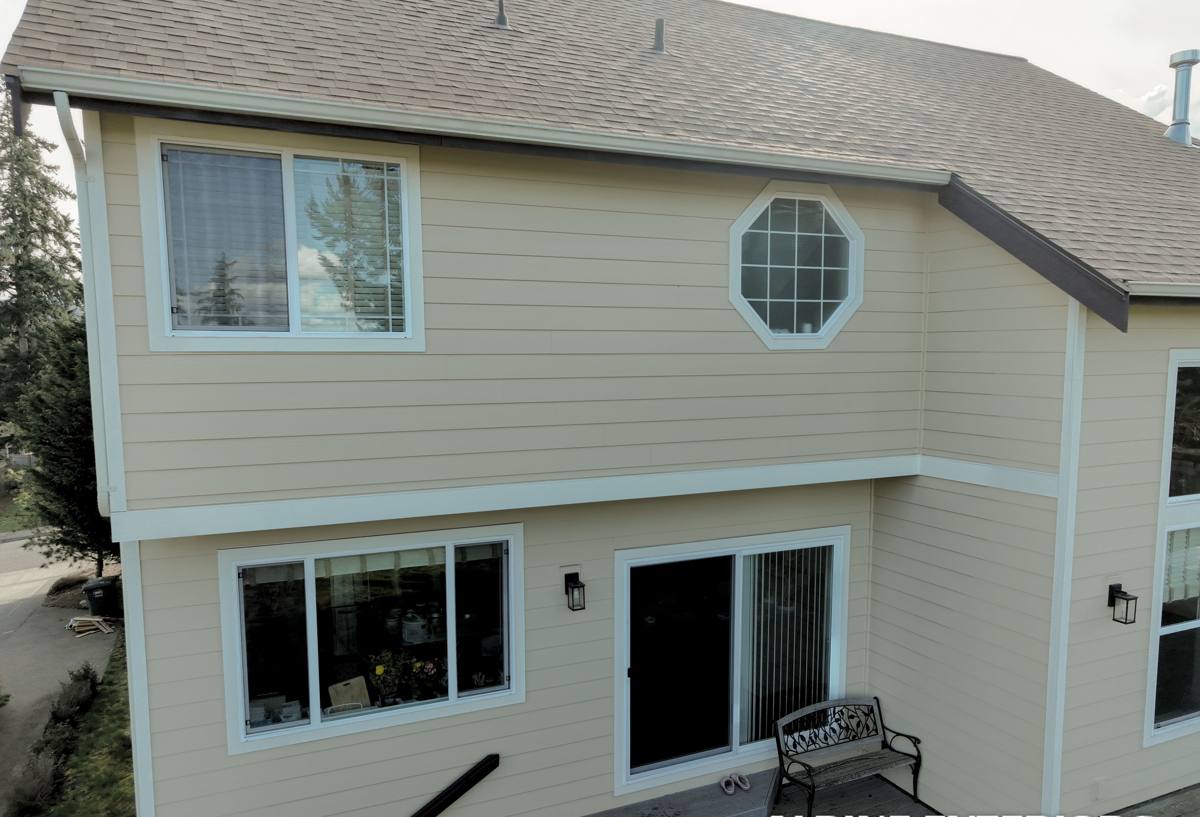
Why Roofs in Birch Bay Wear Differently
Salt Air and Metal Fatigue
Airborne salt accelerates corrosion on anything metal on a roof — nail heads, flashing, drip edge, valley metal, and the fasteners holding shingles or shakes down. Once corrosion starts at a fastener, the seal around it weakens and that spot becomes a future leak point even if the surrounding roofing material still looks fine. This is one of the most common root causes we find when we're called out for a "small leak" that turns out to be a flashing or fastener problem, not a shingle problem.
Wind-Driven Rain and Flashing
Storms coming off the water don't just drop rain straight down — wind pushes it sideways and up under laps, around chimneys, and along roof-to-wall transitions. Flashing that would be adequate in a calmer inland setting can get overwhelmed here, especially at valleys, skylights, and dormers. A repair that doesn't account for wind direction and pressure differences often fails again within a season or two.
Moss and Trapped Moisture
Shaded, north-facing slopes and roofs under tree cover hold moisture longer, and moss takes hold in that environment. Moss doesn't just look bad — it lifts shingle edges, holds water against the roofing surface, and works its way into laps and fastener lines. A long moss season means more months where a roof is sitting damp instead of drying out between rain events, which is exactly when small deficiencies turn into active leaks.
Signs a Birch Bay Roof Needs Repair
Not every issue means a full re-roof. Most of what we see is repairable if it's caught before water has been getting in for an extended period. Watch for:
- Granules collecting in gutters or at downspout outlets, especially after a windy rain
- Dark streaking or green-black moss growth concentrated on shaded slopes
- Curling, lifted, or missing shingles, particularly near valleys and roof edges
- Rust staining below metal flashing or visible corrosion on exposed fasteners
- Soft spots, sagging, or staining on interior ceilings near exterior walls or chimneys
- Daylight visible through the roof deck from inside an attic space
- Flashing that's separated, bent, or pulling away around chimneys, skylights, or vents
If you're seeing one or two of these, it's usually a repair, not a replacement. If several are present together, or the interior damage has been going on for a while, that's worth a closer look before deciding which direction makes sense.
What a Correct Repair Actually Involves
Diagnosing the Real Source
Water doesn't always show up directly below where it enters — it can travel along the underside of the deck or down a rafter before it stains a ceiling. A repair that just seals the spot where the stain appears often misses the actual entry point, which means the leak comes back. We trace the path from the interior symptom back to the actual failure on the roof surface, which usually means checking flashing, valleys, and penetrations near the affected area rather than assuming the nearest shingle is the culprit.
Matching Materials and Fastening for the Environment
Given the salt exposure here, we favor corrosion-resistant fasteners and flashing metals over standard-grade materials whenever a repair involves replacing them. Using the same grade of hardware that failed in the first place just resets the clock on the same problem. We also match shingle or shake profile, color, and exposure as closely as possible so a repaired section doesn't stand out or perform differently than the surrounding roof.
Addressing the Moisture, Not Just the Leak
Where moss or trapped moisture contributed to the failure, a proper repair includes removing the moss, checking the deck underneath for soft spots or rot, and improving drainage or airflow at that section if that's what let moisture sit there in the first place. Patching over a wet, moss-covered area without addressing why it stayed wet is a short-term fix at best.
Roof Types Around Birch Bay and Repair Considerations
Birch Bay has a mix of older beach cabins, mid-century cottages that have been winterized for full-time living, and newer construction closer to the water. Each roofing type common in the area has its own repair considerations:
| Roof Type | Common Issue Locally | Repair Consideration |
|---|---|---|
| Asphalt/composition shingle | Granule loss and edge lifting from wind and salt | Match shingle line and exposure; replace fasteners with corrosion-resistant grade |
| Cedar shake | Moss retention and accelerated weathering from moisture | Clean and treat surrounding shakes; assess deck ventilation before patching |
| Metal roofing/flashing | Corrosion at seams and fastener penetrations | Re-seal or replace affected panels/flashing with marine-grade hardware |
| Low-slope/torch-down (additions, porches) | Ponding water and seam separation | Check slope and drainage, not just the seam itself |
Our Repair Process
- Inspection and diagnosis — We get on or above the roof, trace interior symptoms to their actual source, and check flashing, valleys, and penetrations rather than just the obvious spot.
- Honest assessment — We tell you plainly whether it's a repair, and if we see signs the roof is nearing the end of its practical life, we'll say that too rather than stack repairs on a roof that's not worth it anymore.
- Scope and estimate — You get a clear explanation of what failed, why, and what the repair involves, in plain language before any work starts.
- Repair work — Removal of damaged material, correction of the underlying cause (moisture, flashing, fastening), and replacement with matched materials suited to a marine environment.
- Cleanup and check — Debris and old material removed, gutters checked for granule buildup, and a final look to confirm the fix addresses what actually failed.
Repair vs. Replacement: What Actually Drives the Decision
Cost isn't the only factor, but it's usually the first question. Here's how the two options generally compare and what tends to push a homeowner toward one or the other:
| Factor | Repair | Full Replacement |
|---|---|---|
| Typical cost range | Low hundreds to a few thousand dollars, depending on scope | Several thousand to well into five figures, depending on size and material |
| Best fit when | Roof is under roughly 15-20 years old with isolated damage | Widespread wear, multiple failure points, or roof near end of expected life |
| Risk if skipped | Localized leak can spread to deck and interior over time | Deferred replacement risks structural/deck damage and higher eventual cost |
| Timeline | Usually completed in a day or less | Multiple days depending on size, material, and weather windows |
We don't push replacement when a repair will genuinely hold, and we won't recommend a patch on a roof that's clearly past the point where repairs make financial sense. That call depends on the roof's age, material, and how much of it is affected — not a sales target.
Why Local Experience Matters for a Birch Bay Roof
A crew that mostly works drier, more sheltered parts of Whatcom County can miss what's specific to a shoreline property — the fastener corrosion that's further along than it looks, the flashing detail that needs to handle wind from the water, or the shaded slope that's going to grow moss again within a year if drainage and airflow aren't addressed. Working in Birch Bay regularly means recognizing these patterns quickly instead of treating every repair as a generic one.
It also means understanding realistic timing. Weather windows for roof work can be tighter near the water, and knowing when conditions are actually workable — versus pushing a repair during marginal weather — affects how well the repair holds long-term.
Maintenance Between Repairs
A repair lasts longer when it's not fighting the same conditions that caused the original damage. Between repairs or inspections, a few habits go a long way in Birch Bay's climate:
- Keep gutters and downspouts clear so water isn't backing up under roof edges
- Have moss removed before it spreads across a full slope, not after
- Trim back tree cover that keeps a section of roof shaded and slow to dry
- Have flashing and fasteners checked periodically, especially after a windy winter
- Address small leaks early — a stain the size of a coin is far cheaper to fix than the deck damage that follows if it's ignored for a season or two
If you're seeing signs of trouble on a Birch Bay roof, or just want an honest read on whether it's a repair or something bigger, we're glad to take a look. Estimates are free and there's no pressure either way — just a straight assessment of what your roof needs. Use the form below to get started.