 Semiahmoo Exterior
 Why Birch Bay Siding Takes More Punishment Than Most
Birch Bay sits right where Whatcom County's marine climate is at its most aggressive. Homes here face a combination that inland siding never has to deal with: salt-laden air rolling off the water, wind-driven rain that hits walls sideways instead of falling straight down, and a moss season that stretches for most of the year in the shaded, damp conditions typical of this stretch of the Washington coast. Any one of those factors is manageable. Together, they shorten the working life of the wrong siding material and expose every weak point in a poorly executed installation.
Salt air is corrosive to exposed metal fasteners and trim, and it accelerates the breakdown of coatings that aren't formulated to resist it. Driving rain doesn't just wet the surface of a wall — it tests every seam, every piece of flashing, and every inch of caulk a crew installed. And moss doesn't just grow on roofs. Given a shaded north wall, a few inches of clearance from grade, or a butt joint that traps moisture, moss and algae will colonize siding too, holding water against the surface long after the rain has stopped.
None of this is unique to any one home in Birch Bay — it's the baseline condition every house in this neighborhood is built into. Siding that's chosen and installed without accounting for it tends to show problems years before it should: swelling, peeling paint, soft spots at the bottom courses, and staining that pressure washing only partially removes.
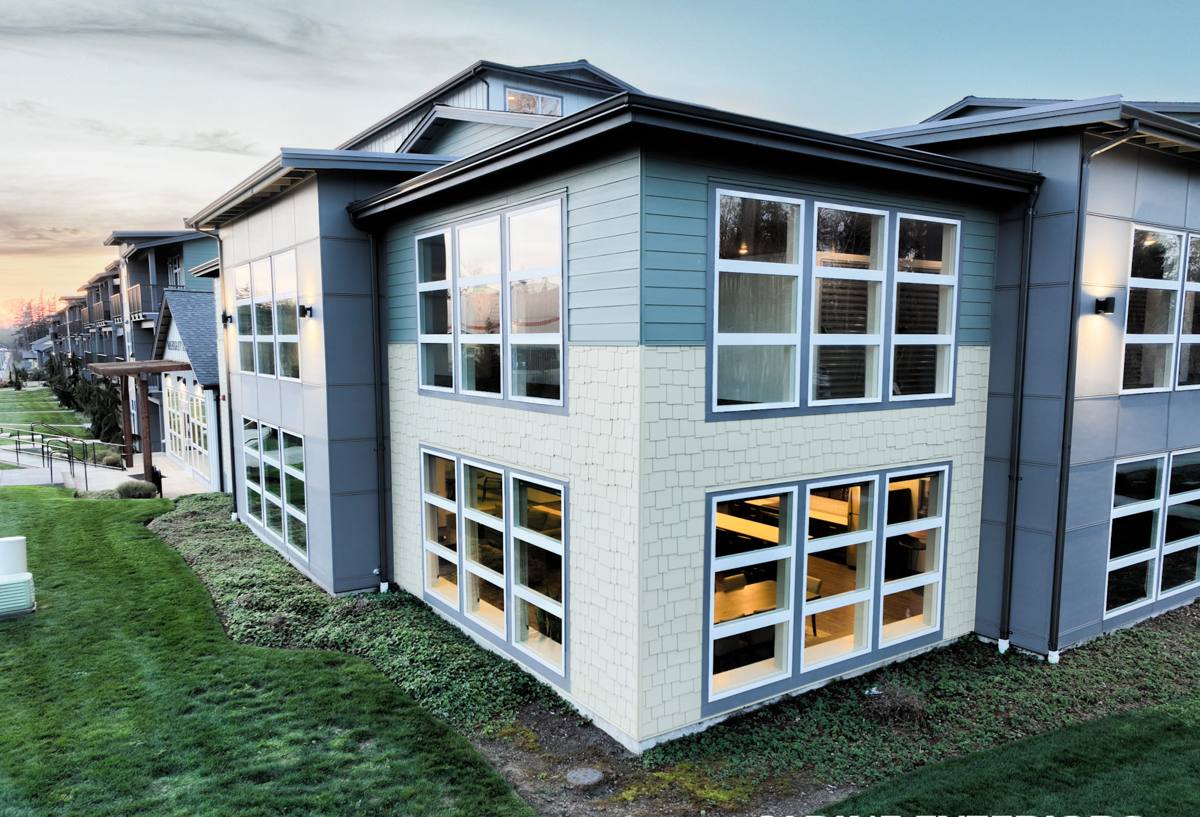
What Birch Bay Homes Actually Need From Their Siding
Given the conditions, a siding system that holds up in Birch Bay needs to do three things well:
- Resist moisture absorption. The material itself shouldn't swell, warp, or rot when it stays damp for extended stretches during our wet months.
- Hold a factory finish. Field-applied paint is the first thing salt air and UV degrade. A factory-cured finish designed for coastal exposure lasts significantly longer between repaints.
- Shed water at every joint. Butt joints, corners, and penetrations (hose bibs, light fixtures, vents) are where installation quality — not the material alone — determines whether water gets behind the siding.
That third point is worth emphasizing because it's where most siding failures in this area actually originate. Even a well-made material fails early if it's installed without proper flashing, correct fastener placement, and adequate clearance from grade, decks, and roof lines. We see this on homes with mismatched materials just as often as we see it on the "wrong" product installed correctly.
Why We Install Only James Hardie Fiber Cement
We made a decision as a company to install one siding system — James Hardie fiber cement — and to stop installing vinyl, LP SmartSide, primed spruce, and cedar. That's not a marketing position; it's a practical one, built around what actually holds up in exactly the conditions Birch Bay throws at a house.
Fiber cement is a mix of cement, sand, and cellulose fibers, engineered to be dimensionally stable in wet climates. It doesn't absorb water the way wood-based products do, so it doesn't swell, cup, or rot at butt joints and bottom courses the way engineered wood or cedar can when moisture gets in. It's also non-combustible, which matters increasingly to insurers and homeowners in Washington regardless of proximity to wildland areas.
James Hardie's HZ5 product line is engineered specifically for climates like ours — colder, wetter, and more moisture-exposed than the HZ10 line built for hot, humid regions. The ColorPlus factory finish is baked on and warrantied against fading and peeling, which matters directly in a salt-air environment where field-applied paint jobs degrade fastest. The product also carries a strong transferable limited warranty, which protects the investment for whoever owns the house next, not just the current owner.
We're not going to tell you every other product on the market is worthless — vinyl and engineered wood siding both have legitimate uses and plenty of installations that perform fine in the right conditions. But we stopped installing them because, in our professional judgment and experience on homes exactly like the ones in Birch Bay, the maintenance burden, moisture sensitivity, or long-term appearance trade-offs weren't ones we wanted to put our name behind. James Hardie fiber cement is what we're willing to warranty our workmanship on.
How the Common Options Compare in This Climate
| Factor | James Hardie Fiber Cement | Vinyl Siding | Wood / Engineered Wood |
|---|---|---|---|
| Moisture behavior | Dimensionally stable; doesn't swell or rot | Doesn't absorb water, but can warp and gap in temperature swings | Absorbs moisture; prone to swelling and rot at joints if not maintained |
| Salt air / coastal exposure | Factory finish resists fading and chalking | Can chalk and become brittle over time in UV and salt exposure | Field finish degrades fastest; needs frequent recoating |
| Fire resistance | Non-combustible | Combustible; can melt or deform near heat sources | Combustible |
| Maintenance | Occasional wash; repaint on a long cycle if ever needed | Low maintenance but limited repair options if cracked | Regular repainting/recoating and moisture monitoring |
| Typical lifespan when installed to spec | Multiple decades | 20-40 years, variable | Highly variable; shorter if moisture management fails |
What a Correct Installation Looks Like on a Birch Bay Home
The material is only half the equation. We treat every Birch Bay installation as a water-management project first and a siding project second, because that's what actually determines whether the job lasts.
Our process
- Assessment and tear-off. We inspect the existing wall assembly for hidden moisture damage, sheathing rot, or prior flashing mistakes before anything new goes up — problems behind the old siding don't fix themselves.
- Weather-resistive barrier and flashing. A correctly lapped weather barrier and properly integrated flashing at every window, door, and penetration is what actually keeps driving rain out, regardless of the siding material on top of it.
- Correct fastening. James Hardie specifies fastener type, placement, and spacing for a reason — under-driven or over-driven nails and the wrong fastener material are common causes of early failure, especially in coastal air.
- Joint and clearance detailing. Butt joints get flashed or caulked to spec, and we maintain proper clearance from grade, roofs, decks, and walkways so water and moss-prone debris don't sit against the bottom courses.
- Finish and trim. ColorPlus panels and trim are handled to avoid finish damage during installation, since a scratch through the factory coating is a weak point for exactly the kind of moisture intrusion we're trying to prevent.
Signs Birch Bay Homeowners Should Watch For
If your current siding is already showing wear, these are the signs worth acting on before they become structural:
- Soft or spongy spots when you press on the bottom few courses of siding
- Persistent moss or algae staining that returns within weeks of washing
- Visible gaps, warping, or separation at butt joints and corners
- Peeling or bubbling paint, especially on walls facing the prevailing wind and rain
- Discoloration or staining around window and door trim, which often points to a flashing failure rather than a surface problem
Any of these can be isolated repairs on a newer, well-installed system. On older installations, especially those with wood-based products past their service life, they're often early signals that a full re-side is more cost-effective than chasing repairs year after year.
Why Local Installation Experience Matters
Siding installation isn't a generic skill that transfers evenly from one climate to another. A crew that primarily works drier, inland conditions doesn't build the same habits around flashing detail, clearance, and joint sealing that a crew working the Whatcom County coastline does daily. Birch Bay's exposure to wind-driven rain and salt air means the margin for error at every seam is smaller here than it is a few miles inland.
A crew that already works this specific area also has a working knowledge of how local homes are typically built, common existing-condition issues under older siding, and how the products perform after a few Northwest winters — not just how they look on installation day.
What to look for when vetting a siding contractor here
- Manufacturer training or certification specific to fiber cement installation
- A written scope that specifies flashing and weather-barrier details, not just "install siding"
- A workmanship warranty separate from the manufacturer's product warranty
- References or completed work in coastal Whatcom County conditions, not just general Puget Sound experience
- A clear explanation of why they recommend the material they're proposing for your specific wall exposures
Cost Factors for a Birch Bay Siding Installation
Every home is different, but the same handful of factors drive the price on most siding installation projects in this area:
| Factor | Why It Affects Cost |
|---|---|
| Existing wall condition | Hidden sheathing rot or moisture damage found at tear-off adds repair scope before new siding goes up |
| Home size and wall complexity | More corners, dormers, and trim details mean more cutting, flashing, and labor time |
| Siding profile and trim package | Lap width, trim style, and accessory details (corner boards, frieze boards) affect material and labor cost |
| Access and site conditions | Steep grades, limited staging area, or landscaping close to the house can add labor time |
| Tear-off and disposal | Removing and hauling away old siding is a separate cost from the new installation |
We walk every home in person before giving a number, because on a Birch Bay property the condition behind the old siding — not just the square footage — is usually what moves the estimate.
If your Birch Bay home's siding is showing its age, or you're planning ahead for a replacement before the next wet season sets in, we're happy to take a look and walk you through what we find. The estimate is free, there's no pressure, and you'll get a straight answer about what your home actually needs.