 Semiahmoo Exterior
 Why Birch Bay Siding Wears Out Faster Than Inland Whatcom County Homes
Birch Bay sits right on the water, and that changes the math on how long siding lasts. A house a few miles inland in Whatcom County might get another five or ten years out of aging siding before it needs replacing. A house facing Birch Bay's shoreline, exposed to salt-laden wind and near-constant winter moisture, often shows real damage well before that. If you're noticing soft spots, peeling paint, or streaks of green growth on your siding, the location itself is part of the reason.
This page focuses specifically on siding replacement for homes in and around Birch Bay — what the local conditions do to different siding materials, what a correct replacement job actually involves, and why the crew doing the work matters as much as the material itself.
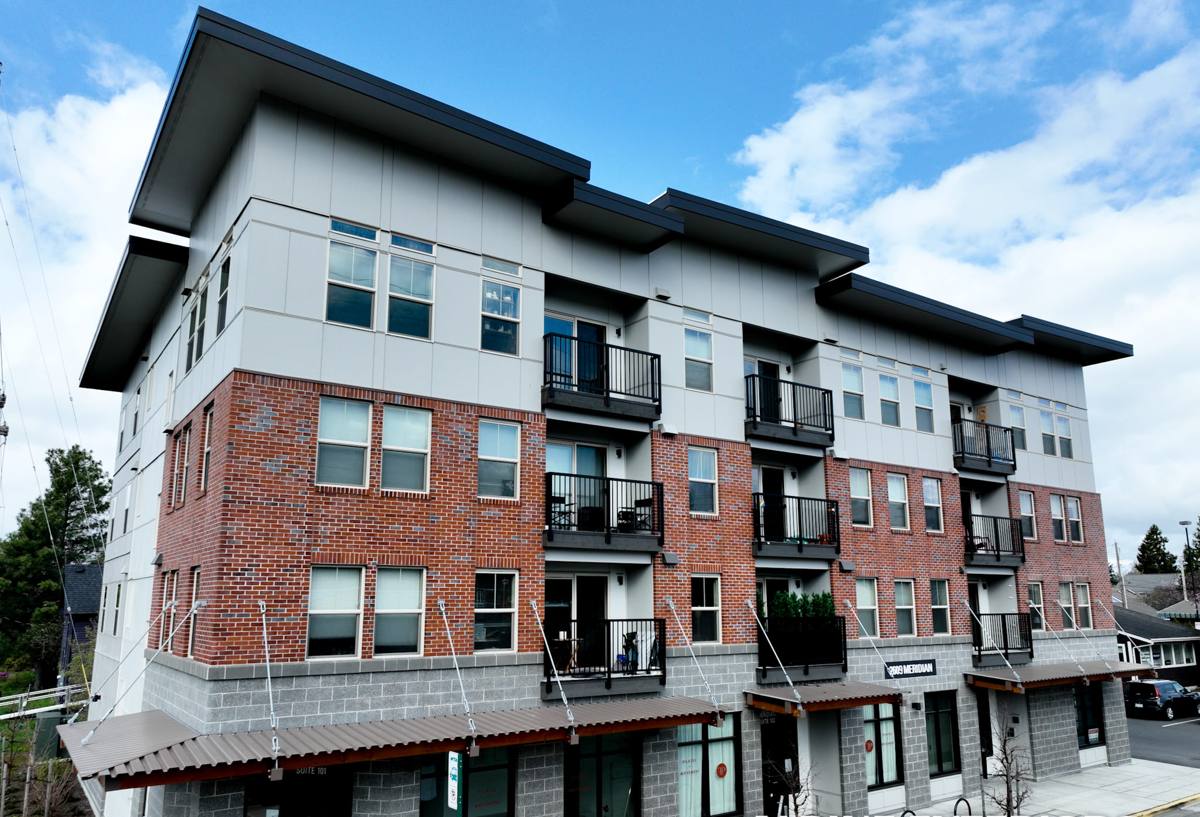
What Salt Air, Driving Rain, and Moss Season Actually Do
Salt Air and Corrosion
Airborne salt off the bay settles on exterior surfaces year-round. It's hardest on fasteners, trim, and any exposed metal — but it also degrades paint finishes and accelerates wear on siding materials that aren't built to handle it. Over time, salt exposure breaks down factory finishes faster than a standard weather rating accounts for, which is one reason generic siding products can underperform here even when they hold up fine elsewhere in the state.
Wind-Driven Rain
Birch Bay gets exposed to weather moving straight off the water, and that means rain doesn't just fall — it drives sideways into wall assemblies. That kind of exposure finds every weak seam, gap, or poorly flashed penetration in a siding system. Materials and installation details that are marginal in a sheltered location fail outright in a wind-driven-rain location.
A Long Moss and Moisture Season
Whatcom County's damp season runs long, and Birch Bay's proximity to the water keeps humidity and shade-driven moisture around even longer on north- and west-facing walls. Moss and algae need sustained moisture to establish, and once they take hold on siding, they hold water against the surface — which is exactly the condition that rots wood-based products and lifts paint. Homes with heavy tree cover or limited sun exposure on one side see this first.
Signs You Need Replacement, Not Just Repair
Not every siding problem in Birch Bay means a full replacement. But there are signs that tell you patching or repainting is just delaying the inevitable:
- Soft, spongy, or crumbling siding when pressed — usually a sign of moisture already inside the material
- Paint that won't hold no matter how often it's redone, especially on the water-facing side of the house
- Persistent moss or algae growth that returns within a season or two of cleaning
- Visible gaps, warping, or buckling boards, particularly around windows, corners, and the bottom courses near grade
- Rot or staining at seams, laps, or anywhere two pieces of siding meet
- Interior signs — musty smell, peeling interior paint, or damp drywall on an exterior wall — that point to moisture getting past the siding entirely
If you're seeing more than one or two of these, especially on the bay-facing side of the house, it's worth having the wall assembly looked at, not just the surface.
What a Correct Siding Replacement Job Involves
Full Tear-Off and Inspection
A proper replacement starts with removing the old siding completely, not installing over it. That's the only way to actually see the sheathing underneath — whether it's sound, whether there's hidden rot, and whether previous flashing details were done correctly. In a coastal, high-moisture area like Birch Bay, skipping this step is how homeowners end up paying to fix the same wall twice.
Water-Resistive Barrier and Flashing
Everything behind the siding matters as much as the siding itself. A correctly installed water-resistive barrier, properly lapped and sealed, along with correct flashing at windows, doors, and every penetration, is what actually keeps wind-driven rain out of the wall. Siding is the visible layer, but it's the last line of defense, not the only one.
Installation to Manufacturer Spec
Fiber cement siding has specific requirements for fastening, clearance from grade, gaps at butt joints, and caulking — all of which matter more in a coastal wind and rain environment than in a sheltered inland lot. Installed correctly, it performs as designed. Installed with shortcuts, even the best material on the market will fail early. This is where the difference between a rushed crew and an experienced one shows up years later, not on day one.
Why We Install Only James Hardie Fiber Cement
We don't install vinyl, LP SmartSide, primed wood, cedar, or other fiber cement brands like Allura or Cemplank. That's a deliberate standard, not a sales preference, and it matters more in a location like Birch Bay than almost anywhere else we work.
Vinyl siding can warp and become brittle under direct sun and temperature swings, and its seams give wind-driven rain more chances to get behind the material. Wood-based products like LP SmartSide and cedar rely on their finish and sealed edges staying intact to resist moisture — in a long moss season with sustained dampness, any breach in that finish leads to swelling and rot faster than in a drier climate. Other fiber cement brands may be reasonable products, but we've standardized on one system so we know exactly how it performs, how to install it to spec, and what the warranty actually covers.
James Hardie fiber cement is non-combustible, doesn't support moss and algae growth the way wood products do, and its ColorPlus factory finish is engineered to hold color and resist fading under UV and salt exposure better than field-applied paint. Hardie also makes climate-specific HZ product lines, so the siding on your home is engineered for the actual weather it faces here, not a one-size-fits-all national spec. Backed by a strong transferable warranty, it's the product we're willing to put our name behind on a Birch Bay job.
How Siding Materials Hold Up in a Birch Bay Climate
| Material | Salt Air Resistance | Moisture / Rot Risk | Moss Resistance | Finish Longevity |
|---|---|---|---|---|
| Vinyl siding | Fair — can chalk and become brittle | Low rot risk, but seams allow water intrusion | Moderate — surface growth common | Color fades, cannot be repainted easily |
| LP SmartSide / primed wood | Fair, depends on finish maintenance | Higher — wood-based core swells if finish fails | Higher — organic material feeds growth | Requires ongoing repainting |
| Cedar siding | Fair, needs regular sealing | Higher — natural wood, moisture sensitive | Higher without regular treatment | Needs recurring stain/seal maintenance |
| James Hardie fiber cement | Strong — engineered, non-organic material | Low — does not swell or rot | Low — inorganic surface resists growth | ColorPlus finish holds color longer, factory-applied |
Our Process, Start to Finish
For a Birch Bay siding replacement, the process generally looks like this:
- On-site inspection and estimate — we look at the current siding, wall condition, and any moisture damage, and walk you through what we're seeing
- Written scope and pricing — no surprise add-ons; if we find hidden damage during tear-off, we tell you before doing the work
- Full removal of existing siding and inspection of sheathing and framing underneath
- Repair of any damaged sheathing or framing found during tear-off
- Installation of water-resistive barrier and correct flashing at all windows, doors, and penetrations
- James Hardie siding installation to manufacturer spec, including proper fastening and clearances
- Final walkthrough so you can see the finished work and ask questions before we consider the job done
What Affects the Cost of a Birch Bay Siding Replacement
Every home is different, and we don't quote pricing without seeing the house, but a few factors consistently move the cost up or down:
- Size and complexity of the home — number of stories, gables, and wall corners
- Condition of the sheathing underneath — hidden rot found during tear-off adds repair work
- Amount of trim, window, and door detailing that needs to be flashed and finished
- Accessibility of the site for staging materials and equipment
- Whether existing siding needs to be hauled away and disposed of
The honest answer is that a full tear-off and correct reinstall costs more upfront than a quick overlay or a cheaper material — but on a bay-facing home, that upfront correctness is what keeps you from paying for the same wall twice within a decade.
Why Hiring a Crew That Already Works Birch Bay Matters
Siding crews that mostly work inland don't always account for what shoreline exposure does to a wall assembly. Flashing details that are adequate a few miles inland can be undersized for direct, wind-driven rain off the water. A crew that regularly works Birch Bay and the surrounding Semiahmoo shoreline knows which walls take the worst of it, which details need extra attention, and what actually fails first in this environment — because they've seen it on other homes nearby, not just in a manual.
That local experience shows up in small decisions during the job: where to add extra flashing attention, how tight to run seams on the exposed side of the house, and which areas need a closer look during tear-off. It's not a different product — it's a different level of attention to the details that matter most in this specific climate.
If your Birch Bay home's siding is showing its age, we're happy to take a look and give you a straightforward, no-pressure estimate — what we're seeing, what it would take to fix it right, and what that involves. Use the form below to get started.