 Semiahmoo Exterior
 Birch Bay's Climate Puts Real Stress on Exterior Siding
Homes along Birch Bay sit right where the Salish Sea's weather meets the land, and that location is hard on the outside of a house. Salt-laden air moves in off the water and settles on every exterior surface, wind-driven rain gets pushed sideways against walls during winter storms, and the long stretches of overcast, damp weather that define a Whatcom County winter leave north- and west-facing walls wet for days at a time. Add in the shade from mature trees on many Birch Bay lots, and you get months of the year where siding simply doesn't dry out between rain events.
That combination — salt air, driving rain, and a long moss season — is exactly why siding choice and installation quality matter more here than they do further inland. A product or installation that would hold up fine in a dry climate can fail years early in Birch Bay if it wasn't built and installed to handle constant moisture exposure and airborne salt.
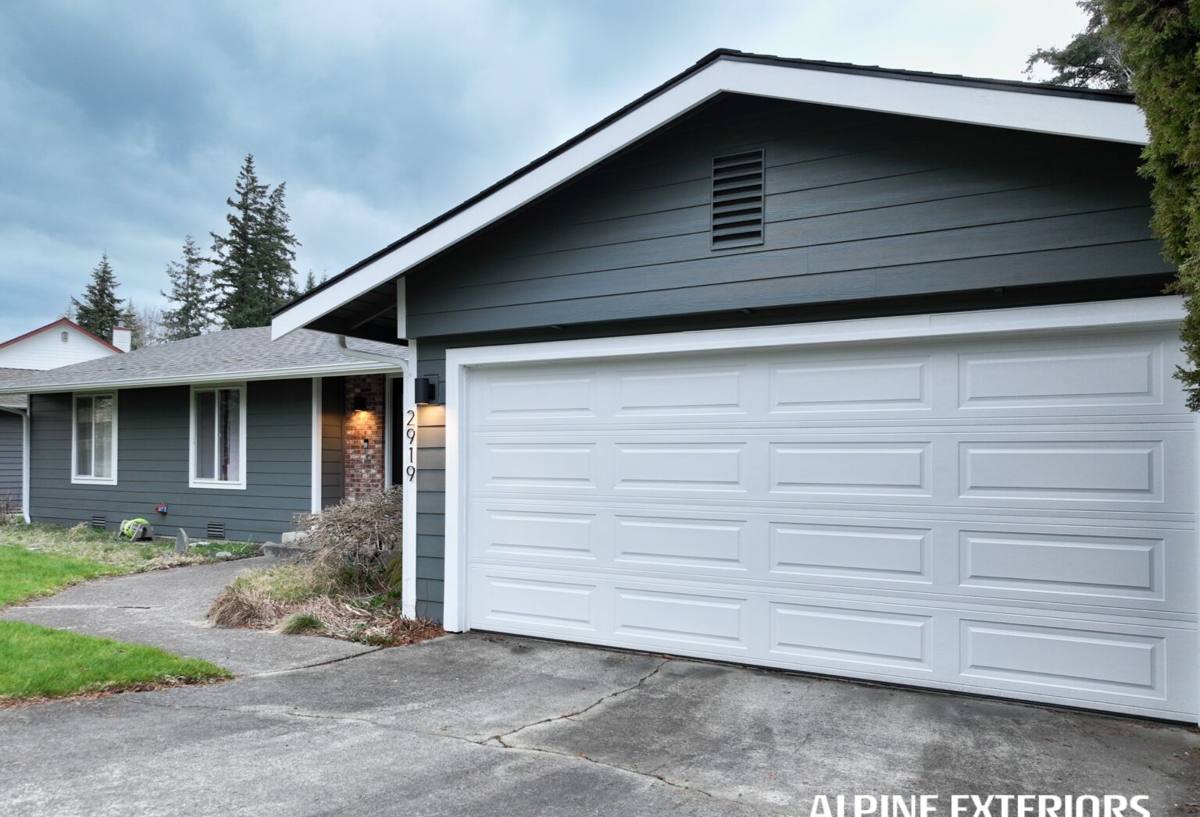
What "Correct" Fiber Cement Installation Means Here
Fiber cement siding is only as good as the installation behind it. In a coastal, high-moisture area like Birch Bay, a handful of details separate a job that lasts decades from one that causes problems in a few years.
Flashing and Water Management
Every window, door, and horizontal trim transition needs proper flashing and a drainage plane behind the siding — not caulk alone. Caulk is a maintenance item, not a waterproofing strategy. Homes near the water take on more wind-driven rain than typical suburban installs, so water that gets past the siding face needs a clear path to drain back out, not a place to collect against the sheathing.
Fastening, Gaps, and Clearances
Fiber cement panels and lap siding need to be fastened per the manufacturer's specifications for the exposure — correct nail placement, spacing, and depth matter for wind resistance in a marine environment. Panels also need the manufacturer-specified gap at butt joints and a minimum clearance above roofing, decks, and grade so the bottom edge of the siding isn't sitting in standing water or snow.
Caulking and Paint Details
Factory-finished siding reduces how much field painting and caulking is needed, which matters because field-applied coatings are usually the first thing to fail in salt air. Where caulk is required, it needs to be a high-quality, paintable, exterior-grade sealant applied to manufacturer spec — not just whatever tube is on the truck.
Why We Install James Hardie and Nothing Else
We install James Hardie fiber cement siding exclusively. We don't install vinyl, LP SmartSide, Cemplank, Allura, primed spruce, or cedar. That's a deliberate standard, not a brand preference, and it comes down to how these products perform over time in exactly the conditions Birch Bay sees.
The HZ5 Product Line
James Hardie engineers its siding by climate zone, and the Pacific Northwest falls under Hardie's HZ5 line, built specifically for regions with high moisture exposure and freeze-thaw cycling. That's a meaningful difference from a generic fiber cement product — the formulation and moisture-resistance engineering are matched to the weather it will actually face.
ColorPlus Factory Finish
Hardie's ColorPlus finish is baked on in a controlled factory environment rather than sprayed or brushed on-site. That gives a more consistent, durable finish that resists fading and holds up better against the UV and moisture cycling that breaks down field-applied paint faster near the water.
Non-Combustible Material
Fiber cement is non-combustible, which matters in Washington's increasingly active wildfire seasons even for homes far from the immediate coastline. It's one more reason we don't ask homeowners to trade long-term performance for a lower-cost product.
A Warranty Built to Transfer
Hardie backs its siding with a strong limited warranty that's transferable to a new owner if the home sells — a real factor for Birch Bay's mix of full-time residences and vacation properties, where resale value matters.
Our Process for a Birch Bay Fiber Cement Siding Project
- On-site assessment — we walk the exterior, check the condition of the existing siding and sheathing, and look specifically for moisture damage, moss buildup, and areas with limited sun exposure that need extra attention.
- Tear-off and sheathing check — removing the old siding lets us inspect the wall assembly underneath before anything new goes up. Hidden rot or moisture damage gets addressed here, not covered over.
- Water-resistive barrier and flashing — a correctly lapped weather barrier and flashing at every penetration and transition, sized for the wind-driven rain exposure a shoreline-adjacent home sees.
- Hardie installation to spec — panels or lap siding fastened, gapped, and cleared per James Hardie's published installation requirements for our climate zone.
- Trim, caulking, and finish details — the small stuff that determines how the job ages: caulk joints, touch-up paint on cut edges, and clean transitions at corners and openings.
- Final walkthrough — we review the finished work with the homeowner before calling the job done.
How Fiber Cement Compares to Other Siding Options Near the Water
Homeowners in Birch Bay often ask how James Hardie fiber cement stacks up against the alternatives. Here's an honest comparison based on how each material actually behaves in a salt-air, high-moisture climate.
| Material | Moisture & Moss Resistance | Salt Air Durability | Maintenance | Typical Lifespan |
|---|---|---|---|---|
| James Hardie Fiber Cement (HZ5) | Engineered for wet climates | Strong — non-corroding, factory finish | Low — occasional wash, minimal repainting | 30+ years with proper installation |
| Vinyl | Can trap moisture behind panels; prone to warping in temperature swings | Can become brittle and fade faster in salt air and UV | Low, but damage often means full-panel replacement | 15-25 years |
| Cedar / Primed Spruce | Absorbs moisture; needs consistent sealing to resist rot and moss | Susceptible to salt-accelerated weathering | High — regular staining, sealing, moss treatment | 15-30 years with diligent upkeep |
| LP SmartSide (engineered wood) | Vulnerable at cut edges and joints if moisture gets in | Coating can wear faster in coastal exposure | Moderate — edge sealing and joint monitoring needed | 20-30 years, installation-dependent |
Every material on that list can perform reasonably well when installed correctly and maintained. The difference is margin for error — fiber cement gives Birch Bay homeowners the most forgiving material for a climate that doesn't offer many dry stretches to catch up on maintenance.
Signs Your Siding Is Already Losing to the Climate
Because Birch Bay's weather is relentless rather than dramatic, siding problems tend to build slowly. Watch for these warning signs:
- Persistent green or black staining on north- or west-facing walls that returns quickly after cleaning
- Soft spots, bubbling paint, or visible warping, especially near the bottom courses or trim
- Caulk joints that are cracked, shrunken, or pulling away from trim and window edges
- Panels or boards that feel damp or spongy to the touch after several dry days
- Rust streaking near fasteners, which often points to the wrong fastener type for a coastal environment
- Visible gaps opening up at butt joints or corners
Any one of these on its own isn't necessarily an emergency, but if you're seeing a combination of them, the siding is telling you it's losing the fight against the moisture and salt exposure faster than it should.
Living With Fiber Cement Siding in a Moss-Prone Climate
Fiber cement dramatically reduces the maintenance burden compared to wood, but no exterior material is entirely maintenance-free in a climate like this one. A simple seasonal routine keeps a Hardie installation performing at its best:
- Rinse the exterior with a garden hose or low-pressure wash once or twice a year, focusing on shaded and north-facing walls where moss and algae take hold first
- Trim back vegetation and tree limbs that keep siding shaded and damp longer than necessary
- Check gutters and downspouts before the fall rains — misdirected water is one of the most common causes of localized siding damage
- Inspect caulk joints annually and have any cracked or gapped sections resealed before winter
- Look over the bottom courses near grade and decks each spring, since these areas hold moisture longest
None of this requires the sanding, stripping, and repainting that wood siding demands — it's a short annual checklist rather than an ongoing project.
Why Local Experience in Birch Bay Matters
A contractor who works throughout Whatcom County's coastal communities understands things a crew from further inland might not think to check: which sides of a house take the worst of the winter storms, how much extra attention a shaded, moss-prone wall needs, and how to sequence a project around the region's wetter months. That local knowledge shows up in the details — flashing choices, fastener selection, and where extra care goes during installation — not in anything flashy. It's also easier to stand behind a warranty and a workmanship guarantee when the crew that did the work is a short drive away, not a company that moved on to the next region.
If your Birch Bay home needs new siding, or you want a straight answer about whether your current siding is holding up the way it should, we're happy to take a look. Request a free, no-pressure estimate using the form below and we'll walk the exterior with you and talk through what we find.