 Semiahmoo Exterior
 Why Birch Bay Roofs Age Differently
A new roof in Birch Bay does a different job than one going on a house forty miles inland. Sitting right on the water in Whatcom County, homes here take on salt-laden air, wind-driven rain that finds its way under poorly lapped material, and a moss season that runs most of the year on north-facing and shaded slopes. None of that is dramatic on its own, but stacked together over a few decades it explains why roofs that "should" last 25-30 years sometimes need attention at 15-18 in this stretch of coastline.
Salt air is corrosive to exposed metal fasteners, flashing, and low-grade hardware. Driving rain off the strait doesn't fall straight down — it gets pushed sideways under ridge caps, around chimney flashing, and into any seam that wasn't lapped with the wind direction in mind. And moss doesn't just look bad; its root structure lifts shingle edges and holds moisture against the roof deck long after a normal roof would have dried out. A correct installation in Birch Bay accounts for all three from the first course of underlayment to the last ridge cap, not as an afterthought.
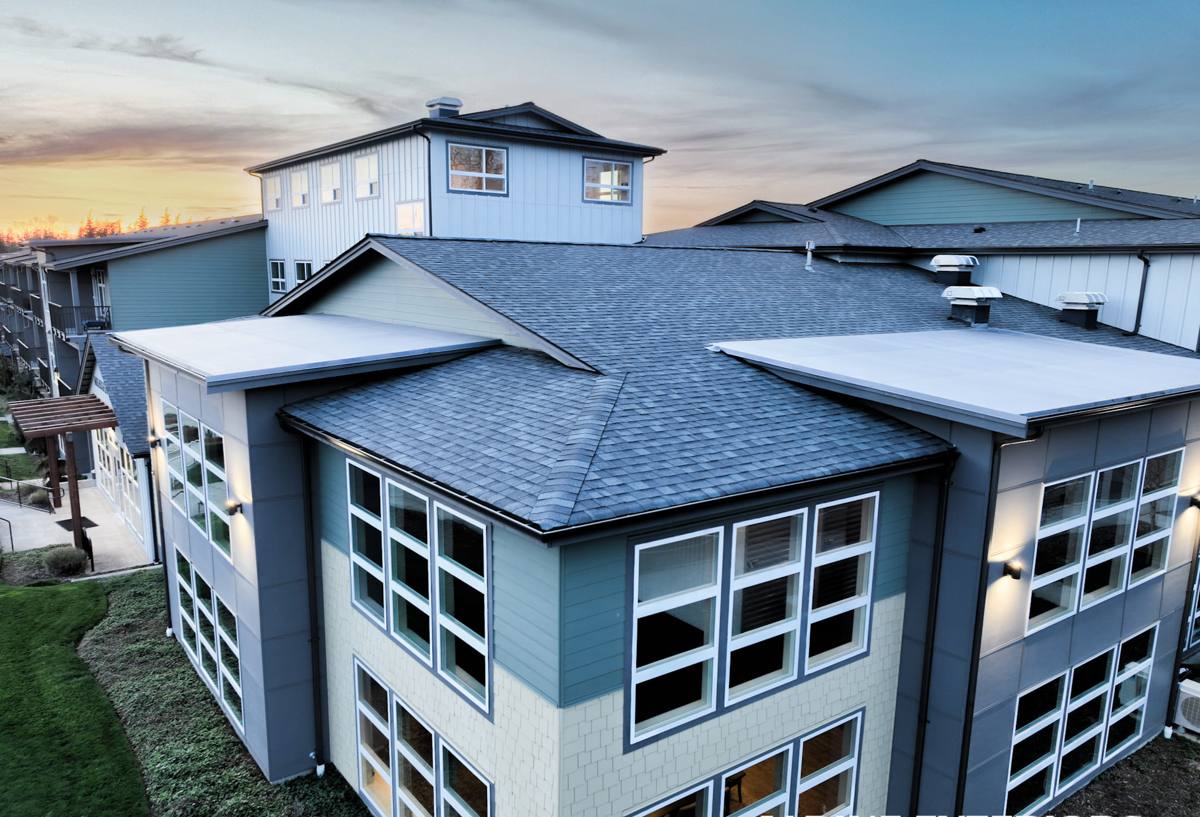
What a Correct Installation Looks Like Here
"New roof" covers a lot of ground, and the difference between a roof that holds up on this coastline and one that doesn't usually isn't the shingle brand — it's the details underneath it. For Birch Bay specifically, that means:
- A full tear-off to bare deck, so we can actually see and repair any moisture damage the old roof was hiding, rather than covering it up
- Deck repair or replacement of any soft, delaminated, or water-stained sheathing before anything new goes down
- Ice-and-water shield at eaves, valleys, and any low-slope transitions, not just the code minimum
- Corrosion-resistant fasteners and flashing rated for coastal/salt exposure, not standard inland-grade hardware
- Flashing details at every roof-to-wall intersection, chimney, and skylight, lapped and sealed with wind-driven rain in mind
- Balanced intake and exhaust ventilation to keep the deck dry from underneath, which also slows moss regrowth
Skip any one of these and the roof may still look fine going up — the problems show up two, five, or ten years later, usually as a leak at a valley or a soft spot at an eave that traces back to a shortcut nobody could see on install day.
The Tear-Off Matters More Here Than Elsewhere
Some contractors will offer to install over an existing layer to save time and cost. On a coastal roof that's already seen years of trapped moisture and moss activity, that's a mistake — it locks in whatever damage is already under there and gives you no chance to fix ventilation or deck issues before they're sealed under new material. We do full tear-offs on Birch Bay homes as standard practice, not an upsell.
Choosing a Roofing Material for This Climate
There's no single "best" roofing material for coastal Whatcom County — it depends on your budget, your roof's slope and shade exposure, and how much maintenance you want to do. Here's how the common options actually perform under salt air, driving rain, and heavy moss pressure:
| Material | Salt Air Behavior | Moss Resistance | Typical Lifespan Here |
|---|---|---|---|
| Architectural asphalt shingle | Good with coastal-rated fasteners and flashing | Moderate — benefits from zinc/copper strips and regular cleaning | 20-25 years |
| Standing seam metal | Very good with proper coating and fastener spec | High — moss struggles to root on smooth metal | 40-50 years |
| Synthetic/composite shingle | Good, low corrosion risk in the material itself | Moderate to high depending on surface texture | 30-40 years |
| Cedar shake | Requires diligent maintenance near salt spray | Low without regular treatment — moss and rot risk is real | 20-30 years with upkeep |
We'll walk through these trade-offs honestly during your estimate rather than steering everyone toward one product. Budget matters, but so does how much roof maintenance you actually want to sign up for — a lower-maintenance material that costs a bit more up front is often the better deal on a shaded, moss-prone lot near the water.
Moss Prevention Built Into the Install
Zinc or copper strips near the ridge are a simple, low-cost addition that releases trace metal ions with every rain, which discourages moss growth on the courses below. It's not a substitute for keeping trees trimmed back and gutters clear, but on a north-facing or heavily shaded Birch Bay roof it meaningfully extends the time between moss treatments.
Our Installation Process
We run new roof installations in Birch Bay the same disciplined way every time, because skipped steps are where coastal roofs fail early:
- On-site inspection and honest assessment of your current roof, deck condition, and ventilation setup
- Written estimate with material options and a clear scope — no vague line items
- Full tear-off to bare deck, with photos of any deck damage before we cover it
- Deck repair as needed, then ice-and-water shield at eaves, valleys, and penetrations
- Underlayment, then the roofing material itself, installed with attention to nail pattern and exposure per manufacturer spec
- Flashing and ventilation work at every roof-to-wall transition, chimney, and vent
- Final walk-through with you before we consider the job done
We keep crews working the Semiahmoo and Birch Bay area regularly, which means we're not guessing at how the wind and rain behave on a given slope or how bad the moss pressure gets on the shaded side of a particular street. That local repetition is part of what keeps callbacks low.
Ventilation and Long-Term Roof Health
A new roof's biggest long-term enemy in this climate isn't the weather hitting the top of it — it's moisture trapped underneath from poor attic ventilation. A deck that can't dry out between rain events stays damp longer, which accelerates rot and gives moss an easier foothold from below as well as above. We check and correct intake and exhaust balance as part of every installation, not as a separate add-on service, because a beautiful new roof over a poorly ventilated attic will show problems well before its expected lifespan is up.
Flashing: Where Most Coastal Leaks Actually Start
When a roof in this area leaks, it's rarely the shingle field itself — it's almost always a flashing detail: a chimney cricket, a skylight curb, a roof-to-wall step flashing, or a valley that wasn't lapped to shed water the way the prevailing wind actually blows here. Driving rain off the strait can push water uphill under a poorly lapped edge in a way that straight-down rain never would. We treat flashing as the part of the job that determines whether you call us back in year two or not at all, and we spend the extra time there that it takes to get it right the first time.
What to Check Before You Hire a Roofing Crew
Whatcom County has plenty of roofing contractors, but coastal experience isn't universal even among local companies. Before you sign anything, it's worth confirming:
- Washington state contractor license and current liability/workers' comp insurance
- Manufacturer certification for the specific product line you're choosing, if warranty coverage matters to you
- A written scope that specifies underlayment type, fastener corrosion rating, and flashing approach — not just "tear off and reroof"
- Willingness to show you deck condition photos before it's covered, rather than just telling you it was fine
- Actual experience with coastal/salt-exposure installations, not just general residential roofing
- A clear ventilation plan as part of the scope, not an assumption that the existing setup is adequate
Any honest local contractor should be able to answer these without hesitation. If you get vague answers on flashing or fastener spec, that's worth pausing on — those are exactly the details that separate a roof that holds up on this coastline from one that doesn't.
Why Local Experience Matters for This Job
A new roof installation is largely the same trade skill anywhere, but the judgment calls — how much ice-and-water shield is enough, which fastener grade to spec, how aggressively to plan for moss, how to lap flashing against the specific wind pattern off the water — come from having done this work on this coastline repeatedly. A crew that mainly works inland roofs may still do competent work, but they're making those calls from general training rather than direct experience with what actually fails on Birch Bay and Semiahmoo homes over time.
If you're weighing a new roof for your Birch Bay home, we're happy to take a look and give you a straightforward assessment — what shape your current roof is really in, what your material options are, and a written estimate with no pressure to decide on the spot. The form below is the easiest way to get that started.