 Semiahmoo Exterior
 Building Decks That Actually Hold Up in Birch Bay
Birch Bay sits close enough to the water that every outdoor structure on a property feels it: salt-laden air drifting off the bay, long stretches of driving rain through the fall and winter, and a moss season that seems to start earlier and last longer each year. A deck built here isn't just an outdoor living space — it's a structure that has to shed water fast, resist corrosion in its fasteners, and stay usable through months of grey, damp weather. We've built and repaired decks throughout Semiahmoo and the Birch Bay area long enough to know which details matter and which ones are just upsells. This page walks through what a correctly built deck looks like for this specific location.
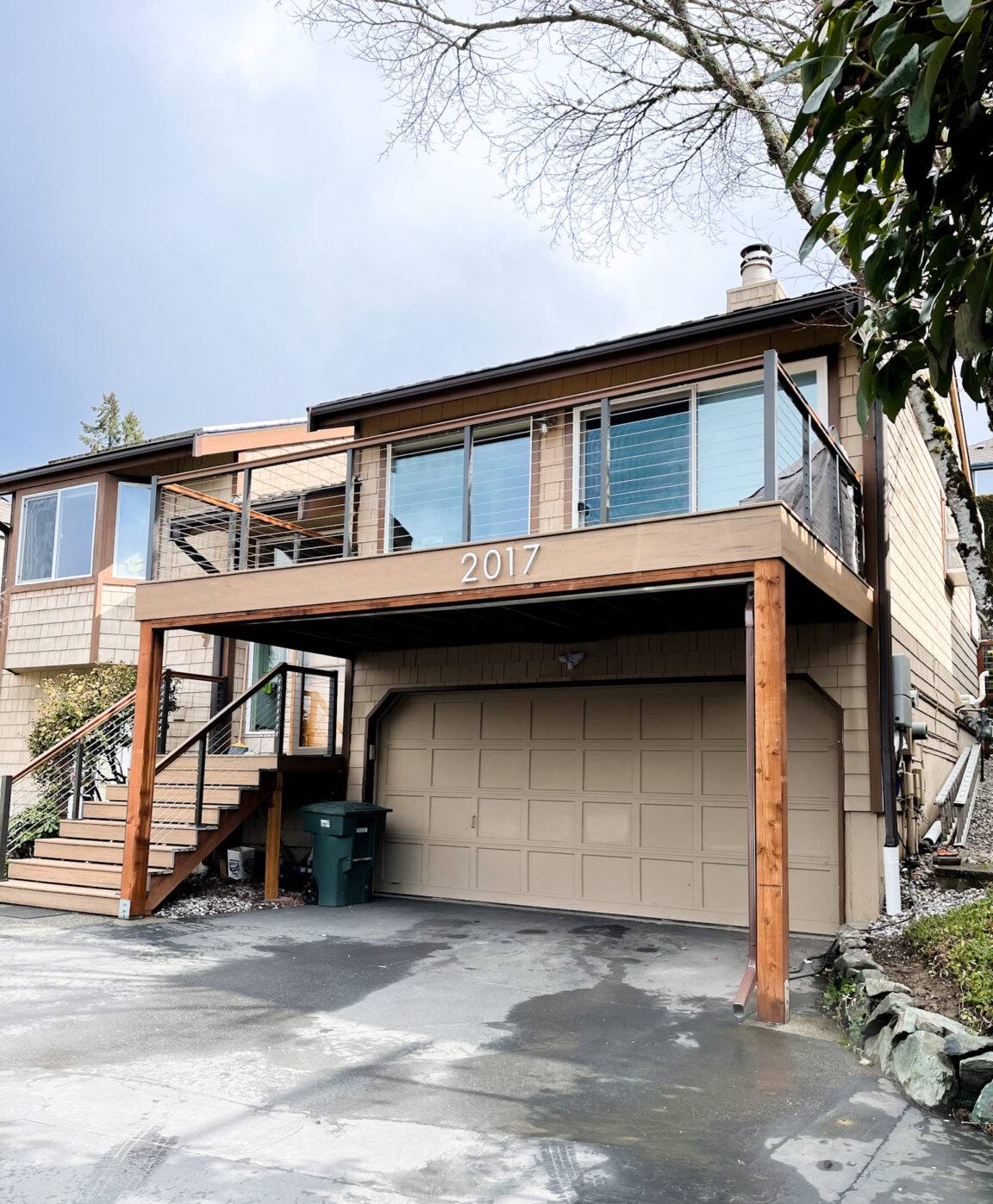
What This Climate Actually Does to a Deck
Whatcom County's marine climate is milder than inland Washington, but "milder" doesn't mean easier on materials. Three things drive almost every deck failure or headache we see in Birch Bay:
Salt Air and Corrosion
Proximity to the bay means airborne salt settles on every exposed surface, including fasteners, hardware, and metal flashing. Standard interior-rated screws and connectors corrode faster here than they would even twenty miles inland. This isn't a scare tactic — it's just chemistry, and it's why fastener and hardware selection matters more here than in a lot of other parts of the state.
Driving Rain
Rain in Birch Bay doesn't always fall straight down. Wind off the water pushes it sideways, which means it gets driven up under ledger boards, behind fascia, and into any gap that wasn't properly flashed or sealed. A deck that would stay dry in a calmer inland location can still take on water here if the flashing details were rushed.
Moss and Prolonged Dampness
Extended damp seasons mean deck surfaces, especially in shaded or north-facing spots, stay wet longer between rain events. That's exactly the condition moss and algae need to establish. Once a deck surface holds moisture longer than it should, wood decking softens and composite decking gets slick and dark far faster than the manufacturer's marketing photos suggest.
Choosing the Right Decking Material for a Birch Bay Property
There's no single "best" decking material — there's a best material for your specific site conditions, sun exposure, and how much upkeep you actually want to do. Here's how the common options stack up against this climate specifically:
| Material | How It Handles Salt Air & Rain | Moss/Algae Resistance | Realistic Upkeep |
|---|---|---|---|
| Pressure-treated wood | Needs sealed end cuts and quality fasteners; performs fine when maintained | Moderate — moss will take hold if not cleaned periodically | Annual cleaning and re-sealing recommended |
| Cedar | Naturally rot-resistant, but still needs sealing near the water | Moderate — same shaded-area concerns as any wood | Periodic sealing and cleaning |
| Capped composite | Excellent — doesn't absorb moisture like wood | Better than wood, but still needs surface cleaning in shaded areas | Occasional washing; no sealing or staining |
| PVC decking | Excellent — fully impervious to moisture absorption | Best of the common options, though surface film can still form | Lowest — mainly periodic washing |
We're upfront with clients that composite and PVC cost more up front but reduce the maintenance burden a wet climate like this creates. Wood costs less initially and has a warmer, traditional look many homeowners still prefer — it just asks for more consistent attention. Neither choice is wrong; it depends on how much deck maintenance you actually want to do every year.
Structural Details That Matter More Here Than Elsewhere
A deck can look finished and still be built wrong underneath. In a climate like Birch Bay's, a few structural details separate a deck that lasts decades from one that develops rot or hardware failure within a handful of years.
Ledger Board Flashing
Where the deck attaches to the house is the single most common failure point we find on older or poorly built decks in this region. Proper flashing — installed in the correct layered sequence with the house's water-resistive barrier — keeps driving rain from working its way behind the ledger and into the framing or the home's wall assembly.
Fastener and Hardware Grade
We use fasteners and structural connectors rated for coastal or corrosive environments on every deck we build in this area, not just the ones directly on the waterfront. Standard galvanized hardware can start showing corrosion within a few seasons this close to salt air; the corrosion-rated equivalents cost more but they're not optional here in our view.
Footings and Post Bases
Whatcom County soil conditions and frost depth requirements dictate footing depth, and post bases need to keep the post end elevated off the concrete so water doesn't wick up into the wood. This is a basic code and durability item, but it's one of the first things to get shortcut on a rushed build.
Joist Protection
Joist tape or an equivalent moisture barrier over the top of each joist prevents water from sitting in fastener holes and initiating rot from the inside out — a slow failure mode that's invisible until the deck surface starts to feel soft.
Design Considerations Specific to Birch Bay Properties
Beyond the climate itself, a few site realities come up often in this area and are worth planning for before construction starts.
- Wind exposure: Properties with a more open view toward the water often see stronger, more consistent wind, which affects railing choices, furniture placement, and even fastener spacing on rail systems.
- Elevation and grading: Sloped lots common around Semiahmoo and Birch Bay sometimes call for taller support posts or stepped landings, which changes the engineering and permitting requirements.
- Shaded, north-facing sections: These areas stay damp longest and are where we pay extra attention to drainage and material choice, since they're the first spots moss and algae will establish.
- Setbacks and permitting: Whatcom County and any applicable shoreline regulations can affect how close to a property line or slope a deck can be built — this gets confirmed before design work locks in, not after.
Our Process for a Birch Bay Deck Project
We keep the process straightforward and put the decisions that matter most in front of you early, before anything is built:
- On-site assessment: We look at sun exposure, drainage patterns, soil conditions, and how the deck will tie into the existing structure.
- Material and design conversation: We walk through the honest trade-offs between wood and composite/PVC options based on your budget and how much maintenance you want to take on.
- Permitting: We handle the permit application and make sure the design meets Whatcom County code requirements before construction starts.
- Framing with climate-appropriate hardware: Corrosion-resistant fasteners and connectors, proper footing depth, and joist protection go in regardless of which decking surface you choose.
- Flashing and waterproofing details: Ledger flashing, proper drainage slope, and any necessary gap spacing to let air circulate underneath and reduce trapped moisture.
- Final walkthrough: We go over basic maintenance expectations for your specific material choice so there are no surprises in year two or three.
Realistic Maintenance Expectations
However, "low maintenance" doesn't mean "no maintenance" for any decking material in this climate. Here's what we tell homeowners to actually expect:
- Wood decking: annual cleaning, inspection of fasteners, and re-sealing every couple of years to keep water from penetrating the surface.
- Composite decking: periodic washing to prevent surface film buildup in shaded areas, plus a visual check of fastener and flashing points.
- PVC decking: the least frequent upkeep, but still benefits from occasional washing, especially in spots that don't get much direct sun.
- All materials: keeping gutters and downspouts clear near the deck area, since redirected roof runoff is a common source of extra moisture exposure on decks close to the house.
Why Hiring a Crew That Already Works This Area Matters
A contractor who builds mostly in drier inland areas may not default to corrosion-rated hardware or the flashing sequence that a marine climate demands — not out of carelessness, but because it's simply not the standard problem they solve every day. Working regularly in Semiahmoo and Birch Bay means we've seen what happens to decks built without those details in mind, and we build to prevent it from the start rather than fixing it a few years later. That local pattern recognition is worth as much as any single material choice.
If you're planning a new deck or replacing an aging one in Birch Bay, we're happy to walk the property with you and talk through what makes sense for your specific site and budget. Reach out for a free, no-pressure estimate using the form below.