 Semiahmoo Exterior
 Why Birch Bay Decks Take More Punishment Than Most
A deck in Birch Bay lives a harder life than the same deck built forty miles inland. Sitting this close to Semiahmoo Bay and the open water, homes here catch a steady dose of salt-laden air, and that air is hard on fasteners, hardware, and any finish that isn't holding up its end of the bargain. Add Whatcom County's long wet season — months of driving rain that finds every gap in flashing and every unsealed end-cut — and you have a structure that's constantly wet, drying slowly, and never fully catching a break.
Then there's moss. Decks shaded by fir and cedar trees, or simply facing north, can stay damp for days after a storm passes. That moisture sits on the wood surface and works its way into any seam, screw hole, or board gap, feeding rot from the inside out long before the surface looks bad. By the time a homeowner notices soft spots or dark staining, the damage underneath is often further along than it appears.
None of this means a deck here is doomed — it means it needs to be built and repaired with this climate in mind, not with a generic approach that would work fine somewhere drier.
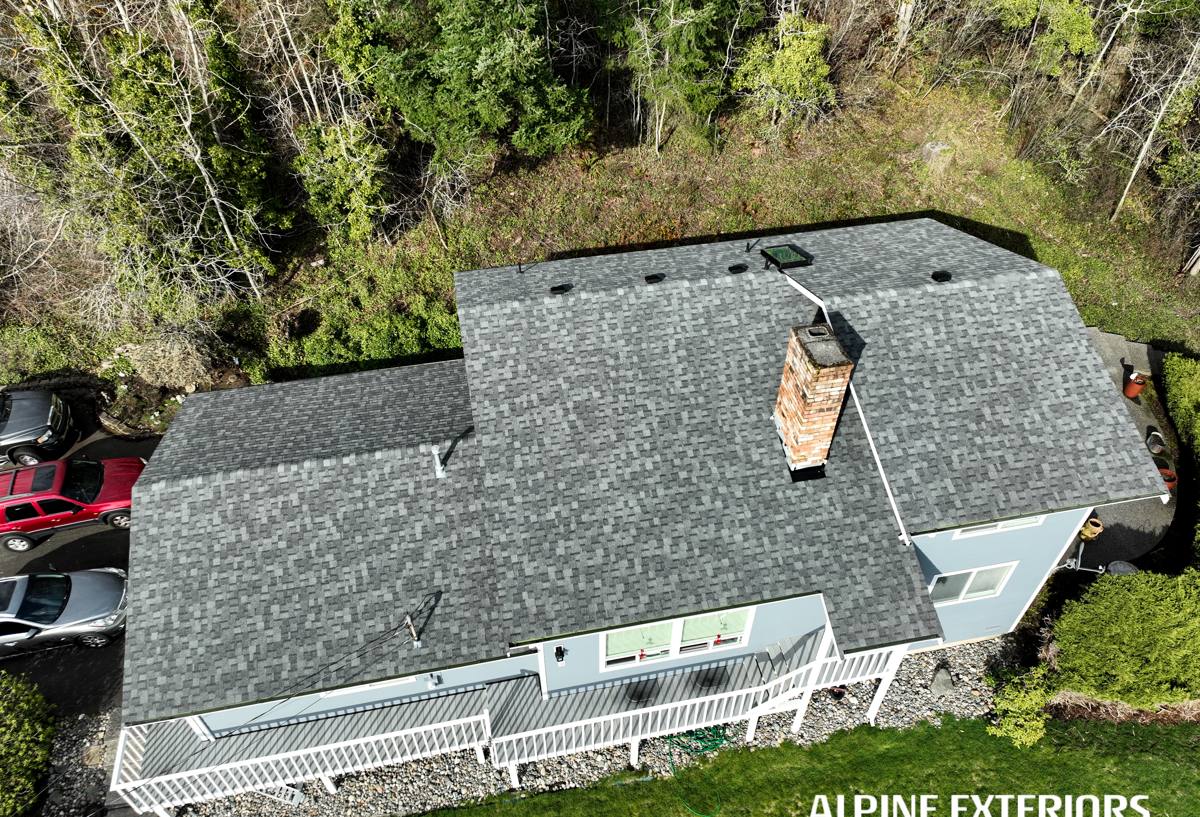
Signs Your Deck Needs Repair, Not Just a Cleaning
A lot of deck problems get masked for a season or two by a good pressure wash. Here's what actually signals a repair need rather than routine upkeep:
- Boards that feel spongy, springy, or soft underfoot, especially near the house or stair landings
- Rust streaks bleeding out from screw or nail heads
- Gaps or dark staining where the deck meets the house — a common sign of failed ledger flashing
- Railings or posts that wobble or flex when you lean on them
- Persistent moss or black-green growth that returns within weeks of cleaning
- Stair stringers that feel bouncy or uneven
- Standing water that doesn't drain within a few hours of rain stopping
- Popped or backed-out fasteners across multiple boards
Any one of these on its own might be minor. Several at once usually means moisture has already gotten past the surface and into the framing.
What a Correct Deck Repair Actually Involves
It Starts Underneath, Not on the Surface
Replacing a few gray, weathered boards is the easy part and, on its own, doesn't fix much. A repair done right starts with what's underneath: the ledger board attaching the deck to the house, the joists carrying the load, the posts and footings holding it all up, and the hardware tying it together. If any of that is compromised, new decking on top of it is a cosmetic fix on a structural problem.
Flashing Is Usually the Real Story
A huge share of deck failures we see trace back to missing or failed ledger flashing — the metal strip that's supposed to keep water from running behind the deck and into the house band board. In a climate with this much sustained rain, a gap here doesn't dry out between storms. It stays wet, and the wood around it slowly loses its strength even while the rest of the deck looks fine.
Hardware Matters More Here Than Inland
Standard zinc-coated fasteners corrode faster in salt air than most homeowners expect. A correct repair near the water means using stainless steel or coastal-rated hot-dip galvanized fasteners and connectors — not because it looks better, but because it's the difference between a repair that lasts and one you're redoing in a few years.
Repair or Replace? How We Make the Call
Not every deck problem needs a full rebuild, and we don't push replacement when a targeted repair will genuinely hold up. The honest answer usually comes down to how much of the structure is still sound.
| Condition | Usually Repairable | Usually Needs Replacement |
|---|---|---|
| Decking boards | Isolated soft or cracked boards | Widespread soft spots across most of the deck |
| Ledger/framing | Localized rot at one joist end | Rot along the ledger board or multiple joists |
| Fasteners/hardware | Rusted screws, sound wood beneath | Corroded structural connectors, brackets pulling loose |
| Posts/footings | Surface weathering, solid core | Soft or crumbling wood at the base, heaving footings |
| Overall age | Under 12-15 years, maintained | Original deck 20+ years, little past maintenance |
As a general rule of thumb we use in the field: once the cost of chasing repairs starts approaching half of what a full rebuild would run, replacement is usually the better long-term value — you're not paying twice to fix the same underlying moisture problem.
Decking Materials That Actually Hold Up Near the Water
What you replace a damaged deck with matters as much as the repair itself. In a coastal, wet, moss-prone environment, some materials are simply lower-maintenance choices than others.
- Cedar — naturally rot-resistant and a good visual match for the Pacific Northwest look, but it still needs regular sealing here, and neglected cedar in a shaded, damp spot will grow moss as readily as any other wood.
- Pressure-treated fir/hem-fir — a solid, economical framing and decking choice, but end cuts and fastener holes need to be sealed on-site or they become entry points for rot.
- Composite decking — higher upfront cost, but it doesn't absorb moisture the way wood does, which cuts down on rot risk and moss adhesion. It still needs periodic cleaning; it's not maintenance-free, just lower-maintenance.
We'll walk through the trade-offs honestly based on your budget, how exposed the deck is, and how much upkeep you actually want to do — there's no single right answer for every Birch Bay property.
Our Deck Repair Process
- On-site inspection — we check decking, framing, the ledger connection, posts, footings, and hardware, not just the visible surface.
- Written scope and options — you get a clear explanation of what's failing, what's still sound, and repair vs. replacement options with honest reasoning.
- Removal of compromised material — damaged boards, rotted framing members, and corroded hardware come out completely; we don't build over hidden rot.
- Structural repair first — ledger flashing, joists, posts, and footings get addressed before anything cosmetic goes back on.
- Rebuild with coastal-appropriate materials — correct fastener grade, proper flashing details, and decking matched to your budget and exposure.
- Final walkthrough — we check for level, secure railings, proper drainage, and answer any questions before we call it done.
Keeping Moss and Moisture From Coming Back
A repaired deck stays repaired longer with a little seasonal attention, especially through a Whatcom County winter.
What Actually Helps
Keep gaps between boards clear of debris so water drains through instead of pooling. Trim back overhanging branches where you can, since shade and leaf litter are what keep a deck damp long enough for moss to take hold. A yearly rinse before moss gets established is far easier than scrubbing it off once it's dug in, and re-sealing wood decking on the schedule the finish manufacturer recommends protects the investment you just made in the repair.
What to Watch For Going Forward
Check ledger flashing and fastener heads once a year, ideally before the wet season sets in. Catching a small rust spot or a hairline gap early is a five-minute fix; catching it two years later can mean pulling boards to get at rotted framing underneath.
Why Hiring a Crew That Already Works Birch Bay Matters
Deck repair advice that's generic doesn't always translate to a bay-front or near-shore property. A crew that regularly works homes in Birch Bay and the surrounding Semiahmoo area already knows which fastener grades actually hold up to the salt air here, which framing details tend to fail first in this rain pattern, and how to sequence a repair around Whatcom County's weather windows instead of getting caught mid-project by a wet spell. That local pattern-recognition is what turns a repair into one that lasts, rather than one you're revisiting in a couple of years.
What Deck Repair Typically Costs
Costs vary a lot based on scope, but here's the general shape of what homeowners in this area typically see:
| Repair Type | Typical Range | What Drives the Cost |
|---|---|---|
| Board replacement (isolated) | Lower end of the range | Number of boards, material match, accessibility |
| Railing or stair repair | Low to mid range | Hardware condition, code compliance updates |
| Ledger/flashing correction | Mid range | Extent of hidden rot, need to open up siding |
| Structural framing repair | Mid to upper range | Number of joists/posts affected, footing condition |
| Full deck rebuild | Highest range | Size, material choice, permitting |
We won't know which category your deck falls into until we actually look at it, which is why we start every job with an honest, no-obligation inspection rather than a phone-quote guess.
If your deck is showing any of the signs above, or you just want an honest read on how much life it has left, we're happy to take a look. Reach out for a free, no-pressure estimate — the form below only takes a minute.