 Semiahmoo Exterior
 Siding Built for What Sumas Weather Actually Does to a House
Homes in Sumas sit in one of the wetter, harder-working corners of Whatcom County. Between the driving rain that blows in for months at a stretch, the salt-tinged air that works its way inland off the Sound, and a moss season that seems to run longer every year, exterior siding here doesn't get an easy ride. We install James Hardie fiber cement siding exclusively, and this page is about what that means specifically for a Sumas home — not siding in general, and not a national sales pitch, but what a correct installation looks like on a house that has to survive this particular climate year after year.
We're not going to tell you every siding product is doomed here. Plenty of materials will go up and look fine on installation day. The question that matters is what they look like in year eight, year twelve, year twenty — after enough wet-dry cycles, enough moss growth, enough freeze-thaw swings — and that's the lens we install through.
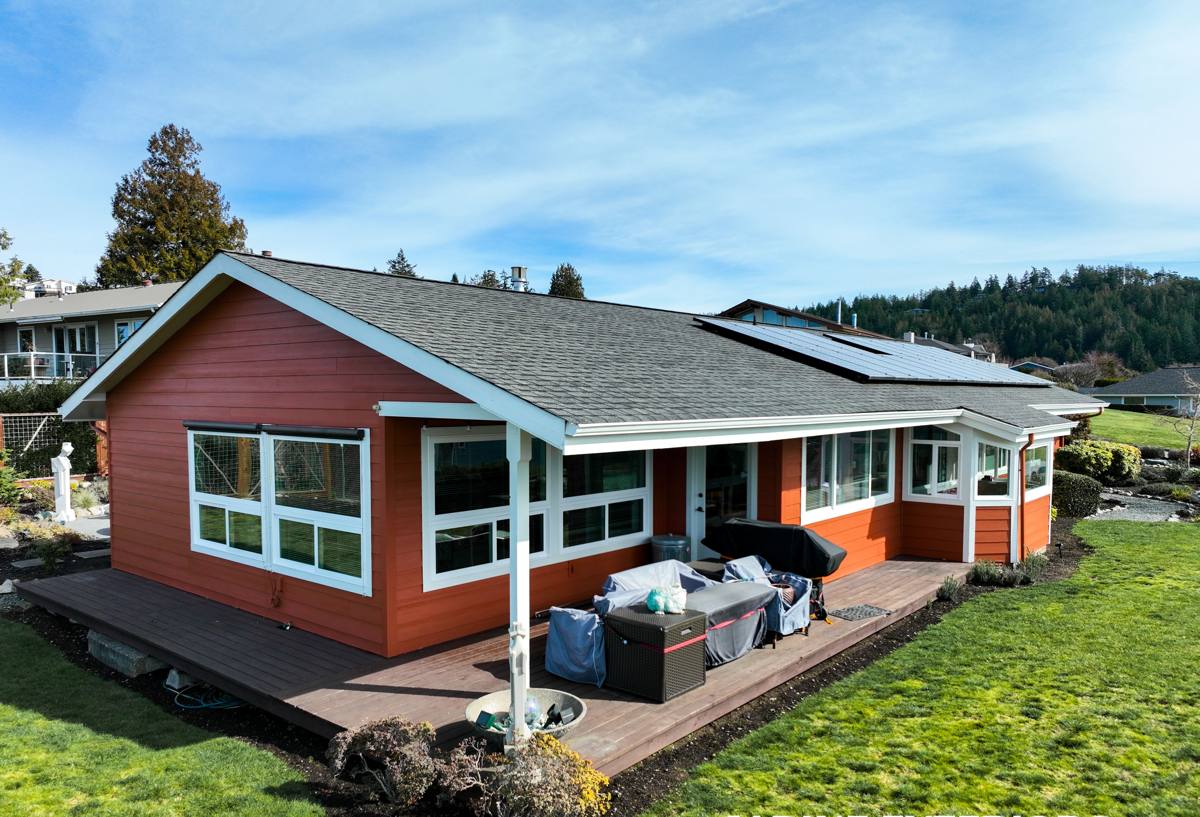
What Sumas Homes Are Actually Up Against
Moisture that doesn't let up
Whatcom County gets long stretches of steady, low-intensity rain rather than short hard storms, and that matters more than people expect. Steady rain finds every gap, seam, and fastener hole a siding system has, and it finds them slowly, over dozens of soakings a year. Materials that swell, wick, or delaminate when wet don't fail on day one — they fail quietly, behind the surface, over several winters.
Salt air and corrosion
Proximity to the Sound means a measure of salt-laden air moves through this region, and salt exposure accelerates corrosion on fasteners, trim, and any siding component that isn't rated for it. It also accelerates the breakdown of lower-grade paint and coatings, which is part of why factory-applied, baked-on finishes hold up so much better here than field-applied paint.
A moss season that runs long
North-facing walls, shaded elevations, and anything near overhanging trees stay damp longer here than in drier parts of the state, and moss and algae take hold wherever siding stays damp. Moss isn't just cosmetic — it holds moisture against the surface and, on materials that aren't moisture-stable, that constant dampness is what drives rot and swelling underneath.
Freeze-thaw swings
Sumas still sees cold snaps that push temperatures below freezing after weeks of saturation. Any siding material that has absorbed water and then freezes is at risk of cracking, splitting, or delaminating — this is one of the most common ways lower-grade siding fails in this part of the state, and it's a big part of why we standardized on a product engineered specifically for climates like ours.
Why We Install Only James Hardie Here
James Hardie fiber cement is engineered in climate-specific formulations, and the HZ5 product line is built for regions like ours — more moisture, more freeze-thaw, more humidity than the milder zones the company also serves. That's not a marketing detail; it changes how the board is formulated and how it performs over decades, not just years.
A few specifics that matter for a Sumas home:
- Non-combustible fiber cement — Hardie board is made primarily from cement, sand, and cellulose fiber, and won't ignite or contribute fuel to a fire the way wood-based products can.
- Moisture-stable core — fiber cement doesn't swell, warp, or absorb water the way wood, engineered-wood, or lower-grade composite sidings do, which matters enormously given how much of the year Sumas siding spends wet.
- ColorPlus factory finish — the color is baked on in a controlled factory process rather than brushed or sprayed on site, which means far better adhesion, better fade resistance, and a finish that isn't compromised by salt air or UV the way field-applied paint can be.
- Engineered for freeze-thaw — the HZ5 formulation is built to handle the wet-then-cold cycle that damages a lot of siding in this region.
- A real transferable warranty — backed by the manufacturer, not just the installer, and structured to survive a change of ownership, which matters if you ever sell the home.
We don't install LP SmartSide, vinyl, Cemplank, Allura, primed spruce, or cedar. Each of those products has real strengths, and we're not here to trash them — but each also comes with a moisture, maintenance, or durability trade-off that we've decided isn't worth carrying on a Sumas roofline, given what this climate does to a home over the long haul. Hardie is the product we're willing to put our name behind here.
What a Correct Installation Actually Involves
Fiber cement siding is only as good as the installation behind it, and this is where a lot of jobs — even ones using good materials — go wrong. A correct Hardie install on a Sumas home includes:
- A moisture-managed water-resistive barrier installed and lapped correctly behind the siding, so any water that gets past the cladding has somewhere to go.
- Proper flashing at every window, door, roofline, and penetration — this is the single most common failure point we find when we tear off older siding in this area.
- Correct fastener spacing and type — corrosion-resistant fasteners, driven to the manufacturer's specified depth, in the specified pattern. Over- or under-driven nails are one of the fastest ways to void a warranty and invite water intrusion.
- Manufacturer-specified clearances — gaps at grade, decks, patios, and roof lines so the board never sits in standing water or gets buried against soil or mulch.
- Caulking and sealant only where Hardie's install guide calls for it — over-caulking traps moisture just as badly as under-caulking lets it in.
- Field-cut edges primed or sealed per spec, so cut ends aren't left exposed to soak up water.
Every one of these steps is spelled out in James Hardie's own installation requirements, and skipping any of them is exactly what voids the manufacturer's warranty — regardless of how good the board itself is. This is why we say the product and the installer both matter; neither one alone is enough.
Our Process on a Sumas Job
We keep the process straightforward and try not to surprise you partway through:
- On-site assessment — we look at your current siding, wall assemblies, trim, flashing, and any moisture or rot already present, and explain what we find in plain terms.
- Written estimate — scope, product line, color, and price, with no vague allowances hiding in the fine print.
- Tear-off and inspection — once old siding comes off, we check sheathing and framing underneath for damage before anything new goes up. This is often where hidden moisture problems from a previous install surface.
- Weather barrier and flashing — installed and inspected before a single piece of siding goes on.
- Hardie installation — to manufacturer spec, with the fastening, clearances, and sealing steps above.
- Final walkthrough and warranty registration — we register the install with James Hardie so your warranty coverage is documented from day one.
How Hardie Compares to the Alternatives
| Factor | James Hardie Fiber Cement | Vinyl Siding | Cedar / Wood |
|---|---|---|---|
| Moisture behavior in wet climates | Moisture-stable core, engineered for HZ5 | Doesn't absorb water but can warp/buckle in heat and gap at seams | Absorbs water readily; prone to swelling, rot, moss |
| Fire resistance | Non-combustible | Can melt/deform under heat exposure | Combustible |
| Finish durability | Factory-baked ColorPlus finish | Color molded through, can fade/chalk over time | Field-applied paint/stain, needs recoating every few years |
| Maintenance | Occasional wash; repaint only if not ColorPlus | Low, but cracks/fades and can't be easily repainted long-term | Regular sealing, staining, and moss/rot monitoring |
| Typical lifespan when installed to spec | Multiple decades | Shorter, especially in harsh climates | Shorter without diligent, ongoing maintenance |
This isn't a knock on vinyl or cedar as products — it's a summary of the trade-offs we weighed before deciding what we'd put our name behind in a climate like this one.
Questions Worth Asking Before You Hire Anyone
- Are you a certified or manufacturer-recognized Hardie installer, or just someone who has "installed it before"?
- Will the flashing and water-resistive barrier be inspected before siding goes on, or covered up without a look?
- What fastener type and spacing will you use, and does it match James Hardie's published spec for this product line?
- Will the job be registered with James Hardie so the warranty is actually active?
- Can you show me the specific HZ5 product and ColorPlus finish options appropriate for this region?
- What's your plan for tear-off day if hidden moisture damage turns up underneath the old siding?
Why a Crew That Already Works Sumas Matters
Siding installation isn't just a product — it's a set of decisions made on-site, in real conditions, by people who understand what this specific climate does to a house. A crew that regularly works Sumas and the surrounding Whatcom County area already knows which elevations take the worst weather, how long moss season really runs, where salt air does the most damage, and how local permitting and inspection work. That local pattern-recognition is worth more than a generic install crew that's never worked this stretch of coastline and county before.
We also stand behind the work after we leave. A siding job done right shouldn't need a callback, but if something does come up, being a crew that's still working in your area next year — not a traveling outfit that's moved three counties over — is part of what you're paying for.
If your Sumas home needs new siding, or you're just trying to figure out whether your current siding is holding up the way it should, we're happy to take a look. Estimates are free, there's no pressure, and we'll tell you honestly what we see — good or bad.