 Semiahmoo Exterior
 Siding Installation in Sumas: A Job the Local Climate Won't Forgive Mistakes On
Homes in the Sumas area, part of our Semiahmoo-area service territory in Whatcom County, sit under some of the wettest, most moisture-loaded conditions in the Pacific Northwest. Salt-tinged marine air moves through the county on prevailing winds, driving rain comes in sideways more months than not, and the shaded, damp stretches of the year give moss and algae a long runway to take hold on anything that stays wet. Siding installation here isn't a cosmetic upgrade — it's the single biggest factor in whether a home's walls stay dry and structurally sound for the next 30 to 50 years.
We install one product system for exactly this reason: James Hardie fiber cement. This page walks through what Sumas homes actually need from a siding install, what a correct job looks like under the hood, and how our process handles the specific punishment this climate delivers.
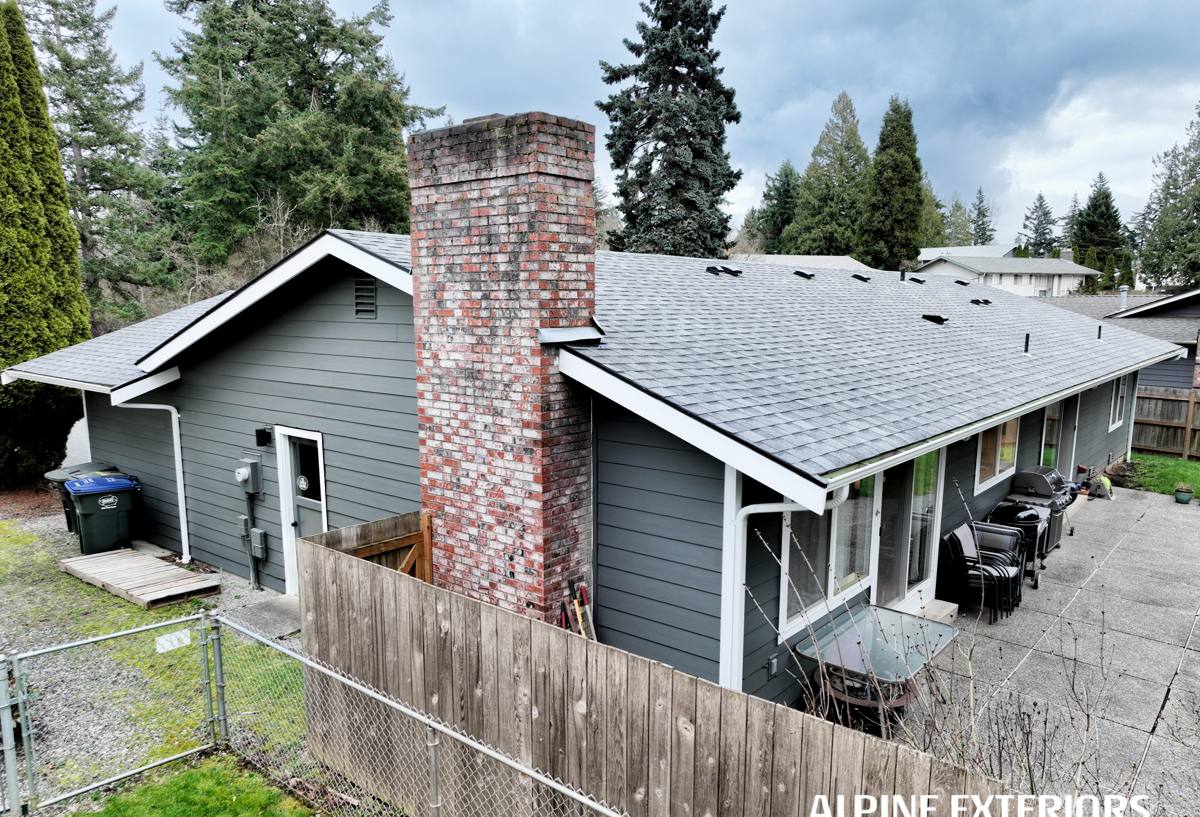
What Sumas Homes Are Up Against
Driving Rain and Wind-Driven Moisture
Whatcom County storms don't just fall straight down — wind pushes rain sideways into wall assemblies, wearing on lap joints, corner trim, and anywhere siding meets a window or door. A siding system that isn't detailed with proper flashing and drainage will eventually let that water behind the cladding, where it does the real damage: rotted sheathing, saturated insulation, and framing that stays wet long after the storm passes.
Salt Air
Proximity to Puget Sound and the Strait of Georgia means salt-laden air reaches homes well inland from the immediate waterfront. Salt accelerates corrosion on fasteners and metal flashing, and it degrades organic materials — untreated wood trim, some composite products, certain paint films — faster than the same materials would wear in a dry inland climate.
A Long Moss and Algae Season
Shade, moisture, and mild temperatures are exactly what moss and algae need to establish on north-facing walls, under eaves, and anywhere airflow is poor. Once organic growth gets a foothold on a porous or absorbent siding surface, it holds moisture against that surface, which speeds up rot and paint failure underneath it — a cycle that's hard to break without addressing the underlying material.
Why We Only Install James Hardie Fiber Cement Here
Fiber cement is a mix of cement, sand, and cellulose fibers, engineered and pressed into board form, then factory-finished. It doesn't absorb water the way wood-based products do, it doesn't feed rot, and it holds paint and color far longer than field-finished materials — which matters directly in a climate that stays damp for most of the year.
James Hardie also builds region-specific product engineering into its line — HZ5 formulations are designed for climates with freeze-thaw cycling and sustained moisture exposure, which describes Whatcom County well. Combined with the ColorPlus factory finish (a baked-on, multi-coat finish applied under controlled conditions rather than painted on-site in variable weather), it gives Sumas homeowners a siding surface built to resist the specific combination of rain, salt air, and organic growth this area produces.
What a Correct Siding Installation Actually Involves
The siding board itself is only part of the system. Most siding failures we get called to diagnose — on any brand — trace back to installation details, not the material. A correct install means getting every layer right, not just the visible one.
Moisture Management Behind the Siding
- A continuous weather-resistive barrier installed over sound sheathing, lapped correctly so water sheds down and out, never into a seam
- Properly integrated flashing at every window, door, and horizontal trim transition — this is where the majority of leaks originate
- A drainage plane or rainscreen gap where conditions call for it, so incidental moisture that gets behind the cladding can drain and dry instead of sitting against the sheathing
- Correct clearances at grade, decks, and roof-to-wall intersections so water and standing moisture never sit directly against the bottom edge of the siding
Installation Sensitivity That Matters
James Hardie publishes specific fastening, spacing, and clearance requirements, and they exist for a reason — fiber cement installed outside spec (fasteners driven wrong, boards butted too tight, joints uncaulked) can crack, hold moisture, or void the manufacturer's warranty. This is a large part of why we don't sub this work out casually: the product performs exactly as well as the installation behind it, and no better.
Trim, Caulking, and Sealant Details
Corner boards, window trim, and butt joints all need the right sealant, applied correctly, at the right stage of installation. In a climate with this much sustained moisture exposure, a skipped or undersized bead of sealant at a single joint is enough to start a slow leak that won't show up as a visible problem for a year or more.
Our Process for a Sumas Siding Installation
| Step | What Happens | Why It Matters Here |
|---|---|---|
| Assessment & walk-around | We inspect existing siding, trim, flashing, and any visible moisture or rot signs before quoting | Catches sheathing damage early instead of finding it mid-tear-off |
| Tear-off & sheathing check | Remove existing siding, inspect the sheathing and framing underneath | Wet or rotted sheathing has to be replaced before new siding goes on — covering it up guarantees a repeat failure |
| Weather barrier & flashing | Install the water-resistive barrier and flash every penetration and transition | This layer, not the visible siding, is what actually keeps water out |
| Hardie installation | Install James Hardie boards, trim, and fasteners to manufacturer spec | Correct spacing and fastening preserve the warranty and the material's performance |
| Sealant & finish details | Caulk joints, install trim details, final inspection | The last line of defense against wind-driven rain at seams |
| Cleanup & walkthrough | Site cleanup and a walk-through explaining the finished work | You should understand what's on your house and how to maintain it |
Comparing Siding Materials for This Climate
Homeowners in Sumas often ask why we don't offer vinyl, LP SmartSide, or cedar as options. Here's an honest look at how the common alternatives hold up against this specific combination of driving rain, salt air, and moss:
| Material | Moisture Resistance | Moss/Algae Behavior | Maintenance Load |
|---|---|---|---|
| James Hardie fiber cement | Doesn't absorb water or feed rot; performs well when installed to spec | Non-organic surface; factory finish resists staining better than field-painted surfaces | Occasional wash; ColorPlus finish holds up for years without repainting |
| Vinyl | Sheds water but relies heavily on what's behind it; can warp or crack in temperature swings | Can develop surface mildew/algae in shaded, damp spots | Low, but color fades and panels aren't repairable in sections without replacement |
| LP SmartSide (engineered wood) | Wood-based core; performs well when the finish is intact but is vulnerable if that finish is compromised | Organic wood core can feed rot if moisture gets in at cut edges or joints | Requires consistent field maintenance to keep the protective coating intact |
| Cedar | Naturally moisture-tolerant to a point, but absorbs water over time and needs a sound finish | Organic material — susceptible to moss, algae, and rot without regular upkeep | Highest ongoing maintenance: refinishing, sealing, and monitoring for rot |
We're not here to tell you every one of these products is a bad choice in every climate — they're not. But given what Sumas-area weather does to a wall assembly year after year, we've standardized on the one product line that needs the least intervention from us or you to keep performing.
Cost Factors for a Siding Installation Project
Every project quotes differently, but the main variables that move the price on a Sumas siding job are consistent:
- Home size and wall complexity — more corners, gables, and dormers mean more cutting, trim, and labor time
- Condition of the existing sheathing — hidden rot found during tear-off adds repair scope that can't be fully known until the old siding is off
- Siding profile and trim style — lap width, trim detail, and accent choices affect material and labor
- Access and site conditions — steep lots, limited access, or extensive landscaping to protect can add time
- Scope beyond siding — window trim replacement, added flashing work, or rainscreen installation where the existing assembly needs it
We walk every project in person before quoting — sight-unseen estimates for siding are unreliable in this climate precisely because so much of the real cost driver (sheathing condition) isn't visible until tear-off starts.
Maintenance After Installation
A correctly installed James Hardie system is low-maintenance, not no-maintenance. In a climate that grows moss on anything that stays damp, a little attention goes a long way:
- Rinse siding periodically to keep pollen, salt residue, and organic buildup from accumulating, especially on north-facing and shaded walls
- Keep gutters clear so overflow doesn't run down the face of the siding repeatedly
- Trim back vegetation and landscaping that keeps a wall section shaded and damp
- Inspect caulking at trim joints every couple of years and have gaps re-sealed before they become entry points
- Address any impact damage or cracked boards promptly rather than letting moisture get behind a compromised panel
Why Hiring a Crew That Already Works This Area Matters
Siding installation isn't just a manufacturer spec sheet applied the same way everywhere. A crew that regularly works Whatcom County homes has already seen how driving rain finds the weak point in a given wall detail, how far salt air travels inland on this stretch of the Sound, and which orientations on a typical Sumas-area lot fight moss the hardest. That's the difference between an installation that looks right on day one and one that's actually built for what this specific climate will do to it over the next few decades.
If you're planning a siding project on a Sumas-area home, we're happy to walk the property, take an honest look at what's there now, and talk through what a correct James Hardie installation would involve for your specific house. Reach out for a free, no-pressure estimate using the form below.