 Semiahmoo Exterior
 Storm Weather That Hits Sumas Roofs Differently
Sumas takes its weather from a different angle than most of Whatcom County, and that shows up on roofs. Homeowners here deal with the same wet, marine-influenced climate that moves through the rest of the county — the salt-tinged air, the driving rain, the long stretch of moss season — but Sumas also sits near a well-known gap in the terrain that channels strong outflow winds down from the Fraser Valley. That combination of wind exposure and near-constant moisture is why roofs in this area often show damage patterns you don't see as often in more sheltered parts of the county.
Wind Funneling Through the Sumas Gap
When cold air pushes out of the Fraser Valley, it accelerates through the lower terrain around Sumas before spreading out into the valley. That means gusts here can run harder and more consistently than what's reported for Whatcom County as a whole. Over time, that repeated wind loading works shingle tabs loose, stresses ridge caps, and can lift flashing edges that would otherwise sit tight for decades. A lot of this damage doesn't announce itself with missing shingles in the yard — it shows up as slow leaks months later.
Driving Rain and a Long Moss Season
Whatcom County's wet season runs long, and Sumas gets its full share of it. Rain that comes in sideways during a windstorm finds its way under shingles that have already been lifted or cracked, and it doesn't take much of a gap for water to start tracking along the decking. Add in a moss and lichen season that can run most of the year on shaded or north-facing slopes, and you've got roofs that are under constant, low-grade stress even between storms. Moss holds moisture against the roofing material and works its way under shingle edges, which is exactly where storm damage tends to start.
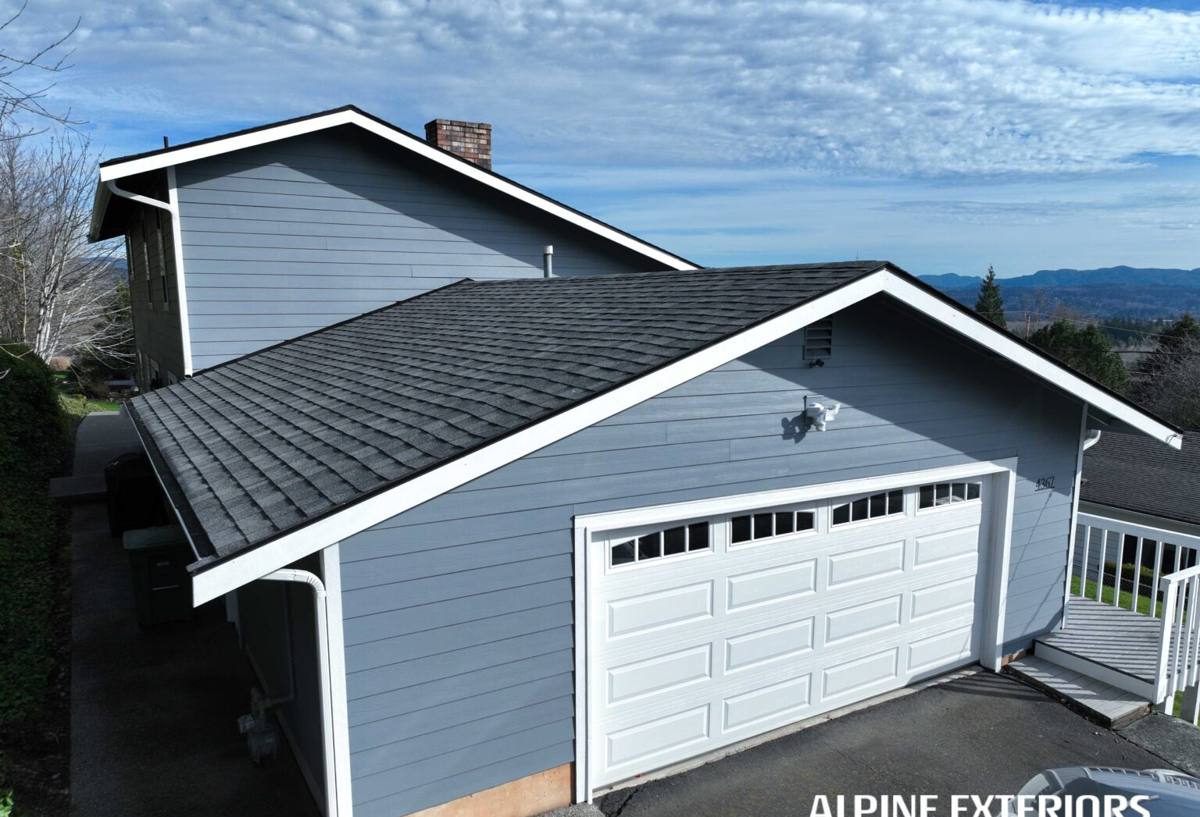
Signs Your Roof Has Storm Damage
Some storm damage is obvious. A lot of it isn't, and the roofs that end up with real interior damage are usually the ones where a smaller problem sat unnoticed through a few more storms. After any significant wind or rain event, it's worth checking for:
- Shingles that look creased, curled at the corners, or noticeably lighter in color where granules have been stripped off
- Bare or dark streaks running down a roof slope, which usually means exposed underlayment or decking
- Bent, lifted, or missing flashing around chimneys, vents, skylights, and roof valleys
- Debris — branches, needles, moss mats — collecting in valleys or against roof-to-wall transitions
- Gutters full of granules, which is a sign the shingle surface has taken a beating
- New or worsening moss growth in patches that weren't there before the last storm
- Water stains, sagging, or a musty smell in the attic or on ceilings below the roofline
None of these by themselves mean you need a full roof replacement. But any one of them is a reason to get a proper inspection rather than wait and see.
What a Correct Storm Damage Repair Involves
Full Inspection, Not Just the Obvious Spot
A repair that only addresses the shingle you can see from the ground is a repair that's likely to get called back out in a season or two. A proper storm damage assessment covers the whole roof plane — not just the area near the reported leak — because wind and rain damage rarely stays contained to one spot. We check ridge lines, valleys, flashing, penetrations, and the underside of the decking wherever it's accessible, since interior damage doesn't always line up neatly with where water first entered.
Checking the Decking and Underlayment
Shingles are the visible layer, but the decking and underlayment underneath are what actually keep water out once shingles have been compromised. If wind has torn shingles loose or rain has been getting underneath them for a while, the plywood decking can be soft, delaminated, or stained, and the underlayment may no longer be doing its job. A repair that skips this step and just lays new shingles over damaged decking is patching over a problem that's still there.
Matching Materials and Making Repairs Blend In
Storm repairs on an otherwise sound roof should match the existing shingle color, style, and exposure as closely as possible. We try to source matching material when it's available, and we're upfront when an exact match isn't possible — sun-faded shingles a few years old rarely match new material perfectly, and that's a normal, honest limitation of spot repairs rather than something we can engineer around.
Flashing, Valleys, and Moss Prevention
Storm damage repair is also a good time to address the things that make the next storm worse. That means resealing or replacing worn flashing, clearing and correcting valley debris paths, and, where it makes sense, treating for moss or recommending simple maintenance steps that slow regrowth. Fixing the shingle without addressing the moss that helped cause the problem just means doing the same repair again in a couple of years.
Our Storm Damage Repair Process
We keep the process straightforward because storm damage is stressful enough without added confusion about what happens next.
- Inspection and photos. We walk the roof (or use a pole camera/drone where a walk isn't safe) and document what we find, including areas that aren't damaged yet but are showing wear.
- Honest assessment. We tell you plainly whether you're looking at a targeted repair, a larger section replacement, or something in between — and why.
- Written estimate. You get a clear scope of work and price before anything is scheduled, no surprises added mid-job.
- Repair work. Damaged shingles, decking, and flashing are replaced; valleys and penetrations are resealed; the work area is cleaned of debris and old material.
- Final walk-through. We show you what was done and flag anything worth watching, like a moss patch that may need treatment down the road.
Repair or Replace? How We Help You Decide
Not every storm-damaged roof needs a full replacement, and not every roof that "just needs a repair" should stop there. The right call usually comes down to a handful of factors we walk through with you directly.
| Factor | Points Toward Repair | Points Toward Replacement |
|---|---|---|
| Roof age | Well within its expected service life | Already near or past the end of its typical lifespan |
| Extent of damage | Isolated to one or two areas | Spread across multiple slopes or the whole roof |
| Decking condition | Solid, no soft spots or rot found | Soft, delaminated, or water-stained in several areas |
| Storm history | First significant damage event | Repeated repairs over the last few years |
| Material availability | Matching shingle still obtainable | Discontinued or badly mismatched material |
We'll never push a full replacement when a solid repair will genuinely hold up, and we won't recommend patching a roof that's clearly at the end of its life just to avoid a harder conversation. Our job is to give you the honest read so you can make the call that fits your budget and your timeline.
Materials and Trade-Offs for Storm Repairs
Most storm repairs in this area are done with asphalt composition shingles, since that's what the large majority of Sumas roofs are built with, and matching material is the priority for a repair that's meant to blend in. For homeowners considering upgrades at replacement time, it's worth understanding a few honest trade-offs:
- Standard three-tab shingles are the most affordable option but generally carry a lower wind rating, which matters given the gusts this area sees — we typically steer storm-prone roofs toward architectural shingles instead.
- Architectural (dimensional) shingles are heavier, carry higher wind ratings, and hold up better against the kind of repeated wind loading Sumas gets, though they cost more up front.
- Metal roofing sheds wind-driven rain and moss buildup better than shingles on shaded slopes, but it's a bigger investment and requires installers experienced with the specific panel system — not every crew that does asphalt work does metal well.
- Wood shake or shingle roofing can look great but needs more maintenance in a climate this wet, and moss and moisture retention are a real ongoing consideration we're upfront about before anyone commits to it.
Whatever material is on your roof now, our standard for a storm repair is the same: use material rated for the wind and moisture conditions this area actually sees, not just whatever's cheapest to install.
Documenting Damage for Insurance
A lot of storm damage repairs in Whatcom County end up going through a homeowner's insurance claim, and how the damage is documented matters. When we inspect a roof after a storm, we take dated photos of the damage, note the likely cause, and provide a written estimate that itemizes the scope of repair — documentation that's typically useful when you're filing or supporting a claim. We're not a public adjuster and we don't make promises about what an insurer will or won't approve, but we'll give you a straightforward, accurate account of what we found so you're working from solid information either way.
Why Hire a Crew That Already Works in Sumas
Storm damage repair isn't just about swinging a hammer — it's about correctly reading what a specific roof, in a specific location, has actually been through. A crew that regularly works in Sumas already has a feel for how the outflow winds here tend to hit roofs, which slopes in this area tend to hold moss longest, and what a repair needs to include to actually hold up through the next wet season rather than needing a repeat visit. That local familiarity doesn't replace a careful inspection, but it means fewer surprises and fewer missed details. We're a Whatcom County crew, and Sumas is part of the area we know and work in regularly — not a stop we make once and move on from.
If your roof has been through a recent storm, or you're not sure whether what you're seeing is something to worry about, we're happy to take a look. Reach out for a free, no-pressure estimate — we'll give you a straight answer about what your roof needs, and nothing more than that.