 Semiahmoo Exterior
 New Roofs Built for Sumas Weather, Not Just a Sunny Sales Photo
A new roof in Sumas has to earn its keep in conditions that don't show up in a manufacturer's brochure. Between the salt-laden air drifting in off the water, long stretches of driving rain, and a moss season that can run most of the year in the shade, a roof here is worked harder than the same product would be in a drier inland climate. When we install a new roof for a Sumas homeowner, we're not just matching shingles to a color swatch — we're building an assembly that's meant to shed water fast, resist moss colonization, and hold up to salt exposure without quietly failing from underneath.
This page is about one job, done right, in one place: full roof replacement for homes in the Sumas area of Whatcom County. If you're weighing whether it's time, trying to understand what a proper installation actually includes, or just tired of getting vague answers from contractors who don't know this part of Washington, this is written for you.
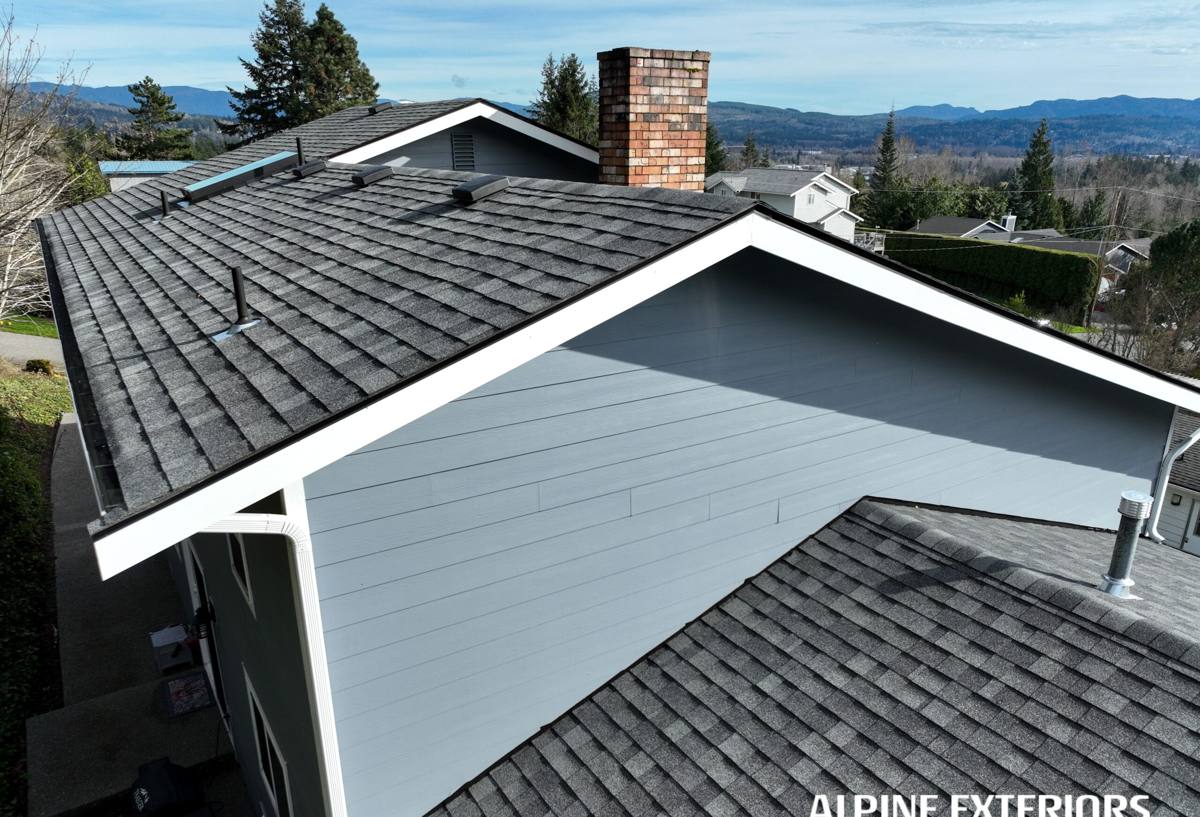
What Salt Air, Rain, and Moss Actually Do to a Roof
Salt Air and Corrosion
Homes closer to the water pick up airborne salt that settles on roofing metal — flashing, fasteners, vents, and gutter hardware. Over years, that salt exposure accelerates corrosion on anything that isn't rated for it. A roof that looks fine from the ground can have flashing and fastener heads quietly rusting through, which is exactly where leaks start. Material choice and hardware grade matter more here than in a landlocked neighborhood.
Driving Rain
This part of Whatcom County doesn't just get rain — it gets rain pushed sideways by wind off the water. Wind-driven rain finds every gap in a roof system: under-lapped shingle courses, poorly sealed valleys, nail pops, and flashing that was caulked instead of properly integrated. A roof that would perform fine in a calm, straight-down rain climate can still leak here if the installation didn't account for wind-driven moisture working its way uphill under the roof covering.
Moss Season
Shade, moisture, and mild temperatures are moss's favorite combination, and Sumas gets a long season of all three. Moss doesn't just sit on top of shingles looking messy — its root structure lifts shingle edges and holds moisture directly against the roofing material, which shortens the life of asphalt shingles and creates rot risk on the decking underneath if it's left unmanaged for years. A new roof installed without any thought to moss resistance is starting its clock early.
Signs a Sumas Roof Is Due for Replacement
Not every roof problem means a full replacement, but these are the signals that usually point that direction rather than toward a patch repair:
- Shingles that are cupping, curling, or missing granules in patches, especially on the sides that catch the most weather
- Moss or algae streaking that keeps coming back within a season or two of cleaning
- Soft spots or noticeable sagging when walked on or viewed from a ladder
- Daylight visible through the roof deck from inside the attic
- Water stains on ceilings or upper walls, particularly after wind-driven rain events
- Flashing around chimneys, skylights, or vents that's visibly rusted, lifted, or cracked
- A roof that's at or past the manufacturer's expected service life for its material and this climate
- Granules collecting in gutters in noticeable amounts, a sign the shingle surface is wearing away
If you're seeing two or three of these at once, that's usually the point where a repair is a short-term patch on a roof that's already telling you it's done.
Choosing the Right Roofing Material for This Climate
There's no single "best" roofing material — there's the right material for a given roof pitch, budget, and exposure. In a coastal Whatcom County climate, we weigh moisture behavior, moss resistance, and how the material handles salt-air exposure just as heavily as looks and cost.
| Material | How It Handles This Climate | Trade-Offs |
|---|---|---|
| Architectural asphalt shingles | Good moisture shedding, available with algae-resistant granules that slow moss and algae growth | Shortest lifespan of the common options; still needs periodic moss management |
| Standing seam metal | Excellent water shedding on steep pitches, sheds moss better than shingles since there's less texture for it to grip | Higher upfront cost; metal hardware and fasteners must be corrosion-rated for salt-air exposure |
| Synthetic/composite shingles | Resists moisture absorption well, holds up to wind-driven rain when properly installed | Product quality varies significantly by manufacturer; installation sensitivity is higher than asphalt |
| Cedar shake | Traditional look that fits many homes in this region | Highest maintenance burden in a wet, mossy climate; requires disciplined upkeep to avoid rot |
We'll walk through these options against your specific roof — pitch, sun exposure, tree cover, and budget all factor in — rather than pushing one product as a default.
What a Correct Roof Installation Actually Involves
A new roof is only as good as the layers nobody sees once it's finished. Here's what has to happen underneath the shingles or panels for the roof to actually perform in this climate.
Full Tear-Off and Deck Inspection
We remove the old roofing down to the deck rather than layering over it. That's the only way to find soft, rotted, or delaminated decking — common in this climate wherever moss or a slow leak has been sitting unnoticed — and replace it before it's covered up again.
Underlayment
In a region with this much wind-driven rain, underlayment isn't a formality. We use synthetic or ice-and-water underlayment strategically at eaves, valleys, and other vulnerable areas to give the roof a second line of defense if wind ever drives moisture past the primary roofing material.
Flashing
Flashing around chimneys, skylights, sidewalls, and valleys is where most roof leaks actually originate — not in the open field of shingles. We use corrosion-resistant flashing and integrate it properly into the roofing layers (not just caulked on top), which matters more here given the salt-air exposure that accelerates corrosion on lower-grade metal.
Ventilation
Proper intake and exhaust ventilation keeps the attic space dry and temperature-regulated, which reduces condensation buildup on the underside of the deck. In a consistently damp climate, poor ventilation is a slow path to hidden rot even on a roof with good shingles.
Fasteners and Hardware
Every nail, screw, and piece of hardware on the roof is a potential corrosion point near the water. We spec fasteners rated for coastal exposure rather than standard hardware that looks fine for the first few years and then starts failing.
Our Installation Process
- On-site assessment — We inspect the existing roof, decking condition, ventilation, and any problem areas like valleys or chimney flashing before quoting anything.
- Material selection — We go over material options suited to your roof's pitch, exposure, and budget, including moss-resistant and corrosion-rated hardware choices.
- Written estimate — A clear, itemized quote so you know what's included before work starts, not after.
- Tear-off and deck repair — Old roofing removed, decking inspected, and any damaged sections replaced.
- Underlayment and flashing installation — The moisture-management layers go in first, done right, before anything visible goes on top.
- Roofing material installation — Installed to manufacturer spec and adjusted for local wind and rain exposure at eaves, valleys, and edges.
- Ventilation check and final walkthrough — We confirm intake/exhaust airflow and walk the finished roof with you before calling the job done.
- Cleanup — Job site and yard cleared of old material and debris.
Cost Factors for a New Roof in Sumas
Every roof is different, so we won't quote a number without seeing yours, but these are the factors that move the price up or down on most jobs in this area:
| Factor | Why It Matters |
|---|---|
| Roof size and pitch | More square footage and steeper pitches mean more material and labor time |
| Material choice | Asphalt, metal, synthetic, and cedar carry different material and installation costs |
| Decking condition | Hidden rot or soft decking found during tear-off adds repair scope |
| Number of penetrations | Chimneys, skylights, and vents each need proper flashing, adding labor |
| Access and roof complexity | Steep, multi-level, or hard-to-access roofs take longer and require more safety setup |
| Ventilation upgrades | Adding or correcting intake/exhaust venting is sometimes needed and adds to scope |
Why Hiring a Crew That Already Works in Sumas Matters
A roofing crew that only occasionally works this part of Whatcom County tends to install roofs the way they'd install one anywhere — standard underlayment, standard flashing, standard fastener grade. A crew that works Sumas regularly knows which valleys collect the most wind-driven rain, which roofs need extra moss-resistant treatment because of tree cover, and which hardware actually holds up against salt air over the long run instead of just the first couple of winters. That local pattern recognition is the difference between a roof that looks right on install day and one that's still performing well a decade later.
It also matters for accountability. A local crew is here after the job is done — for warranty questions, for a post-storm check, or for simple maintenance advice as the seasons change. That's harder to get from a company that installed a roof and then left the area.
Maintaining Your New Roof Through Moss Season
A well-installed roof still benefits from basic upkeep in this climate. A few habits go a long way toward protecting the investment:
- Keep overhanging branches trimmed back to reduce shade and debris buildup on the roof surface
- Clean gutters regularly so water isn't backing up under the roof edge during heavy rain
- Address moss growth early with proper removal methods rather than letting it establish and spread
- Schedule a visual roof check after major windstorms to catch lifted flashing or displaced shingles early
- Watch for granule buildup in gutters or downspouts as an early wear indicator
None of this replaces professional inspection, but it does reduce the odds of small issues turning into deck rot or interior water damage between checkups.
Ready to Talk About Your Roof?
If your roof is showing its age or you just want a straight answer about whether it's time for a replacement, we're happy to take a look. Fill out the form below for a free, no-pressure estimate on a new roof built for the way weather actually behaves in Sumas.