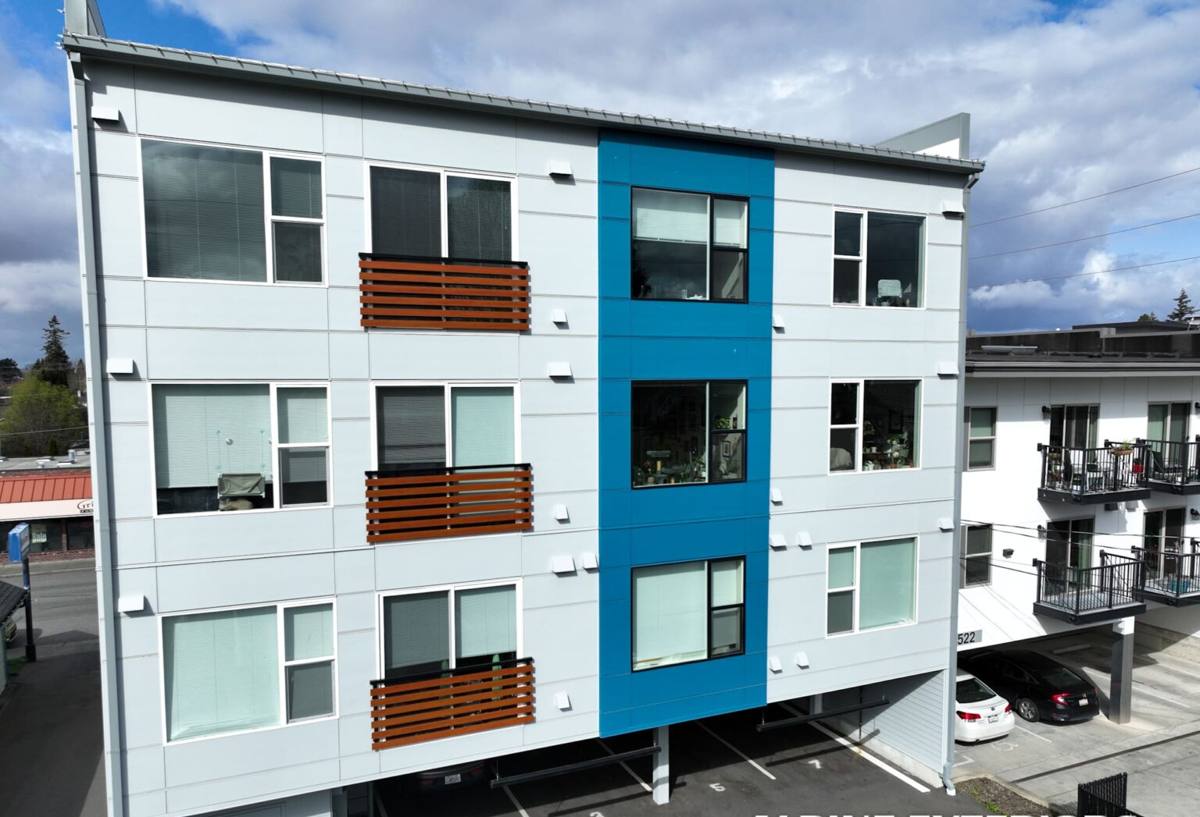
 Semiahmoo Exterior
 Building New in Sumas Means Building for the Weather You'll Actually Get
When you're framing a new home in Sumas, the window decision gets made early and lives with the house for decades. Get it right during construction and you have a tight, dry, energy-efficient building envelope from day one. Get it wrong and you're chasing leaks, stains, and soft framing within a few years — problems that are far more expensive to fix after drywall and siding are closed up than they would have been to prevent during the build. Whatcom County's mix of salt-laden coastal air, long stretches of driving rain, and a moss season that seems to run most of the year puts real demands on window selection, flashing details, and installation sequencing. New construction is the one chance to get every layer right before the walls close.
New-Construction Windows vs. Replacement: Why the Job Is Different
New-construction windows have a nailing fin (sometimes called a nail flange) built into the frame. That flange gets integrated directly into the wall's weather-resistive barrier and flashing system before siding goes on. This is a completely different job from a replacement "pocket" window, which gets inserted into an existing frame with the old exterior trim left mostly intact.
Why This Matters for a New Build
Because the window is going in before the exterior finish, you get to build the drainage plane correctly from the studs out — housewrap, flashing tape, sill pans, and window in the right order, with no shortcuts forced by an existing wall. This is the advantage of new construction: there's no old caulk, no compromised prior installation, no guesswork about what's hidden behind the trim. The job either gets done correctly the first time, or it gets built with a weak point sealed inside the wall for the life of the house.
What Salt Air, Driving Rain, and Moss Season Do to a Window Over Time
Three regional conditions matter most when we're speccing and installing windows for a Sumas build:
Salt Air
Airborne salt accelerates corrosion on unprotected metal hardware, fasteners, and lower-grade aluminum components. It doesn't destroy a window overnight, but over years it can pit finishes, seize hinges and locks, and stain frames if the wrong materials or coatings are used. This is why hardware and cladding selection matters as much as the glass package.
Driving Rain
Wind-driven rain doesn't just fall on a window — it gets pushed sideways and upward against the frame and flashing under storm conditions. A window that would be fine in a calm-rain climate can leak here if the sill pan, head flashing, and jamb flashing aren't layered correctly to shed water outward and downward at every step. This is almost always an installation issue, not a product defect.
Moss and Sustained Moisture
A long moss season means long stretches where exterior surfaces, sills, and trim stay damp. Moss and algae hold moisture against wood trim and can trap water at joints that aren't properly sealed or that lack adequate drainage. Wood-clad exteriors and unpainted trim details are more vulnerable here than properly finished vinyl, fiberglass, or clad-wood products.
Choosing the Right Window Material for a New Sumas Build
There's no single "correct" window material for every home — it depends on your budget, architectural style, and how much long-term maintenance you want to take on. Here's how the common options stack up for this climate specifically.
| Material | Performance in Salt Air / Rain | Maintenance | Typical Fit |
|---|---|---|---|
| Vinyl | Good — won't corrode or rot; seams are the main watch point | Low | Budget-conscious builds, rental properties, simple elevations |
| Fiberglass | Excellent — dimensionally stable, resists moisture and salt exposure well | Low | Higher-end new builds, larger openings, exposed elevations |
| Aluminum-clad wood | Good exterior protection with wood warmth inside; cladding must be properly finished and detailed at joints | Moderate | Craftsman and traditional styles where interior wood trim matters |
| Bare wood | Poorest without diligent upkeep — most exposed to moss, rot, and moisture staining | High | Historic-style projects with a committed maintenance plan |
| Uncoated/mill aluminum | Weakest — prone to pitting and corrosion near salt air over time | Moderate to high | Generally not our first recommendation for this area |
For most new builds in this area, we steer homeowners toward vinyl or fiberglass for exposed elevations, and reserve wood or clad-wood for protected areas like covered porches or interior-facing walls where moisture exposure is lower.
Correct Installation: The Part That Actually Determines Whether a Window Leaks
Window failures in this climate are rarely about the window itself — they're almost always about sequencing and flashing. A quality window installed out of order will leak. A modest window installed correctly will perform for decades. Here's what a correct new-construction install looks like, step by step.
Sill Pan First
Every rough opening gets a sloped sill pan before the window ever goes in. This creates a dedicated drainage path so any water that does get past the window sash or frame drains back out to the exterior instead of pooling on the sill and working into the framing.
Weather-Resistive Barrier Integration
The housewrap or weather barrier has to be shingled correctly — each layer overlapping the one below it — so water is always directed outward and down, never trapped behind a layer above it.
Flashing Tape at the Jambs and Head
Self-adhering flashing tape seals the nailing fin to the wall assembly at the sides and top, in the correct order relative to the weather barrier, so the whole system sheds water the way it's designed to.
Proper Shimming and Fastening
Windows need to be shimmed plumb, level, and square, and fastened per the manufacturer's schedule — not just through the nailing fin wherever it's convenient. Improper fastening leads to frame racking, seal failure, and operational problems (windows that stick or won't latch) down the road.
Sealant as the Last Line, Not the First
Caulk and sealant should back up a correctly built flashing and drainage system — they shouldn't be the only thing standing between your framing and the weather. Relying on sealant alone is one of the most common shortcuts we see, and it's the first thing to fail under sustained driving rain.
Our Process for New-Construction Window Installs
- Plan review and window schedule: we confirm sizes, egress requirements, and product selections against your framing plans before anything ships.
- Rough opening check: we verify every opening is square, correctly sized, and properly braced before install day.
- Sill pan and flashing installation: built and integrated with the weather-resistive barrier in the correct shingled sequence.
- Window setting: shimmed, squared, and fastened to manufacturer specification.
- Flashing and sealant finish: head flashing and final sealant details completed and inspected before siding begins.
- Interior and exterior trim coordination: we work with your framer, siding crew, and trim carpenter so nothing gets covered up before it's checked.
We build in a walkthrough before siding closes the wall — this is the point where a flashing mistake is a five-minute fix instead of a tear-out.
Why Hiring a Crew That Already Works Sumas Matters
New-construction window installation isn't a generic skill you can apply the same way everywhere. A crew that regularly works Whatcom County builds already understands how to detail a window for driving rain that comes in sideways off the water, which hardware finishes hold up against salt exposure, and where moss and sustained dampness cause the most damage on local homes. That's the difference between a crew reading a manufacturer's install sheet for the first time and one that's built dozens of openings under these exact conditions. It also means we're coordinating on-site with framers, siding crews, and trim carpenters who are used to the same sequencing — fewer surprises, fewer callbacks, and a tighter envelope when the house is done.
Common Mistakes We Catch on New Builds
- Nailing fin fastened directly to sheathing with no sill pan underneath
- Weather barrier lapped in the wrong direction, directing water behind the flashing instead of over it
- Sealant used as the sole water barrier instead of a backup to proper flashing
- Windows set out of plumb or square, leading to hardware and seal failure within a few years
- Uncoated or mismatched hardware finishes that corrode quickly in salt air
- Trim and siding installed before flashing details are verified and photographed
Cost Factors for New-Construction Windows in Sumas
Every build is different, but these are the main variables that move the number on a new-construction window package.
| Factor | Why It Affects Cost |
|---|---|
| Window material (vinyl vs. fiberglass vs. clad-wood) | Fiberglass and clad-wood products cost more up front but generally require less long-term maintenance in this climate |
| Number and size of openings | Larger openings and specialty shapes need reinforced framing and custom flashing details |
| Glass package | Upgraded low-E coatings and gas fills improve comfort and energy performance, at added cost |
| Elevation exposure | Walls facing prevailing wind and rain may warrant upgraded flashing details or higher-performance products |
| Access and site conditions | Multi-story installs or tight site access add labor time |
We'll walk your plan set with you and point out where it makes sense to spend more and where a standard-grade product will perform just as well.
Let's Look at Your Plans
If you're framing a new home in the Sumas area, we're happy to review your window schedule and rough opening details before anything ships — it's the easiest time to catch a mismatch or flag an elevation that needs extra flashing attention. Reach out for a free, no-pressure estimate; we'll walk the site, talk through your material options, and give you a straight answer on what your build actually needs.