 Semiahmoo Exterior
 Building a Deck That Actually Holds Up in Sumas
A custom deck in the Sumas area of Semiahmoo isn't the same project as a deck built forty miles inland. The air here carries salt off the water, the rain comes sideways more often than straight down, and there's a stretch of the year where everything outdoors stays damp for weeks at a time. A deck built to a generic national spec will often look fine the first summer and start showing problems by year two or three — soft spots at the ledger, corroded fasteners, railings that wobble, boards that stay slick with moss from October through April. Building it right the first time means designing around this specific climate, not just following a plan set that was drawn up for a dry climate somewhere else.
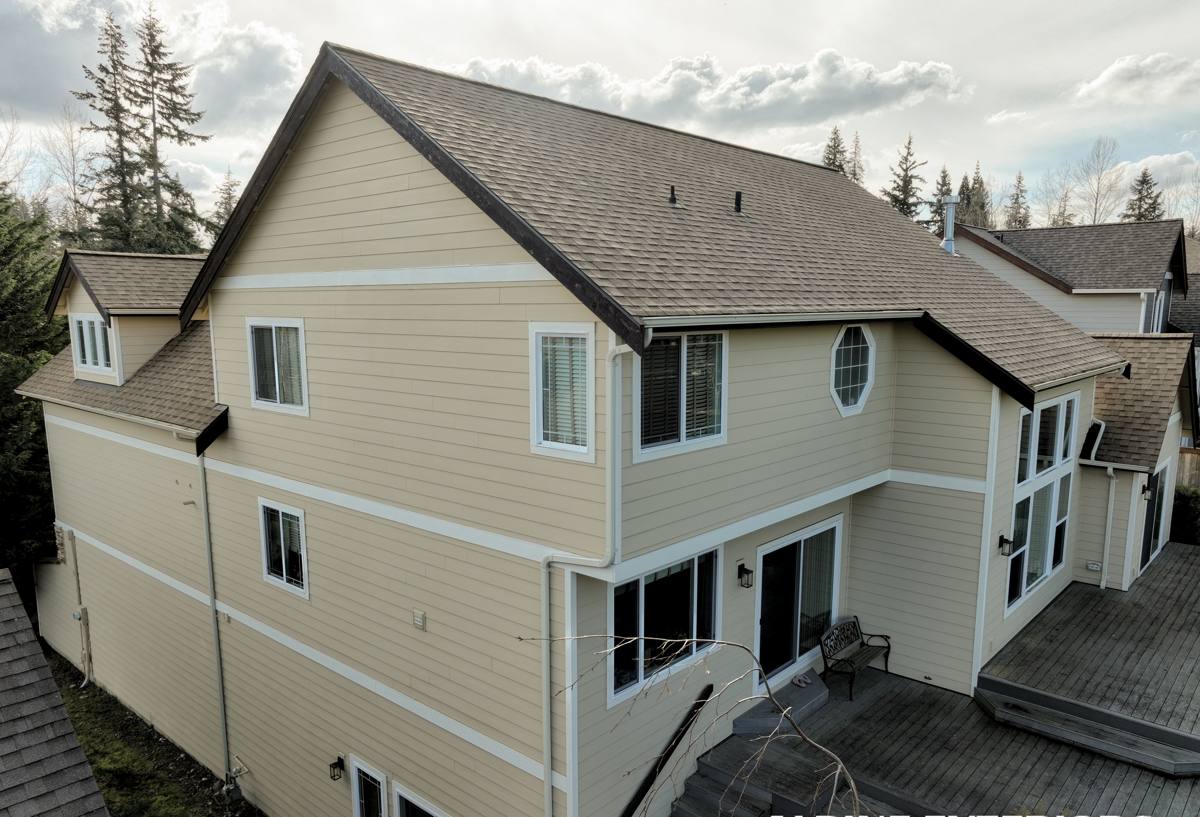
What Whatcom County's Climate Does to a Deck Over Time
Whatcom County's marine climate is the reason Sumas-area homes need a different approach to outdoor structures than most of the country. Three things matter most for decks specifically.
Salt Air and Metal Fatigue
Proximity to the water means airborne salt settles on every exposed surface, including fasteners, brackets, and railing hardware. Standard zinc-coated screws and joist hangers that would last decades in a dry inland climate can start rusting within a few seasons here. Once a fastener corrodes, it loses holding strength long before it looks obviously bad — which is part of why deck failures in coastal areas tend to surprise people.
Driving Rain and Water Intrusion
Rain that comes in at an angle, pushed by wind off the water, gets up under railings, into ledger connections, and behind fascia boards in ways vertical rain doesn't. Any gap in flashing or any fastener seam that isn't sealed becomes an entry point. Over years, that moisture works into framing lumber and starts rot from the inside, often invisible from the deck surface.
Moss Season and Slip Hazards
The long wet season creates months of ideal moss and algae growth on any decking surface that doesn't drain or dry quickly. Beyond the cosmetic issue, moss-covered boards are genuinely slippery, and moss retains moisture against the board surface, accelerating wear on wood decking and even staining some composite products if left unaddressed.
Decking Material Options for Sumas Homes
There's no single "best" decking material — the right choice depends on how much maintenance a homeowner wants to do, budget, and how close the property sits to salt spray. Here's how the common options actually perform in this specific climate.
| Material | How It Handles Salt Air & Rain | Moss Resistance | Relative Cost Factor |
|---|---|---|---|
| Pressure-treated pine | Holds up if sealed regularly; fasteners need to be corrosion-rated | Low — needs regular cleaning | Lowest upfront |
| Western red cedar | Naturally rot-resistant, but still needs periodic sealing near the water | Moderate — still grows moss if not maintained | Moderate |
| Composite decking | Very stable in wet, salty conditions; no rot risk | Moderate to good, depending on the board's surface texture | Higher upfront, lower upkeep |
| Tropical hardwood (ipe, etc.) | Excellent moisture and rot resistance | Moderate — dense grain sheds water well | Highest upfront |
For most Sumas-area homeowners, the decision comes down to whether they'd rather pay more upfront for a composite or hardwood deck that needs less attention, or spend less initially on wood and commit to sealing and cleaning it on a real schedule. We'll walk through the honest maintenance expectations for whichever material fits your budget — there's no wrong answer, just different trade-offs.
What a Correctly Built Deck Actually Involves
The visible decking boards are the smallest part of what determines whether a deck lasts. Most of the problems we get called out to fix start below the surface, in work that was rushed or skipped.
Footings and Framing
Footings need to be sized and set below the frost and settling depth for the soil conditions on the lot, not just poured to a minimum code depth. Framing lumber should be rated for ground contact or exterior exposure where it's close to grade, and joist spacing needs to account for the actual decking material chosen — composite and hardwood both have different span requirements than standard pressure-treated lumber.
Ledger Flashing — the Single Biggest Point of Failure
Where a deck attaches to the house, the ledger board connection is the most common source of long-term water damage anywhere in the Pacific Northwest, and it's worse in a driving-rain, salt-air environment. Correct flashing means a proper metal flashing detail integrated with the house's existing water barrier, not just caulk over a ledger board. This is the detail that separates a deck that lasts twenty-plus years from one with hidden rot in five.
Fastener Grade and Joist Protection
Every fastener, hanger, and structural connector should be rated for the corrosion exposure of a coastal environment — stainless steel or a heavy-duty coated fastener system, not standard exterior-grade hardware. Joist tape over the top of framing lumber adds a second layer of protection against the moisture that inevitably gets past the deck boards over time.
Drainage and Slope
A deck surface needs a slight slope away from the house so water sheds instead of pooling, and gaps between boards need to be sized correctly so water and debris pass through instead of collecting. Poor drainage is a direct cause of the moss buildup that's such a persistent issue in this climate.
Railings, Stairs, and Hardware Choices for a Salt-Air Climate
Railings and stairs take even more direct weather exposure than the deck surface itself, since they're vertical and catch wind-driven rain and salt spray from more angles. We spec corrosion-resistant hardware on every railing connection — this isn't an upsell, it's what keeps a railing solid to the touch ten years in instead of loose after three. Cable railing systems and aluminum or composite railing components have become popular in this area specifically because they shed salt air better than raw wood balusters, which tend to need repainting or resealing on a tighter cycle right at the coast.
Our Process for a Sumas-Area Deck Build
1. On-Site Assessment
We walk the property, look at grade, drainage, sun and wind exposure, and how close the site sits to salt spray or heavy tree cover — both of which change the moss and moisture risk for that specific lot.
2. Design and Material Selection
We go through the material options honestly, including realistic maintenance expectations for each, and design the layout, railing style, and stair placement around how the space will actually be used.
3. Permitting
Most custom decks attached to a house, or built above a certain height, require a permit through the county or local jurisdiction. We handle that process rather than leaving it for the homeowner to sort out.
4. Construction
Footings, framing, ledger flashing, and fastener selection all happen to the standard described above — this is where the difference between a deck that lasts and one that doesn't actually gets decided.
5. Final Walkthrough
We go over the finished deck together, cover basic maintenance for the specific material installed, and answer questions before calling the job done.
Maintenance Checklist for Salt Air and Moss Season
Whatever material a deck is built from, a little seasonal attention goes a long way in this climate. Homeowners who stay ahead of these basics get noticeably longer life out of every part of the structure.
- Sweep or blow off leaves and debris regularly through fall — trapped organic matter holds moisture and feeds moss growth
- Rinse salt residue off railings and decking periodically if the property gets direct sea spray
- Check for soft spots, discoloration, or gaps in caulking around the ledger board connection once or twice a year
- Re-seal wood decking and railings on the schedule appropriate to that wood species — don't wait until it looks obviously weathered
- Keep gutters and downspouts near the deck clear so runoff isn't dumping extra water onto or under the structure
- Address moss buildup promptly with a gentle cleaning approach rather than a pressure washer set too aggressively, which can damage both wood and composite surfaces
Why a Crew That Already Works in Semiahmoo Matters
A contractor who works this specific stretch of Whatcom County regularly already knows which fastener grade holds up here, how ledger flashing needs to be detailed for this rain pattern, and what the local permitting process actually requires — none of that is guesswork. That familiarity shows up in fewer surprises during the build and a deck that's designed for the conditions it will actually face, not a generic spec sheet. It also means a shorter drive if something needs a warranty check or adjustment down the road, instead of waiting on a crew based an hour or more away.
If you're considering a custom deck for a Sumas-area home near Semiahmoo, we're glad to come take a look, walk the site with you, and put together a straightforward, no-pressure estimate — just fill out the form below to get started.