 Semiahmoo Exterior
 Deck Building in Sumas: Built for the Weather, Not Just the Look
A new deck in Sumas has to do more than look good on the day it's finished. Whatcom County weather puts real, ongoing stress on outdoor structures — salt-laden air moving in off the water, long stretches of driving rain, and a moss season that can run most of the year in shaded spots. A deck built without those conditions in mind will show it within a few seasons: soft spots at the ledger, corroded fasteners bleeding rust streaks down the boards, and a slick green film that makes stairs and low corners genuinely dangerous underfoot.
We build decks in this area as a dedicated local crew, not a crew that happens to pass through. That matters more for decks than almost any other exterior project, because so much of what makes a deck last is buried under the surface — the framing, the fasteners, the flashing at the house connection — where a homeowner can't inspect it after the fact. This page covers what a properly built deck for Sumas actually requires, material by material and detail by detail, so you know what to expect and what to ask for.
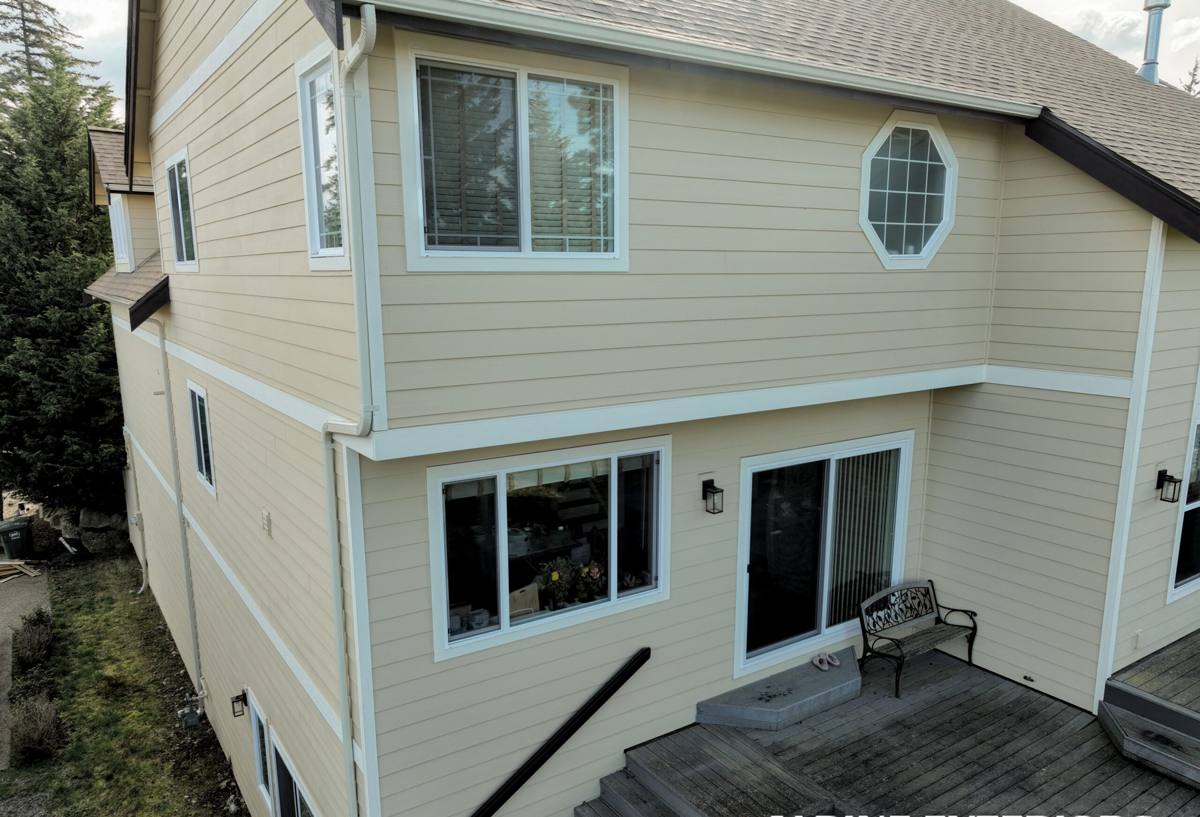
What Salt Air, Rain, and Moss Actually Do to a Deck
Each of these regional conditions attacks a deck differently, and a deck built to resist one doesn't automatically resist the others.
Salt Air and Corrosion
Airborne salt accelerates corrosion on any exposed metal — screws, joist hangers, bolts, railing hardware. Standard zinc-coated fasteners that hold up fine inland can start rusting within a few years this close to salt water. Once a fastener corrodes, it loses holding strength long before the rust is visible from the surface, which is part of why fastener selection is a structural decision here, not a cosmetic one.
Driving Rain and Moisture Intrusion
Rain that comes in at an angle, rather than falling straight down, finds its way into gaps that a fair-weather detail would never catch — behind ledger boards, under poorly lapped flashing, into end grain that wasn't sealed. Wood that stays damp for extended periods is where rot starts, and it almost always starts hidden, at connection points, before it ever shows on a top surface.
Moss and Surface Buildup
Shaded decks, or decks under trees, collect moss and algae readily in this climate. Beyond the appearance issue, moss holds moisture against the board surface and turns walking surfaces slippery, which is a real safety concern on stairs and near door thresholds. Decking material, board spacing, and even deck orientation all affect how much of a moss problem a given deck will have.
Choosing a Decking Material for This Climate
There's no single "best" decking material — the right choice depends on how much upkeep you're willing to do, your budget, and how much sun or shade the deck gets. Here's how the common options actually compare for a Whatcom County deck, not just on price.
| Material | Moisture Behavior | Moss/Algae Resistance | Maintenance | Typical Lifespan |
|---|---|---|---|---|
| Pressure-treated pine | Prone to cupping/checking if not sealed regularly | Moderate — needs cleaning | Annual cleaning + re-seal every 1-2 years | 15-20 years with upkeep |
| Cedar | Naturally moisture- and rot-resistant heartwood | Good, but greys and can host moss if untreated | Periodic cleaning + oil/stain to keep color | 20-25 years with upkeep |
| Composite (capped) | Non-absorbent, won't rot or cup | Best of the group — smooth cap sheds algae | Occasional wash, no sealing/staining | 25-30+ years, warrantied |
| PVC decking | Fully non-absorbent | Very good | Occasional wash | 25-30+ years, warrantied |
Pressure-treated lumber is still the most economical choice and works well as a framing material regardless of what decking surface you choose — the tradeoff is that it needs real, ongoing maintenance to keep water out of the grain. Composite and PVC cost more up front but largely remove the moss and rot conversation from the equation, which is worth weighing seriously in a climate that gives moss so much time to establish itself. We install all of the above and will walk through the real maintenance commitment of each rather than just pushing whichever product has the best margin.
Framing, Fasteners, and Flashing: Where Decks Actually Fail
Most deck failures we get called out to inspect don't start with the decking boards — they start underneath, at connections a homeowner never sees until something gives.
Fastener Selection
In a salt-air environment, fastener grade matters. Hot-dip galvanized or stainless hardware holds up dramatically better than standard coated fasteners, and it's especially important at joist hangers, ledger bolts, and anywhere two treated pieces meet, since the chemicals in modern treated lumber accelerate corrosion of the wrong fastener type. This is one of the details that's cheap to get right during construction and expensive to fix after the fact.
Ledger Flashing
The ledger board — where the deck attaches to the house — is the single most common point of hidden rot on any deck in a wet climate. A correct ledger detail includes flashing that sheds water away from the house band board, proper spacing or a moisture barrier between the ledger and siding, and bolts (not just nails) rated for the load. Skipping or shortcutting this detail is invisible on installation day and can take years to show as a problem, by which point structural framing may need to be replaced.
Joist Spacing and Board Orientation
Tighter joist spacing than the minimum code allows gives decking boards more support and reduces flex over time, and it matters more with composite decking, which can behave differently under load than solid wood. Board orientation and gapping also affect drainage and drying time after rain — boards that can't shed water and dry between storms are the ones that develop moss and soft spots first.
Footings in Wet Ground
Deck footings need to reach below the frost line and bear on undisturbed, stable soil — and in areas with heavier clay or persistently wet ground, that can mean deeper or larger footings than a straightforward soil condition would require. Getting footing depth and sizing right the first time avoids the settling and post movement that eventually shows up as a deck that's no longer level or a railing post that's started to lean.
Permits and Inspections
Most new decks above a certain height or size require a building permit in Whatcom County, and permitted work means an inspector checks footings, framing, and ledger attachment before it's covered up. We handle the permit process as part of the job. Beyond the legal requirement, permitted work gives you a documented record that the structure was inspected at the stages that matter most — which can also matter later for insurance or resale.
Our Deck Building Process
We approach every deck build the same way, regardless of size:
- On-site assessment of the space, sun/shade exposure, drainage, and existing structure (if replacing a deck)
- Material walkthrough — honest tradeoffs between decking options based on your budget and maintenance preference
- Permit drawings and submission where required
- Footings sized and set below frost depth on stable soil
- Framing with corrosion-rated hardware and correct joist spacing for the decking material chosen
- Ledger flashing and attachment done to shed water away from the house
- Decking installation with attention to gapping and drainage
- Railing and stair installation to current code requirements
- Final walkthrough and inspection sign-off before we consider the job done
We don't skip steps to hit a lower number on a bid. If a corner needs to be cut to make a price work, we'll tell you that up front rather than let it show up as a problem in year three.
Keeping a Sumas Deck Looking Good Long-Term
Whatever material you choose, a few habits go a long way in this climate:
- Sweep debris and standing leaves off the deck regularly — trapped organic matter holds moisture and feeds moss
- Rinse or lightly scrub shaded areas and stair treads periodically to stay ahead of algae buildup
- Check and re-seal wood decking on the schedule the product calls for, not just when it visibly looks dry
- Keep gutters and downspouts near the deck clear so runoff isn't dumping directly onto the structure
- Have fasteners and railing connections checked periodically, especially on older decks near the water
None of this is complicated, but it's the difference between a deck that still looks and performs well after a decade and one that starts needing repairs after just a few years.
Why a Local Crew Matters for This Job
Deck building looks straightforward from the top, but the parts that determine whether it lasts — footing depth for the actual soil on site, fastener grade for salt exposure, flashing details for driving rain — are regional knowledge as much as general carpentry skill. A crew that works Sumas and the surrounding Whatcom County area regularly sees how decks built here actually hold up over time, not just how they look on installation day. That's the standard we build to, and it's why we're comfortable standing behind the work after we've left the site.
If you're planning a new deck or replacing one that's showing its age, we're happy to take a look and put together a straightforward, no-pressure estimate using the form below.