 Semiahmoo Exterior
 Storm Damage Roof Repair for Lynden Homes
Lynden sits inland from Semiahmoo Bay but still takes a beating from the same Pacific storm systems that roll through Whatcom County every fall and winter. Wind gusts strip shingles, driving rain finds its way under lifted flashing, and the region's long, damp shoulder seasons keep roofs wet longer than they were ever designed to stay. If a recent windstorm or heavy rain event left you with a leak, missing shingles, or a soft spot on the ceiling, you need a repair that actually addresses what the storm did to the roof deck and underlayment — not just a patch over the visible damage.
We work storm repair calls throughout Whatcom County, and Lynden is a regular stop for our crew. That matters more than it sounds like it should, because storm damage repair done wrong doesn't just fail — it can void what's left of your roof's warranty or leave a hidden path for water to keep getting in.
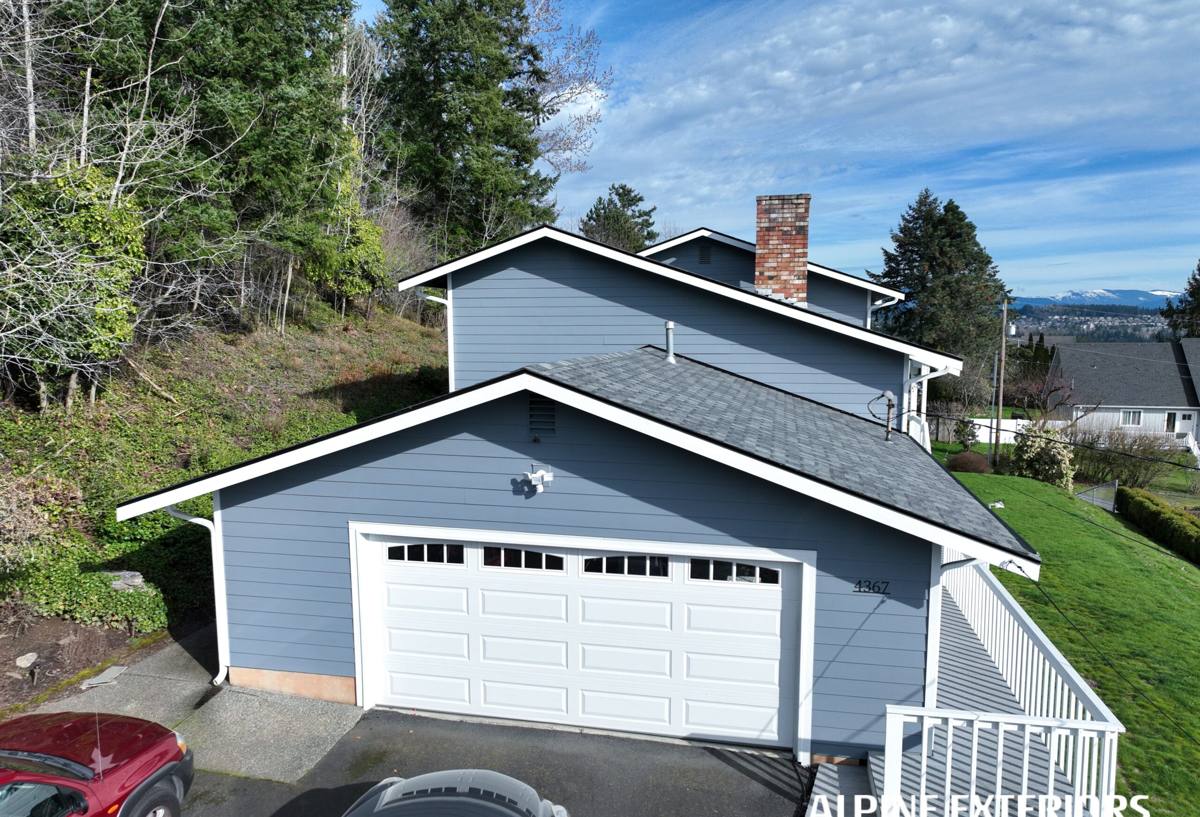
What Whatcom County Storms Do to a Roof
Wind-Driven Rain and Uplift
Most of the damage we see after a storm isn't from wind alone or rain alone — it's the combination. Wind gets under a shingle tab or a ridge cap edge, breaks the seal, and lifts it just enough for wind-driven rain to push in behind it. Once that seal is broken, it usually doesn't reseal on its own, even after the storm passes. A roof can look mostly intact from the ground and still have a dozen compromised spots.
Moss and Trapped Moisture
Whatcom County's moss season runs most of the year, not just the wet months. Moss holds moisture against the roofing material long after a storm has cleared, which softens shingles, corrodes exposed fasteners, and works its way under laps and flashing. A storm that would be minor on a clean, dry roof can do real damage on a roof that already has moss buildup, because the moss has been slowly compromising the surface for months before the wind and rain arrive.
Debris Impact
Mature trees are common throughout Lynden and the surrounding farmland and residential lots, and falling limbs — even small ones — can crack shingles, dent metal flashing, or puncture underlayment in ways that aren't obvious from the ground. Branch damage often looks cosmetic but can compromise the roof's water barrier at the point of impact.
Signs You Have Storm Damage
Not all storm damage is dramatic. Walk your property after any significant wind or rain event and look for these:
- Shingles or shingle tabs on the ground, in gutters, or in landscaping beds
- Granules collecting in downspouts or at the base of downspout extensions
- Visible gaps, curling, or lifted edges on the roof plane
- Dented, bent, or displaced flashing around chimneys, vents, or skylights
- New or worsening water stains on interior ceilings or walls
- Daylight visible through the attic roof deck
- Sagging or soft spots when walked on (a sign a professional, not a homeowner, should check)
- Increased moss or dark streaking following a wet stretch, which can hide underlying damage
Any one of these on its own might be minor. Several together usually means the storm found more than one weak point.
What a Correct Storm Repair Actually Involves
1. Full Inspection, Not Just a Spot Check
We start on the roof, not the ground. Binoculars and drone photos are useful for a first look, but confirming storm damage means physically checking the affected slopes, the flashing details, and the attic underside for water intrusion that hasn't shown up as a ceiling stain yet. Storm damage often extends beyond the spot where the leak is visible inside the house.
2. Emergency Mitigation When Needed
If there's an active leak or exposed decking, the first job is stopping water intrusion — tarping, temporary flashing, or sealing exposed areas — before the permanent repair is scheduled. This isn't the finished repair; it's damage control while materials and scheduling come together.
3. Matching Materials and Technique
A patch that doesn't match the surrounding roofing — in material, profile, or even the age and wear of the existing shingles — creates a visible mismatch and, more importantly, a poor tie-in that's prone to future leaks. We match shingle type, exposure, and fastening pattern to the existing roof wherever possible, and we're upfront when an exact match isn't available.
4. Underlayment and Flashing First, Shingles Second
The shingles are the part everyone sees, but the underlayment and flashing are what actually keep water out. Any storm repair that just swaps damaged shingles without checking the felt or synthetic underlayment and the flashing underneath it is doing half the job. We replace compromised underlayment and reseat or replace flashing as part of the repair, not as an upsell.
5. Documentation
We photograph the damage before and after the repair. This isn't just for our records — it's the kind of documentation that matters if you're filing an insurance claim and need to show the cause and extent of the damage.
Our Process, Start to Finish
- Call or request an estimate. Tell us what you're seeing — a leak, missing shingles, storm debris on the roof.
- On-site inspection. We assess the roof, the attic, and any interior signs of water intrusion, and explain what we find in plain terms.
- Written scope and estimate. You get a clear description of what needs to be repaired and why, with pricing before any work starts.
- Mitigation if urgent. If water is actively getting in, we address that first, even if the full repair is scheduled for later.
- Repair. Matched materials, proper flashing and underlayment work, and a clean tie-in to the existing roof.
- Final walkthrough. We show you the completed work and answer questions before we consider the job done.
Repair or Replace? How We Help You Decide
Storm damage doesn't always mean a full roof replacement, but sometimes it's the event that reveals a roof was already near the end of its useful life. Here's how we weigh it:
| Factor | Favors Repair | Favors Replacement |
|---|---|---|
| Roof age | Under roughly two-thirds of expected lifespan | Nearing or past expected lifespan |
| Extent of damage | Localized to one or two areas | Spread across multiple roof planes |
| Underlying deck condition | Solid, dry decking beneath damaged shingles | Soft, rotted, or repeatedly wet decking |
| Material availability | Matching shingles or materials still available | Discontinued product, poor match likely |
| History of repairs | First significant repair | Multiple prior storm or leak repairs |
| Moss and moisture history | Minimal, well-maintained roof | Long-term moss buildup and moisture damage |
We'll tell you honestly which side of that table your roof falls on. If a repair is the right call, that's what we'll recommend — a storm-damaged roof doesn't automatically need to come off.
Materials We Use and Why
For storm repair work, we typically match the existing roofing material on the home — asphalt shingle, metal, or fiber cement siding trim where relevant — rather than introducing a different product that won't age or perform the same way. When a full section replacement is warranted, we favor higher-wind-rated shingles and properly lapped synthetic underlayment for the exposure this region sees, since felt underlayment alone tends to hold moisture longer in a climate with this much sustained dampness. We also pay close attention to ice-and-water shield placement at eaves, valleys, and penetrations — the details that do the most work during a wind-driven storm.
Working With Your Insurance Company
Many storm repairs are covered under a homeowner's policy, but coverage depends on your specific policy, the cause of damage, and your deductible. We're not your insurance adjuster and won't promise a claim outcome, but we can:
- Provide a written, photographed damage assessment you can submit with a claim
- Point out damage that may not be visible from the ground or from inside the house
- Meet an adjuster on-site if that's helpful for your claim
- Give you a straightforward repair estimate to compare against any settlement offer
We'd rather give you accurate information to use with your insurer than tell you what you want to hear.
Why a Local Whatcom County Crew Matters for Storm Repair
Storm damage repair rewards familiarity with local conditions. A crew that regularly works Lynden and the rest of Whatcom County knows what a wind-driven rain event does to a roof here versus a drier climate, understands how fast moss reestablishes itself after a repair, and isn't guessing at appropriate underlayment and flashing choices for this level of sustained moisture. Fast response also matters after a storm — a compromised roof left unaddressed for days or weeks lets a contained problem turn into a rot or interior damage problem. Being close by means we can typically get eyes on the roof and, if needed, get it tarped, faster than a crew traveling in from outside the area.
Get an Honest Look at the Damage
If your roof took a hit in the last storm, don't wait to find out how bad it is — small leaks get worse, and moss-covered damage doesn't fix itself. Reach out for a free, no-pressure estimate. We'll walk the roof, tell you plainly what we find, and give you options, not a sales pitch. The request form below is the fastest way to get on our schedule.