 Semiahmoo Exterior
 Why Ferndale Windows Wear Out Faster Than the Owner's Manual Says
Every window comes with a manufacturer lifespan estimate, and almost every window in Ferndale beats that estimate to the punch. This part of Whatcom County sits close enough to Semiahmoo Bay and the Strait of Georgia that homes take on salt-laden air for most of the year, mixed with long stretches of driving, wind-pushed rain and a moss season that can run from fall through spring. None of that shows up in a factory warranty document, but all of it shows up in the window frame, hardware, and glazing seals over time.
Salt air is the quiet one. It doesn't announce itself the way a leak does. Instead it works on exposed metal — hinges, cranks, screws, cladding fasteners — slowly pitting and corroding hardware years before the glass itself fails. Combine that with wind-driven rain hitting west- and southwest-facing walls at an angle, and you get water finding its way past aging weatherstripping and undersized flashing details that were never built for this kind of exposure in the first place. Add a moss and algae season that keeps siding and trim damp for weeks at a stretch, and wood-adjacent window components stay wet longer than they were ever designed to.
None of this means Ferndale homeowners need to replace windows constantly. It means the replacement, when it's time, has to be done with this specific climate in mind — not with generic techniques pulled from a drier region.
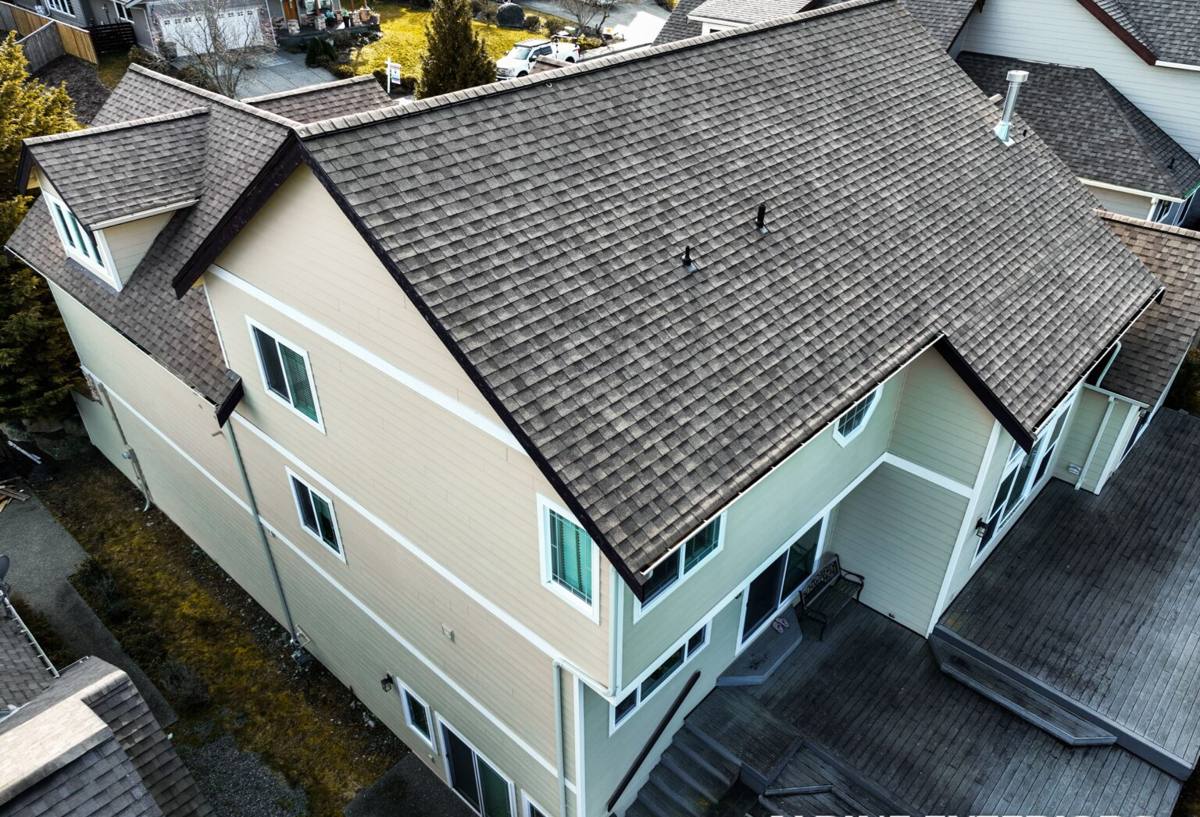
Signs a Ferndale Home Is Ready for Window Replacement
Windows rarely fail all at once. They give warning signs first, and most homeowners live with those signs longer than they need to because the window still technically opens and closes. Here's what we look for, and what you can check yourself before calling anyone:
- Condensation or fogging between panes — a sign the seal has failed and the insulating gas or airspace is compromised
- Visible corrosion, pitting, or stiffness in cranks, hinges, and locks, especially on windows facing the water or prevailing wind
- Soft or discolored wood at the sill or lower frame corners, often the first sign of moisture getting behind the trim
- Drafts you can feel by hand near the frame edges, particularly during wind-driven storms
- Visible daylight or gaps where the sash meets the frame when the window is closed and locked
- Difficulty opening, closing, or latching that has gotten worse over the past year or two
- Paint or finish that keeps failing on the interior sill no matter how often it's touched up
- Noticeably higher heating bills in a home whose insulation and heating system otherwise haven't changed
One or two of these can sometimes be addressed with repair or re-caulking. Several at once, especially on the same window, usually means the unit has reached the end of its useful life and repair is just delaying an inevitable replacement.
What a Correct Window Replacement Actually Involves
Swapping the visible window is the easy part. What determines whether a replacement lasts fifteen years or fails in three is almost entirely in the details you won't see once the trim goes back on.
Removing the old unit without damaging what's around it
Old caulk, trim, and sometimes rotted framing have to come out cleanly. If there's hidden water damage behind the old window — which is common on a home that's absorbed a few decades of Pacific storms — it needs to be found and dealt with now, not covered up and left to keep spreading behind a brand-new window.
Flashing and moisture management
This is the step that separates a window that survives driving coastal rain from one that leaks within a year or two. Proper flashing directs any water that gets past the exterior cladding down and out, away from the framing, using a shingled, overlapping sequence — sill pan, side flashing, then head flashing — so each layer sheds water onto the one below it. Skipping or shortcutting this sequence is the single most common cause of window leaks we get called out to fix, and it's invisible until the damage is already inside the wall.
Air sealing and insulation around the frame
The gap between the new window frame and the rough opening needs to be sealed and insulated correctly — not overpacked with expanding foam that can bow the frame, and not left with gaps that let air and moisture track in around the edges.
Reinstalling trim and finishing the exterior
The exterior finish work needs to shed water the same way the original wall assembly was designed to, with caulking used at the right joints and not as a substitute for proper flashing underneath.
Choosing a Frame Material for This Climate
There's no single "best" window frame material — there's a best fit for a given home, budget, and exposure. For a Ferndale property dealing with salt air and sustained damp periods, here's how the common options actually compare in practice:
| Frame Material | Coastal & Moisture Performance | Maintenance | Typical Trade-Offs |
|---|---|---|---|
| Vinyl | Won't rot or corrode; handles salt air well | Low — occasional cleaning | Limited color/repaint options; can expand and contract with big temperature swings |
| Fiberglass | Very stable in moisture and temperature; strong long-term coastal performance | Low | Higher upfront cost than vinyl |
| Wood | Needs consistent upkeep to resist the moisture and moss exposure common here | High — regular painting/sealing | Best appearance for period homes, but the maintenance burden is real in this climate |
| Wood-clad (wood interior, metal/composite exterior) | Good, if the cladding and flashing details are installed correctly | Moderate | Installation quality matters more than with other materials — a poorly detailed clad window traps moisture instead of shedding it |
We'll walk through which of these makes sense for your specific home, exposure, and budget rather than pushing one material across every job — a window on a sheltered wall doesn't need the same spec as one taking direct wind and rain off the water.
What Affects the Cost of a Window Replacement
Costs vary enough house to house that we won't put a single number here that would be misleading for your situation. What we can do is explain what actually moves the price, so an estimate makes sense when you get one:
| Factor | Why It Matters |
|---|---|
| Frame material | Vinyl, fiberglass, wood, and clad options carry different material costs |
| Number and size of openings | Larger and more numerous windows increase material and labor time |
| Condition behind the old window | Hidden rot or water damage adds repair work before the new window can go in |
| Full-frame vs. insert replacement | Full-frame replaces flashing and sill details too; inserts reuse the existing frame and cost less but only make sense when that frame is still sound |
| Glass package | Double- vs. triple-pane, and coatings for energy performance, add cost but affect comfort and bills |
| Trim and exterior finish work | Matching existing trim profiles or siding can add labor beyond the window itself |
We always recommend full-frame replacement when there's any sign of moisture damage behind the existing window — an insert replacement over a compromised frame just seals the problem in rather than fixing it.
How Our Process Works
- On-site assessment. We look at each window individually — exposure, condition, and what's happening behind the trim, not just what's visible from inside.
- Straight recommendation. We'll tell you which windows genuinely need replacement now, which can wait, and which just need repair or resealing.
- Written estimate. Material options, scope, and price laid out clearly before any work starts — no surprise add-ons mid-job.
- Proper removal and moisture check. Old units come out carefully, and any hidden damage gets flagged and addressed before the new window goes in.
- Correct flashing and installation. Full moisture-management sequence, not shortcuts hidden behind trim.
- Finish and walkthrough. Trim, caulking, and final adjustment, followed by a walkthrough so you know exactly what was done and why.
Why a Crew That Already Works Ferndale Matters
Window installation technique that works fine in a dry inland climate can fall short here. A crew that regularly works homes around Ferndale and the broader Semiahmoo area already knows which walls take the worst of the wind-driven rain, how long moss season really runs, and how salt air chews through hardware that isn't rated for it. That's not a marketing point — it changes real decisions on the job, like where extra flashing attention goes, which frame materials we'll steer you away from on an exposed wall, and how tight the air-sealing needs to be to hold up through a full Whatcom County winter.
It also means we're not guessing at local permitting or typical construction on homes of a certain age in this area. Familiarity with the region's housing stock — from older wood-frame homes to newer construction — helps us spot problems before they become part of the finished job.
Caring for New Windows After Installation
A correctly installed window still benefits from basic upkeep, especially in this climate:
- Rinse salt residue off frames and hardware periodically, particularly on wind-exposed sides of the house
- Keep weep holes (the small drainage openings along the bottom of the frame) clear of debris and moss
- Check and refresh exterior caulking at trim joints every year or two
- Operate cranks and locks a few times each season so hardware doesn't seize from disuse
- Watch for any new condensation between panes, which signals a seal issue worth addressing early
None of this is heavy maintenance — it's the difference between a window that reaches the far end of its expected lifespan and one that runs into avoidable problems halfway there.
If your Ferndale home has windows showing any of the signs above, or you're just planning ahead, we're glad to take a look and give you a straight, no-pressure assessment. Use the form below to request a free estimate — we'll tell you what we actually find, not just what's easiest to sell.