 Semiahmoo Exterior
 Why Ferndale's Climate Is Hard on Decks
Ferndale sits in Whatcom County close enough to the water and the marine weather pattern that homes here deal with a specific combination most inland decks never see: salt-tinged air, long stretches of driving rain, and shaded, damp lots that stay wet well after a storm has passed. Composite decking holds up better than wood against all of that, but "composite" isn't a magic word. How the deck is built underneath and fastened together matters just as much as the boards themselves.
Salt Air and Metal Fasteners
Air moving in off the water carries salt further inland than most homeowners expect, and it doesn't take a beachfront lot to feel the effect. Standard steel screws, brackets, and joist hangers corrode faster in that environment than they would in a dry inland climate. A composite deck can look fine on the surface for years while the fasteners and hardware holding it together are quietly failing underneath. This is a hardware and structural detail, not just a board choice.
Moss, Algae, and a Long Wet Season
Composite boards don't rot the way wood does, but they aren't immune to what grows on top of them. Shaded corners, north-facing sections, and areas under trees stay damp for weeks at a time here, which is exactly the environment moss and algae need. Left alone, that growth makes a deck surface slick and can dull or stain even a well-made board over time. The fix isn't a different material — it's building in enough airflow and drainage underneath so the deck actually gets a chance to dry between rains.
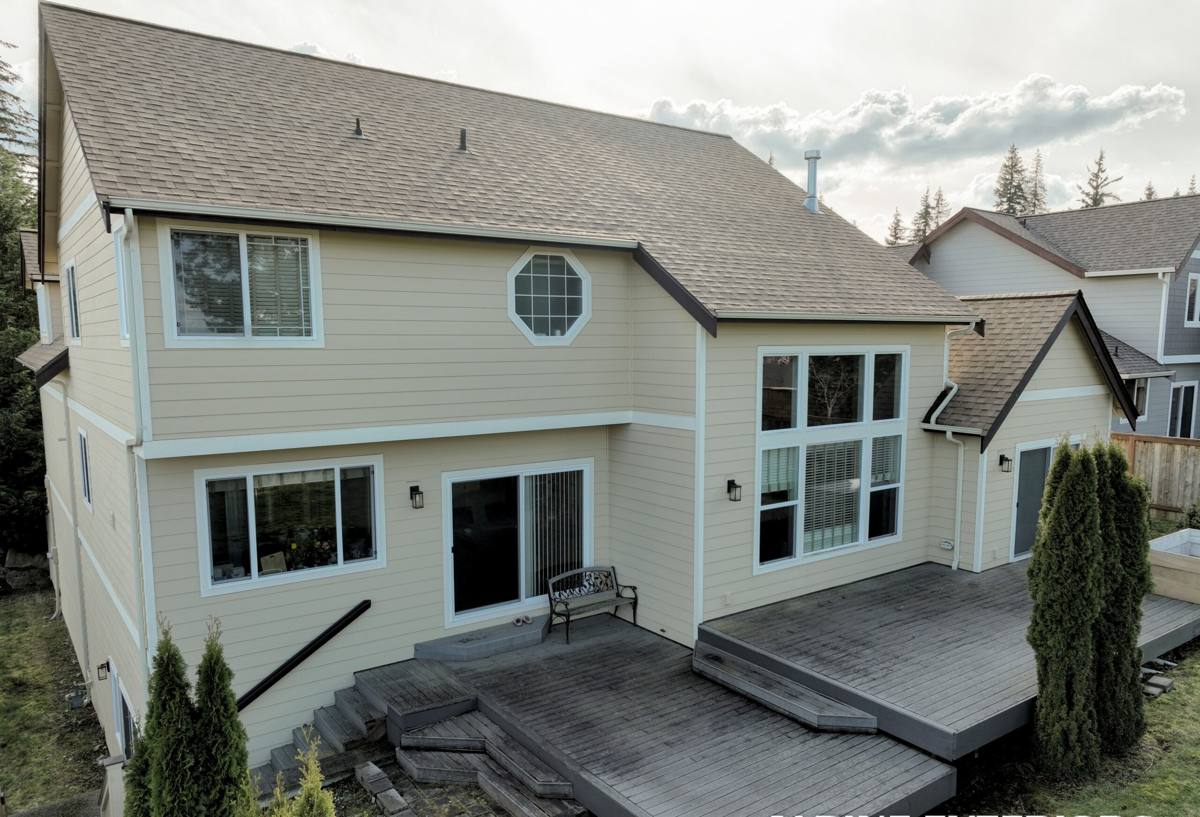
What a Correctly Built Composite Deck Needs in This Climate
Substructure and Ledger Attachment
Almost every deck, composite or not, is still built on a wood-framed substructure. The single most common source of hidden damage on any deck in a wet climate is water getting behind the ledger board — the piece that bolts the deck to the house. Proper flashing and a moisture barrier at that connection point are non-negotiable here; skipping them is how a deck that looks great on top ends up with rot in the band joist within a few years.
Drainage and Airflow Underneath
Composite decking needs clearance to grade and a way for damp air to move out from underneath it, especially on lower decks or ones close to grade. Skirting, when used, should be vented rather than sealed tight. A deck that traps moist air underneath will stay damp longer after every rain, which feeds the moss and algae problem instead of solving it.
Fastening and Flashing Details
Hidden fastener systems, correct joist spacing for the specific board being used, and breathable joist tape over the framing lumber all matter more here than in a dry climate. Boards also need to be gapped correctly — both for normal expansion and contraction and so water has somewhere to go instead of sitting on the surface or between boards.
Composite vs. Other Decking Materials for a Whatcom County Deck
Every material has trade-offs. Here's how the common options actually perform under the rain, moisture, and moss pressure typical of this area:
| Material | How It Holds Up Locally | Maintenance | Typical Lifespan |
|---|---|---|---|
| Composite decking | Resists rot and moisture absorption well; surface can still grow moss/algae if underbuilt | Periodic rinsing/cleaning; no staining or sealing | 25-30+ years with correct installation |
| Cedar/wood decking | Attractive but absorbs moisture and is more vulnerable to rot and splintering in a wet season | Annual staining/sealing, regular inspection for soft spots | 10-15 years before major repair/replacement |
| Pressure-treated lumber | Resists rot better than untreated wood but still moves, splinters, and needs upkeep in constant damp | Staining/sealing every 1-2 years | 10-15 years |
| PVC decking | Fully moisture-proof surface, performs well in wet climates | Low; occasional cleaning | 25-30+ years |
For most Ferndale homeowners, composite hits the balance point: far less upkeep than wood, a more natural look than PVC, and a track record that holds up to this area's weather when it's installed correctly.
Choosing the Right Composite Board
Capped vs. Uncapped Composite
Capped composite boards have a protective outer shell that resists moisture absorption, staining, and mold growth — a real advantage in a climate where boards spend months at a time wet or humid. Uncapped composite costs less up front but absorbs more moisture over time, which matters more here than it would in a drier region. We recommend capped composite for any deck that gets significant shade or sits low to the ground, which describes a lot of lots in this area.
Color and Surface Considerations
Lighter and mid-tone boards show pollen, dust, and early moss growth less than very dark boards, and they don't need as aggressive a cleaning schedule to stay looking good. Heat build-up on dark composite is less of an issue here than in sunnier climates, but surface grip and how easily a board shows organic buildup are worth weighing against pure color preference when you're picking a product.
Our Ferndale Composite Decking Process
- Site assessment — we look at drainage, sun/shade exposure, grade clearance, and the condition of any existing structure before quoting anything.
- Structural check — ledger, beams, footings, and framing get inspected, especially on older homes where undersized framing or hidden moisture damage isn't unusual.
- Tear-off and framing repair — if we're replacing an existing deck, damaged framing gets addressed here, not covered over.
- Flashing and moisture barrier installation — done at the ledger and any other point where the deck meets the house, before a single composite board goes down.
- Composite installation — hidden fasteners, correct board spacing, and joist protection appropriate to the specific product and this climate.
- Railings, stairs, and finish work — fascia, picture-framing, and hardware installed to match the same coastal-grade fastener standard as the deck itself.
- Final walkthrough — we go over the finished deck with you, including what upkeep it actually needs and what it doesn't.
Cost Factors for a Composite Deck in Ferndale
Composite decking costs more per square foot than pressure-treated lumber up front, and the honest range depends heavily on the specifics of the job. These are the factors that move the number most:
| Factor | Why It Affects Cost |
|---|---|
| Deck size and shape | Larger footprints and multi-level or angled layouts require more material and labor time |
| Substructure condition | Existing framing that needs repair or replacement adds cost beyond the surface decking itself |
| Board tier | Capped composite and premium color lines cost more than base-tier uncapped boards |
| Railings and stairs | Composite or metal railing systems and stair builds add materially to the total |
| Site access and tear-off | Removing an old deck, or working a tight/limited-access lot, adds labor time |
| Permitting | Whatcom County and City of Ferndale permit requirements can apply depending on height and attachment to the house |
We'd rather walk a specific property and give you real numbers than throw out a broad estimate that doesn't hold up once we see the site.
Maintenance a Composite Deck Still Needs Here
Composite is low-maintenance, not no-maintenance — especially in a climate with this much rain and shade. A few habits go a long way:
- Rinse the surface a couple of times a year to clear pollen and moss spores before they take hold
- Keep gutters and downspouts clear so runoff doesn't sheet directly across the deck
- Sweep debris out of board gaps and away from the house ledger connection
- Check railings, stair hardware, and fasteners periodically for corrosion or looseness
- Trim back overhanging vegetation that keeps sections of the deck shaded and damp
- Deal with any standing water or blocked drainage at the base of the deck right away, not at the end of the season
Why a Crew That Already Works in Ferndale Matters
A deck built to a generic spec sheet and a deck built for this specific climate aren't the same job, even if the materials list looks identical. Knowing which lots around Ferndale run damp and shaded, what condition older framing tends to be in, and how Whatcom County's permitting process works for deck attachments isn't something you get from a manufacturer's install guide — it comes from doing the work here repeatedly. That local familiarity is what keeps a composite deck performing the way it's supposed to for decades instead of just looking good for the first few years.
If you're weighing a new composite deck or replacing an aging one, we're happy to take a look and give you a straight, no-pressure estimate based on your property, not a generic quote. There's a form below to get started.