 Semiahmoo Exterior
 Why Ferndale Windows Take More Punishment Than Most
Ferndale sits close enough to Semiahmoo Bay and the Strait of Georgia that salt-laden air is a regular fact of life here, and Whatcom County's marine climate means more days of driving, wind-blown rain than most inland Washington towns see in a year. Add in the shaded, damp conditions that keep moss and mildew active for much of the fall, winter, and spring, and you get a climate that is genuinely hard on window systems — not just the glass, but the frames, the weatherstripping, the hardware, and the flashing details tucked around every opening. A window built and installed for a drier, calmer climate can start failing early here if that specific combination of salt, moisture, and shade wasn't accounted for.
This page covers one job, done right, in one place: energy-efficient window replacement for homes in Ferndale. Not a generic rundown of window types, but a look at what actually matters when you're choosing and installing windows in a coastal Whatcom County climate.
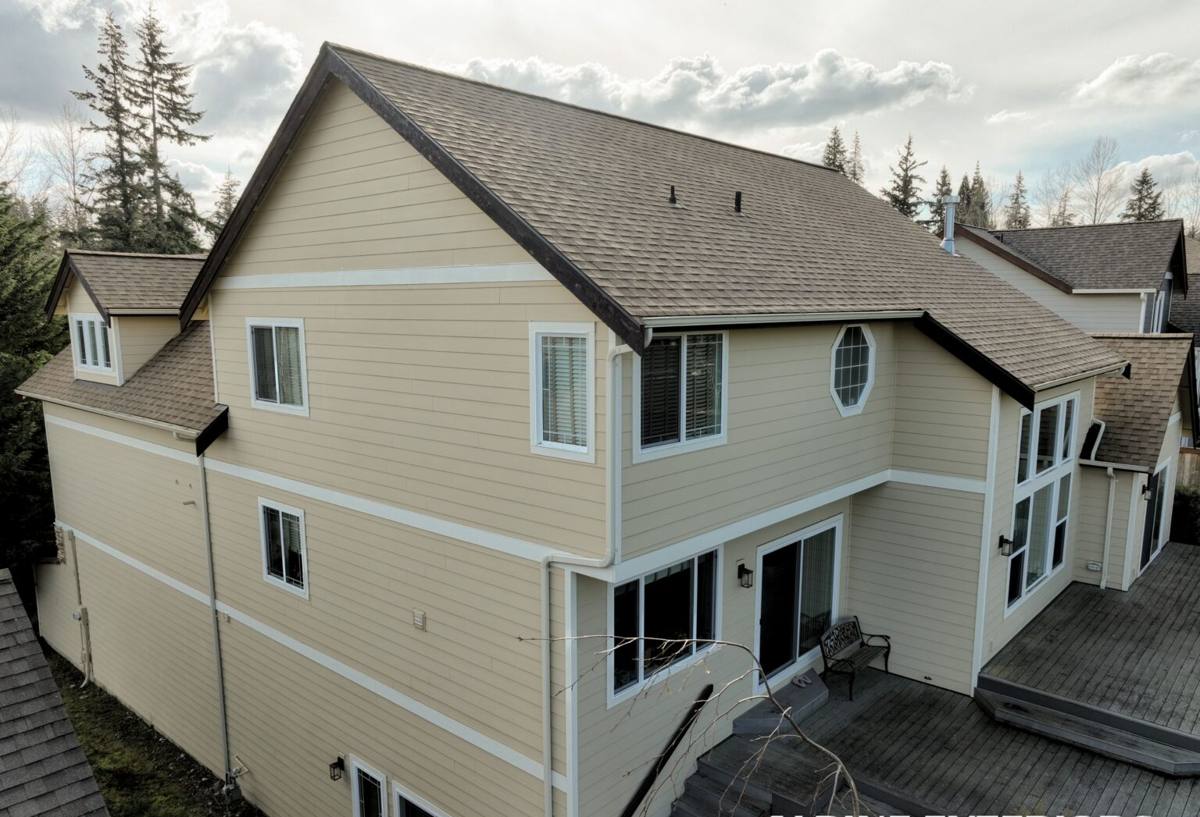
What Salt Air, Rain, and Moss Actually Do to Windows
Salt Air and Hardware
Airborne salt accelerates corrosion on anything metal — hinges, locks, balance mechanisms, and the fasteners holding a window in its frame. On a lower-quality window, that shows up as stiff or seized hardware, streaking on the sill, and locks that stop closing cleanly well before the glass itself shows any wear. Windows with corrosion-resistant hardware and finishes hold up noticeably longer in this kind of exposure.
Driving Rain and Water Intrusion
Rain that comes in sideways doesn't just test the glass — it tests every seam, joint, and piece of flashing around the window opening. A window can have excellent energy ratings on paper and still leak if the flashing behind the trim wasn't lapped correctly or the sill pan wasn't sloped to shed water outward. In a climate with as much wind-driven rain as Ferndale gets, installation detailing matters as much as the window unit itself.
Moss, Shade, and Prolonged Dampness
North-facing walls and windows tucked under eaves or tree cover stay damp longer here, which is exactly the environment moss and mildew need. Wood components that aren't properly sealed or clad can start to soften in these spots years before a homeowner notices anything from the interior. Frame material choice and finish quality matter more in these shaded, slow-to-dry locations than they do on a sun-exposed south wall.
What "Energy-Efficient" Actually Means in This Climate
Energy efficiency in a window comes down to a handful of measurable properties, and in a marine climate like Whatcom County's, some matter more than others.
- U-factor — measures how well the window resists heat transfer. Lower is better for keeping heated air inside during our long, wet winters.
- Solar Heat Gain Coefficient (SHGC) — measures how much solar heat passes through the glass. In a region with limited direct sun for much of the year, this is less critical than in hot, sunny climates, but it still affects comfort on west-facing walls.
- Air leakage rating — measures how much air moves through the window assembly itself, separate from the glass. This is where wind-driven rain exposure makes a real difference, since a poorly sealed frame lets in both drafts and moisture.
- Low-E coatings and gas fills — thin coatings and inert gas fills between panes (typically argon) improve insulation without changing how the glass looks.
For Ferndale homes, we generally steer people toward windows with strong air-leakage performance and durable seals first, then optimize U-factor and glass package for the specific exposure of each wall. A window facing the prevailing weather off the water often warrants a different spec than one on a sheltered side of the house.
Signs Your Ferndale Home's Windows Are Underperforming
Most homeowners don't think about their windows until something is visibly wrong, but by then the underlying seal or flashing failure has usually been developing for a while. Watch for:
- Condensation or fogging between the panes (not just on the surface) — a sign the seal has failed and the gas fill has escaped
- Cold drafts near the frame even when the window is fully latched
- Paint or trim that's bubbling, soft, or discolored around the window opening
- Locks or cranks that have become stiff, corroded, or hard to operate
- Visible staining or dark streaks below the sill, which often points to water tracking behind the exterior trim
- A noticeable jump in heating costs without any other explanation
- Moss or persistent green growth on the sill or surrounding trim that keeps returning after cleaning
Comparing Window Frame Materials for a Coastal Whatcom County Climate
There's no single "best" window material — the right choice depends on the exposure of each wall, your maintenance preferences, and budget. Here's how the common options generally compare for a climate like Ferndale's:
| Material | Salt Air / Moisture Resistance | Maintenance | Relative Cost |
|---|---|---|---|
| Vinyl | Good — won't rot or corrode; hardware quality varies by manufacturer | Low | $ |
| Fiberglass | Very good — stable in wet/dry cycling, resists warping | Low | $$–$$$ |
| Wood-clad (exterior clad in vinyl, aluminum, or fiberglass) | Good if cladding and flashing are done correctly; interior wood still needs care | Moderate | $$$ |
| Aluminum | Fair — durable but prone to condensation and, over time, corrosion in salt air unless properly finished | Low–Moderate | $$ |
| Solid wood | Weakest in this climate without diligent upkeep — exposed wood is most vulnerable to the rain and shade cycle described above | High | $$–$$$ |
For most Ferndale homes, we recommend vinyl or fiberglass frames for exposed elevations, with wood-clad reserved for interior-facing or well-sheltered openings where the appearance is a priority and the cladding can be detailed correctly at installation.
Our Installation Process
1. On-Site Assessment
We start by walking the exterior with you, looking at each window's exposure — which walls take the brunt of the weather off the water, which stay shaded and damp, and where existing moisture or hardware damage is already showing. This shapes the spec, not just the style, of what we recommend.
2. Removal and Opening Inspection
Once the old window is out, we inspect the rough opening itself — sill, sheathing, and existing flashing — before anything new goes in. This is often where hidden water damage from a previous poor installation shows up, and it needs to be addressed before the new window goes in, not covered over.
3. Flashing and Moisture Barrier Detail
We install or repair the sill pan, house wrap integration, and flashing so that any water that does reach the window assembly is directed back out, not into the wall cavity. This step is where most long-term leak problems either get solved or get built in.
4. Window Installation and Sealing
The window is set level, plumb, and square, shimmed correctly, and sealed with materials rated for exterior exposure — not just caulked over gaps as a shortcut.
5. Interior and Exterior Finish
Trim is reinstalled or replaced, gaps are insulated, and the site is cleaned up. We walk the finished work with you before calling the job done.
Why Flashing and Moisture Detailing Matter More Here Than in Drier Climates
It's worth saying plainly: in a climate with less rain and wind, a mediocre flashing job might never cause a visible problem. In Ferndale, driving rain off the water finds gaps that would go unnoticed elsewhere. This is why we treat the flashing and sill pan work as the most important part of the installation, not an afterthought to hanging the window itself. A high-efficiency window installed with poor moisture detailing will eventually cost more in repairs than a modest window installed correctly — the energy performance numbers on the box don't matter if water is getting behind the wall.
Why Hiring a Crew That Already Works Ferndale Matters
Window installation looks similar everywhere on the surface, but the details that actually matter — how deep to set a sill pan, how much lap is needed on flashing given local wind-driven rain, which frame materials hold up in shaded, moss-prone spots — are learned by working this specific climate over and over, not from a general training manual. A crew that regularly works in Ferndale and the surrounding Whatcom County area has already seen how salt air, rain exposure, and shade patterns play out on real homes here, and builds that into how the job gets done. That local familiarity also means faster, more accurate assessments and fewer surprises once the old windows come out.
If you're weighing a window replacement for your Ferndale home, we're happy to walk the exterior with you, look at your specific exposure and existing windows, and give you a straightforward, no-pressure estimate — no obligation, no hard sell. Use the form below to get started.