 Semiahmoo Exterior
 Windows in Bellingham Have to Work Harder Than the Brochure Suggests
Bellingham sits close enough to the water that salt-laden air is a fact of life for exterior building materials, not an occasional inconvenience. Add in long stretches of driving rain off the Sound and a moss season that can run most of the year in shaded, north-facing spots, and you have a climate that is genuinely tough on windows. A window that would perform fine in a drier, inland part of the state can fail early here if it wasn't selected, sealed, and flashed with this specific environment in mind.
This page is about one job, done right, in one place: window installation for homes in the Bellingham area. Not a general overview of every window product on the market, and not a copy-paste service page. We're talking about what actually happens to window openings in this part of Whatcom County, what a correct installation looks like in response, and how our process addresses it.
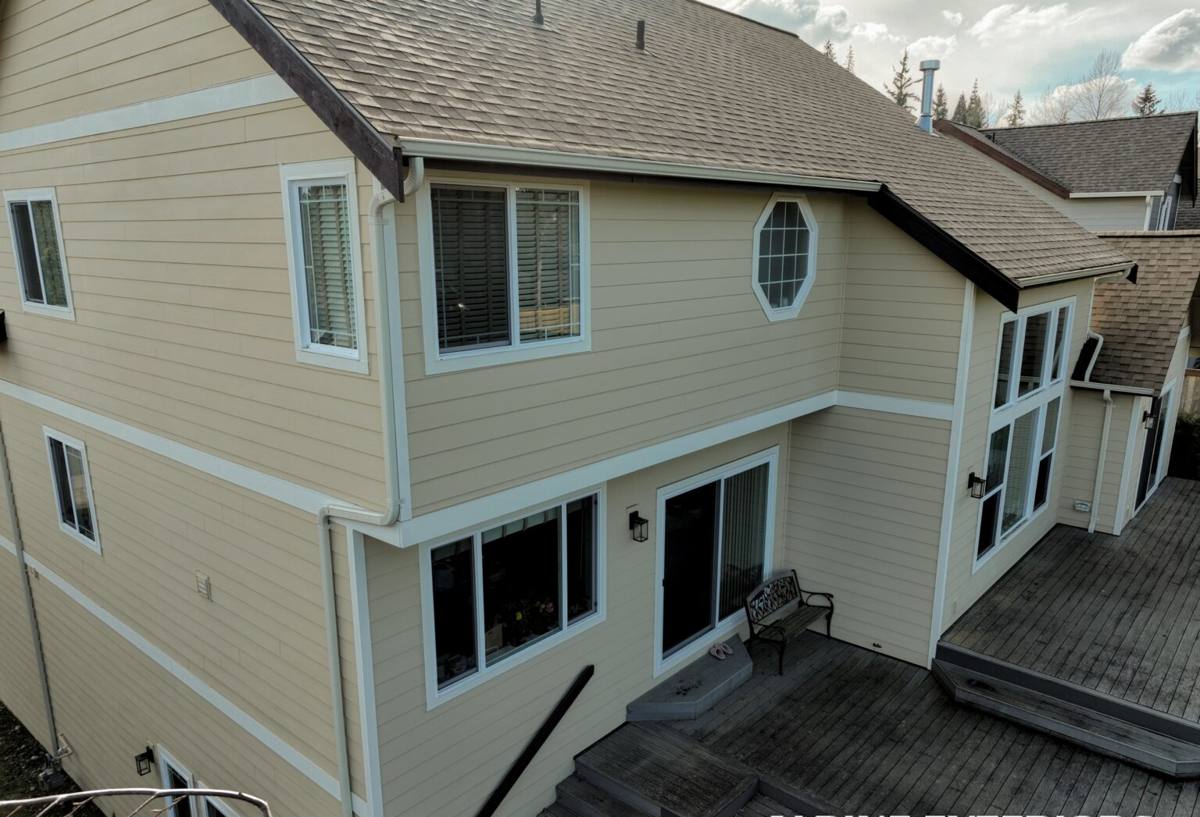
What Salt Air, Rain, and Moss Actually Do to a Window Opening
Salt Air and Metal Components
Coastal salt air accelerates corrosion on unprotected fasteners, hinges, and metal cladding. Over years, this shows up as pitting on hardware, staining around screws, and premature wear on lower-quality cladding finishes. It's a slow process, which is part of why it gets ignored until a window won't latch smoothly or a sill starts showing rust streaks.
Driving Rain and Wind-Driven Moisture
Rain that falls straight down is a much easier problem to manage than rain that's being pushed sideways by wind, which is common in this region. Wind-driven rain finds any gap in flashing, any compressed or degraded sealant joint, and any spot where the weather-resistive barrier wasn't properly lapped. Once water gets behind the window frame instead of running off it, the damage happens out of sight — in the framing, sheathing, and insulation — long before it shows up as a stain on an interior wall.
Moss, Algae, and Prolonged Dampness
Shaded exteriors and north-facing walls in Bellingham can stay damp for extended periods, which is exactly the environment moss and algae need to take hold on sills, trim, and cladding. Beyond the cosmetic issue, sustained moisture against wood trim or OSB sheathing softens it over time, and moss root structures can hold water against a surface long after the rain has stopped.
Signs a Bellingham Home Needs Window Attention
Most window failures don't announce themselves with a dramatic leak. They show up as small, easy-to-dismiss symptoms first. If you're seeing any of the following, it's worth having the window looked at rather than waiting:
- Fogging or a hazy film between the panes of a double-pane window (a sign the seal has failed)
- Soft or spongy wood at the sill or bottom corners of the frame
- Visible moss, algae, or dark staining on the exterior trim around the window
- Drafts you can feel with a hand near the frame on a windy day
- Difficulty opening, closing, or locking a window that used to operate smoothly
- Peeling paint or bubbling finish on interior trim near the window
- Condensation forming consistently on the interior glass, even in mild weather
What a Correct Window Installation Actually Involves
Removal and Opening Inspection
Pulling the old window is when problems that have been hidden for years finally become visible — soft sheathing, missing or damaged flashing, insulation that's been wet and compressed. A rushed installer just sets the new window in the same opening and moves on. A correct installation stops here, assesses what's actually there, and repairs any compromised framing or sheathing before anything new goes in.
Flashing and Weather Barrier Integration
This is the step that matters most in a climate with wind-driven rain, and it's the one most commonly shortcut. Flashing needs to be layered correctly with the house's weather-resistive barrier — sill pan first, then side flashing, then head flashing — so that any water that does reach the opening is directed back out, not trapped behind the window. Skipping or misordering this step is the single biggest cause of hidden rot around window openings in this region.
Air Sealing and Insulation
The gap between the window frame and the rough opening needs to be sealed and insulated correctly — not overpacked with spray foam, which can bow a frame, and not left with gaps that create drafts and cold spots. Done right, this step also cuts down on condensation forming on interior trim during cold, damp stretches.
Trim, Sealant, and Finish Work
Exterior trim and caulking are the last line of defense and the first thing salt air and UV exposure attack. Using a sealant rated for the movement and moisture conditions here, and finishing trim in a way that sheds water rather than holding it, is what keeps moss and rot from creeping back in a year or two after installation.
Choosing the Right Window for This Climate
There's no single "best" window material — the right choice depends on how much upkeep you want to do, your budget, and how exposed the specific wall is to weather. Here's how the common options compare for a coastal Whatcom County home:
| Frame Material | Moisture Behavior | Maintenance | General Cost Position |
|---|---|---|---|
| Vinyl | Doesn't rot or corrode; performs well in damp, salty air | Low — occasional cleaning | Lower |
| Fiberglass | Very stable in temperature swings; strong moisture resistance | Low | Mid to higher |
| Aluminum | Can corrode over time in salt air unless properly finished; conducts cold | Moderate | Varies |
| Wood | Attractive but vulnerable to moisture and rot without diligent upkeep | High — regular painting/sealing | Higher |
| Wood-clad | Exterior clad protects wood core, but clad seams need inspection over time | Moderate | Higher |
Glass package matters as much as frame material. In this climate, we generally recommend at minimum a quality double-pane unit with a low-E coating and an argon or krypton gas fill, and we'll discuss triple-pane options where added insulation value is worth the added cost for a particular wall or room. We don't push wood as a first recommendation for exposed, weather-facing elevations in this area — not because it can't be a good-looking product, but because the maintenance burden and moisture sensitivity are real trade-offs homeowners deserve to hear plainly before they commit.
Our Process for Bellingham Window Installations
1. On-Site Assessment
We look at each window opening individually — sun exposure, wind exposure, current condition of trim and sheathing — rather than quoting a blanket price over the phone. Two windows on the same house can need different solutions depending on which direction they face.
2. Straightforward Recommendation
You get options and honest trade-offs, not a single upsell. If a lower-cost option will genuinely hold up fine on a sheltered wall, we'll say so.
3. Careful Removal and Opening Repair
Any soft framing, failed flashing, or compromised sheathing gets addressed before the new window goes in — not papered over.
4. Installation to Manufacturer and Best-Practice Standards
Proper flashing sequencing, correct fastening, and air sealing done to hold up against wind-driven rain, not just look finished on installation day.
5. Finish Work and Walkthrough
Trim, caulking, and cleanup, followed by a walkthrough so you understand what was done and why.
Why Local Experience in the Bellingham Area Matters
A crew that works this part of Whatcom County regularly has already seen how salt air ages hardware, which walls in a given neighborhood tend to stay damp longest, and how moss establishes itself on shaded trim. That's not something you can fully substitute with a general installation checklist written for a different climate. It shows up in small decisions — which sealant to use, how much slope to build into a sill, where to expect hidden rot before the old window even comes out — that add up to a window system that actually lasts here instead of one that looked fine on day one.
What Affects the Cost of a Window Installation
Every home is different, so we don't quote sight-unseen, but the main factors that move a project's cost are consistent:
- Number of windows and whether they're standard sizes or custom-ordered
- Condition of the existing opening — hidden rot or flashing repair adds labor
- Frame material and glass package selected
- Accessibility (second story, tight landscaping, difficult access points)
- Whether trim, siding, or interior finish work needs to be matched or repaired around the new window
We'll walk through these with you on-site so the number you get reflects your home, not a generic average.
If you're dealing with a drafty, foggy, or moss-stained window — or you're simply ready to stop patching and get it done right — we're happy to take a look and put together a straightforward, no-pressure estimate. Use the form below to get started.